
MultimodalImage, audio & video
Guardian review pans Castle Walls, Ay Yapım's AI-generated Turkish series on Prime Video
Ay Yapım's two-episode Castle Walls, promoted as the first end-to-end AI series on a major streamer, pairs human writers, sketches and voice actors with AI-generated visuals. The Guardian praises its palette but finds its faces waxy and writing banal.
From the The Guardian · AI article of October 28, 2026 and cited sources: Humans and AI both worked on the production. [2] [4] [3]
SOURCES[2] Variety – Castle Walls launches on Prime Video variety.com[4] TTV News – Ay Yapim produces first fully AI-generated series todotvnews.com[3] aivancity – Castle Walls: Turkey launches first AI series aivancity.ai
 AT Pulse research deskPublished · Updated · 5 min read · AI-assisted analysis
AI-assisted, not human-edited. Methodology Corrections Who owns this site
- Original source
- The Guardian · AI article, independent perspective
- Brief by
- AT Pulse research desk AI-assisted; publisher and contact on the desk page
- When
- October 28, 2026 article published
- Covered
- Oct 28 edition
- Evidence
- 10 sources across 10 sites
- 1Castle Walls review – Prime’s first fully AI-generated…theguardian.com
- 2Variety – Castle Walls launches on Prime Videovariety.com
- 3aivancity – Castle Walls: Turkey launches first AI seriesaivancity.ai
- 4TTV News – Ay Yapim produces first fully AI-generated seriestodotvnews.com
- 5GamesBeat – Amazon draws on Assassin's Creed loregamesbeat.com
- 6kino.de – Kontroverse Serie läuft jetzt bei Prime Videokino.de
RisingHow it’s measured
YouTube video · 20K views · 78 likes
Reach blends public engagement (views, likes, comments, shares, stars) from the platforms where the story or its original source lives: YouTube, Hacker News, GitHub, Substack and similar. A video and the article written from its transcript share one score, taken from the video. Platforms with no data are left out rather than counted as zero, and the age of a story never lowers its score.
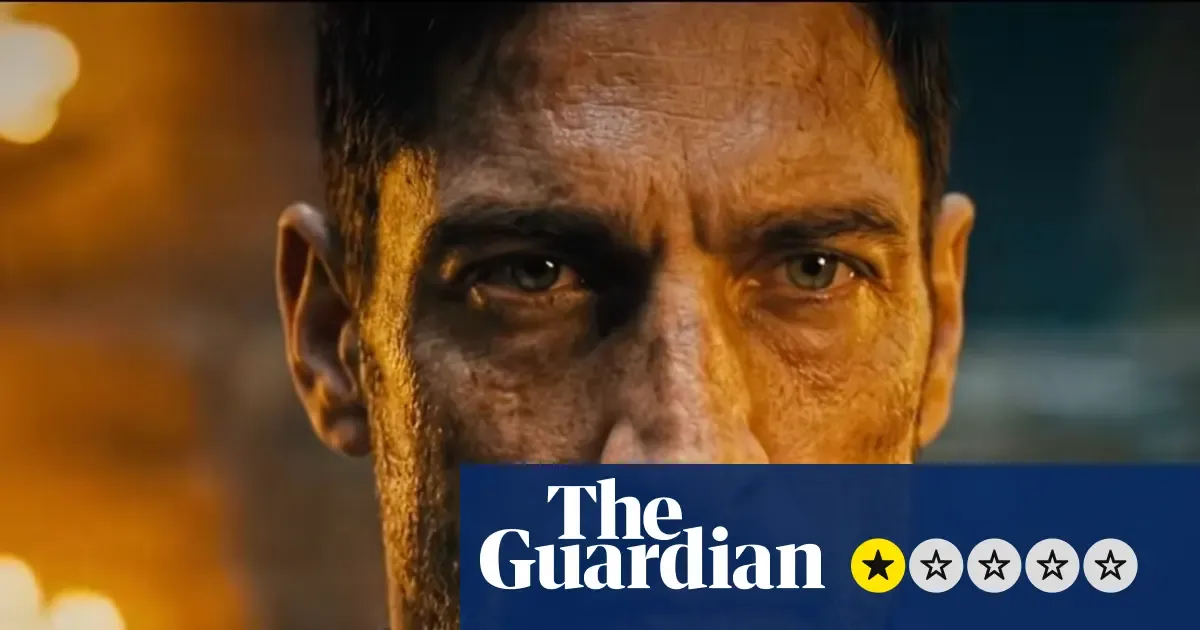
Humans and AI both worked on the production. Kerem Deren and Çisil Hazal Tenim wrote the scripts, and hand-drawn character sketches kept the characters consistent. Human artists dubbed every language. AI Yapım's own video diffusion model, AYDNA, generated the images. Pre-launch coverage had wrongly said AI wrote the scripts and produced the voices. [2] [4] [3]
The two episodes were made about two years apart with different methods. The first was built shot by shot with inpainting, and the second used newer generative video tools. The series therefore does not show one consistent model's output. [5]
The company says AYDNA was trained only on the studio's own rights-managed catalogue. No model card, data card or audit has been published to back this up. [2]
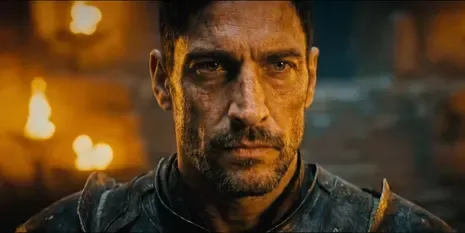
The Guardian's critic praises the colour palette. He says the human figures look like melting waxworks, the show leans too hard on spectacle, the pacing is odd and the writing is banal. [1]
a major streamer released a series with images from a studio-trained diffusion model, and the reviewer found the human figures weakest.
Read the full assessment
Implication: near-term use may favour mixed human–AI workflows, with AI handling wide shots, previsualisation and backgrounds rather than performances.
Status: the source checks are done, and here is the dossier.
Executive brief
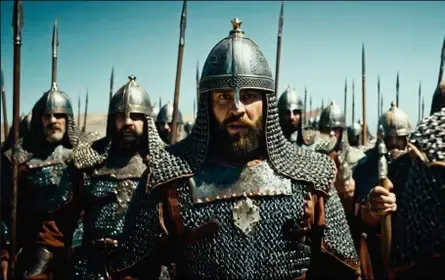
The show sold as the first "end-to-end AI-created" series on a major streamer still used human writers, human voice actors and hand-drawn character sketches. What the AI made was the pictures. Castle Walls (Surlar) comes from Turkey's Ay Yapım through its AI arm, AI Yapım. It runs two short episodes on Prime Video about 11th-century Alamut Castle. The images came from AYDNA, an in-house video diffusion model that the company says was trained only on its own licensed catalogue (Variety). The Guardian's review calls the result a "Vaseline-smeared mess" (Guardian).
What changed and event timeline
Early coverage describes a fully machine-made series
An AI-education blog says AI wrote the script, generated the voices and composed the music, at under €200,000 per episode. Later reporting contradicts most of this ().
Prime Video launches it worldwide
Two 15-minute episodes, written by Kerem Deren and Çisil Hazal Tenim, with visuals from AYDNA. It is described as a streaming first (;).
German coverage gives a different date and reports job fears
Kino.de gives 18 August as the start date for Prime Video and Turkish free TV. It reports that filmmakers fear automation of creative jobs ().
Musk posts an AI Odyssey episode
Elon Musk shares the first episode of an Odyssey series made with Grok Imagine. Critics call it AI "slop" (;).
The Guardian pans Castle Walls
Luke Buckmaster praises the colour palette but says the human figures look like melting waxworks and the writing is banal ().
Capabilities and access
Read the full section
- Where to watch: Prime Video, worldwide including the US (TTV News). There is an official trailer on YouTube.
- Models and tools:
- AYDNA, a proprietary video diffusion model. No version, size or architecture details are public.
- An in-house AI storyboard system used for "prompt enhancement" (Variety).
- Episode length: about 15 minutes each per trade reports, about 17 per the Guardian.
- Dubbing: human voice artists in every language.
Technical analysis for researchers and developers
- Two pipelines, about two years apart.
- Episode 1 used shot-by-shot inpainting from before current image-generation tools.
- Episode 2 used newer generative video tools (GamesBeat).
Read the full section
- Two pipelines, about two years apart.
- Episode 1 used shot-by-shot inpainting from before current image-generation tools.
- Episode 2 used newer generative video tools (GamesBeat).
- The series is therefore a mix of two pipelines, not one consistent model.
- Training data. The company says every input to AYDNA was rights-managed studio material (Variety). No data card, model card or audit has been published.
- Workflow. Human scripts and hand-drawn character sketches came first, then AI image generation, then human dubbing. Character consistency apparently depended on those sketches.
- Evaluation. There are no benchmarks, ablations or reproducible artefacts. The only quality evidence is critical review.
Claims and evidence
Read the full section
- "First end-to-end AI series on a major streamer." This is Ay Yapım's framing, repeated by trade press (Variety). No independent source has checked it.
- Licensed-only training data. Only the company says so. No audit exists.
- "Used AI to amplify" human skill. Ay Yapım's statement, quoted by the Guardian.
- Under €200k per episode and under 15 days per episode. These are early estimates attributed to Ay Yapım in pre-launch coverage (aivancity). The same piece is wrong about AI writing and voices, so treat these numbers with caution.
- Amazon. None of the reviewed reports quote an Amazon statement.
Context and prior work
- Alamut is the fortress at the centre of Ubisoft's Assassin's Creed Mirage, which gives the show a familiar setting (GamesBeat).
- Ay Yapım is a three-time International Emmy winner and set up AI Yapım as a subsidiary for AI production (Señal News).
- The show arrives alongside Musk's Grok Imagine Odyssey project. The Guardian frames both as early, crude examples of AI-made screen content.
Read the full section
- Location. Alamut is the fortress at the centre of Ubisoft's Assassin's Creed Mirage, which gives the show a familiar setting (GamesBeat).
- Producer. Ay Yapım is a three-time International Emmy winner and set up AI Yapım as a subsidiary for AI production (Señal News).
- Odyssey comparison. The show arrives alongside Musk's Grok Imagine Odyssey project. The Guardian frames both as early, crude examples of AI-made screen content.
- Cinema history. The reviewer compares AI video to Tom Gunning's "cinema of attractions" idea about early film: novel at the time but soon outdone (Guardian).
Limitations, safety and contested findings
- What "fully AI" means is disputed. Pre-launch coverage said AI did the script, voices and music (aivancity).
- The launch date is 12 Aug in trade press and 18 Aug in kino.de. Episode length is 15 or 17 minutes.
- The review describes plasticky, "melting" faces, too much spectacle and odd pacing.
Read the full section
- What "fully AI" means is disputed. Pre-launch coverage said AI did the script, voices and music (aivancity). Launch reporting credits human writers and voice actors (TTV News).
- Facts differ between sources. The launch date is 12 Aug in trade press and 18 Aug in kino.de. Episode length is 15 or 17 minutes.
- Quality. The review describes plasticky, "melting" faces, too much spectacle and odd pacing.
- Industry reaction. Turkish director Mehmet Günsür said, in pre-launch coverage, that AI cannot replace a human performance (aivancity). Fears about creative jobs are reported in kino.de.
Business and practitioner implications
- Licensed data is now a selling point. Others will copy that, but buyers should ask for an audit.
- Short, mixed formats come first.
- Faces are still the weak point. Landscapes and wide shots hold up, but people do not.
Read the full section
- Licensed data is now a selling point. Training a model only on a studio's own catalogue is offered as the answer to doubts about where training data came from. Others will copy that, but buyers should ask for an audit.
- Short, mixed formats come first. Human writing and voice work plus AI images in short episodes is the realistic near-term model, not a fully synthetic feature film.
- Faces are still the weak point. Landscapes and wide shots hold up, but people do not. That points to using AI for establishing shots, previsualisation and background plates.
- Branding can backfire. Calling something "fully AI" drew press attention, and it also drew harsh reviews and worry about jobs.
The source trail.
Sources (10)
Castle Walls review – Prime’s first fully AI-generated show is here, and it’s a Vaseline-smeared mess
Article text retrieved; extracted text may omit tables or interactive elements.
theguardian.com