
BusinessMarkets, money & strategy
Socceroo Cristian Volpato licenses his AI 'synthetic twin' to startup Callandor
Socceroo Cristian Volpato has granted California startup Callandor exclusive rights to his likeness, voice, biometric and performance data, which it plans to license to brands as a synthetic twin while unauthorised athlete deepfakes spread and legal protections remain thin.
From the The Guardian · AI article of October 24, 2026 and cited sources: The Sassuolo player's deal covers his face, voice, biometric profiles and performance data. [1] [3]
SOURCES[1] ‘Synthetic twin’: Why Socceroo Cristian Volpato is the… theguardian.com[3] Yahoo Finance/Business Wire: Football Star Cristian… finance.yahoo.com
 AT Pulse research deskPublished · Updated · 5 min read · AI-assisted analysis
AI-assisted, not human-edited. Methodology Corrections Who owns this site
- What happened
- The Sassuolo player's deal covers his face, voice, biometric profiles and performance data. [1] [3]
- Original source
- The Guardian · AI article, independent perspective
- Brief by
- AT Pulse research desk AI-assisted; publisher and contact on the desk page
- When
- October 24, 2026 article published
- Covered
- Oct 25 edition
- Evidence
- 8 sources across 8 sites
- 1‘Synthetic twin’: Why Socceroo Cristian Volpato is the…theguardian.com
- 2Broadcast: Neymar Jr to appear in FlareFlow microdramasbroadcastnow.co.uk
- 3Yahoo Finance/Business Wire: Football Star Cristian…finance.yahoo.com
- 4Yahoo Sports: Cole Palmer, Lucy Bronze among footballers…sports.yahoo.com
- 5Mediaweek: AFL stops Sportsbet from posting AI-generated…mediaweek.com.au
- 6Gambling.com: AFL Orders Sportsbet To Stop Using…gambling.com
Reach: not measured yet
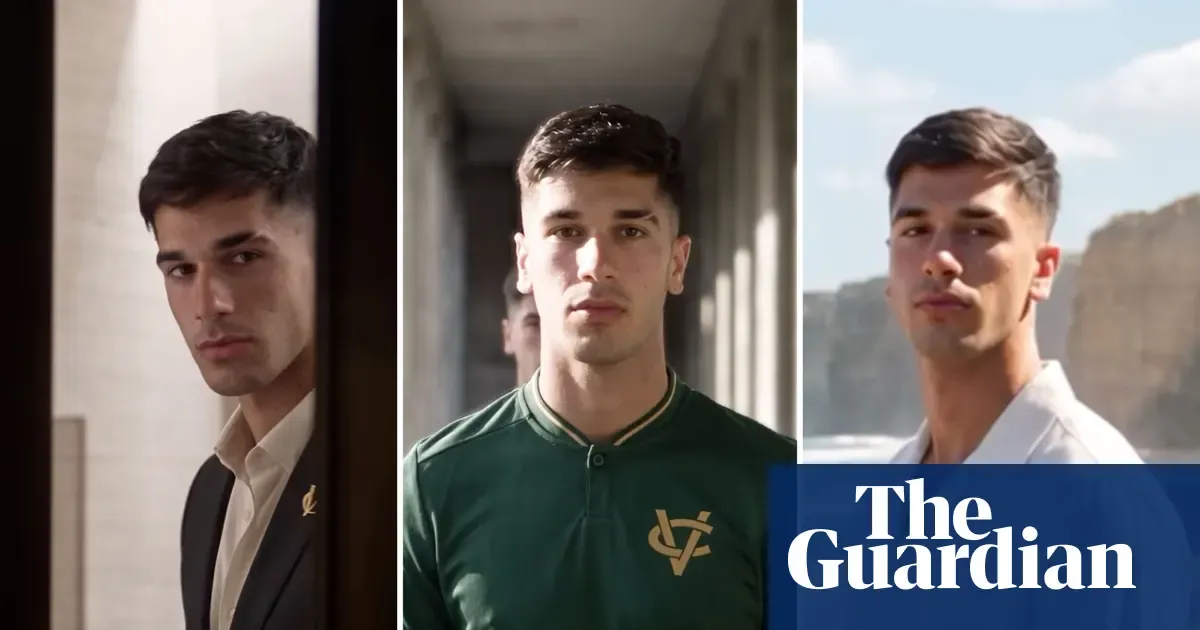
The Sassuolo player's deal covers his face, voice, biometric profiles and performance data. Callandor was founded in February 2026, and its other clients include Jorginho and sailor Chris Poole. It plans brand campaigns, foreign-language audiobook voiceovers and fan apps, including a twin that coaches users in real time. It would take a cut of revenue and challenge unapproved uses. Its campaigns are still pilots. [1] [3]
Unauthorised AI use of athletes is growing. After the players' union complained, the AFL ordered betting partner Sportsbet to remove AI clips of Lachie Neale and Will Ashcroft. UK footballers including Cole Palmer and Lucy Bronze are backing a campaign for personality-rights laws, which cites government research showing deepfakes shared rose from 500,000 in 2023 to 8 million in 2025. [4] [5] [6]
Legal protection is thin. In Australia, copyright needs a human author, so it does not cover AI reproductions, and passing-off claims require proof of economic loss. UK law gives individuals no right against cloned likenesses or voices. A private consent registry also cannot stop outsiders from making synthetic content. [1] [4] [8]
athletes are licensing AI likenesses, and leagues are policing unapproved clips. Implication: consent records and licence-scoped generation may become the real product.
Read the full assessment
But Callandor has disclosed no model, evaluation or provenance method, and its claim that the clones are undetectable has not been tested.
Executive brief
Cristian Volpato, a 22-year-old Socceroo who plays for Sassuolo, has given California startup Callandor exclusive rights to his digital likeness, voice, biometric profiles and performance data (Guardian). Callandor was founded in February 2026 and its campaigns are still pilots. It plans to sell his "synthetic twin" to brands, take a cut, and push back on unapproved uses. The deal comes as unauthorised AI use of athletes grows. The AFL has just made its betting partner remove AI clips of players, and UK footballers are lobbying for personality-rights laws. Nobody has shown yet whether brands will pay real-athlete prices for a clone.
What changed and event timeline
Neymar licenses likeness for AI microdramas
Neymar Jr licensed his image to FlareFlow, which is owned by COL Group, for 16 scripted series made with AI workflows. They were released alongside the World Cup ().
Volpato signs with Callandor
A Business Wire release announced Volpato's registration in Callandor's "AI Rights Registry", which covers what the company calls his "Digital DNA" ().
"My Name, My Face" campaign launches
FIFPRO, the PFA and law firm Mills & Reeve asked for UK personality-rights legislation. Cole Palmer and Lucy Bronze are among the backers ().
AFL reins in Sportsbet
After the players' union complained, the AFL told Sportsbet to delete AI clips of Lachie Neale and Will Ashcroft reciting movie and TV lines ().
Guardian profiles the "synthetic twin" market
The article sets Callandor and Sydney startup Hyperknown against a legal framework where copyright does not cover AI reproductions ().
Capabilities and access
- No generation model, vendor or version has been disclosed for Callandor's output.
- Capture: the company says one "verified capture" lets it run multilingual digital-twin campaigns (Business Wire via Yahoo).
- Planned products (Guardian):
Read the full section
- Model: none named. No generation model, vendor or version has been disclosed for Callandor's output.
- Capture: the company says one "verified capture" lets it run multilingual digital-twin campaigns (Business Wire via Yahoo).
- Planned products (Guardian):
- brand campaigns
- foreign-language audiobook voiceovers
- fan apps, including a twin that coaches users in real time from how they play
- Status: pilots only. Other clients include footballer Jorginho and sailor Chris Poole.
Technical analysis for researchers and developers
The reviewed sources contain no architecture, training data, evaluation or provenance details.
Read the full section
The reviewed sources contain no architecture, training data, evaluation or provenance details. What they do describe:
- Consent registry. This is a private record of permissions, licence terms and allowed uses (Business Wire via Yahoo). No watermarking, C2PA-style credentials or detection method is mentioned.
- Data scope. The licence covers biometric and performance data as well as face and voice. That makes the data-governance burden heavier than for image-only licences.
- Realism. Fisk says the output is "almost impossible to detect" on a phone. No test backs this up (Guardian).
- Reproducibility. Nothing has been published that would let anyone reproduce or assess the system.
Claims and evidence
- Exclusive rights to likeness, voice, biometrics and performance data: reported by the Guardian. Both can be true, but the release reads as marketing.
- Twins usable "24-7" and undetectable: these come only from the CEO, with no independent corroboration.
- Deepfakes rose from 500,000 shared in 2023 to 8 million in 2025: from UK government research, as cited by the campaign (Yahoo Sports).
Read the full section
- Exclusive rights to likeness, voice, biometrics and performance data: reported by the Guardian. The company's own release stresses instead that Volpato keeps "creative control" (Yahoo/Business Wire). Both can be true, but the release reads as marketing.
- Twins usable "24-7" and undetectable: these come only from the CEO, with no independent corroboration.
- Deepfakes rose from 500,000 shared in 2023 to 8 million in 2025: from UK government research, as cited by the campaign (Yahoo Sports).
- Sportsbet clips breached player image agreements: this is the AFLPA's position. The AFL acted on it (Gambling.com).
Context and prior work
- It was billed as a first at scale.
- It joked that his AI clone had already shot the ad (Guardian).
- Unauthorised uses. An offshore casino ran a deepfake of Bruno Fernandes this year.
Read the full section
- Neymar's FlareFlow deal. It was billed as a first at scale. COL did not say how much of Neymar's screen time was filmed and how much was generated (Hollywood Reporter).
- Travis Head's Kayo ad. It joked that his AI clone had already shot the ad (Guardian).
- Unauthorised uses. An offshore casino ran a deepfake of Bruno Fernandes this year. Sportsbet's AI clips also brushed against Australia's ban on athletes appearing in gambling ads (Mediaweek).
Limitations, safety and contested findings
- Australian law is thin. "Passing off" claims require proof of economic loss (Guardian).
- Sports-law commentary notes that registering in a private system does not prevent outsiders from making synthetic content.
- UK law gives individuals no right against unauthorised use of their likeness or a cloned voice (Yahoo Sports).
Read the full section
- Australian law is thin. Jonathan Harlen of Southern Cross University says copyright needs human authorship, so it does not cover AI reproductions. "Passing off" claims require proof of economic loss (Guardian).
- A registry doesn't stop third parties. Sports-law commentary notes that registering in a private system does not prevent outsiders from making synthetic content. Consent to one use also does not automatically cover AI variations (Sports Law Expert).
- UK gap. UK law gives individuals no right against unauthorised use of their likeness or a cloned voice (Yahoo Sports).
- Fan content. Fisk argues against a crackdown on AI fan art. He concedes this makes brand-safety control harder, for example around religion or drugs.
Business and practitioner implications
- Brands: consent is becoming a selling point.
- Agencies and leagues: major Australian player contracts don't mention AI. The AFLPA is weighing tougher rules (Guardian).
- Developers: consent records, audit trails and licence-scoped generation are the product here, more than the model.
Read the full section
- Brands: consent is becoming a selling point. Hyperknown's William Saunders predicts content labels will move from "made with AI" to "made with this person's permission".
- Agencies and leagues: major Australian player contracts don't mention AI. The AFLPA is weighing tougher rules (Guardian).
- Developers: consent records, audit trails and licence-scoped generation are the product here, more than the model. Biometric data brings privacy obligations.
- Pricing: it is still unknown whether clones can earn anything close to real endorsement fees.
The source trail.
Sources (8)
‘Synthetic twin’: Why Socceroo Cristian Volpato is the latest footballer to license his AI clone
Article text retrieved; extracted text may omit tables or interactive elements.
theguardian.com