
MultimodalImage, audio & video
BBC's Blue Planet III keeps murky, unpolished footage to show audiences it was not made with AI
For Blue Planet III, BBC producers kept cloudy, plankton-filled shots and left boats and buoys in frame, and commissioning head Jack Bootle said no generative AI was used in any frame. The six-part series premieres on BBC One on 1 November.
From the The Guardian · AI article of October 24, 2026 and cited sources: Producers kept footage they would once have cut, including poor visibility, particles in the water and human equipment in shot, so that imperfection works as a visible sign that the animals were really filmed. [1]
SOURCES[1] Blue Planet III features cloudier footage to prove… theguardian.com
 AT Pulse research deskPublished · Updated · 5 min read · AI-assisted analysis
AI-assisted, not human-edited. Methodology Corrections Who owns this site
- What happened
- Producers kept footage they would once have cut, including poor visibility, particles in the water and human equipment in shot, so that imperfection works as a visible sign that the animals were really filmed. [1]
- Original source
- The Guardian · AI article, independent perspective
- Brief by
- AT Pulse research desk AI-assisted; publisher and contact on the desk page
- When
- October 24, 2026 article published
- Covered
- Oct 25 edition
- Evidence
- 13 sources across 12 sites
- 1Blue Planet III features cloudier footage to prove…theguardian.com
- 2Blue Planet III is keeping the rough edges in the age of AItheverge.com
- 3Broadcast: Blue Planet IIIbroadcastnow.co.uk
- 4Wikipedia: Blue Planet IIIen.wikipedia.org
- 5Senal News: Attenborough to narrate Blue Planet IIIsenalnews.com
- 6Euronews: Fabricated AI animal videos distorting how we…euronews.com
QuietHow it’s measured
Hacker News · 2 likes
Reach blends public engagement (views, likes, comments, shares, stars) from the platforms where the story or its original source lives: YouTube, Hacker News, GitHub, Substack and similar. A video and the article written from its transcript share one score, taken from the video. Platforms with no data are left out rather than counted as zero, and the age of a story never lowers its score.
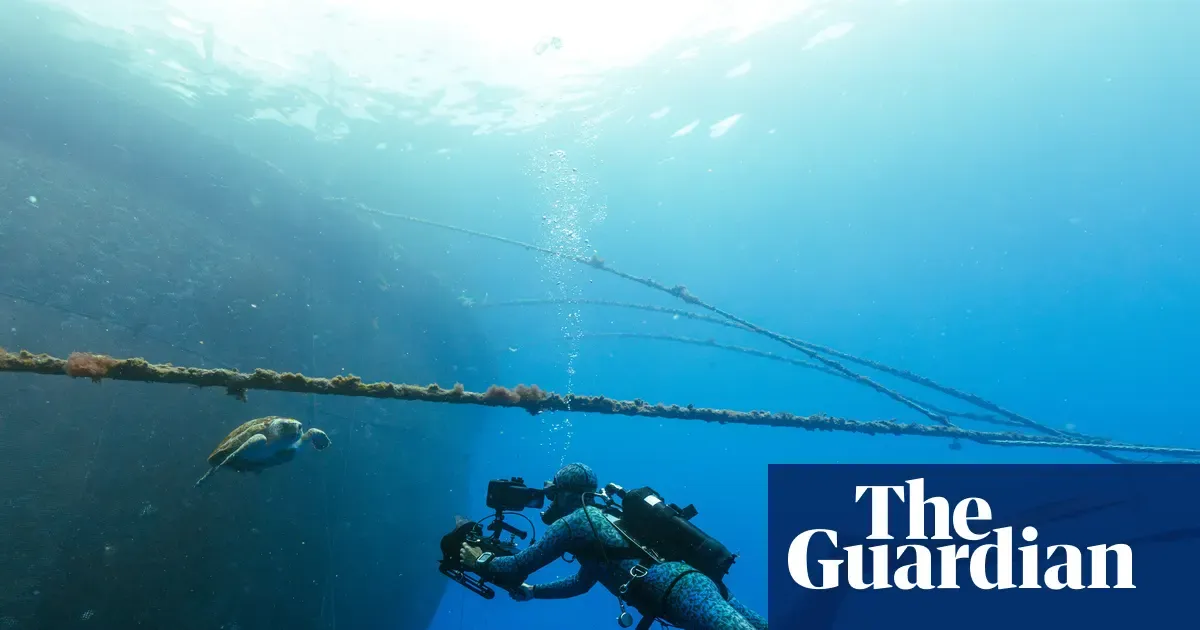
Producers kept footage they would once have cut, including poor visibility, particles in the water and human equipment in shot, so that imperfection works as a visible sign that the animals were really filmed. The Guardian reports that the no-generative-AI assurance from Bootle is a first for the BBC. [1]
The move responds to a growing wave of synthetic wildlife content. University of Córdoba researchers, writing in Conservation Biology, say AI animal clips distort how the public understands animal behaviour and call for platform detection and mandatory labels. Separate reporting describes fake images making people doubt real camera-trap evidence. [6] [10] [12]
a leading broadcaster is answering synthetic wildlife video with editorial choices and a public pledge, not technical provenance.
Read the full assessment
Implication: authenticity is becoming a selling point, and producers may need capture-time records or content credentials to support similar claims.
Sources are checked; writing the dossier now.
Executive brief
The BBC is now treating imperfect footage as proof that footage is real. For Blue Planet III, producers kept murky, plankton-filled shots that they would once have cut, and left boats and buoys in frame, so viewers can see the animals were filmed and not generated by AI (Guardian). Commissioning head Jack Bootle said no generative AI was used in "a single frame." The BBC has not published any independent check of that claim. The series starts 1 November 2026. It shows how a major broadcaster is answering the flood of synthetic wildlife clips: with an editorial style and a public promise, not technical verification.
What changed and event timeline
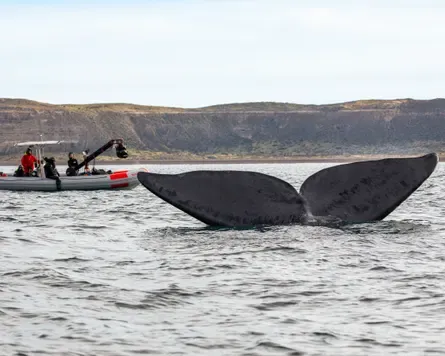
Series launched to international buyers
BBC Studios pitched six one-hour episodes made over four years, with broadcast partners including BBC America, ZDF and France Télévisions ().
Attenborough confirmed as narrator
The announcement came around his 100th birthday. Broadcasters in nine countries had already pre-ordered the series (;).
Researchers warn about fake animal videos
University of Córdoba researchers, publishing in Conservation Biology, said AI wildlife clips distort how people understand animal behaviour. They called for platform detection and mandatory labels ().
23–24 Oct 2026: Press screening makes the "no gen AI" pledge
Producers explained why they kept less polished footage. Bootle gave a no-generative-AI assurance, which the Guardian reports as a first for the BBC ().
Dolphin sponge sequence publicised
A roughly 40-year-old Shark Bay dolphin called Gambara was filmed plugging holes in coral with sponges to trap fish. The team used a custom underwater CCTV camera ().
Capabilities and access
Read the full section
- No AI model is involved. The story is about deliberately not using generative AI.
- Release: BBC One and iPlayer from 1 November 2026, with BBC America also listed (Wikipedia). One secondary site mentions a 2027 US release on AMC+ (Karmactive); no other reviewed source confirms this.
- Episodes: Tropical Seas, Open Ocean, Seasonal Seas, Polar Waters, The Deep and Future Seas (Wikipedia).
- Camera kit: the "stonefish" underwater CCTV, a mini-dome camera, a deep-sea selfie stick, leg-mounted scooters and lasers (Guardian).
Technical analysis for researchers and developers
- The BBC's method is editorial. None of the reviewed sources mention cryptographic content credentials, watermarking or audit logs.
- Rough looks are a weak signal (inference). Video generators can add murk and noise on request, so imperfection proves little on its own.
- Camera specs are thinly sourced.
Read the full section
- The BBC's method is editorial. It changed what it keeps in the edit: particles in the water, poor visibility and human objects in shot (Guardian). None of the reviewed sources mention cryptographic content credentials, watermarking or audit logs.
- Rough looks are a weak signal (inference). Video generators can add murk and noise on request, so imperfection proves little on its own. A stronger signal is the record of how a shot was made, like the drone tracking of Gambara by her fin (AOL).
- Camera specs are thinly sourced. Claims that stonefish records 4K for 24 hours, and that a rig called "Little Charlie" works at 3,000 m, come only from a low-authority aggregator (Karmactive).
Claims and evidence
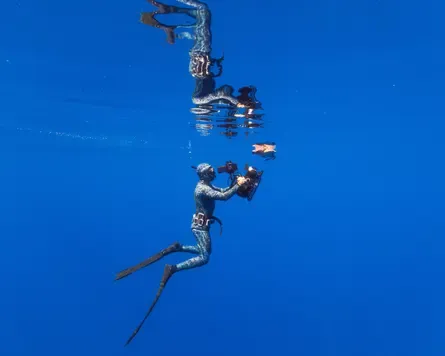
- "No gen AI… not a single frame": this is the BBC's own claim at a press screening.
- Murkier shots were kept on purpose: stated by executive producer Elizabeth White (same source).
- Dolphins using sponges to block holes: presented as never seen before. It has not yet been independently confirmed or peer-reviewed (AOL).
Read the full section
- "No gen AI… not a single frame": this is the BBC's own claim at a press screening. No independent audit or published methodology exists (Guardian).
- Murkier shots were kept on purpose: stated by executive producer Elizabeth White (same source). Broader coverage repeats the Guardian rather than adding new reporting (inkl; Time News).
- Dolphins using sponges to block holes: presented as never seen before. It has not yet been independently confirmed or peer-reviewed (AOL).
- Harm from AI wildlife clips: supported by a peer-reviewed study (New Atlas).
Context and prior work
- Earlier series: Blue Planet II (2017) is credited with raising awareness of plastic pollution.
- Synthetic wildlife content: Mongabay reports fake animal images driving retaliation against wildlife and making people doubt real camera-trap evidence (Mongabay).
- Viral fakes: one AI clip of a leopard chased off by a house cat passed a million likes (New Atlas).
Read the full section
- Earlier series: Blue Planet II (2017) is credited with raising awareness of plastic pollution. Blue Planet III continues that thread with stories on pollutants and "forever chemicals" (Guardian; Blue Planet II).
- Synthetic wildlife content: Mongabay reports fake animal images driving retaliation against wildlife and making people doubt real camera-trap evidence (Mongabay).
- Viral fakes: one AI clip of a leopard chased off by a house cat passed a million likes (New Atlas).
- Spotting fakes: consumer guides now teach people how to recognise AI animal videos (Popular Science).
Limitations, safety and contested findings
- Imperfect footage as proof: the reviewed sources do not show whether audiences actually read murky footage as evidence of authenticity.
- Dating of the Córdoba study: New Atlas dates it to 2025 (New Atlas), while Euronews covered it in July 2026 (Euronews).
- Budget pressure: White would not comment on how the BBC's £500m cost-cutting drive might affect the natural history unit.
Read the full section
- Imperfect footage as proof: the reviewed sources do not show whether audiences actually read murky footage as evidence of authenticity.
- Dating of the Córdoba study: New Atlas dates it to 2025 (New Atlas), while Euronews covered it in July 2026 (Euronews).
- Budget pressure: White would not comment on how the BBC's £500m cost-cutting drive might affect the natural history unit. She did say the series saved money by using more local crews (Guardian).
Business and practitioner implications
- Authenticity has become a selling point. Expect rival producers to make similar pledges.
- Promises with no supporting provenance are hard to defend. Media teams would gain from capture-time content credentials and behind-the-scenes records.
- Platforms: researchers are asking for mandatory AI labels on wildlife content (Euronews), which implies compliance and detection costs.
Read the full section
- Authenticity has become a selling point. A "no gen AI" statement now sits alongside the BBC's pitch to international buyers (Broadcast). Expect rival producers to make similar pledges.
- Pledges without proof (inference). Promises with no supporting provenance are hard to defend. Media teams would gain from capture-time content credentials and behind-the-scenes records.
- Platforms: researchers are asking for mandatory AI labels on wildlife content (Euronews), which implies compliance and detection costs.
- Generative video vendors (inference): a "too polished" look is becoming a giveaway, while the most respected brands in the field are signalling that they avoid generated footage altogether.
The source trail.
Sources (13)
Blue Planet III features cloudier footage to prove authenticity amid AI boom
Article text retrieved; extracted text may omit tables or interactive elements.
theguardian.comBlue Planet III is keeping the rough edges in the age of AI
Related coverage; assess separately
theverge.com