
ModelsArchitectures & capability
Meta releases Muse Spark Open, an 816B-parameter open-weight model that runs on linked Mac Studios
Meta's Muse Spark Open is a mixture-of-experts model with 816B total and 42B active parameters and a 1M-token context, released under a custom license. Apple benchmarks show it running on linked M5 Ultra Mac Studios, but it trails rival open models on several tests.
From the TechCrunch AI article of October 15, 2026 and cited sources: The model can run locally on Apple hardware. [8] [6]
SOURCES[8] Apple ML Research: Local and Distributed LLM Inference… machinelearning.apple.com[6] VentureBeat: Meta unveils Muse Spark Open venturebeat.com
 AT Pulse research deskPublished · Updated · 5 min read · AI-assisted analysis
AI-assisted, not human-edited. Methodology Corrections Who owns this site
- Original source
- TechCrunch AI article, independent perspective
- Brief by
- AT Pulse research desk AI-assisted; publisher and contact on the desk page
- When
- October 15, 2026 article published
- Covered
- Oct 16 edition
- Evidence
- 10 sources across 9 sites
- 1TechCrunch: Meta launches an open-weight AI model that…techcrunch.com
- 2Hugging Face blog: Welcome Muse Spark Openhuggingface.co
- 3NVIDIA: Scale Agentic Coding Workflows with Muse Spark Opendeveloper.nvidia.com
- 4Meta and Apple team up to make Muse AI models run better…theverge.com
- 5OrcaRouter: open weights out, benchmarks not yetorcarouter.ai
- 6VentureBeat: Meta unveils Muse Spark Openventurebeat.com
Reach: not measured yet
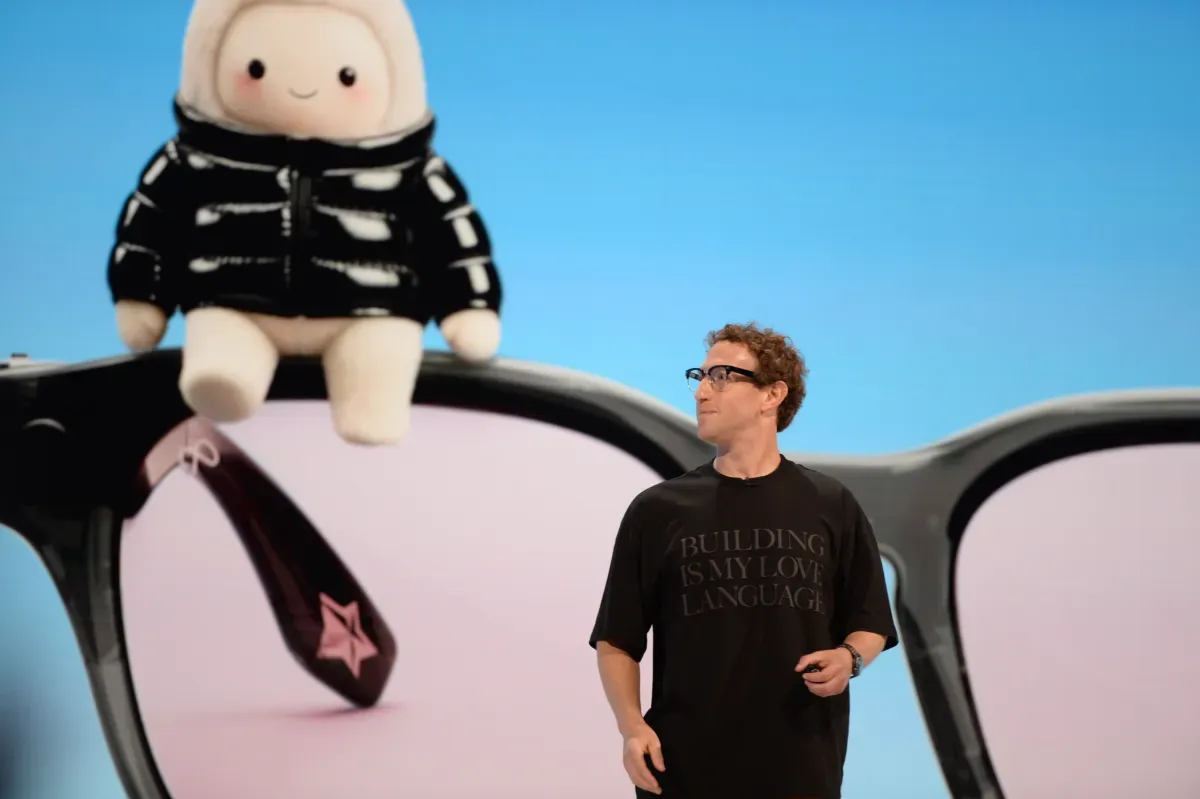
The model can run locally on Apple hardware. Apple's MLX tests used a 4-bit NVFP4 build that took about 493GB on each machine. Two M5 Ultra Mac Studios decoded about 15.7 tokens per second, and four reached about 36.7. The 512GB configurations that the two-machine setup needs are due in late October, and Apple has not announced their price. [8] [6]
Meta calls it the most capable US open-weight model, but it does not lead the field. Artificial Analysis gives it 39, ninth among 118 large open-weight models. Meta's own model card shows it behind Kimi K3 on Terminal-Bench 2.1 (76.4 vs 85.0), DeepSWE and GPQA Diamond. Its lead on agentic benchmarks comes from scores where each model ran in its own agent harness, so those results do not rank the models fairly. [5] [6] [7]
The license has more conditions than the Apache 2.0 and MIT terms used by Qwen and GLM. Products must show attribution to Muse Spark Open. API providers with more than $20M in revenue need a separate agreement with Meta. Military use is banned. Internal use is not subject to the revenue cap. [10]
Apple measured working decode speeds on Mac clusters, and Artificial Analysis ranks the model ninth among open-weight peers.
Read the full assessment
Implication: companies can now run a US open-weight model locally, but coding teams should benchmark Kimi K3 too and check the license terms.
Executive brief
Meta has released Muse Spark Open, an 816B-parameter open-weight model that it says runs locally on two linked M5 Ultra Mac Studios. Meta calls it the most capable US open-weight model, but so far only one independent check exists. Artificial Analysis gives it 39 on its Intelligence Index, ninth of 118 large open-weight models (OrcaRouter), and six models score higher (VentureBeat). Meta's own model card shows it behind Kimi K3 on coding benchmarks (model card). The license also adds conditions on large API resellers.
What changed and event timeline
Closed Muse Spark debuts
Meta's first Muse Spark model was available only through the Meta AI website and app. It focused on multimodal reasoning and tool use, and it marked a turn away from Llama-style open releases ().
Weights repository appears
One analysis reports that the Hugging Face repository went up a month before the announcement. It reads this as a delayed announcement, not a stealth launch ().
Muse Spark Open launches
The release has 816B total and 42B active parameters, a 1M-token context window, and a custom Muse Model License. It is available through API platforms and on Hugging Face (;).
Apple publishes Mac benchmarks
Apple's machine learning research team published MLX distributed-inference results for the model on clusters of two and four M5 Ultra Mac Studios connected by Thunderbolt RDMA ().
- Late Oct 2026
512GB Mac configurations ship
The 512GB M5 Ultra configurations needed for the two-machine setup are not due until late October, and Apple has not announced pricing ().
Capabilities and access
- Model: Muse-Spark-Open-816B-A42B. It takes text, image, audio and video input, outputs text only, and supports more than 100 languages (model card).
- Reasoning: effort levels run from low to xhigh, and the model supports tool calling (Hugging Face blog).
- Checkpoints: BF16 (about 1.5TB), NVFP4 for Blackwell GPUs, MLX 3/4-bit and llama.cpp quantizations (Hugging Face blog).
Read the full section
- Model: Muse-Spark-Open-816B-A42B. It takes text, image, audio and video input, outputs text only, and supports more than 100 languages (model card).
- Reasoning: effort levels run from low to xhigh, and the model supports tool calling (Hugging Face blog).
- Checkpoints: BF16 (about 1.5TB), NVFP4 for Blackwell GPUs, MLX 3/4-bit and llama.cpp quantizations (Hugging Face blog).
- API: Together AI charges $1.25 per million input tokens and $4.25 per million output tokens (VentureBeat).
- Download gate: access requires full legal name, birth date and organization details (same source).
Technical analysis for researchers and developers
- Architecture: a mixture-of-experts model (only some subnetworks, the "experts", run for each token).
- Experts: each MoE layer has 256 experts and routes each token to 8.
- Encoders: a 1.8B vision encoder and an audio encoder that emits 12.5 tokens per second.
Read the full section
- Architecture: a mixture-of-experts model (only some subnetworks, the "experts", run for each token). It has 62 layers, a hidden size of 8192, and grouped-query attention with 128 query heads and 16 KV heads, which keeps the KV cache to about 250 KB per token (Hugging Face blog).
- Experts: each MoE layer has 256 experts and routes each token to 8. Experts hold about 97% of all parameters, and every expert must stay in memory even though few run per token.
- Encoders: a 1.8B vision encoder and an audio encoder that emits 12.5 tokens per second.
- Fine-tuning: TRL LoRA on the attention layers with the experts frozen. Meta's 500-step demo on 64 H100s raised token accuracy from 72% to 84%.
- Mac inference: Apple ran NVFP4 at about 493GB per machine with an 8,192-token context. Two machines in pipeline mode decoded 15.74 tok/s with an 8.4s time to first token. Four machines with tensor parallelism reached 36.73 tok/s with a 4.8s time to first token (Apple ML Research).
- NVIDIA claims: up to 600 tok/s per user on Blackwell GPUs with speculative decoding (NVIDIA).
Claims and evidence
- Agentic leadership (Meta's figures): JobBench 61.8 vs GLM 5.3 at 61.4, and MCP-Atlas 89.2 (model card; VentureBeat).
- Where it trails (Meta's own figures): Terminal-Bench 2.1 76.4 vs Kimi K3 at 85.0, DeepSWE 1.1 60 vs 68, and GPQA Diamond 89.0 vs 93.5 (model card).
- Independent check: Artificial Analysis scores it 39, with MiMo-V2.6-Pro at 46 (OrcaRouter; VentureBeat).
Read the full section
- Agentic leadership (Meta's figures): JobBench 61.8 vs GLM 5.3 at 61.4, and MCP-Atlas 89.2 (model card; VentureBeat). Each model was scored in its own agent harness, so these numbers are not a fair ranking (OrcaRouter).
- Where it trails (Meta's own figures): Terminal-Bench 2.1 76.4 vs Kimi K3 at 85.0, DeepSWE 1.1 60 vs 68, and GPQA Diamond 89.0 vs 93.5 (model card).
- Independent check: Artificial Analysis scores it 39, with MiMo-V2.6-Pro at 46 (OrcaRouter; VentureBeat).
- Mac performance: measured by Apple, a launch partner (Apple ML Research).
Context and prior work
- Meta's history: Meta's open-weight line ran from Llama 3.1 405B (July 2024) to the mixture-of-experts Llama 4 (April 2025), followed by the closed Muse Spark (VentureBeat).
- Competition: The Decoder frames the release as Meta's answer to Qwen 3.8, GLM 5.3 and Kimi K3.
- Licensing: Qwen and GLM use Apache 2.0 or MIT. Meta's terms are closer to Kimi K3's (Trending Topics).
Read the full section
- Meta's history: Meta's open-weight line ran from Llama 3.1 405B (July 2024) to the mixture-of-experts Llama 4 (April 2025), followed by the closed Muse Spark (VentureBeat).
- Competition: The Decoder frames the release as Meta's answer to Qwen 3.8, GLM 5.3 and Kimi K3. It also notes the model is well below Meta's paid Muse Wonder Full frontier models (The Decoder).
- Licensing: Qwen and GLM use Apache 2.0 or MIT. Meta's terms are closer to Kimi K3's (Trending Topics).
Limitations, safety and contested findings
- TechCrunch, citing Engadget, says at least 1TB of RAM. Apple's 4-bit runs used about 493GB per machine.
- Safety data is internal. Meta reports 99.2% refusal on cyber jailbreak attempts and 98.1% honesty on MASK (model card).
- No public audio or video evaluations exist (same source).
Read the full section
- Hardware requirements conflict. TechCrunch, citing Engadget, says at least 1TB of RAM. Apple's 4-bit runs used about 493GB per machine. Hugging Face reports a 2-bit quantization on a single 512GB M3 Ultra at 18 tok/s (TechCrunch; Apple; Hugging Face blog).
- Safety data is internal. Meta reports 99.2% refusal on cyber jailbreak attempts and 98.1% honesty on MASK (model card). The full safety report is still unpublished (OrcaRouter).
- No public audio or video evaluations exist (same source).
- Quantized versions show what the model card calls minor quality differences in edge cases.
Business and practitioner implications
- Running it locally: buyers would need about $40K or more in Mac hardware, using VentureBeat's estimate for four 256GB units, or wait for the 512GB configurations (VentureBeat).
- License:
- Products must display "Built with Muse Spark Open".
Read the full section
- Running it locally: buyers would need about $40K or more in Mac hardware, using VentureBeat's estimate for four 256GB units, or wait for the 512GB configurations (VentureBeat).
- License:
- Products must display "Built with Muse Spark Open".
- API providers with more than $20M in revenue need a separate agreement with Meta.
- Military use and other listed uses are banned.
- Internal use is not subject to the revenue cap (Trending Topics).
- Picking a coding model: Meta's own numbers favor Kimi K3, so teams should test on their own workloads.
The source trail.
Sources (10)
TechCrunch: Meta launches an open-weight AI model that runs on Macs
techcrunch.comHugging Face blog: Welcome Muse Spark Open
huggingface.coNVIDIA: Scale Agentic Coding Workflows with Muse Spark Open
developer.nvidia.comMeta and Apple team up to make Muse AI models run better on Macs
Related coverage; assess separately
theverge.com