
FundingRounds, leads & terms
Ornn CEO Kush Bavaria Discusses GPU Prices and Neoclouds on 20VC While ICE Compute Futures Await CFTC Review
Ornn, the GPU price-index startup led by 23-year-old Kush Bavaria, has raised two seed rounds and partnered with ICE on GPU futures, but those contracts cannot trade until US regulators finish reviewing compute derivatives.
From the 20VC podcast episode of November 21, 2026 and cited sources: Ornn announced a $5.7M seed in October 2025 and a $33M seed in June 2026, backed by a16z crypto, Galaxy Ventures, SV Angel and others. [3] [6] [7] [8]
SOURCES[3] VCA Online: $5.7M seed vcaonline.com[6] SiliconANGLE: Ornn raises $33M siliconangle.com[7] Bloomberg: a16z backs Ornn bloomberg.com
 AT Pulse research deskPublished · Updated · 4 min read · AI-assisted analysis
AI-assisted, not human-edited. Methodology Corrections Who owns this site
- What happened
- Ornn announced a $5.7M seed in October 2025 and a $33M seed in June 2026, backed by a16z crypto, Galaxy Ventures, SV Angel and others. [3] [6] [7] [8] [10]
- Original source
- 20VC podcast episode, independent perspective
- Brief by
- AT Pulse research desk AI-assisted; publisher and contact on the desk page
- When
- November 21, 2026 podcast episode published
- Covered
- Nov 22 edition
- Evidence
- 12 sources across 11 sites; no transcript
- 120VC: The State of Compute: What Everyone Needs to Know |…thetwentyminutevc.libsyn.com
- 2Compute Futures Timelinecomputefuturesdata.com
- 3VCA Online: $5.7M seedvcaonline.com
- 4SemiAnalysis: The Great GPU Shortagenewsletter.semianalysis.com
- 5Business Wire: ICE and Ornn futuresbusinesswire.com
- 6SiliconANGLE: Ornn raises $33Msiliconangle.com
Reach: not measured yet
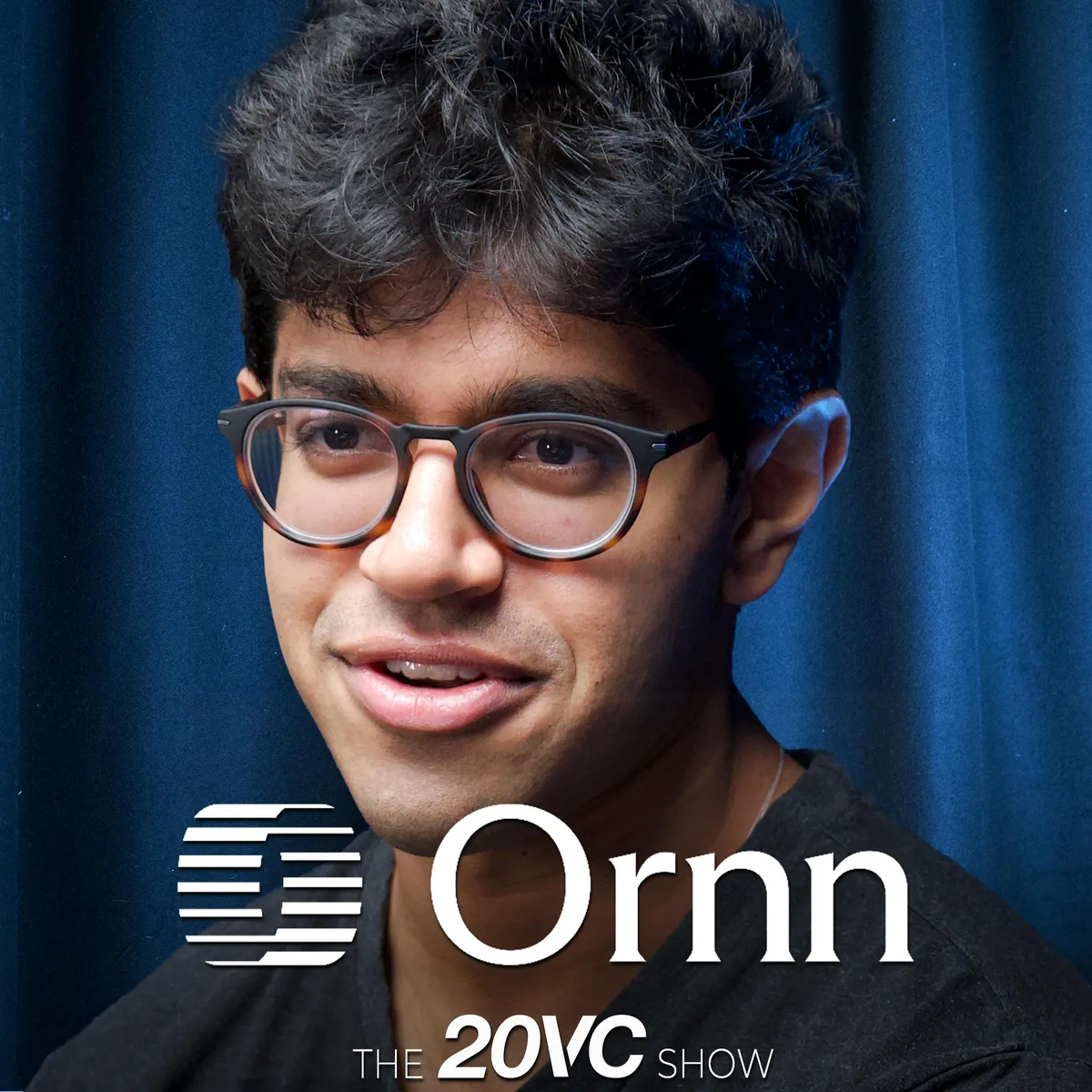
Ornn announced a $5.7M seed in October 2025 and a $33M seed in June 2026, backed by a16z crypto, Galaxy Ventures, SV Angel and others. Reports disagree on who led the larger round, and neither valuation nor revenue has been disclosed. Its main products are the OCPI GPU price index, which is built from executed transactions and has been on the Bloomberg Terminal since April 2026, and a marketplace for transferring and subletting compute capacity. [3] [6] [7] [8] [10]
In May 2026, ICE announced cash-settled H100 and B200 futures that settle against OCPI. In August, the CFTC opened a comment period on compute derivatives, and CME postponed its rival contracts, which use Silicon Data's index. As of November 9, no compute futures were trading and no ICE listing date had been set. Until they list, buyers can hedge only through bilateral contracts or marketplace sublets. [2] [5]
GPU rental prices have been volatile. SemiAnalysis reported that one-year H100 contract rates rose about 40%, from $1.70 to $2.35 per GPU-hour, between October 2025 and March 2026. Ornn's own index data showed H100 rents falling after a spike in early May 2026. How long GPUs stay economically useful is also disputed: operators such as CoreWeave depreciate them over six to eight years, while critics argue for two to three. That disagreement matters for how neoclouds and GPU-backed debt are valued. [4] [8] [12]
GPU rental rates have swung sharply, and two exchanges with rival indices are preparing contracts.
Read the full assessment
Implication: a trusted benchmark could let buyers hedge compute costs and lenders value GPU collateral, while neocloud valuations stay sensitive to disputed useful-life assumptions.
Executive brief
The ICE futures contracts built on Ornn's GPU price index still could not trade as of November 9, 2026. No listing date had been set while the CFTC reviewed compute derivatives (Compute Futures Timeline). Ornn's CEO is Kush Bavaria, 23. His company has raised a $5.7M seed and a $33M seed, both company-announced. It sells a GPU price benchmark and a compute marketplace. In this 20VC episode he covers GPU prices, neoclouds, older-GPU obsolescence and trading compute like oil (20VC). The open question is whether GPU-hours can be priced and hedged like a commodity.
What changed and event timeline
Ornn's first seed
Ornn announced a $5.7M seed led by Crucible Ventures and Vine Ventures to launch what it called the first compute futures exchange ().
GPU rents climb
SemiAnalysis reported that one-year H100 contract rates rose about 40%, from $1.70 to $2.35/GPU-hour between October 2025 and March 2026. It linked the rise to agentic coding and media-generation demand ().
ICE partnership
ICE announced cash-settled GPU futures referencing Ornn's OCPI index. The first contracts are H100 (HPR) and B200 (BKL), pending the CFTC comment process ().
$33M seed
Ornn announced a $33M seed with a16z crypto, Galaxy Ventures, SV Angel and others. Valuation was not disclosed (;).
CFTC opens review
The CFTC requested comment on compute derivatives, with a deadline of October 20. CME postponed its competing futures, which use Silicon Data's index ().
20VC episode
20VC published the Bavaria interview. Its agenda covers bets against CoreWeave and Nebius, whether older GPUs are obsolete, and talent versus compute ().
Capabilities and access
- OCPI (Ornn Compute Price Index): covers H100, H200, B200 and RTX 5090. It has been on the Bloomberg Terminal since April 2026 (Crypto Briefing).
- Ornn Compute: a marketplace that pools capacity from public clouds and neoclouds, with transfers and sublets (SiliconANGLE).
- Products described by investor a16z: inference token price indices (OTPI), residual-value protection for GPUs, and capital-markets vehicles (a16z).
Read the full section
- OCPI (Ornn Compute Price Index): covers H100, H200, B200 and RTX 5090. It has been on the Bloomberg Terminal since April 2026 (Crypto Briefing).
- Ornn Compute: a marketplace that pools capacity from public clouds and neoclouds, with transfers and sublets (SiliconANGLE).
- Products described by investor a16z: inference token price indices (OTPI), residual-value protection for GPUs, and capital-markets vehicles (a16z).
- ICE futures (HPR, BKL): specifications are published, but no listing date has been set (Compute Futures Timeline).
Technical analysis for researchers and developers
- Index method: OCPI is built from executed transactions, not surveys or list quotes (Business Wire). It adjusts for differences in provider, contract term and region.
- Reproducibility: the reviewed sources do not include the full weighting method, the data-contributor panel or minimum-volume thresholds. Outsiders cannot audit the index from them.
- Competing benchmarks: Silicon Data's H100 index, which backs CME's contracts, can produce different readings.
Read the full section
- Index method: OCPI is built from executed transactions, not surveys or list quotes (Business Wire). It adjusts for differences in provider, contract term and region. Mid-May on-demand H100 prices ranged from $1.38 to $11.01/hour (Crypto Briefing).
- Reproducibility: the reviewed sources do not include the full weighting method, the data-contributor panel or minimum-volume thresholds. Outsiders cannot audit the index from them.
- Competing benchmarks: Silicon Data's H100 index, which backs CME's contracts, can produce different readings. That matters for hedging: how closely your own costs track the index ("basis risk") depends on which benchmark a contract settles against.
- Depreciation as a modelling input: rental curves now feed GPU useful-life assumptions, which links index data to how infrastructure is valued.
Claims and evidence
- Round size: $33M was company-announced (Ornn on X) and independently reported (Bloomberg). No filing confirms it.
- Lead investor is reported inconsistently. Bloomberg and a16z's own post name a16z.
- Thrive Capital: the episode description lists Thrive as a backer. The reviewed round reports do not name it.
Read the full section
- Round size: $33M was company-announced (Ornn on X) and independently reported (Bloomberg). No filing confirms it.
- Lead investor is reported inconsistently. Bloomberg and a16z's own post name a16z. SiliconANGLE names a16z crypto and Galaxy Ventures (SiliconANGLE). a16z is an investor writing about its own portfolio company (a16z).
- Thrive Capital: the episode description lists Thrive as a backer. The reviewed round reports do not name it.
- Valuation and revenue: neither is disclosed.
- GPU price data: Ornn's own data shows H100 rents falling after a spike in early May (Crypto Briefing).
Context and prior work
- Ornn's founders compare compute to oil after NYMEX futures arrived in the 1980s (Crypto Briefing).
- Silicon Data launched an H100 rental index in May 2025 and partnered with CME in May 2026 (Compute Futures Timeline).
- SemiAnalysis has run its own H100 rental index (SemiAnalysis).
Limitations, safety and contested findings
- GPU useful life is disputed. Operators including CoreWeave depreciate GPUs over six to eight years. SemiAnalysis counters that higher rents extend useful life (SemiAnalysis).
- Prices are volatile. A spike in May 2026 quickly reversed (Crypto Briefing).
- NYMEX agreed to extend its review to January 8, 2027. No compute futures trade yet (Compute Futures Timeline).
Read the full section
- GPU useful life is disputed. Operators including CoreWeave depreciate GPUs over six to eight years. Michael Burry has argued the economic life is two to three years (ElectronEconomics). SemiAnalysis counters that higher rents extend useful life (SemiAnalysis).
- Prices are volatile. A spike in May 2026 quickly reversed (Crypto Briefing).
- Regulatory delay. NYMEX agreed to extend its review to January 8, 2027. No compute futures trade yet (Compute Futures Timeline).
Business and practitioner implications
- Buyers: until futures list, hedging GPU costs means bilateral contracts or marketplace sublets, not exchange-cleared instruments.
- Neoclouds and lenders: a market-based way to value GPUs over time could change how GPU-backed debt is underwritten.
- Investors: two exchanges with rival indices (ICE/Ornn and CME/Silicon Data) are competing to become the standard.
Read the full section
- Buyers: until futures list, hedging GPU costs means bilateral contracts or marketplace sublets, not exchange-cleared instruments.
- Neoclouds and lenders: a market-based way to value GPUs over time could change how GPU-backed debt is underwritten. That depends on the index being trusted.
- Investors: two exchanges with rival indices (ICE/Ornn and CME/Silicon Data) are competing to become the standard. Whichever gathers more trading volume first will likely set the benchmark.
- Diligence: treat neocloud valuations as sensitive to the GPU useful-life assumption.
The source trail.
Sources (12)
20VC: The State of Compute: What Everyone Needs to Know | Why Neo-Clouds are Great Businesses | What Everyone Is Missing About GPU Prices? | How AI Infrastructure Investors Will Win with Kush Bavaria, Co-Founder @ Ornn
Metadata only. Transcript unavailable: Audio transcription returned HTTP 429.
thetwentyminutevc.libsyn.com