
PolicyLaw, regulation & governance
South Korea's education minister resigns after AI-assisted exam cheating confession disrupts national university entrance test
Education Minister Choi Kyo-jin resigned on 22 November after a tax-exam top scorer confessed to using a hidden camera, an AI service and a smuggled phone in a supervised exam, forcing emergency anti-cheating measures for the national university entrance exam.
From the The Guardian · AI article of November 22, 2026 and cited sources: Han Won-seok, the top scorer on the April 2026 tax accountant exam, said he scored 397.5 out of 400 using everyday tools. [2] [3]
SOURCES[2] Korea Times: Top tax accountant exam scorer admits… koreatimes.co.kr[3] JoongAng Daily: Tax exam top scorer details camera use koreajoongangdaily.com
 AT Pulse research deskPublished · Updated · 5 min read · AI-assisted analysis
AI-assisted, not human-edited. Methodology Corrections Who owns this site
- What happened
- Han Won-seok, the top scorer on the April 2026 tax accountant exam, said he scored 397.5 out of 400 using everyday tools. [2] [3]
- Original source
- The Guardian · AI article, independent perspective
- Brief by
- AT Pulse research desk AI-assisted; publisher and contact on the desk page
- When
- November 22, 2026 article published
- Covered
- Nov 22 edition
- Evidence
- 11 sources across 6 sites
- 1South Korean minister quits after AI cheating scandal…theguardian.com
- 2Korea Times: Top tax accountant exam scorer admits…koreatimes.co.kr
- 3JoongAng Daily: Tax exam top scorer details camera usekoreajoongangdaily.com
- 4Korea Herald: Nationwide disaster alerts target hidden…koreaherald.com
- 5IBTimes UK: Phones face surprise alertsibtimes.co.uk
- 6JoongAng Daily: 98 test-takers caught cheatingkoreajoongangdaily.com
Reach: not measured yet
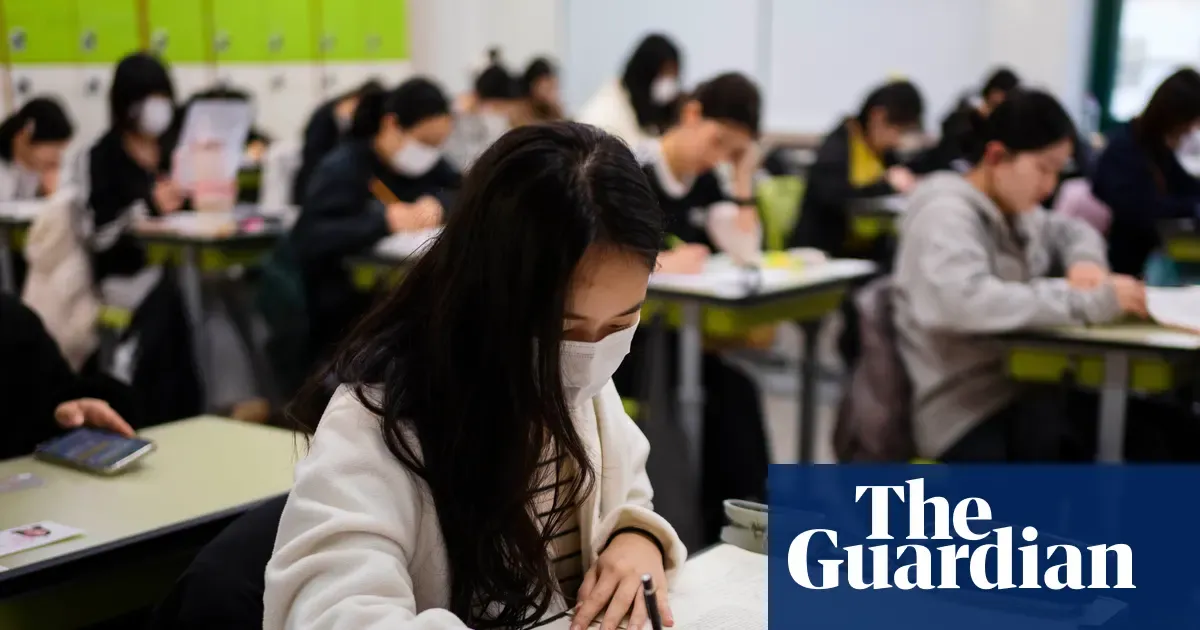
Han Won-seok, the top scorer on the April 2026 tax accountant exam, said he scored 397.5 out of 400 using everyday tools. He photographed questions with a miniature camera, had a general-purpose AI service answer them from the images and read the answers on a hidden smartphone. This beat a supervised, in-person paper exam. He did not name the model, and early rumours that he used smart glasses were wrong. [2] [3]
Detection during the CSAT targeted phones, not the AI model. A nationwide emergency alert at 8:30 a.m., designed to sound even on silent phones, turned up 22 devices. The first-day count was 98 cheating cases, 49 of them found through the alerts. Later reports cite 111 device-related cases. The alerts were part of a wider response that included about 8,400 extra staff and checks of clothing and glasses. [4] [5] [6] [1] [7]
Investigating after the exam faces practical and legal limits. Domestic apps Qanda and Pickle restricted service on exam day, but ChatGPT, Claude and Gemini did not. Exam photos would have to be found among a huge volume of queries. US disclosure law limits what providers can hand over voluntarily, deleted data is kept only for limited periods, and offline models leave no network record. President Lee said four AI companies agreed to provide records of exam-question photos, but the firms are unnamed and the terms are not settled. [8]
The fallout goes beyond one exam. Choi resigned saying the ministry had failed to prepare in advance, and the president accepted his resignation within about an hour. A proposed 10-year exam ban may apply to this year's exam retroactively, with decisions due before scores are released on 11 December. Investigators are considering widening the inquiry to the customs broker and law school admission exams. [1] [7] [3]
A supervised paper exam was reportedly beaten with consumer hardware and a general-purpose AI service.
Read the full assessment
The likely consequence, not yet tested, is pressure on exam bodies, AI providers and employers who rely on credentials over device screening, access to usage logs and licence reviews.
Executive brief
A single confession set off a ministerial resignation within a week. On 15 November 2026 Han Won-seok, the top scorer on South Korea's tax accountant exam, admitted he scored 397.5 out of 400 by photographing questions with a hidden microcamera, sending them to an AI system and reading the answers on a smartphone. Four days later, the national university entrance exam (the suneung, or CSAT) went ahead under emergency measures: nationwide phone alerts, stickers over shirt buttons and checks of glasses. Education Minister Choi Kyo-jin resigned on 22 November, saying the ministry had failed to prepare in advance (Guardian). The system that was beaten was a supervised, in-person paper exam, not an online test.
What changed and event timeline
The tax exam is compromised
Han got 159 of 160 first-stage questions right. He later said he used the same method on the first stage of the CPA exam ().
15–16 Nov 2026: Confession and complaint
A YouTube video confession was followed by a written confession to Seoul police. HRD Korea, which runs the exam, filed an obstruction-of-business complaint ().
17–18 Nov 2026: Emergency measures for the CSAT
These included roughly 8,400 extra staff, checks of clothing and glasses, and a plan to send phone alerts that sound even on silent. An 18-year-old student filed a constitutional complaint asking for the exam date to be annulled (;).
Exam day
A nationwide alert at 8:30 a.m. turned up 22 smartphones. The first-day count was 98 cheating cases, 49 of them found through the alerts ().
The minister resigns
President Lee Jae Myung accepted Choi's resignation within about an hour. Prime Minister Han Seong-sook now oversees the follow-up ().
Capabilities and access
- Which AI model was used has not been disclosed. Han declined to give specifics so others could not copy the method (Korea Times).
- The method: a handheld miniature camera, a general-purpose AI service and a smuggled smartphone, plus one further method for viewing the phone that he did not disclose.
- Provider response: domestic apps Qanda and Pickle restricted their services during the exam. ChatGPT, Claude and Gemini did not (JoongAng Daily).
Read the full section
- Which AI model was used has not been disclosed. Han declined to give specifics so others could not copy the method (Korea Times).
- The method: a handheld miniature camera, a general-purpose AI service and a smuggled smartphone, plus one further method for viewing the phone that he did not disclose. Early online rumours that he used smart glasses were wrong (JoongAng Daily).
- Provider response: domestic apps Qanda and Pickle restricted their services during the exam. ChatGPT, Claude and Gemini did not (JoongAng Daily).
Technical analysis for researchers and developers
- The attack: photograph the question, have a multimodal model answer it from the image, relay the answer back.
- Detection relies on the devices, not the model.
- Investigating afterwards is hard.
Read the full section
- The attack: photograph the question, have a multimodal model answer it from the image, relay the answer back. This needs no special hardware, only image input and a hidden way to see the output.
- Detection relies on the devices, not the model. Emergency alerts sound on any phone that is switched on, so they expose devices that are on but not turned in (JoongAng Daily).
- Investigating afterwards is hard. Problems include finding exam photos among a huge volume of queries, the US Stored Communications Act limiting what providers can hand over voluntarily, deletion windows (about 30 days for deleted chats; up to 90 days under a law-enforcement preservation request at OpenAI), and models run offline that leave no network record (JoongAng Daily).
Claims and evidence
- The method and the score rest on Han's own confession. Police are still investigating (Korea Times).
- The Guardian and Korea Herald report 111 device-related cases (Guardian; Korea Herald). JoongAng's exam-day report said 98 (JoongAng Daily).
- Cooperation from AI companies is an official claim only. President Lee said companies agreed to provide records of exam-question photos.
Read the full section
- The method and the score rest on Han's own confession. Police are still investigating (Korea Times).
- The misconduct count differs by source. The Guardian and Korea Herald report 111 device-related cases (Guardian; Korea Herald). JoongAng's exam-day report said 98 (JoongAng Daily). The higher figure probably reflects later counting, but no source explains the gap.
- Cooperation from AI companies is an official claim only. President Lee said companies agreed to provide records of exam-question photos. The four firms have not been named and the terms were not settled (JoongAng Daily).
Context and prior work
- 2025: about 190 Yonsei students cheated with ChatGPT on a proctored online midterm.
- June 2026: South Korea reported its first exam cheating cases involving AI smart glasses (The Star).
- What is new this time: the cheating hit a supervised, in-person national licensing exam, and it led to a resignation at cabinet level.
Read the full section
- 2025: about 190 Yonsei students cheated with ChatGPT on a proctored online midterm. At Korea University, about 500 students shared answers in a group chat during an online exam (Korea Times).
- June 2026: South Korea reported its first exam cheating cases involving AI smart glasses (The Star).
- What is new this time: the cheating hit a supervised, in-person national licensing exam, and it led to a resignation at cabinet level.
Limitations, safety and contested findings
- Teachers' unions called it belated. A Korea Times opinion piece said the measures drew "more ridicule than reassurance" (Korea Times).
- Pulling AI usage logs raises privacy and legal issues, and industry sources doubt it can work in practice (JoongAng Daily).
- A proposed 10-year exam ban may apply retroactively to this year's exam.
Read the full section
- The response drew criticism. Teachers' unions called it belated. Choi drew backlash after telling parliament that, "due to my age," he was not confident he could catch cheaters (Guardian). A Korea Times opinion piece said the measures drew "more ridicule than reassurance" (Korea Times).
- Privacy and practicality concerns. Pulling AI usage logs raises privacy and legal issues, and industry sources doubt it can work in practice (JoongAng Daily).
- Penalties still pending. A proposed 10-year exam ban may apply retroactively to this year's exam. The ministry plans to decide cases before scores are released on 11 December (Korea Herald).
Business and practitioner implications
- Exam bodies: basic invigilation no longer stops cheating that needs only a phone camera.
- AI providers: governments may ask for exam-day service restrictions, log preservation or image matching.
- Credential-dependent employers: licences awarded through compromised exams may face review.
Read the full section
- Exam bodies: basic invigilation no longer stops cheating that needs only a phone camera. Expect device-detection tools, RF and thermal screening (thermal cameras were recommended at an emergency presidential meeting), and a shift away from recall-based questions (Korea Times).
- AI providers: governments may ask for exam-day service restrictions, log preservation or image matching. Retention policies and US disclosure law will limit what providers can do.
- Credential-dependent employers: licences awarded through compromised exams may face review. Investigators are considering extending the inquiry to the customs broker and law school admission exams (JoongAng Daily).
The source trail.
Sources (11)
South Korean minister quits after AI cheating scandal engulfs university exams
Article text retrieved; extracted text may omit tables or interactive elements.
theguardian.com