
PolicyLaw, regulation & governance
UN weapons forum agrees only to 'elaborate' autonomous weapons rules over two years after failing to open treaty talks
After all-night talks, the 128 states in the Convention on Certain Conventional Weapons agreed on 21 November to elaborate an autonomous-weapons instrument over two years, rather than negotiate a treaty, leaving open whether any eventual rules will be legally binding.
From the The Verge · AI article of November 21, 2026 and cited sources: The Review Conference's final mandate replaced 'negotiate' with 'elaborate' because some states objected. [3] [1] [2]
SOURCES[3] Al Jazeera: Nations agree to 'elaborate' on rules for… aljazeera.com[1] The UN fails to agree on rules regulating ‘killer robots’ theverge.com[2] The Guardian: International UN talks on controlling use of… theguardian.com
 AT Pulse research deskPublished · Updated · 5 min read · AI-assisted analysis
AI-assisted, not human-edited. Methodology Corrections Who owns this site
- What happened
- The Review Conference's final mandate replaced 'negotiate' with 'elaborate' because some states objected. [3] [1] [2]
- Original source
- The Verge · AI article, independent perspective
- Brief by
- AT Pulse research desk AI-assisted; publisher and contact on the desk page
- When
- November 21, 2026 article published
- Covered
- Nov 22 edition
- Evidence
- 9 sources across 8 sites
- 1The UN fails to agree on rules regulating ‘killer robots’theverge.com
- 2The Guardian: International UN talks on controlling use of…theguardian.com
- 3Al Jazeera: Nations agree to 'elaborate' on rules for…aljazeera.com
- 4Tech Times: Autonomous Weapons Treaty at Stake as CCW…techtimes.com
- 5Stop Killer Robots: What makes for an acceptable outcome…stopkillerrobots.org
- 6OPB/NPR: U.N. talks seek to rein in 'killer robots'opb.org
Reach: not measured yet
The Review Conference's final mandate replaced 'negotiate' with 'elaborate' because some states objected. It gives states two years and runs the process to 2028. It does not say whether the result will be binding, and reporting suggests some rules could end up optional. [3] [1] [2]
The CCW decides by consensus, so a small group of states could weaken a mandate that most states wanted to be stronger. Russia's procedural objections led to formal sessions being cancelled. The US had pushed for five more years of work toward a non-binding text, and reporting also names Israel among the states opposing binding rules. [2] [1] [5] [6]
The expert group's working description covers any weapon that can identify, select and engage a target without a human stepping in. That makes it function-based rather than tied to particular platforms. The group also softened 'meaningful human control' to 'context-appropriate human judgement and control', and the reviewed sources do not explain how that standard would be audited. [4]
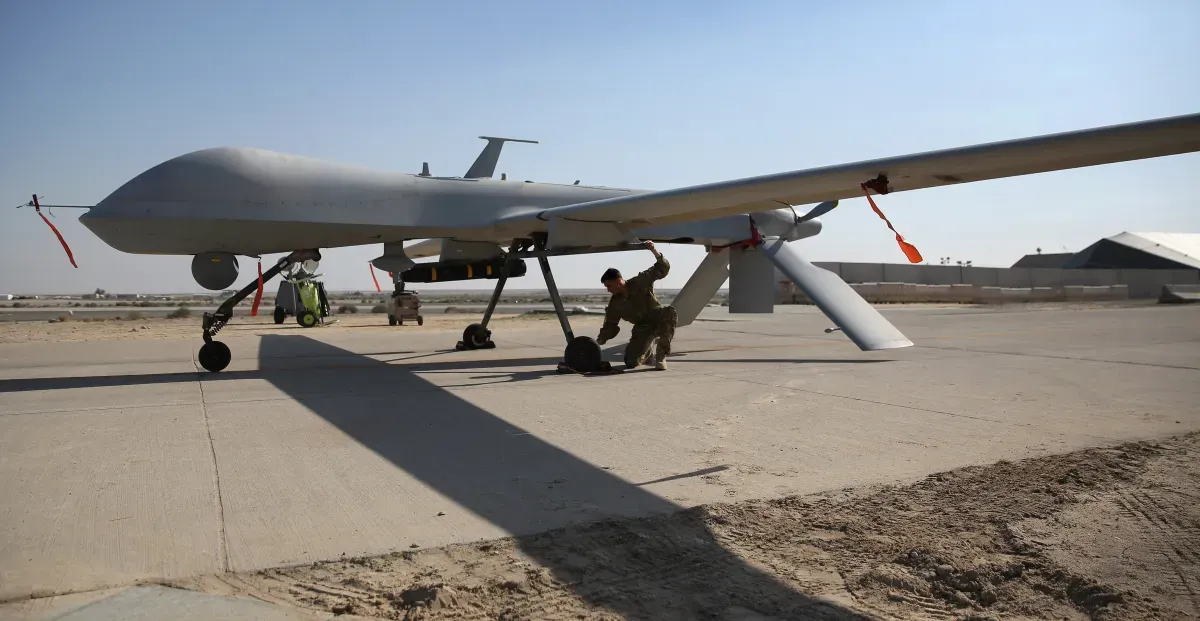
AI-assisted weapons have already been used in Ukraine and Gaza, still under remote human control. Until a new instrument exists, national guidelines and existing international humanitarian law are what govern autonomous targeting. The ICRC warns that these systems can misread context, for example by failing to recognise people who are surrendering or wounded. [6] [3]
binding international limits on autonomous targeting are at least two years away.
Read the full assessment
Implication: developers of defence AI and dual-use perception systems must rely on national rules and humanitarian law, and should plan for oversight requirements that could be either voluntary or mandatory.
Executive brief
Even after all-night talks, the UN's main weapons-control forum could not agree to "negotiate" a treaty on autonomous weapons. On 21 November 2026 the 128 states party to the Convention on Certain Conventional Weapons (CCW) agreed only to "elaborate" an instrument over two years. The text leaves open whether any future rules will be binding (Al Jazeera; The Verge). Nearly 100 states wanted binding rules. Because the CCW decides by consensus, opposition led by Russia, the US and Israel was enough to weaken the mandate. For defence-AI builders, this means at least two more years without binding international limits.
What changed and event timeline
Expert group finishes its report
The CCW expert group (GGE) agreed, for the first time, on a working description of autonomous weapons. It also swapped "meaningful human control" for "context-appropriate human judgement and control" ().
Review Conference opens with rival mandates
Peru's chair-designate proposed two years of negotiations on a new CCW protocol. The US asked for five more years of work toward a non-binding instrument, ideally with a first version before the end of 2029 ().
Russia stalls the agenda
On the first day, Russia objected to the agenda. Its procedural objections later caused formal sessions to be cancelled (;).
Weak compromise adopted before dawn
After all-night talks, states agreed to "elaborate" an instrument over two years. The word "negotiate" was dropped because some states rejected it (;).
Campaigners condemn the result
Stop Killer Robots called the mandate "watered down." Human Rights Watch said the technology is moving faster than the rules ().
Capabilities and access
This is a governance story, not a model release, so there is no model or version involved.
Read the full section
This is a governance story, not a model release, so there is no model or version involved.
- Scope under discussion: the GGE text describes weapons that can "identify, select, and engage a target" without a human operator stepping in (Tech Times).
- Systems already in use: AI-assisted weapons have been used in Ukraine and Gaza, still remotely controlled by humans (OPB/NPR). Swissinfo reports a fully autonomous Russian drone killed civilians in Zaporizhzhia on 6 July 2026 (Swissinfo).
Technical analysis for researchers and developers
- Definition is function-based: it covers the identify–select–engage loop, not specific platforms. Any perception-plus-targeting stack could fall inside it.
- Human-control standard is looser: "context-appropriate human judgement and control" does not require a human to be directly involved at all times (Tech Times).
- US scope argument: the US says autonomy is a capability that runs across many systems, not a separate weapons category, which could put it outside CCW scope (same source).
Read the full section
- Definition is function-based: it covers the identify–select–engage loop, not specific platforms. Any perception-plus-targeting stack could fall inside it.
- Human-control standard is looser: "context-appropriate human judgement and control" does not require a human to be directly involved at all times (Tech Times). How that standard would be audited is not documented.
- US scope argument: the US says autonomy is a capability that runs across many systems, not a separate weapons category, which could put it outside CCW scope (same source).
- ICRC technical concern: autonomous systems cannot read context the way a human can, so they risk misidentifying surrendering or wounded people (OPB/NPR).
Claims and evidence
- Mandate wording: "elaboration" over two years, with the outcome running to 2028 (Al Jazeera).
- Some future rules may be "optional": reported by The Verge, citing NPR.
- Who blocked it: The Guardian puts the collapse mainly on Russian "filibustering" (The Guardian). The Verge names Russia, Israel and the US.
Read the full section
- Mandate wording: "elaboration" over two years, with the outcome running to 2028 (Al Jazeera).
- Some future rules may be "optional": reported by The Verge, citing NPR.
- Who blocked it: The Guardian puts the collapse mainly on Russian "filibustering" (The Guardian). The Verge names Russia, Israel and the US.
- How many states backed binding rules: estimates differ. Reports give "at least 50" (OPB/NPR), "70+" (Swissinfo) and "nearly 100" (Al Jazeera).
- July drone strike: the claim that it was fully autonomous comes from Swissinfo alone. None of the other reviewed sources corroborates it.
Context and prior work
- CCW states have spent more than a decade discussing autonomous weapons without a treaty (Swissinfo).
- The Review Conference meets only every five years. A similar push to open negotiations failed in 2021 (Al Jazeera, 2021).
- Before the conference, the ICRC called for binding rules within a year, and the UN secretary-general and Pope Leo backed that call (The Verge).
Read the full section
- CCW states have spent more than a decade discussing autonomous weapons without a treaty (Swissinfo).
- The Review Conference meets only every five years. A similar push to open negotiations failed in 2021 (Al Jazeera, 2021).
- Before the conference, the ICRC called for binding rules within a year, and the UN secretary-general and Pope Leo backed that call (The Verge).
- Human Rights Watch, Amnesty International and Stop Killer Robots pushed for time-bound talks on a new protocol (HRW).
Limitations, safety and contested findings
Read the full section
- Because the CCW requires consensus, a small minority of states can veto the majority. That is how the outcome ended up weaker than most states wanted (The Guardian).
- The ICRC wants autonomous anti-personnel weapons and "unpredictable" systems prohibited (Swissinfo).
- HRW lists unlawful killings, algorithmic bias and weaker accountability as risks (HRW).
- The reviewed sources do not agree on how many states backed binding rules or on how much each blocking state was responsible.
Business and practitioner implications
- Regulatory vacuum until at least 2028: for now, national guidelines and existing international humanitarian law are what govern autonomous targeting.
- The human-control standard sets the design target.
- Dual-use exposure: a definition built on the identify–select–engage function means general-purpose perception and targeting AI could fall under future rules.
Read the full section
- Regulatory vacuum until at least 2028: for now, national guidelines and existing international humanitarian law are what govern autonomous targeting.
- The human-control standard sets the design target. If the "context-appropriate" wording survives, vendors will need to document human oversight, but not necessarily keep a human in every decision.
- Dual-use exposure: a definition built on the identify–select–engage function means general-purpose perception and targeting AI could fall under future rules.
- Plan for both outcomes: a binding protocol remains possible. Until 2028 it is unclear whether rules will be voluntary or mandatory, so compliance plans should cover both.
The source trail.
Sources (9)
The UN fails to agree on rules regulating ‘killer robots’
Article text retrieved; extracted text may omit tables or interactive elements.
theverge.com