
FundingRounds, leads & terms
Contrary leads $5.5M seed round in Marble, a YC startup automating restaurant back-office work with AI
Contrary led a $5.5M seed round in Marble, a three-person Y Combinator startup whose AI agent drafts restaurant orders, prep sheets and schedules for manager approval. Its lead investor argues back-of-house work is territory software never reached.
From the Investing 101 article of November 20, 2026 and cited sources: Marble, a three-person startup in Y Combinator's Summer 2026 batch, announced a $5.5M seed round on November 17, 2026. [8] [9] [3]
SOURCES[8] Marble Raises $5.5 Million… — Restaurant Technology News restauranttechnologynews.com[9] Marble raises $5.5M for back-of-house AI app — Restaurant… restaurantbusinessonline.com[3] Marble Draws $5.5M in Seed Funding After Signing 150+… unite.ai
 AT Pulse research deskPublished · Updated · 5 min read · AI-assisted analysis
AI-assisted, not human-edited. Methodology Corrections Who owns this site
- What happened
- Marble, a three-person startup in Y Combinator's Summer 2026 batch, announced a $5.5M seed round on November 17, 2026. [8] [9] [3]
- Original source
- Investing 101 article, independent perspective
- Brief by
- AT Pulse research desk AI-assisted; publisher and contact on the desk page
- When
- November 20, 2026 article published
- Covered
- Nov 21 edition
- Evidence
- 10 sources across 10 sites
- 1What Software Hasn't Eaten Yetinvesting101.substack.com
- 2Linked video: What Software Hasn't Eaten Yetyoutube.com
- 3Marble Draws $5.5M in Seed Funding After Signing 150+…unite.ai
- 4Elevated costs continue to pressure restaurant…restaurant.org
- 542% of restaurants did not turn a profit last year — WTOPwtop.com
- 6Marble launches AI back-office system… — Runtime Wireruntimewire.com
StrongHow it’s measured
YouTube video · 5.4M views · 21.5K likes
Reach blends public engagement (views, likes, comments, shares, stars) from the platforms where the story or its original source lives: YouTube, Hacker News, GitHub, Substack and similar. A video and the article written from its transcript share one score, taken from the video. Platforms with no data are left out rather than counted as zero, and the age of a story never lowers its score.
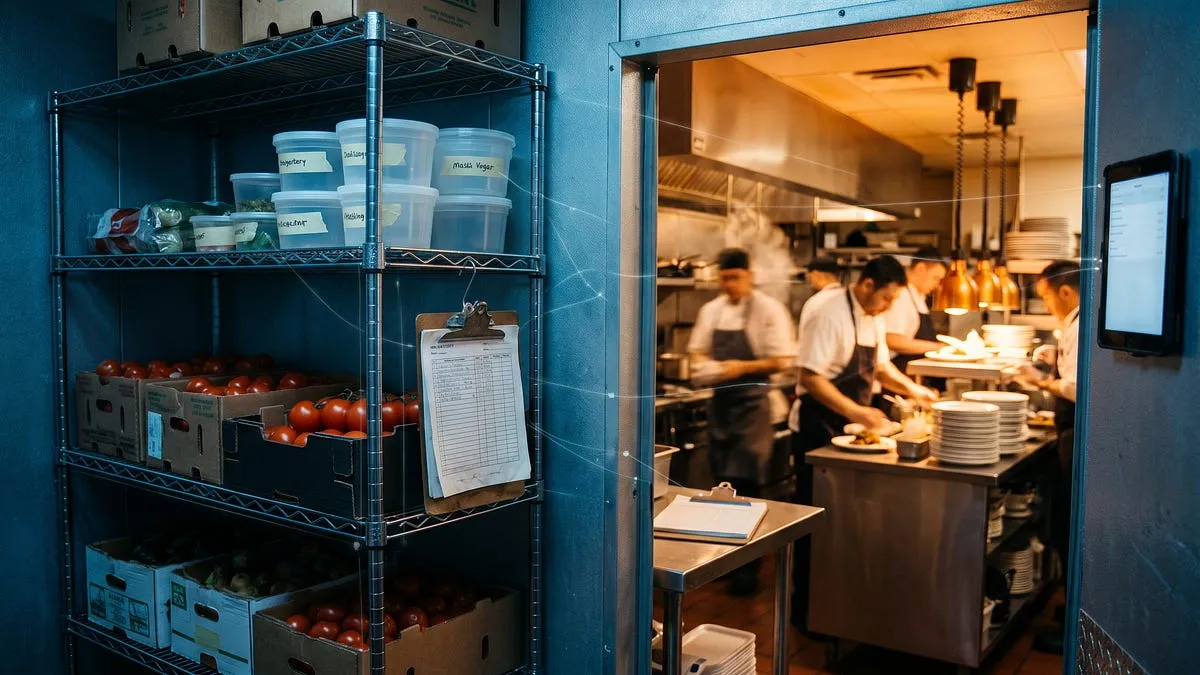
Marble, a three-person startup in Y Combinator's Summer 2026 batch, announced a $5.5M seed round on November 17, 2026. Contrary led the round, and Y Combinator, Robinhood Ventures and Restive Ventures also invested. The valuation was not disclosed. [8] [9] [3]
Kyle Harrison of Contrary led the round and argues that AI's biggest opening is work software never touched. He points to stock levels, deliveries and waste, which rarely make it into any database. In his view, the hard engineering is capturing and migrating that data, not building the model. Restaurants are under heavy margin pressure: 42% of operators were unprofitable in 2025, and total expenses are up 36% since 2019. [1] [4] [5]
Marble's agent, Remy, drafts supplier orders, prep sheets and staff schedules and reconciles invoices. A manager approves each output. Staff count inventory by phone camera or by voice. Pricing runs about $250–$450 per month, and the product competes with established tools such as MarginEdge, Restaurant365 and Toast's xtraCHEF. [8] [3] [10]
Marble says it has signed more than 150 restaurants in under four months, with A&W among its named customers. Its performance figures come from the company and vary by source. Weekly labor savings are given as 20+, 20–30 or 30+ hours, and forecast accuracy is put at 97%. No methodology has been published for any of these numbers. [3] [1] [8] [10]
On record: a funded round, named customers and published pricing.
Read the full assessment
The implication: if the savings hold, a $250–$450 monthly tool could pay for itself at thin-margin restaurants, and competition with incumbent suites would turn on data capture more than on models.
Status: research is complete and I'm writing the dossier now.
Executive brief
Marble is a three-person startup in Y Combinator's Summer 2026 batch. It says it has replaced back-office tools like MarginEdge, Restaurant365 and xtraCHEF at customers within weeks, and it has signed 150+ restaurants in under four months. Contrary led its $5.5M seed round, announced November 17, 2026. In a personal essay, Contrary's Kyle Harrison (who led the round) argues that AI's real opportunity lies in work software never reached, such as the restaurant back of house. Harrison also cites the National Restaurant Association finding that 42% of operators were unprofitable in 2025. All of Marble's performance figures are self-reported, and they differ from one source to the next.
What changed and event timeline
42% of restaurants unprofitable
The NRA's State of the Industry report found that 42% of operators did not turn a profit in 2025, as rising food and labor costs squeezed already thin margins ().
NRA quantifies cost pressure
The NRA puts total restaurant expenses up 36% since 2019. Wholesale food prices rose 35% and hourly earnings rose 41% ().
Marble launches from YC S26
Runtime Wire described a two-person team using computer vision, voice AI and agents to run inventory and labor for multi-unit chains (). The company first launched under the name Truffle ().
$5.5M seed announced
Contrary led the round, with Y Combinator, Robinhood Ventures and Restive Ventures participating. No valuation was disclosed (;).
Lead investor publishes thesis
Harrison frames Marble as a "self-driving restaurant" that does back-office work for managers to approve, instead of adding another dashboard ().
Capabilities and access
- Agent: "Remy" drafts supplier orders, prep sheets and schedules and reconciles invoices.
- Inputs: staff count inventory by phone camera or voice, including in Spanish. Forecasts draw on POS sales, reservations, weather and local events.
- Price: about $250–$450 per month, depending on location count.
Read the full section
- Agent: "Remy" drafts supplier orders, prep sheets and schedules and reconciles invoices. A manager approves each output (Restaurant Technology News).
- Inputs: staff count inventory by phone camera or voice, including in Spanish. Forecasts draw on POS sales, reservations, weather and local events.
- Price: about $250–$450 per month, depending on location count.
- Customers named by YC: A&W Restaurants, The Kati Roll Company, Sophie's Cuban, Kokomo NYC and others (YC).
- No public sources name the underlying models.
Technical analysis for researchers and developers
Unite.AI describes a three-stage design (Unite.AI): A human approval gate sits at the action stage. Harrison's central technical point is that the data was never there in the first place: walk-in stock, deliveries and waste rarely reach any database. The hard engineering is therefore capture and data migration more than modelling.
Read the full section
Unite.AI describes a three-stage design (Unite.AI):
- Perception: inventory capture through vision and voice.
- Reasoning: item-level demand forecasting.
- Action: draft orders, prep plans and schedules.
A human approval gate sits at the action stage. Harrison's central technical point is that the data was never there in the first place: walk-in stock, deliveries and waste rarely reach any database. The hard engineering is therefore capture and data migration more than modelling. He calls onboarding "really just a data parsing problem" (Investing 101). No methodology, holdout design or baseline has been published for the accuracy figures, so none of them can be reproduced.
Claims and evidence
- Round: $5.5M, led by Contrary. Company-announced and repeated by trade press (Restaurant Technology News). Not confirmed by any filing. Valuation not disclosed.
- Performance claims (all self-reported, and inconsistent):
- Labor hours saved per week: 20+ (Harrison), 20–30 (Restaurant Technology News), 30+ (YC).
Read the full section
- Round: $5.5M, led by Contrary. Company-announced and repeated by trade press (Restaurant Technology News). Not confirmed by any filing. Valuation not disclosed.
- Performance claims (all self-reported, and inconsistent):
- Labor hours saved per week: 20+ (Harrison), 20–30 (Restaurant Technology News), 30+ (YC).
- Food waste reduction: 30–40% or about 40%.
- Forecast accuracy: 97%. Count accuracy: 99%.
- Profit lift: "up to 20%," cited only by Harrison.
- Onboarding: Harrison says about 3 days. An A&W case study says the first location took six days, with later sites going live in hours (Unite.AI).
- Source of the essay: Harrison's post is lead-investor commentary on his own portfolio company.
Context and prior work
Harrison's essay revisits Marc Andreessen's 2011 "software is eating the world" argument. His view is that software transformed work that was already information, while restaurant technology (Toast, Square, DoorDash) mostly improved the front of house. Marble competes directly with established back-office suites: MarginEdge, Restaurant365 and Toast's xtraCHEF (Restaurant Technology News).
Read the full section
Harrison's essay revisits Marc Andreessen's 2011 "software is eating the world" argument. His view is that software transformed work that was already information, while restaurant technology (Toast, Square, DoorDash) mostly improved the front of house. Marble competes directly with established back-office suites: MarginEdge, Restaurant365 and Toast's xtraCHEF (Restaurant Technology News). The essay links to a clip from Pixar's Ratatouille. In it, a rat dreams of cooking in Paris (02:30) and partners with a kitchen worker who cannot cook (03:26). The clip explains the "Remy" name but offers no evidence about the product. The captions are automatic and may contain errors.
Limitations, safety and contested findings
- No independent evaluation, customer audit or peer-reviewed benchmark of Marble exists in the reviewed sources.
- The industry statistics in the essay do not all match the NRA's own figures.
- Human approval of every order and schedule limits the risk of autonomous errors, but it also means "self-driving" is an aspiration, not the current state.
Read the full section
- No independent evaluation, customer audit or peer-reviewed benchmark of Marble exists in the reviewed sources.
- The industry statistics in the essay do not all match the NRA's own figures. Harrison cites food costs up about 38% and labor up about 35% since 2019. The NRA's July analysis reports food up 35% and labor up 41%, likely because it uses different measures (NRA).
- Human approval of every order and schedule limits the risk of autonomous errors, but it also means "self-driving" is an aspiration, not the current state.
Business and practitioner implications
- For operators: at a $250–$450 monthly price, even small cuts in waste or labor could pay for the tool where pretax margins are a few percent.
- For builders: the defensible part is data capture plus migration from incumbent systems, not the model.
- For investors: watch for retention, logo churn from MarginEdge and Restaurant365 customers, and whether multi-unit chains such as A&W expand their deployments.
Read the full section
- For operators: at a $250–$450 monthly price, even small cuts in waste or labor could pay for the tool where pretax margins are a few percent. Ask vendors for audited before-and-after data, not headline percentages.
- For builders: the defensible part is data capture plus migration from incumbent systems, not the model.
- For investors: watch for retention, logo churn from MarginEdge and Restaurant365 customers, and whether multi-unit chains such as A&W expand their deployments.
The source trail.
Sources (10)
What Software Hasn't Eaten Yet
Article text retrieved; extracted text may omit tables or interactive elements. A transcript of the video linked from this page is supplied (linked video auto captions; https://www.youtube.com/watch?v=NvM3nMbyeM8); automatic text may contain errors.
investing101.substack.comLinked video: What Software Hasn't Eaten Yet
linked video auto captions
www.youtube.com