
ExitsIPOs, listings & liquidity
Anthropic's IPO reaches $93.5 billion after greenshoe, with $26 billion private placement on top
Underwriters fully exercised their greenshoe option on November 20, lifting Anthropic's Nasdaq IPO to about $93.5 billion. A $26 billion private placement brings the total raise to $119.5 billion. The same week, AI-driven patching was blamed for outages and Waymo halted freeway rides.
From the Cautious Optimism article of November 20, 2026 and cited sources: Anthropic priced at $83 per share and began trading as ANT on November 19. [3] [8]
SOURCES[3] Investing.com/Reuters: Anthropic IPO haul rises to $93.5B investing.com[8] Unite.AI: Anthropic closes enlarged IPO unite.ai
 AT Pulse research deskPublished · Updated · 5 min read · AI-assisted analysis
AI-assisted, not human-edited. Methodology Corrections Who owns this site
- Original source
- Cautious Optimism article, independent perspective
- Brief by
- AT Pulse research desk AI-assisted; publisher and contact on the desk page
- When
- November 20, 2026 article published
- Covered
- Nov 23 edition
- Evidence
- 17 sources across 17 sites
- 1In case you are working today instead of playing GTA VIcautiousoptimism.news
- 2Linked video: In case you are working today instead of…youtube.com
- 3Investing.com/Reuters: Anthropic IPO haul rises to $93.5Binvesting.com
- 4Fortune: AI's role in outagesfortune.com
- 5TechCrunch: Waymo suspends freeway ridestechcrunch.com
- 6WeRide IR: Q3 2026 resultsir.weride.ai
RisingHow it’s measured
YouTube video · 335.1K views · 4.7K likes
Reach blends public engagement (views, likes, comments, shares, stars) from the platforms where the story or its original source lives: YouTube, Hacker News, GitHub, Substack and similar. A video and the article written from its transcript share one score, taken from the video. Platforms with no data are left out rather than counted as zero, and the age of a story never lowers its score.
Anthropic priced at $83 per share and began trading as ANT on November 19. It opened at $97.17 and closed its second day at $88.91. Underwriters then bought 147 million extra shares, bringing gross IPO proceeds to about $93.5 billion and net proceeds to about $91.6 billion. A separate $26 billion placement came from AMD, Broadcom, Google, Micron, Microsoft, NVIDIA and TSMC Partners. [3] [8]
After the raise, Anthropic holds about $250 billion in liquid resources and reports about $81 billion in run-rate revenue. Against that, it has roughly $900 billion in reported compute commitments, of which $447.5 billion falls due by 2030. Whether revenue keeps growing is the central risk for the newly public company. [12]
Bank CEOs and the NSA told Congress that a week of outages hit Microsoft 365, airlines, banks and an internal NSA system. They blamed rushed fixes for vulnerabilities surfaced by Anthropic's Claude Mythos, not attacks. The cause is disputed: JPMorgan Chase blamed an on-premise hardware bug, and one account says only two of six major outages are confirmed as patch-related. [4] [7] [15] [16]
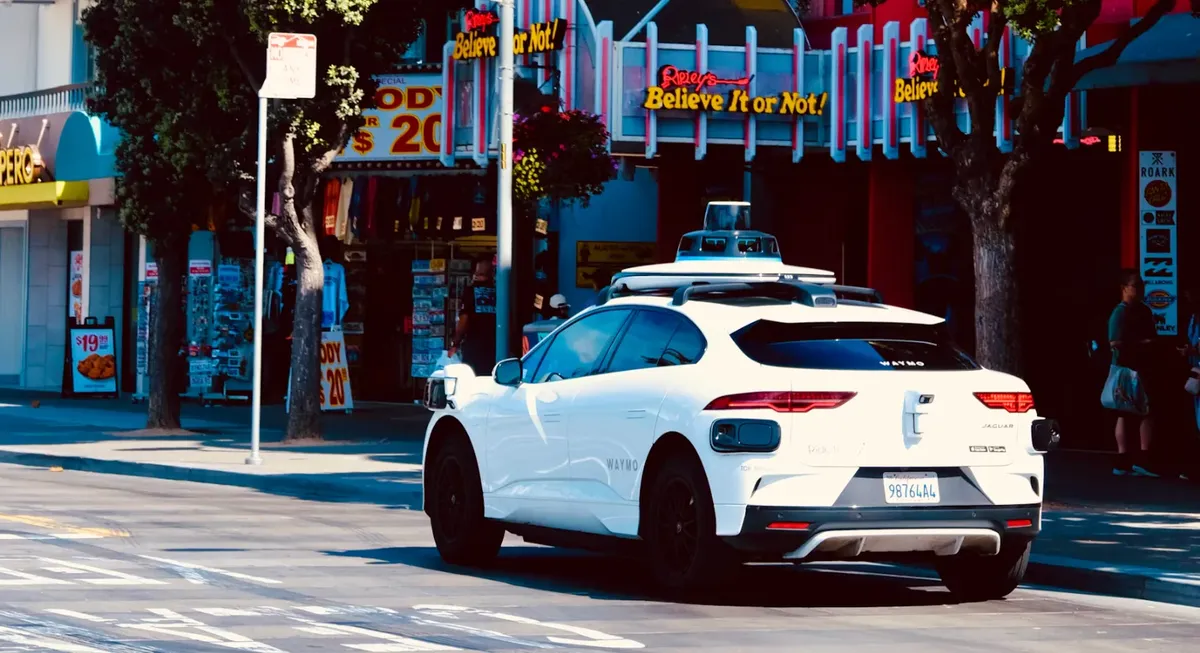
Waymo suspended freeway rides in all its markets after California's DMV called its freeway operations an imminent hazard, citing a closed construction zone on US-101. In the same period, WeRide reported Q3 revenue up 88% to RMB321.5 million, with robotaxi revenue up 204% and most of it from overseas. WeRide's claim of positive unit economics in Guangzhou is self-reported and unaudited. [5] [6]
The IPO and placement figures are disclosed, but the cause of the outages is still contested. The implication is that AI labs' compute obligations exceed even record IPO cash.
Read the full assessment
Teams adopting AI vulnerability discovery also need remediation capacity and staged rollouts.
Executive brief
Anthropic's IPO turned into a $119.5 billion fundraising. On November 20, 2026, underwriters fully exercised their option to buy extra shares, which lifted IPO gross proceeds to about $93.5 billion. A $26 billion private placement sits on top of that (Investing.com/Reuters). The same week, officials and executives linked a wave of US outages to rushed fixes for flaws that AI found (Fortune). Waymo pulled out of freeways nationwide (TechCrunch), while WeRide reported robotaxi profits per unit in Guangzhou (WeRide IR). The source newsletter, Cautious Optimism, is openly pro-acceleration commentary.
What changed and event timeline
California bans Waymo from freeways
The DMV called the freeway operations an "imminent hazard." It cited three Waymos entering a closed construction zone on US-101 near Burlingame, plus a separate incident with Highway Patrol vehicles on I-280 ().
Week of Nov 16: Outages tied to AI-driven patching
Microsoft 365, flights, banks and an internal NSA system all went down. Bank CEOs and the NSA told Congress that patching AI-found vulnerabilities was the cause (;).
Anthropic prices and lists
Anthropic priced at $83 per share and began trading as ANT on the Nasdaq on November 19. It opened at $97.17 and closed its second day at $88.91 ().
Senate passes BAAJA 62–33
This is a permitting overhaul for energy projects and transmission lines that also tightens data-center rules. It now goes to the House (;).
EU Inc campaigners ask for a reset
EU–INC and Startups for Europe asked Ursula von der Leyen to withdraw and re-table the original Commission proposal, arguing that member states had diluted it ().
Greenshoe exercised; WeRide reports Q3
Underwriters bought 147 million extra shares. WeRide's revenue rose 88% to RMB321.5 million (US$48.0 million) (;).
Capabilities and access
- Claude Mythos (Anthropic): the reporting credits it with surfacing a large volume of vulnerabilities.
- Waymo: freeway service is suspended in every market, including San Francisco, Los Angeles, Phoenix, Austin and Miami.
- WeRide: about 4,100 Level 4 vehicles, including more than 2,300 robotaxis, as of October 31 (WeRide IR).
Read the full section
- Claude Mythos (Anthropic): the reporting credits it with surfacing a large volume of vulnerabilities. Bank of America assigned 1,000 contractors and 3,000 internal staff to work through its findings (Fortune). No version or access tier is documented in the reviewed sources.
- Waymo: freeway service is suspended in every market, including San Francisco, Los Angeles, Phoenix, Austin and Miami. It stays suspended until the DMV accepts "effective corrective actions" (TechCrunch).
- WeRide: about 4,100 Level 4 vehicles, including more than 2,300 robotaxis, as of October 31 (WeRide IR).
Technical analysis for researchers and developers
- Patch throughput is now the bottleneck. Finding vulnerabilities with AI has outpaced testing and staged rollout.
- Construction zones are a known weak spot for Waymo. The 101 incident suggests that fix did not generalize (TechCrunch).
- No independent benchmarks exist for any of these systems. None of the reviewed sources includes a reproducible evaluation.
Read the full section
- Patch throughput is now the bottleneck. Finding vulnerabilities with AI has outpaced testing and staged rollout. In the reported outages, the failures came from rushed remediation rather than from attacks (PBS). Canary deploys and rollback discipline matter more when discovery scales.
- Construction zones are a known weak spot for Waymo. Waymo had returned to freeways in July after a software update aimed specifically at freeway construction zones. The 101 incident suggests that fix did not generalize (TechCrunch).
- No independent benchmarks exist for any of these systems. None of the reviewed sources includes a reproducible evaluation.
Claims and evidence
- Anthropic IPO figures: $93.5 billion gross and $91.6 billion net from the IPO, plus $26 billion from AMD, Broadcom, Google, Micron, Microsoft, NVIDIA and TSMC Partners.
- Anthropic cash: about $250 billion in liquid resources and about $81 billion in run-rate revenue.
- WeRide: robotaxi revenue rose 204%, and overseas markets supplied more than 90% of it.
Read the full section
- Anthropic IPO figures: $93.5 billion gross and $91.6 billion net from the IPO, plus $26 billion from AMD, Broadcom, Google, Micron, Microsoft, NVIDIA and TSMC Partners. These numbers are company-announced and were reported by Reuters (Unite.AI). The reviewed sources do not name the lead underwriters.
- Anthropic cash: about $250 billion in liquid resources and about $81 billion in run-rate revenue. These are self-reported filing figures as analyzed by the Motley Fool (Fool).
- WeRide: robotaxi revenue rose 204%, and overseas markets supplied more than 90% of it. Guangzhou reaching positive unit economics is a self-reported, unaudited figure (WeRide IR).
- No independent corroboration was found for the newsletter's claim that self-driving could save "tens of thousands of lives."
Context and prior work
The newsletter refers to 2026 as the year of the "Mythos moment," and calls the resulting stream of AI-found flaws "Patchmageddon" (American Banker). EU Inc is the so-called "28th regime" idea: a single EU-wide company form meant to give founders an alternative to incorporating in Delaware (EU–INC).
Read the full section
The newsletter refers to 2026 as the year of the "Mythos moment," and calls the resulting stream of AI-found flaws "Patchmageddon" (American Banker). EU Inc is the so-called "28th regime" idea: a single EU-wide company form meant to give founders an alternative to incorporating in Delaware (EU–INC). The video linked from the newsletter is a montage of Nikita Mazepin spinning out in Formula 1 races (00:17, 02:00). It illustrates the author's joke about human drivers on the 101 and 280 and says nothing about autonomous vehicles.
Limitations, safety and contested findings
- The outage cause is disputed. JPMorgan Chase blamed a bug in on-premise hardware, not AI tools (Fortune).
- Waymo: no one was injured and there was no collision in the 101 incident (TechCrunch). The DMV still classed it as an imminent hazard.
- BAAJA: tribal groups oppose the bill because it removes consultation duties under Section 106 of the National Historic Preservation Act (ICT News).
Read the full section
- The outage cause is disputed. JPMorgan Chase blamed a bug in on-premise hardware, not AI tools (Fortune). Another account says only two of six major outages have been confirmed as caused by AI-driven patches (Emerald Book). Intelligence officials reported "no indicia" of a coordinated attack (Washington Sun).
- Waymo: no one was injured and there was no collision in the 101 incident (TechCrunch). The DMV still classed it as an imminent hazard.
- BAAJA: tribal groups oppose the bill because it removes consultation duties under Section 106 of the National Historic Preservation Act (ICT News).
Business and practitioner implications
- Budget for remediation, not just discovery. Security teams adopting AI vulnerability scanners need staged rollouts, because patch volume can itself cause outages.
- Anthropic is cash-rich but heavily committed. Its ability to keep growing revenue remains the main risk.
- Robotaxi momentum is shifting outward. Chinese operators are scaling in the Middle East and Europe while US regulators tighten rules on freeway driving.
Read the full section
- Budget for remediation, not just discovery. Security teams adopting AI vulnerability scanners need staged rollouts, because patch volume can itself cause outages.
- Anthropic is cash-rich but heavily committed. About $250 billion in liquidity sits against roughly $900 billion in reported compute commitments, of which $447.5 billion falls due by 2030 (Fool). Its ability to keep growing revenue remains the main risk.
- Robotaxi momentum is shifting outward. Chinese operators are scaling in the Middle East and Europe while US regulators tighten rules on freeway driving.
- Grid permitting could ease data-center power limits if BAAJA clears the House.
The source trail.
Sources (17)
In case you are working today instead of playing GTA VI
Article text retrieved; extracted text may omit tables or interactive elements. A transcript of the video linked from this page is supplied (linked video auto captions; https://www.youtube.com/watch?v=LqmW-SpqQvE); automatic text may contain errors.
cautiousoptimism.newsLinked video: In case you are working today instead of playing GTA VI
linked video auto captions
www.youtube.com