
BusinessMarkets, money & strategy
Anthropic shares slide in second-day trading as AI chip sell-off spreads after record $81.3 billion IPO
Anthropic's stock fell in premarket trading a day after a volatile Nasdaq debut that followed its record $81.3 billion IPO. A global AI and chip sell-off drove the drop. Its filings show about $895 billion in compute commitments against $131.8 billion in cash and short-term investments.
From the CNBC · Technology article of November 20, 2026 and cited sources: Anthropic sold 980 million Class A shares at $83 each, above its $70–$78 target range. [7] [9] [10]
SOURCES[7] CNBC: Anthropic IPO raises over $81 billion cnbc.com[9] Anthropic: Anthropic prices initial public offering anthropic.com[10] FinanceFeeds: Anthropic (ANT) day two after a 17% debut financefeeds.com
 AT Pulse research deskPublished · Updated · 5 min read · AI-assisted analysis
AI-assisted, not human-edited. Methodology Corrections Who owns this site
- What happened
- Anthropic sold 980 million Class A shares at $83 each, above its $70–$78 target range. [7] [9] [10]
- Original source
- CNBC · Technology article, independent perspective
- Brief by
- AT Pulse research desk AI-assisted; publisher and contact on the desk page
- When
- November 20, 2026 article published
- Covered
- Nov 20 edition
- Evidence
- 14 sources across 11 sites
- 1CNBC Morning Squawk: Tech wreck drags Anthropic into the…cnbc.com
- 2CNBC: Anthropic shares fall in premarket amid AI selloffcnbc.com
- 3Anthropic shares slide as fears over AI boom dominateft.com
- 4Stock Market Today: Anthropic Stock Slides as Tech Rout…wsj.com
- 5AI Trade Unravels; Anthropic Drops After Strong Debutbloomberg.com
- 6Anthropic shares fall in pre-market trade as AI rout hits…theguardian.com
Reach: not measured yet
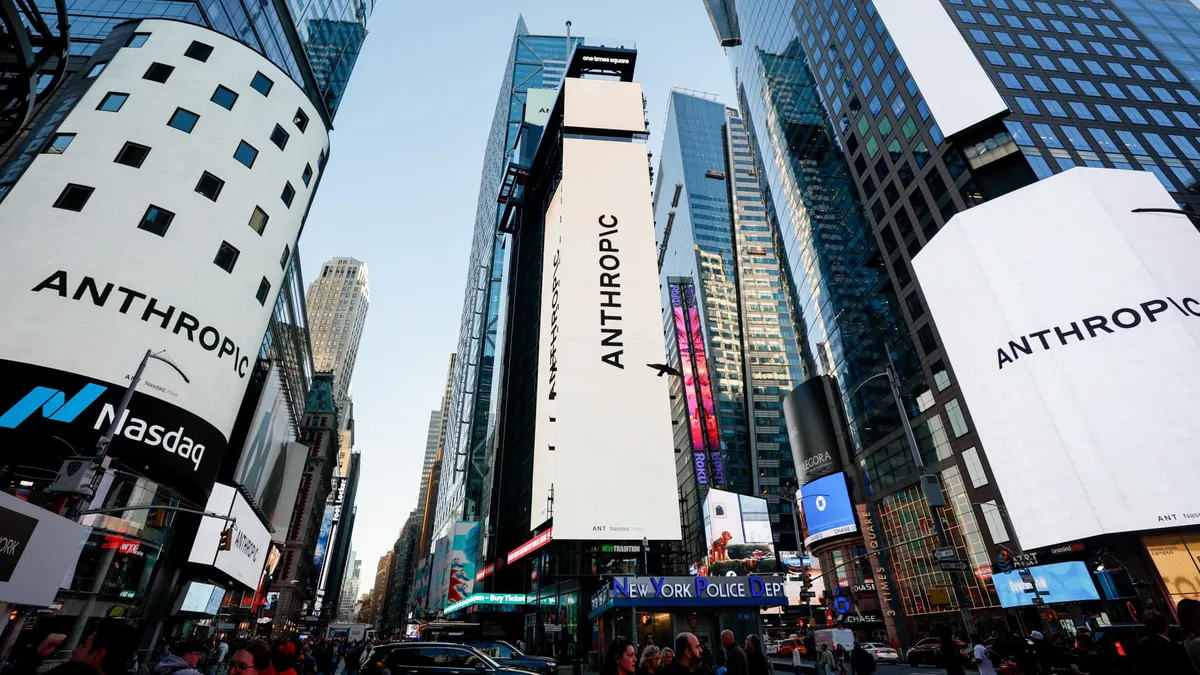
Anthropic sold 980 million Class A shares at $83 each, above its $70–$78 target range. The sale raised $81.3 billion at a fully diluted value of about $1.5 trillion, beating SpaceX's June record. On its first day of trading, ANT opened at $111.50 and closed at $97.17, up 17%, while the Nasdaq fell 2.3%. [7] [9] [10]
On day two, ANT fell in premarket trading along with chip stocks. AMD dropped more than 7% after a short-seller report, Nvidia slid, and SoftBank had its worst day in more than two years. Reports put ANT's decline anywhere from about 6% to 13%, but even the largest figure left it above the $83 IPO price. [1] [2] [11]
Anthropic's compute commitments total about $895.4 billion. Of that, $213.8 billion is contingent and $69.8 billion is due within 12 months, and some take-or-pay contracts run to 2045. Based on the filed figures, the commitments are roughly 6.8 times cash and 11 times the revenue run-rate. Amodei argues that cash and revenue make them manageable. In Q3, the company swung to a $567 million operating loss, partly because short-term compute costs more than capacity bought on long contracts. [8] [1]
The filings report Q3 revenue of $17.0 billion. These are the company's own figures, not independently verified. Usage-based billing, mostly the API, made up 79% of nine-month revenue, and the top five customers account for about 25%. Most of the $104 billion nine-month net loss is a non-cash fair-value charge. Class F stock holds 50.1% of voting power, which limits public shareholders' influence. [8] [12]
the filings tie Anthropic's economics to long-dated, take-or-pay compute contracts with Google and Microsoft.
Read the full assessment
Implication: daily public pricing and quarterly reporting may pressure margins and API pricing, and Claude customers share exposure to the same compute supply risks.
Executive brief
Anthropic raised $81.3 billion at $83 a share, the largest IPO on record. One day after its Nasdaq debut, the stock was falling in premarket trading as a global sell-off in AI stocks spread (CNBC; CNBC Morning Squawk). The bigger story is in its filings. Anthropic has committed about $895 billion to compute, against $131.8 billion in cash and short-term investments and a revenue run-rate of about $81 billion (sec-api analysis). Public investors now set the price on that bet every day, while worries about AI capital spending are hitting Nvidia, AMD and Asian chip stocks.
What changed and event timeline
IPO priced above range
980 million Class A shares sold at $83, above the $70–$78 target range. The offering raised $81.3 billion at a fully diluted value of about $1.5 trillion, beating SpaceX's June record (;).
Volatile debut in a falling market
ANT opened at $111.50, reached $115.10 and closed at $97.17, up 17%. On the same day the Nasdaq fell 2.3% to its lowest close since April 14 ().
ANT slides premarket
Reports of the drop differ: "over 6%" (), as much as 7.4% to $90 (), and 8% to 13% (). Even at the low end it stayed above the $83 IPO price.
Capabilities and access
The IPO coverage does not name a specific new model or version. The filings list paid consumer tiers (Claude Pro, Max and Ultra) and a newly launched Claude Security product (sec-api). Access is mostly metered. In the first nine months of 2026, 79% of revenue ($26.3 billion) came from usage-based billing, mainly the API, and 21% ($6.9 billion) from subscriptions (sec-api).
Technical analysis for researchers and developers
The filings say nothing about model architecture or evaluations.
Read the full section
The filings say nothing about model architecture or evaluations. What they do document is how compute shapes the business:
- Compute commitments: about $895.4 billion in total, including $213.8 billion that is contingent and $69.8 billion due within 12 months. Some contracts run to 2045 on take-or-pay terms. Google ($114.5–121.3 billion) and Microsoft are named as counterparties (sec-api).
- Margins: Anthropic swung to a Q3 operating loss of $567 million, partly because short-term compute costs more than capacity bought on multi-year contracts (sec-api).
- Supply risk: the filings warn that compute providers that rely on outside financing could delay, reprice or fail to deliver contracted capacity (sec-api).
Claims and evidence
- Record size: the $81.3 billion raise is reported by CNBC and Anthropic, which agree on the details.
- Growth: Q3 revenue was $17.0 billion, up 1,127%, and nine-month revenue was $33.2 billion.
- Amodei's argument: he said cash on hand and current revenue make the roughly $900 billion in commitments look manageable (CNBC Morning Squawk).
Read the full section
- Record size: the $81.3 billion raise is reported by CNBC and Anthropic, which agree on the details.
- Growth: Q3 revenue was $17.0 billion, up 1,127%, and nine-month revenue was $33.2 billion. These numbers come from Anthropic's own filings, as summarized by sec-api.
- Amodei's argument: he said cash on hand and current revenue make the roughly $900 billion in commitments look manageable (CNBC Morning Squawk). By the filed figures, commitments are about 6.8 times cash and 11 times the run-rate (calculation from the filed numbers, not reported).
- Mega-IPOs draining crypto: the claim that big listings pull liquidity out of Bitcoin rests on two cases, Anthropic and SpaceX, in CNBC commentary only. No other source corroborates it.
Context and prior work
Anthropic was valued at $183 billion in its Series F (Yahoo Finance), and was reported to be raising at $350 billion in January 2026 (TechCrunch). SpaceX's June IPO is the closest comparison: it raised $75 billion at first, rising to $85.7 billion after underwriters exercised their option to buy extra shares (CNBC).
Read the full section
Anthropic was valued at $183 billion in its Series F (Yahoo Finance), and was reported to be raising at $350 billion in January 2026 (TechCrunch). At the IPO it was valued at about $1.5 trillion. Google, Microsoft, Nvidia and AMD together committed $26 billion at the IPO price (CNBC). SpaceX's June IPO is the closest comparison: it raised $75 billion at first, rising to $85.7 billion after underwriters exercised their option to buy extra shares (CNBC).
Limitations, safety and contested findings
- The size of the premarket drop varies by source and time of day, from 6% to 13%.
- The $104 billion nine-month net loss is mostly a $94.3 billion non-cash change in the fair value of convertible notes and derivatives.
- Shareholders have limited control. Class F stock holds 50.1% of voting power, and the Long-Term Benefit Trust elects a majority of the board (sec-api).
Read the full section
- The size of the premarket drop varies by source and time of day, from 6% to 13%.
- The $104 billion nine-month net loss is mostly a $94.3 billion non-cash change in the fair value of convertible notes and derivatives. Operating losses were $1.3 billion (sec-api).
- Shareholders have limited control. Class F stock holds 50.1% of voting power, and the Long-Term Benefit Trust elects a majority of the board (sec-api).
- Revenue is concentrated: the top five customers account for about 25% (sec-api).
Business and practitioner implications
- Pricing pressure: quarterly reporting and a falling stock may push Anthropic to protect margins.
- Concentration risk for customers: businesses whose products depend on Claude now carry exposure to the same compute counterparties (Google, Microsoft) that the filings flag as supply risks.
- Investor views split: Steve Grasso advises waiting for a lower price, while Ross Gerber expects ANT to become a blue chip like Google (CNBC Morning Squawk).
Read the full section
- Pricing pressure: quarterly reporting and a falling stock may push Anthropic to protect margins. Expect closer attention to API pricing and to how much capacity runs on expensive short-term compute.
- Concentration risk for customers: businesses whose products depend on Claude now carry exposure to the same compute counterparties (Google, Microsoft) that the filings flag as supply risks.
- Investor views split: Steve Grasso advises waiting for a lower price, while Ross Gerber expects ANT to become a blue chip like Google (CNBC Morning Squawk).
- Sector link: ANT is already trading in step with Nvidia and AMD, so chip-sector news will move it.
The source trail.
Sources (14)
CNBC Morning Squawk: Tech wreck drags Anthropic into the red on its second day of trading
cnbc.comCNBC: Anthropic shares fall in premarket amid AI selloff
cnbc.comAnthropic shares slide as fears over AI boom dominate
Related coverage; assess separately
ft.comStock Market Today: Anthropic Stock Slides as Tech Rout Intensifies
Related coverage; assess separately
wsj.comAI Trade Unravels; Anthropic Drops After Strong Debut
Related coverage; assess separately
bloomberg.comAnthropic shares fall in pre-market trade as AI rout hits global markets - business live
Related coverage; assess separately
theguardian.com