
BusinessMarkets, money & strategy
Walter Isaacson says his biography startup Boswell & Co. is built on Google's Gemini Notebook
Historian Walter Isaacson told Google's Kent Walker that his AI-assisted biography startup runs on Gemini Notebook, urged students to start from curated sources, and argued for human–AI partnership and curiosity over coding, while repeating a labor-history claim economists dispute.
From the Google AI article of November 19, 2026 and cited sources: Isaacson has students begin with a curated notebook of chosen material instead of an open-ended chatbot. [2] [5] [4]
SOURCES[2] Linked video: Walter Isaacson on curiosity and creativity… youtube.com[5] Google: NotebookLM is now Gemini Notebook blog.google[4] Tulane Hullabaloo: Boswell & Co. launch tulanehullabaloo.com
 AT Pulse research deskPublished · Updated · 5 min read · AI-assisted analysis
AI-assisted, not human-edited. Methodology Corrections Who owns this site
- What happened
- Isaacson has students begin with a curated notebook of chosen material instead of an open-ended chatbot. [2] [5] [4]
- Original source
- Google AI article, company source
- Brief by
- AT Pulse research desk AI-assisted; publisher and contact on the desk page
- When
- November 19, 2026 article published
- Covered
- Nov 22 edition
- Evidence
- 10 sources across 7 sites
- 1Google blog: Walter Isaacson on curiosity and creativity…blog.google
- 2Linked video: Walter Isaacson on curiosity and creativity…youtube.com
- 3Tulane Hullabaloo opinion: What Boswell & Co. gets wrongtulanehullabaloo.com
- 4Tulane Hullabaloo: Boswell & Co. launchtulanehullabaloo.com
- 5Google: NotebookLM is now Gemini Notebookblog.google
- 6Hoover/EconTalk: Hubris, humility and the AI revolutionhoover.org
RisingHow it’s measured
YouTube video · 23K views · 203 likes
Reach blends public engagement (views, likes, comments, shares, stars) from the platforms where the story or its original source lives: YouTube, Hacker News, GitHub, Substack and similar. A video and the article written from its transcript share one score, taken from the video. Platforms with no data are left out rather than counted as zero, and the age of a story never lowers its score.
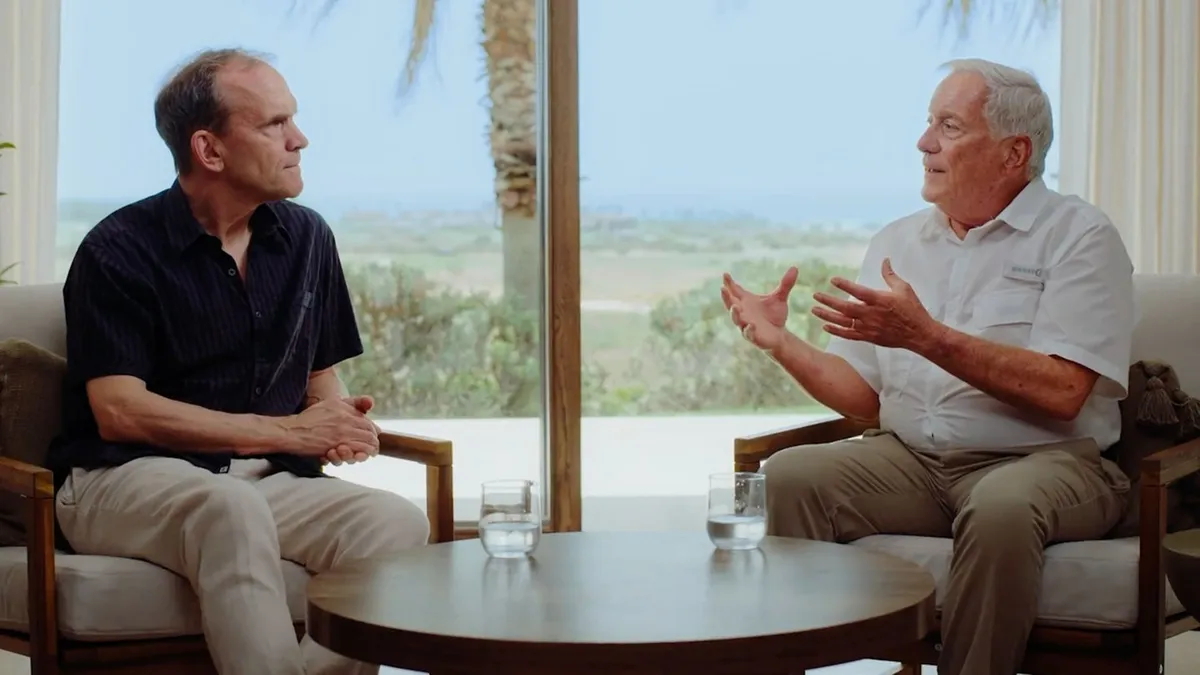
Isaacson has students begin with a curated notebook of chosen material instead of an open-ended chatbot. He says Gemini Notebook would be his first stop for a new book and that Boswell & Co. uses it to gather large amounts of material on each subject. Google describes the tool's analysis as grounded in the user's own sources. [2] [5] [4]
Isaacson favors what he calls Ada Lovelace's idea of symbiosis, meaning close integration of human creativity and values with machines, over autonomous systems that leave people out of the loop. He argues that teaching curiosity and an understanding of what people want may serve students better than teaching coding alone. [2] [1] [6]
Isaacson says technology has never reduced employment and cites a tenfold rise in English textile jobs after automated looms arrived. Acemoglu and Johnson's research finds instead that handloom weavers' real wages fell to about a quarter of their peak and that factories absorbed few displaced weavers for decades. Power-loom riots broke out in Lancashire in 1826. [2] [9] [10]
Isaacson wants 500,000 biographies written each year instead of about 500, citing the pattern that cheaper goods attract more demand. Boswell's reported starting fee of $200,000 cuts against that goal, and a student critic argues that commissioned biographies trade interpretive depth for efficiency. [2] [3] [4]
The reviewed sources describe a concrete pattern, grounding AI in curated material, but report no accuracy or citation-fidelity testing of Boswell's pipeline.
Read the full assessment
Leaders weighing Isaacson's case against retraining should also weigh research showing displaced weavers' wages collapsed for decades.
Executive brief
Walter Isaacson told Google's Kent Walker that if he were writing a book today, Google's Gemini Notebook would be his first stop. He also said his AI-assisted biography startup, Boswell & Co., is built on it (video, 4:51; 5:06). Boswell's reported starting fee is $200,000 (Hullabaloo opinion), which sits awkwardly next to his idea that biography should be democratized. The episode, published by Google, argues for human–AI "symbiosis" over autonomy and for teaching curiosity over coding (Google blog). It also repeats a claim about job history that economic research contradicts.
What changed and event timeline
Boswell & Co. launches
Isaacson and Tulane alumni Ishaan Pomitcher and Owen Kirsten began offering commissioned biographies. AI helps sift research material, students do the reporting, and about 20 clients had signed up ().
Student critique published
A Hullabaloo opinion piece argued that the $200,000 service treats biography as a commodity, and that efficiency is at odds with the slow, interpretive work biography requires ().
NotebookLM becomes Gemini Notebook
Google renamed its research tool, added code execution grounded in user sources and synced notebooks with the Gemini app. Google says it has 30 million users ().
Isaacson on EconTalk
Isaacson set the Lovelace and Turing visions of computing against each other and criticized builders who pour resources into autonomous agents that leave humans out of the loop ().
Google "Dialogues" episode
Kent Walker, Alphabet's president of global affairs, interviewed Isaacson on curiosity, collaboration and AI in education ().
Capabilities and access
- Tool named: "Gemini Notebook," formerly NotebookLM (Google). No underlying model version is stated in the video or the Google post.
- Access: Notebooks are available in the Gemini app, first for paid tiers on the web and later for free users on mobile (Google; Android Authority).
- Boswell & Co. deliverables: 50,000–75,000-word manuscripts, plus hardcover and digital editions (Hullabaloo).
Read the full section
- Tool named: "Gemini Notebook," formerly NotebookLM (Google). No underlying model version is stated in the video or the Google post.
- Access: Notebooks are available in the Gemini app, first for paid tiers on the web and later for free users on mobile (Google; Android Authority).
- Boswell & Co. deliverables: 50,000–75,000-word manuscripts, plus hardcover and digital editions (Hullabaloo).
Technical analysis for researchers and developers
- Isaacson makes students begin with a curated notebook rather than an open-ended chatbot "that'll go all over the place" (4:33).
- Walker remarked that models have different "personalities," and Isaacson said it is worth learning how they work together (4:18).
- No evaluation. Neither the reviewed sources nor the episode report accuracy, hallucination rates or citation-fidelity tests for Boswell's pipeline.
Read the full section
- Curated sources first. Isaacson makes students begin with a curated notebook rather than an open-ended chatbot "that'll go all over the place" (4:33). This is a source-grounded, retrieval-style workflow, and Google describes Gemini Notebook's analysis the same way, as grounded in the user's own sources (Google).
- Comparing models. Walker remarked that models have different "personalities," and Isaacson said it is worth learning how they work together (4:18).
- No evaluation. Neither the reviewed sources nor the episode report accuracy, hallucination rates or citation-fidelity tests for Boswell's pipeline.
Claims and evidence
- "Never in history" has technology reduced employment. Lancashire saw power-loom riots in 1826 (Wikipedia).
- Students who master AI are "about 10 times" more likely to get jobs (4:00). This is an anecdote with no data cited.
- Boswell is "based on Gemini Notebook" (5:10). The claim was made on a Google-produced show.
Read the full section
- "Never in history" has technology reduced employment; within 20 years of automated looms there were 10 times as many people in English textiles (5:38). Acemoglu and Johnson's research finds that handloom weavers' real wages fell to about a quarter of their peak, and that factory jobs absorbed few displaced weavers for decades (MIT Stone Center). Lancashire saw power-loom riots in 1826 (Wikipedia).
- Students who master AI are "about 10 times" more likely to get jobs (4:00). This is an anecdote with no data cited.
- Boswell is "based on Gemini Notebook" (5:10). The launch coverage does not name a tool, and no independent source confirms it. The claim was made on a Google-produced show.
Context and prior work
- Isaacson's "Ada Lovelace School" comes from The Innovators (2014): close human–machine integration rather than belief in the singularity (2:57; Wikipedia)).
- He frames history as roughly 50-year waves: 1900 physics, 1950s digital, 2000 genomics, and now AI and quantum computing (0:46).
- He calls AI the biggest shift in access to information since Gutenberg (8:17).
Read the full section
- Isaacson's "Ada Lovelace School" comes from The Innovators (2014): close human–machine integration rather than belief in the singularity (2:57; Wikipedia)). He says the book is being reissued this fall (2:10). No independent confirmation of the reissue was found.
- He frames history as roughly 50-year waves: 1900 physics, 1950s digital, 2000 genomics, and now AI and quantum computing (0:46).
- He calls AI the biggest shift in access to information since Gutenberg (8:17).
Limitations, safety and contested findings
- The host is a Google executive, and the episode promotes a Google product without any counterpoint.
- Isaacson's account of the transition conflicts with the wage-collapse evidence above.
- His goal of 500,000 biographies a year instead of 500 (6:26) conflicts with the reported $200,000 starting fee and with critics who see such books as vanity projects (Hullabaloo opinion).
Read the full section
- Venue. The host is a Google executive, and the episode promotes a Google product without any counterpoint.
- Labor history. Isaacson's account of the transition conflicts with the wage-collapse evidence above. He also says he is "not a big believer in retraining" (6:00) and offers no evidence for that view.
- Price vs. promise. His goal of 500,000 biographies a year instead of 500 (6:26) conflicts with the reported $200,000 starting fee and with critics who see such books as vanity projects (Hullabaloo opinion).
- Access. Isaacson himself warns that AI could widen inequality unless everyone has access to it (8:54).
Business and practitioner implications
- Building on curated sources first is a practical pattern for knowledge work that needs provenance, such as research, legal work and biography.
- Isaacson cites Jevons-style demand: when something gets cheaper, people want more of it (6:31). Boswell shows that pricing can still keep such services premium.
- Isaacson questions whether coding is the "highest and best use" of students' time and favors understanding what people want (6:46).
Read the full section
- Grounded workflows. Building on curated sources first is a practical pattern for knowledge work that needs provenance, such as research, legal work and biography.
- Cheaper bespoke content. Isaacson cites Jevons-style demand: when something gets cheaper, people want more of it (6:31). Boswell shows that pricing can still keep such services premium.
- Hiring and training. Isaacson questions whether coding is the "highest and best use" of students' time and favors understanding what people want (6:46). Leaders weighing his view against retraining should account for the contrary labor evidence.
The source trail.
Sources (10)
Google blog: Walter Isaacson on curiosity and creativity in the AI age
blog.googleLinked video: Walter Isaacson on curiosity and creativity in the AI age.
linked video manual captions
www.youtube.com