
FoundersOperators, strategy & lessons
Nvidia Board Rules Out Jensen Huang's Return as CEO as Investor Gavin Baker Argues for Reinstatement
Jensen Huang resigned after admitting an affair with a woman reported to be a suspected Chinese intelligence agent. Nvidia's board then ruled out his return, and interim CEO Colette Kress ended H200 sales to China. Investor Gavin Baker argues that losing Huang weakens Nvidia and US AI competitiveness.
From the Sourcery video of November 19, 2026 and cited sources: Huang resigned on November 12, and CFO Colette Kress became interim CEO. [2] [4] [5] [7]
SOURCES[2] Yahoo Finance: Nvidia shuts door on Huang's return finance.yahoo.com[4] TechCrunch: Scandal timeline techcrunch.com[5] NPR: Nvidia CEO Jensen Huang steps down npr.org
 AT Pulse research deskPublished · Updated · 5 min read · AI-assisted analysis
AI-assisted, not human-edited. Methodology Corrections Who owns this site
- What happened
- Huang resigned on November 12, and CFO Colette Kress became interim CEO. [2] [4] [5] [7] [8]
- Original source
- Sourcery video, independent perspective
- Brief by
- AT Pulse research desk AI-assisted; publisher and contact on the desk page
- When
- November 19, 2026 video published
- Covered
- Nov 19 edition
- Evidence
- 11 sources across 9 sites; transcript sourced
- 1Gavin Baker: Why Nvidia Needs Jensen Huang Back as CEOyoutube.com
- 2Yahoo Finance: Nvidia shuts door on Huang's returnfinance.yahoo.com
- 3TechCrunch: Nvidia abandoning Chinatechcrunch.com
- 4TechCrunch: Scandal timelinetechcrunch.com
- 5NPR: Nvidia CEO Jensen Huang steps downnpr.org
- 6CNBC: Nvidia CEO Jensen Huang resigns, live updatescnbc.com
RisingHow it’s measured
YouTube video · 419 views · 18 likes
Reach blends public engagement (views, likes, comments, shares, stars) from the platforms where the story or its original source lives: YouTube, Hacker News, GitHub, Substack and similar. A video and the article written from its transcript share one score, taken from the video. Platforms with no data are left out rather than counted as zero, and the age of a story never lowers its score.
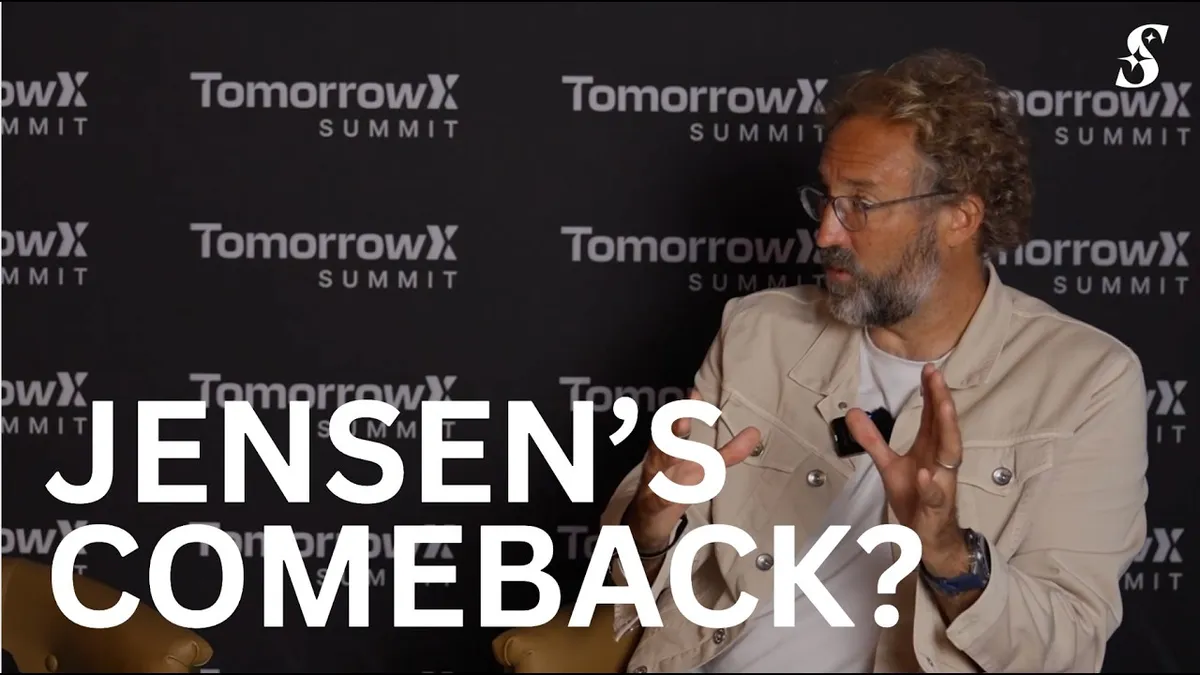
Huang resigned on November 12, and CFO Colette Kress became interim CEO. On November 13, Altimeter's Brad Gerstner and Atreides' Gavin Baker wrote to the board. They asked for an unhurried CEO search that would keep a Huang return possible. They did not demand that he be reinstated. On November 17, Huang said he was open to coming back, and the board chair said the board does not intend to reinstate him. A search for a permanent CEO is underway. [2] [4] [5] [7] [8]
Under Kress, Nvidia stopped H200 shipments to China and created a board committee for national security and export compliance. Its Q4 guidance leaves out China Hopper data-center revenue. Jefferies puts the potential data-center losses at $44–62B. Baker argues that pushing every Chinese lab onto Huawei hardware could speed up Huawei's improvement, because chips get better through use. That is his inference, and he cites no data for it. [1] [3] [9]
Baker says markets measure AI returns too narrowly. In his view they compare capex only with frontier-lab revenue and miss demand from serving open-weight models and from enterprise on-premises deployments. As examples, he points to Dell adding about 3,300 AI Factory customers in roughly nine months, which matches Dell's reported figures. He also cites 13x growth at the top customer of Fireworks, an Atreides portfolio company. [1] [10]
Whether Huang should return is disputed. He has not been charged, and Wachtell Lipton is investigating whether national security or company secrets were compromised. A TIME op-ed opposes reinstatement, citing his months of denials and conflicts of interest. Baker calls Huang a friend of 27 years, and both investment firms hold Nvidia shares. [1] [7] [8] [11]
Established facts: Nvidia has lost its founder-CEO and stopped selling H200s in China. Not established: whether its leverage with TSMC, its advocacy for US open models, and Huawei's slower progress will erode.
Read the full assessment
That would matter to buyers who rely on Nvidia supply and pricing.
Sources gathered; writing the dossier now.
Executive brief
Two Nvidia shareholders are pushing for Jensen Huang to come back as CEO, and Nvidia's board has refused. On the November 17 earnings call, board chair Harvey Jones said the board "does not intend to reinstate Jensen as CEO" (Yahoo Finance). Huang resigned on November 12 after admitting to an affair with a woman reported to be a suspected Chinese intelligence agent. In a Sourcery interview, Atreides' Gavin Baker argues that Nvidia's China reversal and the loss of Huang's supply-chain relationships carry strategic risk (video, 6:07). He also argues that markets understate AI demand. The same week, interim CEO Colette Kress ended H200 sales to China (TechCrunch).
What changed and event timeline
NYT reports a spy link
The New York Times reported a "close relationship" between Huang and Alice Huang, an executive at Megaspeed who is suspected of being a Chinese spy. US and Singapore authorities had investigated Megaspeed over chip diversion since October 2025 ().
Huang admits infidelity
He told staff in a message that he had been unfaithful. The board opened an independent investigation and the stock fell more than 5% ().
Gerstner and Baker write to the board
Altimeter's Brad Gerstner and Atreides' Gavin Baker asked for a "slow, measured, and deliberate" CEO search that keeps a Huang return possible. They did not demand reinstatement ().
Huang says he's open to returning; the board says no; China sales end
Huang said he would be "honored" to return. The board ruled that out. Kress ended H200 sales to China and created a board-level committee for national security and export compliance (;).
Capabilities and access
No model or product launch is involved.
Read the full section
No model or product launch is involved. What changes is access to hardware:
- Nvidia will no longer ship H200s to China. That ends the Huang–Trump arrangement under which the chips were routed through the US with a 25% tariff (TechCrunch).
- Q4 guidance excludes all Hopper data-center revenue from China that US approvals had allowed (Gizmodo).
- New US export rules bar advanced US chips from foreign data centers that serve Chinese customers (TechCrunch).
Technical analysis for researchers and developers
The episode has no technical disclosures.
Read the full section
The episode has no technical disclosures. Baker makes two points relevant to engineers:
- Huawei's learning curve. Chinese labs preferred Nvidia GPUs, and that preference slowed Huawei, because hardware improves through use. If every Chinese lab now has to use Huawei chips, Baker expects them to "get better really fast" (video, 9:02). This is his inference and is not measured.
- Open-weight inference uses more compute. Baker says lower-margin open-source tokens "drag" more compute demand with them (video, 3:22). He gives no benchmark data.
- Orbital compute. He says SpaceX engineers consider cooling for orbital compute solved (video, 18:47). This is undocumented.
Claims and evidence
- Dell's enterprise base: Baker cites about 3,300 new AI Factory buyers in roughly nine months (video, 3:38). These are company figures, and they match.
- Fireworks' top customer grew 13x (video, 2:48). This is self-reported, and Fireworks is an Atreides portfolio company.
- Revenue figures: Baker uses about $80B for Anthropic and about $40B for OpenAI, and estimates SpaceX's first-party AI business near $10B (video, 1:55; 20:17).
Read the full section
- Dell's enterprise base: Baker cites about 3,300 new AI Factory buyers in roughly nine months (video, 3:38). Dell has reported more than 6,500 customers, with 3,300 added over three quarters (Nasdaq). These are company figures, and they match.
- Fireworks' top customer grew 13x (video, 2:48). This is self-reported, and Fireworks is an Atreides portfolio company.
- Revenue figures: Baker uses about $80B for Anthropic and about $40B for OpenAI, and estimates SpaceX's first-party AI business near $10B (video, 1:55; 20:17). The reviewed sources do not corroborate any of these.
- Nvidia Q3 revenue of $115.8B comes from news reports (TechCrunch).
Context and prior work
- Huang was the strongest advocate for restoring chip exports to China.
- Baker says Huang was the "biggest proponent of American open source" (video, 13:12).
- He calls Huang's relationships with TSMC and the Asian supply chain unmatched.
Read the full section
- Huang was the strongest advocate for restoring chip exports to China. He argued that giving up the market was "a disservice to our country" (TechCrunch).
- Baker says Huang was the "biggest proponent of American open source" (video, 13:12).
- He calls Huang's relationships with TSMC and the Asian supply chain unmatched. He notes Nvidia has never had a contract with TSMC and that Huang reportedly was once asked to run TSMC (video, 13:44).
- Baker raises the risk that Huang could run a competitor (video, 7:31).
Limitations, safety and contested findings
- The spy allegation is unproven. Huang has not been charged (video, 15:34). Wachtell Lipton is investigating whether national security or company secrets were compromised (CNBC).
- Sonnenfeld, Henriques and Tian say Huang denied the affairs for 13 months.
- The same op-ed notes that prominent Huang defenders have financial stakes in Nvidia's ecosystem. Baker describes Huang as a friend of 27 years.
Read the full section
- The spy allegation is unproven. Huang has not been charged (video, 15:34). Wachtell Lipton is investigating whether national security or company secrets were compromised (CNBC).
- A TIME op-ed opposes reinstatement. Sonnenfeld, Henriques and Tian say Huang denied the affairs for 13 months. They also cite a conflict of interest with Megaspeed, an affair with a direct report, and Nvidia chips reaching Chinese military sites (TIME).
- Conflicts of interest on both sides. The same op-ed notes that prominent Huang defenders have financial stakes in Nvidia's ecosystem. Altimeter holds about 9.4M Nvidia shares and Atreides about 1.2M, together roughly 0.04% of the company (MLQ). Baker describes Huang as a friend of 27 years.
Business and practitioner implications
- China revenue is at risk. Jefferies estimates potential data-center losses of $44–62B. Kress says the existing backlog limits the near-term impact (TechCrunch).
- A permanent CEO search is underway (CNBC).
- He argues the market's "capex versus lab revenue" math leaves out spending on open-source and enterprise on-prem AI.
Read the full section
- China revenue is at risk. Jefferies estimates potential data-center losses of $44–62B. Kress says the existing backlog limits the near-term impact (TechCrunch).
- Leadership. A permanent CEO search is underway (CNBC). Teams that depend on Nvidia should watch whether its open-model advocacy and allocation leverage with TSMC continue under new leadership.
- Baker's investment thesis. He argues the market's "capex versus lab revenue" math leaves out spending on open-source and enterprise on-prem AI. He calls AI stocks cheap even at 5–10% growth (video, 5:31). That is an investor's view, not a forecast.
The source trail.
Sources (11)
Gavin Baker: Why Nvidia Needs Jensen Huang Back as CEO
Transcript retrieved via youtube_auto_captions; language en. Timestamped text, not direct audiovisual review. Source: https://www.youtube.com/watch?v=drpASO63CJc. Automatic captions/transcription may contain errors.
www.youtube.com