
Personal investingPortfolios, retirement & planning
Brad Gerstner and Geoffrey Canada Pitch Trump Accounts as an AI-Era Social Contract as Nearly 70 Million Accounts Await Claims
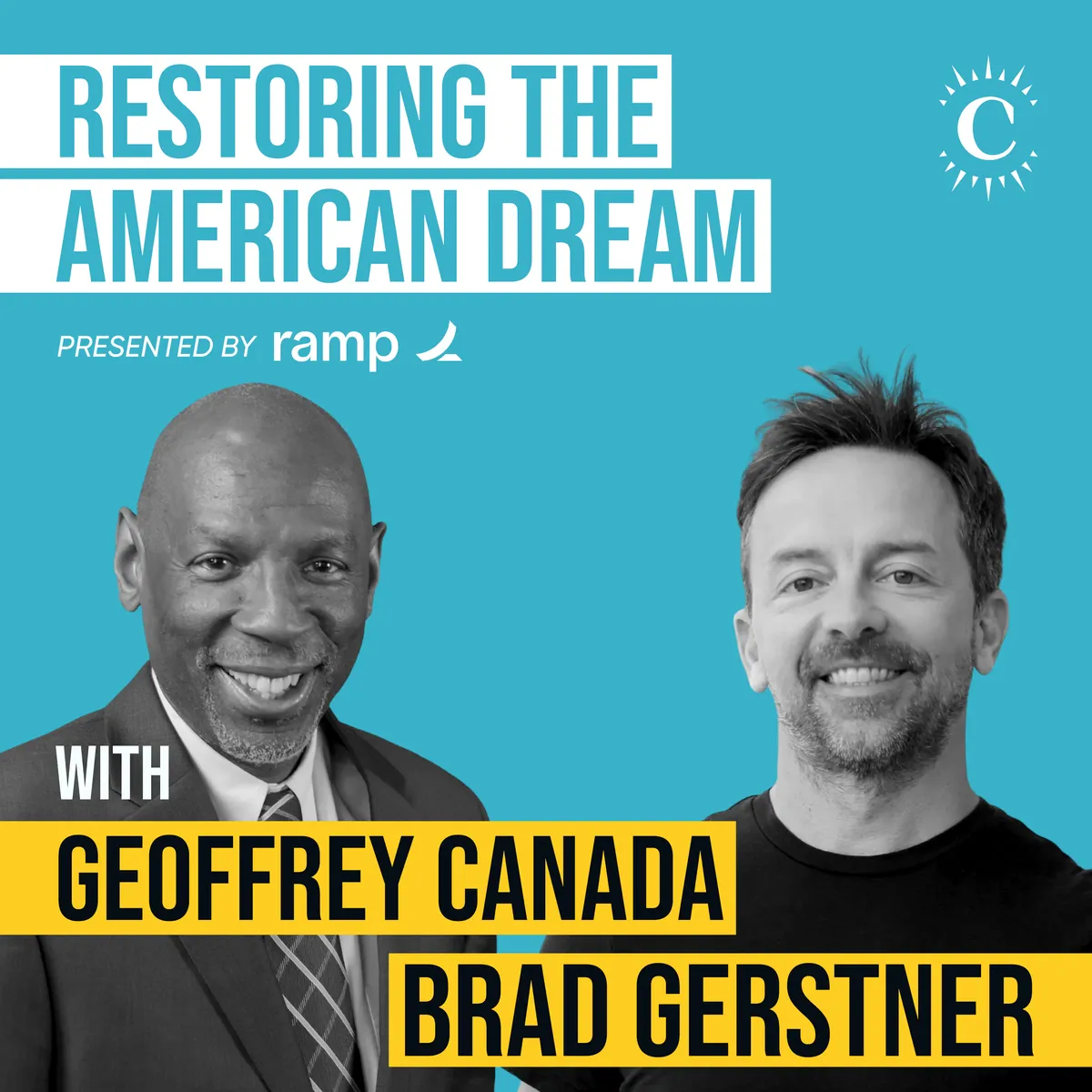
Altimeter's Brad Gerstner and Harlem Children's Zone founder Geoffrey Canada argue that Trump Accounts can give every American child a stake in an AI-era economy. They say the main remaining task is getting families to claim nearly 70 million mostly auto-opened accounts.
From the Invest Like the Best podcast episode of November 17, 2026 and cited sources: The total of nearly 70 million accounts comes mainly from automatic enrollment, not family choice. [2] [3] [9]
SOURCES[2] CNBC — Trump Accounts hit 70 million enrolled cnbc.com[3] The College Investor — Trump Accounts top 70 million thecollegeinvestor.com[9] CNBC — Trump Accounts will auto-enroll children cnbc.com
 AT Pulse research deskPublished · Updated · 5 min read · AI-assisted analysis
AI-assisted, not human-edited. Methodology Corrections Who owns this site
- What happened
- The total of nearly 70 million accounts comes mainly from automatic enrollment, not family choice. [2] [3] [9]
- Original source
- Invest Like the Best podcast episode, independent perspective
- Brief by
- AT Pulse research desk AI-assisted; publisher and contact on the desk page
- When
- November 17, 2026 podcast episode published
- Covered
- Nov 17 edition
- Evidence
- 11 sources across 8 sites; no transcript
- 1Colossus — Restoring the American Dream (EP.501)colossus.com
- 2CNBC — Trump Accounts hit 70 million enrolledcnbc.com
- 3The College Investor — Trump Accounts top 70 millionthecollegeinvestor.com
- 4Axios — America's newborns to get $1,000 investment accountsaxios.com
- 5CNBC — How Trump accounts workcnbc.com
- 6CNBC — $6 billion Dell investment in Trump accountscnbc.com
Reach: not measured yet
The total of nearly 70 million accounts comes mainly from automatic enrollment, not family choice. Temporary Treasury rules used Social Security data to open more than 60 million accounts in October 2026. Each account still has to be claimed and activated by a parent, and fewer than 1% of the auto-opened accounts have been claimed so far. [2] [3] [9]
The $1,000 Treasury seed applies only to children born from 2025 to 2028, and parents must elect it. Families can add up to $5,000 a year after tax. The money goes into low-cost index funds, and the account rolls into an IRA at age 18. Unlike 529 plans, the accounts do not offer tax-free withdrawals for education. [2] [3] [4] [6]
Private donors are becoming part of how the accounts are funded. Michael and Susan Dell pledged $6.25 billion, or $250 per child, for about 25 million children in qualifying ZIP codes. Neil Mehta has given $100 to each child in San Francisco. Gifts like these can now be targeted by geography across an almost universal base of accounts. [6] [10]
The guests present broad stock ownership as a partial answer to young people's fears about AI-driven job disruption and as a way to restore faith in capitalism. This is their argument, not a measured result. [1]
Accounts now exist for almost every eligible child, so the key measures become claims, activation and contributions. That makes onboarding the main opening for fintechs and asset managers.
Read the full assessment
No reviewed source quantifies whether ownership offsets AI-driven job disruption.
Executive brief
The episode claims that nearly 70 million American children now have accounts in their name. CNBC confirms that total, but more than 60 million of those accounts were opened automatically in October 2026, and The College Investor reports that parents have claimed fewer than 1% of the auto-opened accounts (CNBC; The College Investor). In Invest Like the Best EP.501, Altimeter's Brad Gerstner and Harlem Children's Zone founder Geoffrey Canada present "Trump Accounts" as a new social contract for the AI era, and they name getting families to claim their accounts as the main remaining problem (Colossus).
What changed and event timeline
Researchers criticize the opt-in design
Washington University's Jin Huang and the Urban Institute's Madeline Brown warned that requiring families to opt in through tax filing would leave out the lowest-income children ().
Accounts launch
Gerstner said the President wanted up to 70 million accounts created automatically within 90 days. At that point, families still had to opt in using Form 4547 ().
Episode released
Gerstner and Canada discuss how to get the 70 million accounts claimed, financial education, and young people's fears about AI ().
Capabilities and access
- Account type: a 530A, IRA-style account for children under 18 who have a Social Security number (Marketplace).
- Seed money: a one-time $1,000 from the Treasury, only for children born 2025–2028. Parents have to elect it.
- Contributions: families can add up to $5,000 a year after tax. The money is invested in low-cost index funds.
Read the full section
- Account type: a 530A, IRA-style account for children under 18 who have a Social Security number (Marketplace).
- Seed money: a one-time $1,000 from the Treasury, only for children born 2025–2028. Parents have to elect it. The episode's line that "every newborn receives $1,000" leaves this step out (The College Investor).
- Contributions: families can add up to $5,000 a year after tax. The money is invested in low-cost index funds. At 18 the account rolls into an IRA (CNBC).
Technical analysis for researchers and developers
- Enrollment pipeline: Treasury's temporary regulations open an account when a Social Security number is issued, so families no longer need to file Form 4547 for the account to exist.
- Portfolio rules: donations of individual stocks are now allowed, with a holding period of generally five years.
- Projected growth: CNBC's example uses an assumed 7% annual return. $1,000 grows to about $3,400 by age 18, or about $20,000 if the family adds $500 a year (CNBC).
Read the full section
- Enrollment pipeline: Treasury's temporary regulations open an account when a Social Security number is issued, so families no longer need to file Form 4547 for the account to exist. A parent must still claim and activate it (CNBC). As a result, "accounts created" and "accounts claimed" now measure different things.
- Portfolio rules: donations of individual stocks are now allowed, with a holding period of generally five years. Treasury's own rules acknowledge this adds concentration risk (CNBC).
- Projected growth: CNBC's example uses an assumed 7% annual return. $1,000 grows to about $3,400 by age 18, or about $20,000 if the family adds $500 a year (CNBC). That return is an assumption, not a forecast.
Claims and evidence
- Nearly 70 million accounts and more than $4.5 billion deposited: reported by CNBC (CNBC). Most of the accounts came from auto-enrollment, not family choice.
- Fewer than 1% of auto-opened accounts claimed: reported by The College Investor (The College Investor). No other outlet in the reviewed sources confirms it.
- 5% uptake among families earning up to $80,000: from Commonwealth, a nonprofit, before auto-enrollment began (CNBC).
Read the full section
- Nearly 70 million accounts and more than $4.5 billion deposited: reported by CNBC (CNBC). Most of the accounts came from auto-enrollment, not family choice.
- Fewer than 1% of auto-opened accounts claimed: reported by The College Investor (The College Investor). No other outlet in the reviewed sources confirms it.
- 5% uptake among families earning up to $80,000: from Commonwealth, a nonprofit, before auto-enrollment began (CNBC).
- Ownership will rebuild faith in capitalism: this is the guests' argument, not a measured result (Colossus).
Context and prior work
Opt-in savings programs for children have historically had low participation. Before auto-enrollment, the Urban Institute and Washington University's Center for Social Development both argued for creating accounts automatically (Yahoo/news). Besides the Dells, Neil Mehta has given $100 to each San Francisco child (Billionaires.Africa).
Read the full section
Opt-in savings programs for children have historically had low participation. Before auto-enrollment, the Urban Institute and Washington University's Center for Social Development both argued for creating accounts automatically (Yahoo/news). Large private gifts are now part of the funding model. Besides the Dells, Neil Mehta has given $100 to each San Francisco child (Billionaires.Africa). Gerstner has also written op-eds with Sen. Todd Young promoting the accounts (Sen. Young).
Limitations, safety and contested findings
- Who benefits: the opt-in design has been criticized for missing families that don't file taxes (Marketplace).
- Privacy trade-off: a tax-prep site director in the same report noted that opt-in may feel safer to immigrant families who worry about government data sharing.
- Concentration risk: IRS CEO Frank Bisignano said there would be no concentration risk, while Treasury's own rules say account holders will bear some (CNBC).
Read the full section
- Who benefits: the opt-in design has been criticized for missing families that don't file taxes (Marketplace).
- Privacy trade-off: a tax-prep site director in the same report noted that opt-in may feel safer to immigrant families who worry about government data sharing. Auto-enrollment through Social Security data removes that choice (Marketplace).
- Concentration risk: IRS CEO Frank Bisignano said there would be no concentration risk, while Treasury's own rules say account holders will bear some (CNBC).
- Comparison with 529 plans: advisers point out that 529 plans give tax-free withdrawals for education, which Trump Accounts do not (CNBC).
Business and practitioner implications
- Fintech and asset managers: the main open market is claim and activation, meaning identity checks, outreach and account onboarding at very large scale.
- Employers and philanthropies: contributions now reach a near-universal base of accounts. Gifts can be targeted by ZIP code, as the Dell pledge shows (CNBC).
- AI policy: the guests present broad ownership of stocks as one answer to AI-driven job disruption (Colossus).
Read the full section
- Fintech and asset managers: the main open market is claim and activation, meaning identity checks, outreach and account onboarding at very large scale. Getting accounts created is no longer the bottleneck (CNBC).
- Employers and philanthropies: contributions now reach a near-universal base of accounts. Gifts can be targeted by ZIP code, as the Dell pledge shows (CNBC).
- AI policy: the guests present broad ownership of stocks as one answer to AI-driven job disruption (Colossus). None of the reviewed sources quantify that effect.