
RegulationRules, enforcement & market structure
Colorado River Indian Tribes sell 9,009 acre-feet of Lake Mead water to Arizona district at $590 per acre-foot
The Colorado River Indian Tribes sold stored Lake Mead water to Central Arizona's water district for about $5.3 million, more than double an earlier conservation rate. The sale raises the question of whether senior tribal rights could anchor a market price for river water.
From the The Indicator from Planet Money podcast episode of November 17, 2026 and cited sources: On September 3, 2026, the Central Arizona Water Conservation District agreed to buy CRIT's last 9,009 acre-feet of conserved water at $590 per acre-foot, about $5.3 million in total. [3]
SOURCES[3] Western Water: CRIT Water Deal Sends 9,009 Acre-Feet to… western-water.com
 AT Pulse research deskPublished · Updated · 5 min read · AI-assisted analysis
AI-assisted, not human-edited. Methodology Corrections Who owns this site
- What happened
- On September 3, 2026, the Central Arizona Water Conservation District agreed to buy CRIT's last 9,009 acre-feet of conserved water at $590 per acre-foot, about $5.3 million in total. [3]
- Original source
- The Indicator from Planet Money podcast episode, independent perspective
- Brief by
- AT Pulse research desk AI-assisted; publisher and contact on the desk page
- When
- November 17, 2026 podcast episode published
- Covered
- Nov 17 edition
- Evidence
- 12 sources across 8 sites; transcript sourced
- 1NPR / The Indicator: How a tribal water deal could put a…npr.org
- 2Transcript: How a tribal water deal could put a price tag…npr.org
- 3Western Water: CRIT Water Deal Sends 9,009 Acre-Feet to…western-water.com
- 4Public Law 117-343congress.gov
- 5Parker Live: President Biden signs CRIT water bill into lawparkerliveonline.com
- 6Circle of Blue: Some of Arizona's Most Valuable Water…circleofblue.org
Reach: not measured yet
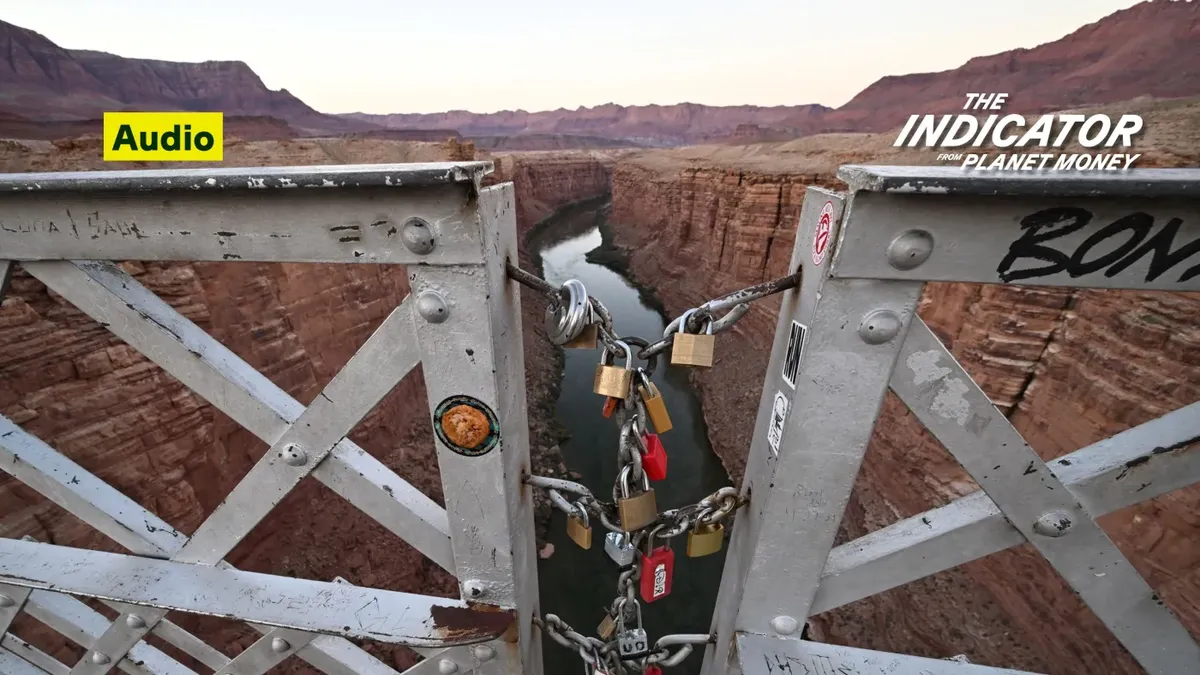
On September 3, 2026, the Central Arizona Water Conservation District agreed to buy CRIT's last 9,009 acre-feet of conserved water at $590 per acre-foot, about $5.3 million in total. That is more than twice the roughly $254 per acre-foot CRIT received for earlier drought conservation. The figures come from district and tribal statements. The water came from farmland CRIT left unplanted in 2020–2022. The sale closes out the tribe's commitments under the 2019 Drought Contingency Plan. [3]
CRIT holds some of Arizona's most senior rights, with an 1865 priority date and close to 720,000 acre-feet a year. A 2023 federal law lets it lease part of its Arizona water to users in Arizona's share of the Lower Basin, with leases capped at 100 years. That seniority is why NPR presents a negotiated CRIT price as a possible reference point for the river. CRIT has said up to 150,000 acre-feet a year could be available to lease by 2060, but it has made no decisions. [1] [4] [6]
A separate Navajo, Hopi and San Juan Southern Paiute settlement (S. 953) is stalled. It would cost about $5.136 billion, including a $1.7 billion pipeline from Lake Powell, and relies partly on leasing water to pay for infrastructure. Colorado, New Mexico, Utah and Wyoming object to leasing across the line between the river's upper and lower basins. [7] [8]
The evidence is one documented sale at $590 and an older payment of about $254. Arizona utilities, developers and mines now have prices to compare, and tribes with senior rights may become major sellers.
Read the full assessment
How much they can sell depends on Congress and the states.
Executive brief
On September 3, 2026, the Colorado River Indian Tribes (CRIT) agreed to sell 9,009 acre-feet of conserved water stored in Lake Mead to Arizona's Central Arizona Water Conservation District at $590 per acre-foot, about $5.3 million in total (Western Water). That is more than twice the roughly $254 per acre-foot CRIT got for earlier drought conservation. Because CRIT's rights are among the most senior in Arizona, a negotiated price for its water could become a reference point for the whole river. That is NPR's framing in The Indicator from Planet Money. Meanwhile, a separate Navajo–Hopi settlement that also relies on leasing has stalled because four states object.
What changed and event timeline
CRIT gets leasing authority
The Colorado River Indian Tribes Water Resiliency Act lets CRIT lease, exchange or store part of its Arizona water entitlement for users elsewhere in the Lower Basin (;).
Leasing made operational
CRIT signed agreements with Arizona's water department and the federal Bureau of Reclamation that put the law into effect, with leases capped at 100 years ().
$5 billion settlement questioned
At a Senate Indian Affairs hearing on the Navajo, Hopi and San Juan Southern Paiute settlement (S. 953), Interior official Scott Cameron called its cost "a significant issue" ().
Upper Basin states stall the settlement
Colorado, New Mexico, Utah and Wyoming object to the Navajo and Hopi leasing water across the line between the river's upper and lower basins ().
$590 per acre-foot deal approved
The district buys CRIT's last 9,009 acre-feet of conserved water, closing out CRIT's commitments under the 2019 Drought Contingency Plan ().
NPR frames it as price discovery
The Indicator episode asks whether a tribal water deal could set a price for the Colorado River ().
Capabilities and access
- CRIT's rights: close to 720,000 acre-feet a year across Arizona and California, with 662,402 in Arizona.
- Who can buy: only users in Arizona's part of the Lower Basin (Public Law 117-343).
- Possible scale: CRIT told federal officials that up to 150,000 acre-feet a year could be available to lease by 2060, but says no decisions have been made (Circle of Blue).
Read the full section
- CRIT's rights: close to 720,000 acre-feet a year across Arizona and California, with 662,402 in Arizona. Their 1865 priority date puts them at the "front of the line" (Circle of Blue).
- Who can buy: only users in Arizona's part of the Lower Basin (Public Law 117-343).
- Possible scale: CRIT told federal officials that up to 150,000 acre-feet a year could be available to lease by 2060, but says no decisions have been made (Circle of Blue).
Technical analysis for researchers and developers
- Where the water came from: CRIT left farmland unplanted from 2020 to 2022 and conserved about 160,000 acre-feet. The other 10,009 acre-feet went unpaid.
- What the price is, and isn't: $590 is a one-off sale of water already stored.
- Planning limits: a former Phoenix water director noted that leases shorter than 100 years can't by themselves meet Arizona's 100-year assured supply requirement (Circle of Blue).
Read the full section
- Where the water came from: CRIT left farmland unplanted from 2020 to 2022 and conserved about 160,000 acre-feet. It was paid $38 million for 150,000 acre-feet. The other 10,009 acre-feet went unpaid. After losses to the system and evaporation, 9,009 acre-feet were left, stored in Lake Mead as "Intentionally Created Surplus" (Western Water).
- What the price is, and isn't: $590 is a one-off sale of water already stored. It is not a recurring annual lease, and there is no published method showing how the price was set.
- Planning limits: a former Phoenix water director noted that leases shorter than 100 years can't by themselves meet Arizona's 100-year assured supply requirement (Circle of Blue).
Claims and evidence
- $590 per acre-foot, 9,009 acre-feet, about $5.3 million: from district and tribal statements as reported in Western Water. No independent audit is cited.
- That the deal "puts a price tag" on the river: this is NPR's framing as commentary (NPR), not a documented benchmark.
- The settlement costs about $5.136 billion, including $1.7 billion for a pipeline from Lake Powell (Western Water).
Read the full section
- $590 per acre-foot, 9,009 acre-feet, about $5.3 million: from district and tribal statements as reported in Western Water. No independent audit is cited.
- That the deal "puts a price tag" on the river: this is NPR's framing as commentary (NPR), not a documented benchmark.
- The settlement costs about $5.136 billion, including $1.7 billion for a pipeline from Lake Powell (Western Water).
- The Navajo and Hopi plan to lease water to pay for infrastructure: reported by ProPublica. ProPublica cites no lease prices.
Context and prior work
- Tribes have been key dealmakers in the basin for at least a decade (Circle of Blue, 2015).
- Tribal water rights trace back to the Supreme Court's 1908 Winters decision. The Navajo rejected an earlier settlement in 2012 (ProPublica).
- In November 2026, Reclamation offered $6 million in drought funding for basin tribes (Western Water).
Read the full section
- Tribes have been key dealmakers in the basin for at least a decade (Circle of Blue, 2015).
- Tribal water rights trace back to the Supreme Court's 1908 Winters decision. The Navajo rejected an earlier settlement in 2012 (ProPublica).
- In November 2026, Reclamation offered $6 million in drought funding for basin tribes (Western Water).
- The seven basin states are still at an impasse over long-term river rules (ColoradoBiz).
Limitations, safety and contested findings
- The states' objections: the Upper Basin states say leasing across the basin divide breaks the river's governing rules.
- Conditions on CRIT leasing: CRIT says it will lease only if the proceeds pay for upgrading its irrigation systems (Circle of Blue).
- How far one price goes: it rests on a single small transaction, and it can't be applied directly to longer-term leases.
Read the full section
- The states' objections: the Upper Basin states say leasing across the basin divide breaks the river's governing rules. They worry it could open the door to sales to the highest bidder in places like Los Angeles, Phoenix or Las Vegas, and that it could count against their own obligations. Navajo President Buu Nygren argues the tribe shouldn't be "punished for being in two basins" (ProPublica).
- Conditions on CRIT leasing: CRIT says it will lease only if the proceeds pay for upgrading its irrigation systems (Circle of Blue).
- How far one price goes: it rests on a single small transaction, and it can't be applied directly to longer-term leases.
Business and practitioner implications
- Pricing: Arizona utilities, developers and mines now have one documented price ($590) and one older conservation payment (about $254) to compare.
- Tribes as sellers: tribes with senior rights are emerging as major suppliers. How much they can sell depends on Congress and on the states.
- Risk to watch: whether S. 953 passes, and whether the Upper Basin objections spread to other leasing arrangements.
Read the full section
- Pricing: Arizona utilities, developers and mines now have one documented price ($590) and one older conservation payment (about $254) to compare. Cities including Gilbert, Glendale, Mesa and Scottsdale already lease water from tribes (Source New Mexico).
- Tribes as sellers: tribes with senior rights are emerging as major suppliers. How much they can sell depends on Congress and on the states.
- Risk to watch: whether S. 953 passes, and whether the Upper Basin objections spread to other leasing arrangements.
The source trail.
Sources (12)
NPR / The Indicator: How a tribal water deal could put a price tag on the Colorado River
npr.orgTranscript: How a tribal water deal could put a price tag on the Colorado River
published_transcript
npr.org