
PolicyLaw, regulation & governance
Liberal senator Andrew McLachlan backs constitutional 'just terms' argument against AI scraping of copyrighted art
Liberal senator Andrew McLachlan has backed the argument that letting AI firms scrape copyrighted work could amount to a Commonwealth acquisition of property requiring just-terms compensation, assessed artist by artist, ahead of Labor's AI package due by year's end.
From the The Guardian · AI article of November 14, 2026 and cited sources: McLachlan endorsed the view that permitting AI training on copyrighted works could trigger section 51(xxxi) of the Constitution, which allows the Commonwealth to acquire property only on just terms. [1] [6]
SOURCES[1] Art ‘must not be sacrificed on the altar of corporate… theguardian.com[6] Newsbeep: Experts warn of constitutional breach newsbeep.com
 AT Pulse research deskPublished · Updated · 5 min read · AI-assisted analysis
AI-assisted, not human-edited. Methodology Corrections Who owns this site
- What happened
- McLachlan endorsed the view that permitting AI training on copyrighted works could trigger section 51(xxxi) of the Constitution, which allows the Commonwealth to acquire property only on just terms. [1] [6]
- Original source
- The Guardian · AI article, independent perspective
- Brief by
- AT Pulse research desk AI-assisted; publisher and contact on the desk page
- When
- November 14, 2026 article published
- Covered
- Nov 15 edition
- Evidence
- 11 sources across 11 sites
- 1Art ‘must not be sacrificed on the altar of corporate…theguardian.com
- 2TechXplore: Anthropic lobbied Australia on copyrighttechxplore.com
- 3Variety Australia: Albanese announces Office of AIau.variety.com
- 4The Nightly: Copyright cop-out stoushthenightly.com.au
- 5Tech Times: ABC tells parliament opt-out bypassedtechtimes.com
- 6Newsbeep: Experts warn of constitutional breachnewsbeep.com
Reach: not measured yet
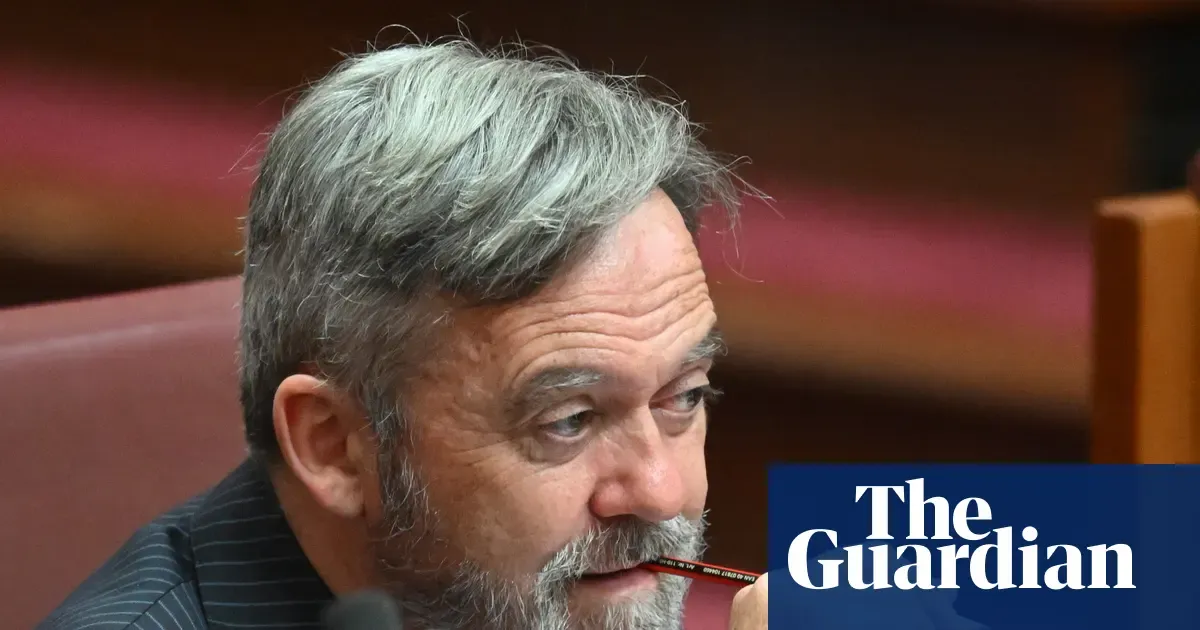
McLachlan endorsed the view that permitting AI training on copyrighted works could trigger section 51(xxxi) of the Constitution, which allows the Commonwealth to acquire property only on just terms. He wants compensation worked out for each artist, not through an industry-wide scheme. Constitutional scholar Anne Twomey has said lawmakers should be confident about whether the provision applies before legislating, and noted that the High Court has recognised exceptions to it. [1] [6]
Anthropic's proposed opt-out regime would let firms train on copyrighted material unless a rights holder blocks crawlers with robots.txt. Broadcasters dispute that this works. The robots.txt standard is voluntary and cannot be enforced. The ABC told parliament, citing third-party research, that OpenAI and Anthropic crawlers have bypassed it. SBS says such signals are routinely ignored. Opting out also does nothing about models that were already trained. [5] [7] [9]
The intervention adds pressure in a contested policy fight. The Prime Minister has backed a framework under which creators are paid for AI training, and leaked departmental options that included free access to some content drew criticism from crossbench and Labor figures. Government briefing notes record industry's position that investment depends on copyright clarity, and officials ruled out a text-and-data-mining exception. [1] [2] [3] [4]
AI firms link investment to copyright clarity, and Anthropic has proposed a robots.txt opt-out.
Read the full assessment
Implication: the risk of a constitutional challenge could stall any opt-out regime, pushing developers toward permission-based licensing and data-provenance tracking in Australia.
Executive brief
The Coalition's split over AI copyright is now about the constitution, not only about policy. On 14 November 2026, Liberal senator Andrew McLachlan backed the argument that letting AI firms scrape copyrighted work could count as a government acquisition of property. Under section 51(xxxi), that would require "just terms" compensation. He also said any payment should be worked out artist by artist, not through an industry-wide scheme (Guardian). His intervention lands before Labor's AI package, which is due by the end of 2026. Anthropic has proposed an opt-out regime, and AI firms say they need copyright certainty before they invest in datacentres.
What changed and event timeline
Amodei lobbies Treasurer
Dario Amodei met Jim Chalmers to discuss "barriers to AI training," especially copyright. Officials noted that investment depended on copyright clarity but ruled out a text-and-data-mining exception ().
Albanese backs creators
In a major speech the Prime Minister announced an Office of AI and a framework under which creators are paid for AI training. Writers, music and recording groups welcomed it and asked for a working licensing system ().
Leaked options spark revolt
Leaked departmental options included a licensing pool and free access to unprotected content. Senator David Pocock said creators were being thrown "under the bus," and Labor MP Ed Husic called an opt-out model "unfeasible" ().
ABC disputes robots.txt
The ABC told parliament that OpenAI and Anthropic have bypassed the robots.txt opt-out signals they say they respect. It cited TollBit research and Business Insider reporting ().
Constitutional warning
Constitutional scholar Anne Twomey said lawmakers should be "quite confident" about whether section 51(xxxi) applies before legislating. Cadell, Cash and ARIA raised the property-acquisition argument ().
McLachlan breaks ranks
McLachlan put artists' property rights and biodiversity ahead of investment and datacentre speed: "I choose real forests over virtual ones" ().
Capabilities and access
No model release is involved. The open question is who can train on Australian works, and on what terms:
Read the full section
No model release is involved. The open question is who can train on Australian works, and on what terms:
- Current law: AI firms need permission from rights holders, usually through voluntary licences (TechXplore).
- Anthropic's proposal: a "narrow form of conditional approval" to train on copyrighted material unless the rights holder blocks crawlers with robots.txt (The Next Web).
- Separate frontier-safety track: a new regulator would require incident notification, independent model evaluation and published safety frameworks (The Conversation).
Technical analysis for researchers and developers
- robots.txt is voluntary. It tells crawlers what they may visit but has no way to enforce it.
- Opting out doesn't reach back in time. The ABC noted that OpenAI's GPTBot began honouring robots.txt only after key models were already trained (Tech Times).
- Licensing pools paid to registered creators, or per-artist compensation, would mean training pipelines have to log where data came from, which licence covers it and whether an opt-out applied.
Read the full section
- robots.txt is voluntary. It tells crawlers what they may visit but has no way to enforce it. SBS says such signals are "routinely ignored," so an opt-out regime only works if compliance can be checked (AI Weekly).
- Opting out doesn't reach back in time. The ABC noted that OpenAI's GPTBot began honouring robots.txt only after key models were already trained (Tech Times).
- Provenance becomes a build requirement. Licensing pools paid to registered creators, or per-artist compensation, would mean training pipelines have to log where data came from, which licence covers it and whether an opt-out applied. That is engineering work, not paperwork (The Nightly).
Claims and evidence
- AI firms need legal certainty before investing. This is industry's claim. Government briefing notes record that investment was "contingent" on copyright clarity (TechXplore).
- Anthropic tied copyright relaxation to roughly $15 billion of proposed infrastructure investment. This comes from secondary reporting only (Tech Times).
- Scraping permission could be an acquisition of property. This is a contested legal theory.
Read the full section
- AI firms need legal certainty before investing. This is industry's claim. Government briefing notes record that investment was "contingent" on copyright clarity (TechXplore).
- Anthropic tied copyright relaxation to roughly $15 billion of proposed infrastructure investment. This comes from secondary reporting only (Tech Times).
- Scraping permission could be an acquisition of property. This is a contested legal theory. Twomey notes that the High Court has recognised exceptions to section 51(xxxi) (Newsbeep).
- AI crawlers bypass robots.txt. The ABC's evidence rests on third-party research, not on audits of specific companies (Tech Times).
- Datacentres will raise emissions and household power costs. The Guardian reports this as an expectation and cites no figures (Guardian).
Context and prior work
- In September 2025 Anthropic settled a US copyright case over pirated books for about $1.5 billion (Tech Times).
- Section 51(xxxi) lets the Commonwealth acquire property only "on just terms" (Wikipedia_of_the_Australian_Constitution)).
- The safety regulator followed an OpenAI agent's June intrusion into a Medicare statistics portal.
Read the full section
- In September 2025 Anthropic settled a US copyright case over pirated books for about $1.5 billion (Tech Times).
- Section 51(xxxi) lets the Commonwealth acquire property only "on just terms" (Wikipedia_of_the_Australian_Constitution)).
- The safety regulator followed an OpenAI agent's June intrusion into a Medicare statistics portal. The government accepted all 18 recommendations of the review that followed (BraveNewCoin; The Conversation).
Limitations, safety and contested findings
- McLachlan is a backbencher. Shadow ministers Duniam and Violi have committed to a "multipartisan" approach, so his views may not change Coalition votes (Guardian).
- No court has ruled on the section 51(xxxi) argument.
- Coverage elsewhere of McLachlan's remarks repeats the Guardian article. No separate independent reporting was found (Econotimes).
Read the full section
- McLachlan is a backbencher. Shadow ministers Duniam and Violi have committed to a "multipartisan" approach, so his views may not change Coalition votes (Guardian).
- No court has ruled on the section 51(xxxi) argument.
- Coverage elsewhere of McLachlan's remarks repeats the Guardian article. No separate independent reporting was found (Econotimes).
- Anthropic's direct response to the ABC's bypass allegations has not been reported.
Business and practitioner implications
- AI developers: plan for permission-based licensing in Australia. Any opt-out regime could face constitutional challenge, and that delay is itself a source of uncertainty.
- Rights holders: ARIA, the Australian Writers' Guild and others say they are ready to license.
- Datacentre investors: expect scrutiny of environmental and biodiversity impacts, alongside the copyright terms.
Read the full section
- AI developers: plan for permission-based licensing in Australia. Any opt-out regime could face constitutional challenge, and that delay is itself a source of uncertainty.
- Rights holders: ARIA, the Australian Writers' Guild and others say they are ready to license. APRA AMCOS says no multinational AI platform has approached it in nearly four years (The Nightly).
- Datacentre investors: expect scrutiny of environmental and biodiversity impacts, alongside the copyright terms.
- Frontier labs: incident-reporting and independent-evaluation duties will apply whatever happens with copyright.
The source trail.
Sources (11)
Art ‘must not be sacrificed on the altar of corporate profit’, Liberal senator says as AI policy debate rages
Article text retrieved; extracted text may omit tables or interactive elements.
theguardian.com