
ExitsIPOs, listings & liquidity
SEBI Clears Razorpay to Proceed With IPO, Listing Expected in Early 2027
Indian payments company Razorpay has cleared SEBI review for its IPO. People familiar with the matter put the issue at ₹5,000–6,000 crore and the valuation near $5 billion, about a third below its 2021 private mark. Listing is expected January–March 2027.
From the Inc42 article of November 13, 2026 and cited sources: SEBI's processing status shows the regulator issued observations on Razorpay's confidential draft papers on November 3, 2026, which lets the company proceed with its offering. [1] [2]
SOURCES[1] [Update] Razorpay Gets SEBI Nod For ₹6,000 Cr IPO inc42.com[2] YourStory – Razorpay, Sembcorp Green Infra get Sebi nod yourstory.com
 AT Pulse research deskPublished · Updated · 4 min read · AI-assisted analysis
AI-assisted, not human-edited. Methodology Corrections Who owns this site
- What happened
- SEBI's processing status shows the regulator issued observations on Razorpay's confidential draft papers on November 3, 2026, which lets the company proceed with its offering. [1] [2]
- Original source
- Inc42 article, independent perspective
- Brief by
- AT Pulse research desk AI-assisted; publisher and contact on the desk page
- When
- November 13, 2026 article published
- Covered
- Nov 15 edition
- Evidence
- 9 sources across 8 sites
- 1[Update] Razorpay Gets SEBI Nod For ₹6,000 Cr IPOinc42.com
- 2YourStory – Razorpay, Sembcorp Green Infra get Sebi nodyourstory.com
- 3Inc42 – Razorpay FY25 resultsinc42.com
- 4Samco – Razorpay FY25 resultssamco.in
- 5Razorpay newsroom – Vulcan launchrazorpay.com
- 6AWS press release – Vulcanpress.aboutamazon.com
Reach: not measured yet
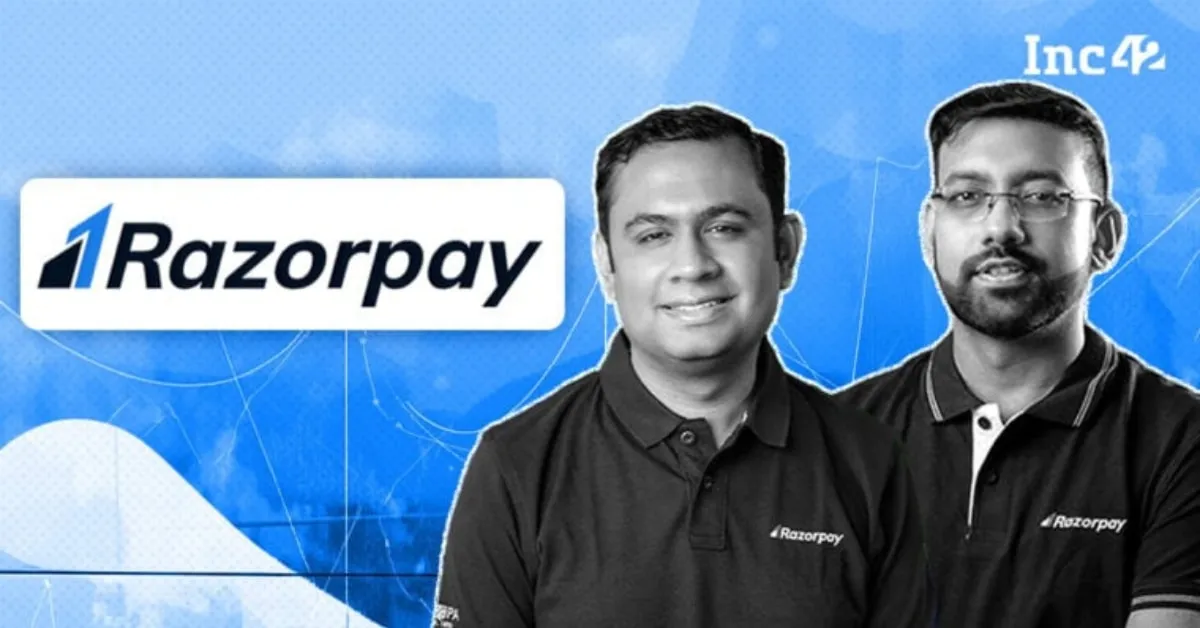
SEBI's processing status shows the regulator issued observations on Razorpay's confidential draft papers on November 3, 2026, which lets the company proceed with its offering. The draft was filed through the confidential route in June 2026. The expected ₹5,000–6,000 crore size and January–March 2027 listing window come from people familiar with the matter. Razorpay has not disclosed the issue size. [1] [2]
The reported target of about $5 billion is roughly a third below the $7.5 billion valuation from Razorpay's 2021 round. That makes the listing an early public-market price check on Indian fintechs that moved their legal home back to India before going public, as Razorpay did in 2025. [1] [2] [7]
FY25 operating revenue rose 65% to ₹3,783 crore. One-time ESOP, tax and restructuring costs pushed the company into a loss. Outlets disagree on whether ₹1,209 crore was the ESOP expense or the net loss, and one reports gross profit of about ₹1,277 crore. [3] [4] [9]
Razorpay pitches itself as an AI-first payments company. Its main AI product is Vulcan, a transformer model trained on payments data and built with NVIDIA and AWS. Only early components run inside Razorpay's own network. The company's own figures claim higher payment success rates and better fraud detection, but no paper or outside evaluation has been published. [5] [6] [8]
Confirmed: SEBI's observations let Razorpay proceed with its IPO. If the roughly one-third discount to its private valuation holds, it will show how public investors price Indian fintechs that moved home.
Read the full assessment
The issue size and price stay unconfirmed until the updated filing is public.
Executive brief
Razorpay, the Indian payments company valued at $7.5 billion in 2021, has SEBI clearance for an IPO that unnamed sources say targets about $5 billion. That is roughly a third below its last private price. SEBI's processing status shows it issued observations on Razorpay's confidential draft on November 3, 2026, and those observations allow the company to proceed with the offering (Inc42). People familiar with the matter put the issue at ₹5,000–6,000 crore, with listing expected between January and March 2027 (YourStory). For AI watchers, Razorpay presents itself as an AI-first payments company, built around its in-house "Vulcan" payments model.
What changed and event timeline
Last private valuation
Razorpay's last funding round valued it at $7.5 billion. That price is the benchmark for the expected IPO discount ().
Confidential DRHP filed
Razorpay filed its draft IPO papers through SEBI's confidential route. A $5–6 billion valuation target was reported at the time ().
Vulcan launched
Razorpay announced a transformer-based payments foundation model built with NVIDIA and AWS (;).
SEBI issues observations
SEBI's processing status records final observations on the draft papers. The Economic Times first reported the clearance, and Inc42 followed on November 4 (;).
Capabilities and access
- Vulcan: a proprietary transformer model for payments data. Razorpay says it is not an LLM. No model version or parameter count is published.
- Access: only "early components" are live, inside Razorpay's own network. Named merchants include Blinkit and redBus. There is no external API or model release.
- Agent Studio: a platform for task-specific business agents. About 200 businesses were using it in beta as of August (Inc42).
Read the full section
- Vulcan: a proprietary transformer model for payments data. Razorpay says it is not an LLM. The company reports training on about 3 trillion data points from 4 billion payments, with about 3,000 signals per transaction (Razorpay newsroom). No model version or parameter count is published.
- Access: only "early components" are live, inside Razorpay's own network. Named merchants include Blinkit and redBus. There is no external API or model release.
- Agent Studio: a platform for task-specific business agents. About 200 businesses were using it in beta as of August (Inc42).
Technical analysis for researchers and developers
- Design: Razorpay describes one continuously learning model that replaces separate, task-specific ML models. Tasks include route scoring, fraud detection and checkout personalisation (Razorpay newsroom).
- Infrastructure: NVIDIA GPUs for training and inference, and Amazon SageMaker for development and deployment (Crowdfund Insider).
- Reproducibility: no paper, model card, tokenisation scheme or evaluation protocol is published.
Read the full section
- Design: Razorpay describes one continuously learning model that replaces separate, task-specific ML models. Tasks include route scoring, fraud detection and checkout personalisation (Razorpay newsroom).
- Infrastructure: NVIDIA GPUs for training and inference, and Amazon SageMaker for development and deployment (Crowdfund Insider).
- Reproducibility: no paper, model card, tokenisation scheme or evaluation protocol is published. The reported gains come from Razorpay's own live traffic, with no stated baselines, time windows or control groups.
Claims and evidence
- IPO size and valuation: ₹5,000–6,000 crore and about $5 billion. Razorpay has not disclosed the issue size (YourStory). The fresh-issue/OFS split is unknown.
- SEBI observations on November 3: confirmed by the regulator's processing status (Inc42).
- Vulcan results: Razorpay reports an 8–10% higher payment success rate, 8x more international card fraud caught and 5x more disputed transactions flagged.
Read the full section
- IPO size and valuation: ₹5,000–6,000 crore and about $5 billion. These come from unnamed sources (via ET and PTI), not filings. Razorpay has not disclosed the issue size (YourStory). The fresh-issue/OFS split is unknown.
- SEBI observations on November 3: confirmed by the regulator's processing status (Inc42).
- Vulcan results: Razorpay reports an 8–10% higher payment success rate, 8x more international card fraud caught and 5x more disputed transactions flagged. All of these are self-reported, with no independent evaluation (Razorpay newsroom).
- Partner quotes: the endorsing quotes come from NVIDIA and AWS staff, both of which are technology vendors to the project.
Context and prior work
- Razorpay was founded in 2014 by Harshil Mathur and Shashank Kumar.
- Razorpay is one of several Indian startups that moved their legal base back to India before listing.
- In October it expanded a partnership with OpenAI so that Razorpay Engage can run brands' campaigns on ChatGPT Ads (Inc42).
Read the full section
- Razorpay was founded in 2014 by Harshil Mathur and Shashank Kumar. It has raised more than $800 million from investors including Y Combinator, Tiger Global, Ribbit Capital and Lightspeed (Inc42). Upstox lists Peak XV, GIC, Alkeon, Lone Pine and TCV among its backers (Upstox).
- Razorpay is one of several Indian startups that moved their legal base back to India before listing.
- In October it expanded a partnership with OpenAI so that Razorpay Engage can run brands' campaigns on ChatGPT Ads (Inc42).
Limitations, safety and contested findings
- FY25 figures conflict. Entrackr reports FY25 gross profit of about ₹1,277 crore (Entrackr).
- Draft not public. Because the DRHP was filed confidentially, its risk disclosures are not yet available.
- Vulcan: none of its fraud or reliability claims have been independently checked.
Read the full section
- FY25 figures conflict. Inc42's IPO story describes ₹1,209 crore as ESOP expense, while Samco calls ₹1,209 crore the post-ESOP loss (Inc42; Samco). Entrackr reports FY25 gross profit of about ₹1,277 crore (Entrackr).
- Draft not public. Because the DRHP was filed confidentially, its risk disclosures are not yet available. One market outlet's write-up says the DRHP was filed in June 2024, which conflicts with other reports of June 2026 (Upstox).
- Vulcan: none of its fraud or reliability claims have been independently checked.
Business and practitioner implications
- Investors: a roughly $5 billion target against a $7.5 billion private mark is a test of how public markets price Indian fintech after the reverse-flip wave.
- Merchants and developers: Vulcan's value comes through Razorpay's own products (routing, checkout, fraud tools), not through standalone model access.
- AI teams: this is a notable industry case of training a foundation model on structured transaction data instead of language.
Read the full section
- Investors: a roughly $5 billion target against a $7.5 billion private mark is a test of how public markets price Indian fintech after the reverse-flip wave. Treat all figures as unconfirmed until the updated DRHP or RHP is published.
- Merchants and developers: Vulcan's value comes through Razorpay's own products (routing, checkout, fraud tools), not through standalone model access. Ask for A/B evidence on your own traffic.
- AI teams: this is a notable industry case of training a foundation model on structured transaction data instead of language. Without published methods, though, it is not a benchmark anyone else can test.
The source trail.
Sources (9)
[Update] Razorpay Gets SEBI Nod For ₹6,000 Cr IPO
Article text retrieved; extracted text may omit tables or interactive elements.
inc42.com