
Fed & ratesCentral banks & interest rates
US wholesale prices rose 0.3% in October, lifting the annual PPI rate to 6.5%, the highest since November 2022
US producer prices rose 0.3% in October, a touch under forecasts, but the annual rate climbed to 6.5%, the highest since November 2022, as goods prices jumped 10.2%. Markets now fully price a Fed rate hike in December.
From the CNBC · Economy article of November 13, 2026 and cited sources: Final-demand producer prices rose 0.3% in October, below the 0.4% consensus, and 6.5% from a year earlier, against 6.6% expected. [2] [1] [6] [3]
SOURCES[2] BLS: Producer Price Index News Release, October 2026 bls.gov[1] CNBC: Wholesale prices rose 0.3% in October… cnbc.com[6] FXStreet: Annual producer inflation rises to 6.5% vs 6.6%… fxstreet.com
 AT Pulse research deskPublished · Updated · 5 min read · AI-assisted analysis
AI-assisted, not human-edited. Methodology Corrections Who owns this site
- What happened
- Final-demand producer prices rose 0.3% in October, below the 0.4% consensus, and 6.5% from a year earlier, against 6.6% expected. [2] [1] [6] [3]
- Original source
- CNBC · Economy article, independent perspective
- Brief by
- AT Pulse research desk AI-assisted; publisher and contact on the desk page
- When
- November 13, 2026 article published
- Covered
- Nov 15 edition
- Evidence
- 6 sources across 5 sites
- 1CNBC: Wholesale prices rose 0.3% in October…cnbc.com
- 2BLS: Producer Price Index News Release, October 2026bls.gov
- 3Yahoo Finance: PPI report: Inflation shows signs of…finance.yahoo.com
- 4BLS: Consumer Price Index release, Nov 10, 2026bls.gov
- 5ANI: US producer prices rise 6.5 pc annually in Octoberaninews.in
- 6FXStreet: Annual producer inflation rises to 6.5% vs 6.6%…fxstreet.com
Reach: not measured yet
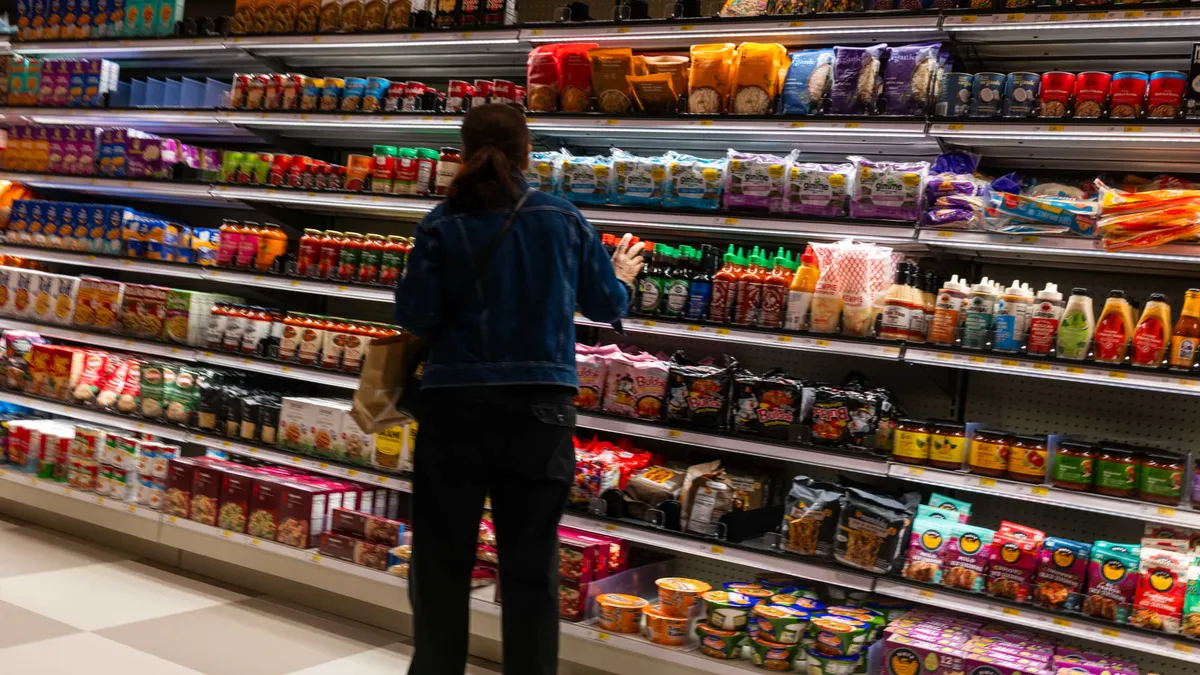
Final-demand producer prices rose 0.3% in October, below the 0.4% consensus, and 6.5% from a year earlier, against 6.6% expected. Goods drove the jump: they rose 10.2% over 12 months, the largest gain since October 2022. Core PPI, which excludes food, energy and trade services, rose 0.5% on the month, and its annual rate eased to 4.9% from 5.0%. [2] [1] [6] [3]
A few items drove most of the gains. Truck freight rose 3.9% and accounted for over 80% of the services increase. Basic organic chemicals led core goods, and food rose 1.3%. Some figures pointed the other way: energy fell 0.1% and unprocessed intermediate goods fell 3.1%. [2] [1]
Several Fed officials, including Chicago Fed President Austan Goolsbee, said price pressures are spreading beyond oil and tariffs. After the release, markets fully priced a quarter-point hike at the December 8–9 meeting, with small odds of a half-point move. Some forecasters see back-to-back hikes in December and January. [1] [3]
The data show producer inflation at a four-year high; the view that pressure is spreading beyond oil and tariffs is Fed officials' interpretation. If it holds, businesses face higher borrowing costs and rising freight, chemical and food input costs.
Executive brief
US goods prices at the producer level rose 10.2% in the year to October, the biggest 12-month gain since October 2022. That pushed headline wholesale inflation to 6.5%, the highest rate since November 2022 (BLS). The monthly figure was 0.3%, slightly below the 0.4% consensus. Even so, markets fully priced a quarter-point Fed rate hike at the December 8–9 meeting (CNBC). Several Fed officials now describe price pressures as spreading beyond oil and tariffs (Yahoo Finance).
What changed and event timeline
Shutdown leaves a data gap
BLS collected no CPI survey data for October 2025 because funding lapsed. As a result, it cannot publish 12-month changes for most October 2026 CPI indexes ().
Big monthly PPI jump
Final-demand producer prices rose 1.4% in September, according to coverage of the October release (). BLS has since revised its June–September data ().
PPI hits a four-year high
Final demand rose 0.3% on the month and 6.5% on the year, the largest 12-month gain since November 2022's 7.4% ().
Goolsbee warns on breadth
Chicago Fed President Austan Goolsbee told CNBC that progress has stalled, and in some cases reversed, even in categories not driven by oil or tariffs ().
Capabilities and access
These are the October 2026 numbers from the BLS Producer Price Index release of November 13, 8:30 a.m.
Read the full section
These are the October 2026 numbers from the BLS Producer Price Index release of November 13, 8:30 a.m. ET (BLS):
- Final demand: +0.3% on the month (seasonally adjusted), +6.5% on the year (not adjusted).
- Goods: +0.5% on the month, +10.2% on the year. Food rose 1.3% and energy fell 0.1%.
- Services: +0.2%. Trade margins fell 0.2%, and transportation and warehousing rose 2.0%.
- Core (excluding food, energy and trade services): +0.5% on the month, +4.9% on the year.
- Intermediate demand: processed goods +0.4%, unprocessed goods −3.1%, services +0.6%.
Technical analysis for researchers and developers
- Mixed adjustment: BLS seasonally adjusts the monthly changes but reports the 12-month figures unadjusted, so the two aren't directly comparable (BLS).
- Revisions: June–September data were revised for late reports and corrections. Model inputs should be pulled again rather than appended to old vintages (BLS).
- Uneven coverage: The PPI has a 12-month rate for October. Year-over-year comparisons across the two measures need care.
Read the full section
- Mixed adjustment: BLS seasonally adjusts the monthly changes but reports the 12-month figures unadjusted, so the two aren't directly comparable (BLS).
- Revisions: June–September data were revised for late reports and corrections. Model inputs should be pulled again rather than appended to old vintages (BLS).
- Uneven coverage: The PPI has a 12-month rate for October. Most CPI indexes don't, because of the 2025 shutdown gap (BLS CPI release). Year-over-year comparisons across the two measures need care.
- Concentrated drivers: Truck freight (+3.9%) accounted for over 80% of the services increase. Basic organic chemicals (+3.9%) led the core goods rise (BLS).
Claims and evidence
- 6.5% annual rate, highest since November 2022: confirmed by the primary release (BLS).
- Below forecasts: the consensus was 0.4% on the month (Dow Jones, per CNBC) and 6.6% on the year (FXStreet).
- Conflict on core goods: CNBC says goods excluding food and energy fell 0.1% yet drove over 60% of the goods increase.
Read the full section
- 6.5% annual rate, highest since November 2022: confirmed by the primary release (BLS).
- Below forecasts: the consensus was 0.4% on the month (Dow Jones, per CNBC) and 6.6% on the year (FXStreet).
- Conflict on core goods: CNBC says goods excluding food and energy fell 0.1% yet drove over 60% of the goods increase. BLS says that category rose 0.5% (CNBC vs BLS). The BLS figure is the authoritative one.
- "Broadening" inflation: this is Fed officials' interpretation, not something the data show by itself. Goolsbee, Susan Collins, Michelle Bowman and John Williams all made the point (Yahoo Finance).
Context and prior work
- The 12-month rate is the highest since November 2022 (7.4%), during the post-pandemic inflation surge (BLS).
- Intermediate processed goods are up 14.6% on the year, the most since July 2022 (CNBC).
- Fed officials point to three sources of pressure: the Iran war, higher fuel prices and President Trump's tariffs (CNBC).
Read the full section
- The 12-month rate is the highest since November 2022 (7.4%), during the post-pandemic inflation surge (BLS).
- Intermediate processed goods are up 14.6% on the year, the most since July 2022 (CNBC).
- Fed officials point to three sources of pressure: the Iran war, higher fuel prices and President Trump's tariffs (CNBC).
- Goolsbee noted inflation has been above the Fed's 2% target for almost six years (CNBC).
Limitations, safety and contested findings
- Mixed signals: Energy fell 0.1% and unprocessed intermediate goods fell 3.1% (BLS). Northlight's Chris Zaccarelli saw "some signs of improving" (CNBC).
- Narrow drivers: A large share of the gains comes from a few items, mainly freight and chemicals (BLS).
- Small easing in core: The core 12-month rate dipped to 4.9% from 5.0% in September (Yahoo Finance).
Read the full section
- Mixed signals: Energy fell 0.1% and unprocessed intermediate goods fell 3.1% (BLS). Northlight's Chris Zaccarelli saw "some signs of improving" (CNBC).
- Narrow drivers: A large share of the gains comes from a few items, mainly freight and chemicals (BLS).
- Small easing in core: The core 12-month rate dipped to 4.9% from 5.0% in September (Yahoo Finance).
- Data quality: The revisions and the CPI gap make it harder to judge the trend.
Business and practitioner implications
- Rates: Market pricing on November 13 pointed to tighter policy in December.
- Input costs: Freight (+3.9%), chemicals and food (+1.3%) are where cost pressure shows up most for procurement and logistics teams (BLS).
- Market reaction: On the day, stock futures added to gains and Treasury yields were mixed (CNBC).
Read the full section
- Rates: Market pricing on November 13 pointed to tighter policy in December. Capital Economics' Thomas Ryan said the Fed may need to tighten faster than his firm expects, and the consensus sees possible back-to-back hikes in December and January (Yahoo Finance).
- Input costs: Freight (+3.9%), chemicals and food (+1.3%) are where cost pressure shows up most for procurement and logistics teams (BLS).
- Market reaction: On the day, stock futures added to gains and Treasury yields were mixed (CNBC). That is a single-day price move, not a fundamental signal.
- Forecasting: Account for the June–September revisions and the CPI comparability gap in any models.