
FundingRounds, leads & terms
Anorak, founded by former Hutch executives, raises $5M pre-seed from Play Ventures, Backed VC, Supercell and MTG for interactive generative video games
London–Chengdu startup Anorak, started by former executives of racing-game studio Hutch, raised a $5M pre-seed round to build interactive generative video: AI-generated video that responds to players in real time, aimed at games for niche hobby communities.
From the Tech.eu article of November 11, 2026 and cited sources: Play Ventures and Backed VC co-led the $5M pre-seed round. [1] [2] [3] [4]
SOURCES[1] Tech.eu: Anorak secures $5M to let anyone create their own… tech.eu[2] Mobilegamer.biz: Hutch cofounder Shaun Rutland teases his… mobilegamer.biz[3] Mobilegamer.biz: Generative video startup Anorak raises… mobilegamer.biz
 AT Pulse research deskPublished · Updated · 5 min read · AI-assisted analysis
AI-assisted, not human-edited. Methodology Corrections Who owns this site
- Original source
- Tech.eu article, independent perspective
- Brief by
- AT Pulse research desk AI-assisted; publisher and contact on the desk page
- When
- November 11, 2026 article published
- Covered
- Nov 12 edition
- Evidence
- 8 sources across 7 sites
- 1Tech.eu: Anorak secures $5M to let anyone create their own…tech.eu
- 2Mobilegamer.biz: Hutch cofounder Shaun Rutland teases his…mobilegamer.biz
- 3Mobilegamer.biz: Generative video startup Anorak raises…mobilegamer.biz
- 4Runtime Wire: Anorak raises $5M to make generative video…runtimewire.com
- 5The Decoder: Genie 3 generates interactive 3D worldsthe-decoder.com
- 6Neowin: DeepMind unveils Genie 3neowin.net
Reach: not measured yet
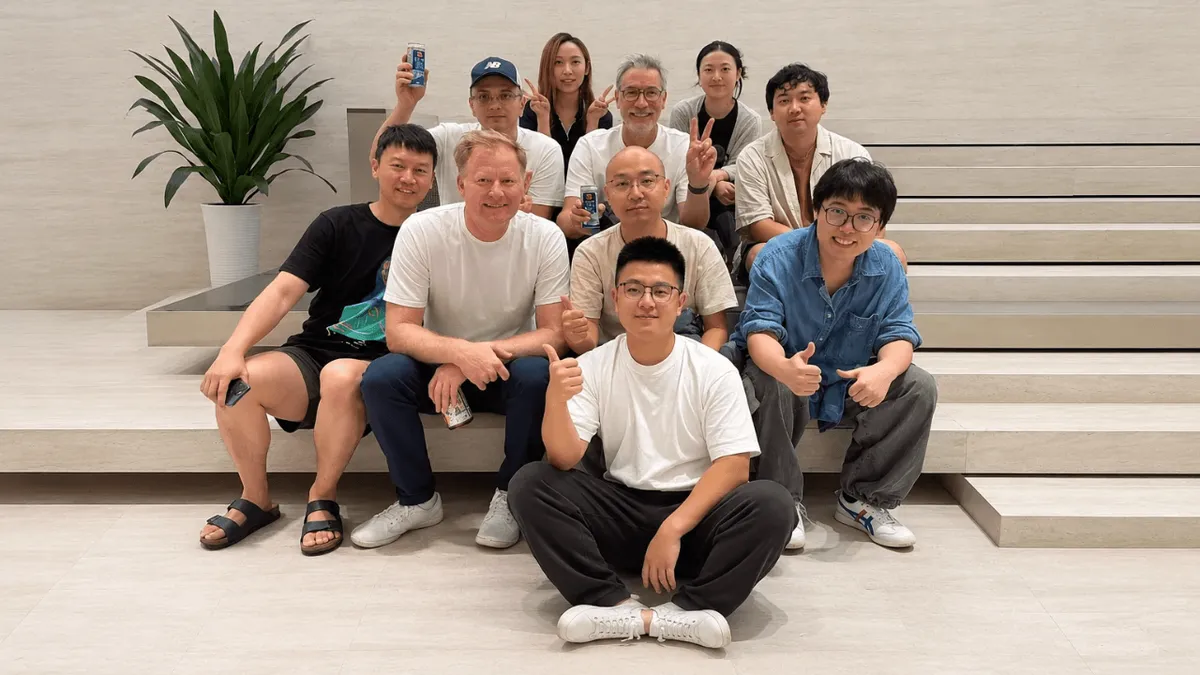
Play Ventures and Backed VC co-led the $5M pre-seed round. Supercell also invested, along with MTG, which bought Hutch for $375M in 2020 and is now backing its former executives. No valuation was disclosed. [1] [2] [3] [4]
Anorak's bet is that cheap generative video can make games viable for small communities such as anglers, sneakerheads and birdwatchers, and that members of those communities will make the games. It plans to launch a creator platform in early 2027 and says the tool will deliberately not be a chatbot that turns a prompt into a game. Co-founder Shaun Rutland argues that when content becomes cheap to make, value moves to curation. [1] [2]
Anorak has published no paper, named model, latency or frame-rate figures, or evaluations. So far it has shown dress-up, boxing and 'alien salesman' demos, plus weekly blog experiments. It says it is building its own inference technology at its Chengdu AI lab so it can move step by step from pre-generated content to real-time generation. [1] [2] [3]
Anorak's approach differs from general-purpose world models such as Google DeepMind's Genie 3, a limited research preview that generated consistent 720p worlds at 24 frames per second for several minutes. Those systems still struggle with long-session coherence and a narrow range of user actions. Anorak is instead designing mechanics around short, specific interactions. [5] [6] [8]
two major mobile-game companies invested in a startup with no product yet. Implication: incumbents may be exploring new generative game formats, not just production tools.
Read the full assessment
The bet depends on real-time video for each player becoming cheap enough to pay off with small audiences.
Executive brief
Anorak, a London–Chengdu startup founded by former executives of the mobile racing-game studio Hutch, has raised a $5M pre-seed round for "interactive generative video": AI-generated video that changes in real time based on what the player does. Two of the backers are notable. Supercell is one of the most powerful mobile game companies, and MTG is the company that bought Hutch in 2020 for $375M. Anorak is betting that cheap generative video can make games viable for niche communities like anglers, sneakerheads and birdwatchers, and that those communities will make the games themselves. It has not yet released any product, published any benchmarks or disclosed a valuation (Tech.eu).
What changed and event timeline
MTG acquires Hutch
Hutch made the racing games Top Drives and F1 Clash and was bought by MTG for $375M. Its community of car enthusiasts later shaped Anorak's focus on subcultures ().
Rutland steps back at Hutch
Shaun Rutland went from co-CEO to executive chairman after about a decade at the studio ().
Anorak teased
Rutland called Anorak "a technology entertainment business rather than a games company." He showed a dress-up game, a boxing game and an "alien salesman" demo, and said funding news was imminent ().
$5M pre-seed announced
Play Ventures and Backed VC co-led the round, with Supercell and MTG also investing (;).
(planned): Creator platform
The company plans to release its first playable formats and launch its creator platform ().
Capabilities and access
- No named model, version or public product.
- Demos shown so far: dress-up, boxing, and an alien character that looks at user-uploaded images and tries to resell them (Mobilegamer.biz).
- Planned creator tool: the company says it will deliberately not be a chatbot that turns a prompt into a game.
Read the full section
- No named model, version or public product. Anorak posts weekly "playable experiments" on its blog and says it is building its own inference technology to make generative video "faster, cheaper and more controllable" (Tech.eu).
- Demos shown so far: dress-up, boxing, and an alien character that looks at user-uploaded images and tries to resell them (Mobilegamer.biz).
- Planned creator tool: the company says it will deliberately not be a chatbot that turns a prompt into a game.
Technical analysis for researchers and developers
Nothing about Anorak's technology is documented. There is no paper, model card, base model, latency or frame-rate figure, or evaluation, and trade coverage confirms that no technical metrics were disclosed (Mobilegamer.biz).
Read the full section
Nothing about Anorak's technology is documented. There is no paper, model card, base model, latency or frame-rate figure, or evaluation, and trade coverage confirms that no technical metrics were disclosed (Mobilegamer.biz).
- Stated approach: optimise inference so the product can shift step by step from "pre-generated" content to real-time generation (Tech.eu). That framing suggests a hybrid pipeline in the near term, though this is an inference, not something the company has stated.
- Where the work happens: the AI lab is in Chengdu and is led by co-founder Tak Fung (Chief of AI).
- Reproducibility: none is possible at this stage.
Claims and evidence
- $5M pre-seed, co-led by Play Ventures and Backed VC, with Supercell and MTG: announced by the company and repeated by independent trade press (Mobilegamer.biz; Runtime Wire).
- Valuation: not disclosed.
- Zynga co-founder Justin Waldron as an angel investor and David Amor as COO: reported only by Mobilegamer.biz.
Read the full section
- $5M pre-seed, co-led by Play Ventures and Backed VC, with Supercell and MTG: announced by the company and repeated by independent trade press (Mobilegamer.biz; Runtime Wire). No filing confirms it.
- Valuation: not disclosed.
- Zynga co-founder Justin Waldron as an angel investor and David Amor as COO: reported only by Mobilegamer.biz.
- "Technical breakthroughs … in the past 12 months": this comes from Alex Brunicki, founding partner at Backed VC, one of the round's lead investors. It is investor commentary with no published evidence behind it (Tech.eu).
- Harri Manninen's praise of the team: he is founding partner at Play Ventures, the other lead investor.
- 20-person team: reported by the company.
Context and prior work
Interactive generative video sits next to research on "world models", AI systems that generate an explorable environment frame by frame in response to user input. Google DeepMind's Genie 3 (August 2025) generated interactive worlds at 720p and 24 frames per second that stayed consistent for minutes. Anorak's angle is different.
Read the full section
Interactive generative video sits next to research on "world models", AI systems that generate an explorable environment frame by frame in response to user input. Google DeepMind's Genie 3 (August 2025) generated interactive worlds at 720p and 24 frames per second that stayed consistent for minutes. It was released only as a limited research preview (The Decoder; Neowin).
Anorak's angle is different. Rather than building a general-purpose world simulator, it is designing new game mechanics around short, specific interactions. Other AI-native game studios are also raising pre-seed money, for example Surge Games' $3M round.
Limitations, safety and contested findings
- Known limits of the field: world models still struggle to stay coherent over long sessions, can handle only a narrow range of agent actions, and find multiple interacting agents hard to model (BD Tech Talks).
- Little scrutiny so far: coverage of the round has been uncritical, with no skeptical analysis (Mobilegamer.biz).
- Unaddressed safety risks: the image-reselling demo and the planned user-generated platform raise content-moderation and IP questions that the reviewed sources do not discuss.
Read the full section
- Known limits of the field: world models still struggle to stay coherent over long sessions, can handle only a narrow range of agent actions, and find multiple interacting agents hard to model (BD Tech Talks). Anorak has published nothing showing how it handles these problems.
- Little scrutiny so far: coverage of the round has been uncritical, with no skeptical analysis (Mobilegamer.biz).
- Unaddressed safety risks: the image-reselling demo and the planned user-generated platform raise content-moderation and IP questions that the reviewed sources do not discuss.
Business and practitioner implications
- Strategic interest from incumbents: Supercell and MTG investing points to interest in generative formats, not just generative tools.
- The cost bet: the thesis depends on inference costs falling far enough that per-player real-time video can pay for itself with niche audiences.
- What developers can watch: the weekly blog experiments and the early-2027 creator platform will be the first things anyone can actually test.
Read the full section
- Strategic interest from incumbents: Supercell and MTG investing points to interest in generative formats, not just generative tools. MTG is backing its own former executives.
- The cost bet: the thesis depends on inference costs falling far enough that per-player real-time video can pay for itself with niche audiences. The company has disclosed no unit economics.
- What developers can watch: the weekly blog experiments and the early-2027 creator platform will be the first things anyone can actually test.
- Taste as the moat: Rutland argues that when making content gets cheap, value moves to curation. If that holds, distribution and community ownership matter more than the model itself (Tech.eu).