
FundingRounds, leads & terms
Imprint Raises $130 Million at $1.88 Billion Valuation as It Adds Big Retail Card Programs and Targets AI Shopping Agents
Co-branded card company Imprint raised $130 million at a $1.88 billion valuation and projects about $400 million in 2026 revenue, up 150%. It added Shell, Kroger, Albertsons and Fanatics programs and launched an MCP server for AI-agent shopping.
From the Upstarts Media article of November 11, 2026 and cited sources: Imprint raised $130 million at a $1.88 billion valuation. [1] [2] [10] [4]
SOURCES[1] Upstarts: Card Startup Imprint Raises $130M At $1.9B… upstartsmedia.com[2] FinTech Global: Imprint raises $130m as AI reshapes brand… fintech.global[10] Finimize: Imprint Raises $130 Million finimize.com
 AT Pulse research deskPublished · Updated · 5 min read · AI-assisted analysis
AI-assisted, not human-edited. Methodology Corrections Who owns this site
- Original source
- Upstarts Media article, independent perspective
- Brief by
- AT Pulse research desk AI-assisted; publisher and contact on the desk page
- When
- November 11, 2026 article published
- Covered
- Nov 12 edition
- Evidence
- 11 sources across 11 sites
- 1Upstarts: Card Startup Imprint Raises $130M At $1.9B…upstartsmedia.com
- 2FinTech Global: Imprint raises $130m as AI reshapes brand…fintech.global
- 3Business Model Analyst: Imprint Hits $1.9 Billionbusinessmodelanalyst.com
- 4Silicon UK: Imprint Series C press releasesilicon.co.uk
- 5Pulse 2.0: Imprint $150M Series Dpulse2.com
- 6Gerald: Shell Citi card transitionjoingerald.com
RisingHow it’s measured
Substack · 16 likes
Reach blends public engagement (views, likes, comments, shares, stars) from the platforms where the story or its original source lives: YouTube, Hacker News, GitHub, Substack and similar. A video and the article written from its transcript share one score, taken from the video. Platforms with no data are left out rather than counted as zero, and the age of a story never lowers its score.
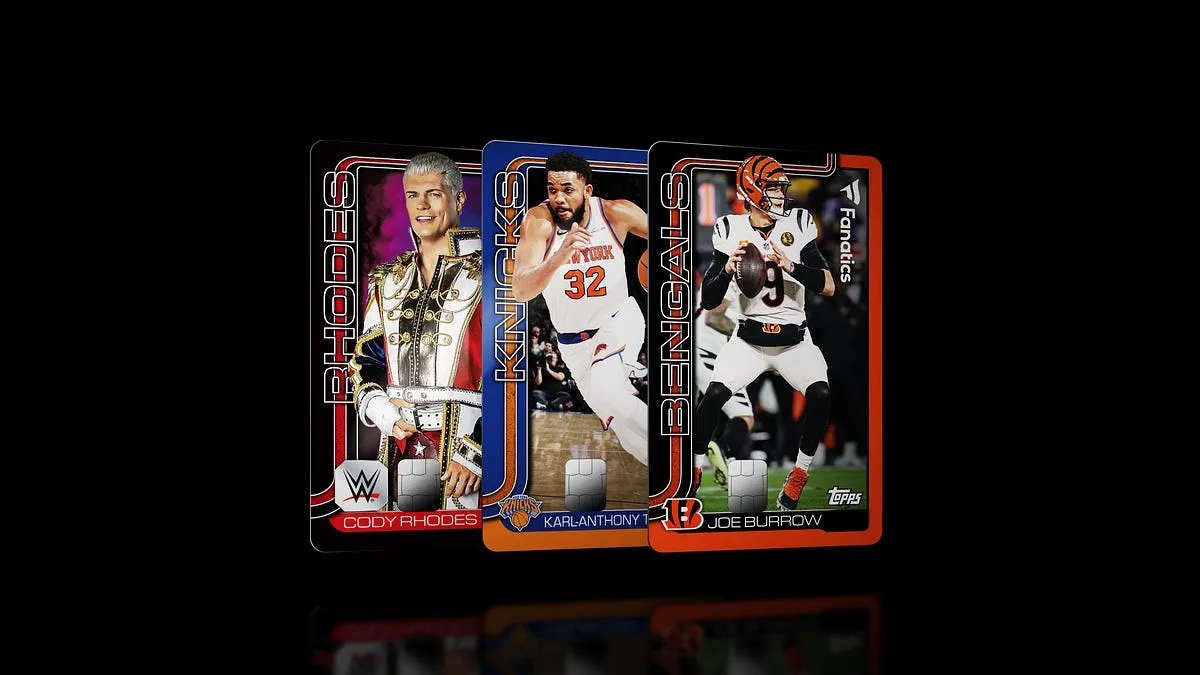
Imprint raised $130 million at a $1.88 billion valuation. Two outlets report that Khosla Ventures led the round, and Positive Sum joined as a new investor. Reports conflict on whether Kleiner Perkins took part. The valuation has risen from $600 million at the October 2024 Series C to $1.2 billion in December 2025 and now $1.88 billion. [1] [2] [10] [4] [5]
Imprint expects about $400 million in 2026 GAAP revenue. It says that is up 150%, which is 2.5 times last year rather than double, while headcount grew about 30%. These figures come from the company. One outside analysis puts the new price at about 4.7 times expected revenue, down from about 8.6 times at the Series C. [1] [3]
Shell moved its card program from Citi to Imprint in 2026, and Kroger relaunched its card with Imprint. In Kroger's case, U.S. Bank kept the existing accounts and moved them to its own card. That split shows how much card contracts decide who keeps the cardholders. Some Shell cardholders reported missing cards, lost account access and limited support during the switch. [6] [7] [8] [11] [9]
The evidence shows a bigger round at a higher valuation and major retail card programs moving to Imprint. Not yet shown: whether co-branded cards become a payment and loyalty channel for AI shopping agents.
Read the full assessment
Retailers also face the question of who keeps cardholder accounts.
Sources gathered; writing the dossier now.
Executive brief
Imprint raised $130 million at a $1.88 billion valuation. CEO Daragh Murphy says it expects about $400 million in 2026 GAAP revenue, up 150%, while headcount grew only about 30% (Upstarts). All of these figures come from the company. The headline says revenue "doubled," but 150% growth means 2.5x. Imprint runs co-branded credit cards for Kroger, Albertsons, Shell and Fanatics. It is now selling itself as the loyalty layer for AI-agent shopping and has launched an MCP server for agents (FinTech Global). One outside analysis estimates the new price at about 4.7x expected revenue, below earlier rounds (Business Model Analyst).
What changed and event timeline
Series C at $600M
Imprint raised $75 million to expand co-branded card partnerships, according to the company's press release ().
Series D at $1.2B
Khosla Ventures led a $150 million round with Thrive, Ribbit, Kleiner Perkins and Hedosophia. Plans included debit, secured cards and AI tooling ().
Shell moves from Citi
Shell retired its Citi cards and moved holders to an Imprint-managed Mastercard issued by First Bank & Trust. Autopay did not carry over ().
Kroger relaunch
Kroger launched a new card powered by Imprint and issued by First Bank & Trust (). U.S. Bank kept the old Kroger accounts and moved them to its Smartly Visa ().
$130M at $1.88B
Murphy disclosed the round to Upstarts as an exclusive. Positive Sum is a new investor ().
Capabilities and access
- Model Context Protocol (MCP) server: lets AI agents securely reach member rewards, virtual cards and transaction history.
- Imprint Access: a new card secured by a refundable deposit, aimed at people building credit (same source).
- Card programs: Shell, Kroger, Albertsons (with American Express) and Fanatics launched Imprint-powered cards in 2026 (same source).
Read the full section
- Model Context Protocol (MCP) server: lets AI agents securely reach member rewards, virtual cards and transaction history. No underlying AI model or version is named (Securities.io).
- Imprint Access: a new card secured by a refundable deposit, aimed at people building credit (same source).
- Card programs: Shell, Kroger, Albertsons (with American Express) and Fanatics launched Imprint-powered cards in 2026 (same source).
- Other: $1.5 billion of added warehouse funding capacity and a second AAA-rated asset-backed securitization (FinTech Global).
Technical analysis for researchers and developers
- The reviewed sources do not document the MCP server's tools, its login and permission model, how much an agent can spend, or how payments are confirmed.
- Imprint says an internal AI platform "tripled engineering velocity" over 18 months (Securities.io).
- The December 2025 plan named ImprintCore, Imprint's own card issuing and processing platform (Pulse 2.0). The cards themselves are issued by partner banks.
Read the full section
- The reviewed sources do not document the MCP server's tools, its login and permission model, how much an agent can spend, or how payments are confirmed. Builders cannot judge the integration until a public spec exists.
- Imprint says an internal AI platform "tripled engineering velocity" over 18 months (Securities.io). No metric, baseline or method is published, so the claim can't be checked or reproduced.
- The December 2025 plan named ImprintCore, Imprint's own card issuing and processing platform (Pulse 2.0). The cards themselves are issued by partner banks.
Claims and evidence
Patrick O'Shaughnessy, CEO of new investor Positive Sum, publicly backed the AI-loyalty thesis while commenting on his own new holding (FinTech Global).
Read the full section
| Claim | Status |
| $130M round at $1.88B (reported as ~$1.9B) | Company-announced to Upstarts and in wider distribution (Upstarts; Finimize). No regulatory filing confirms it. |
| Khosla Ventures led | Reported by FinTech Global and Finimize. The free Upstarts excerpt names no lead and lists Kleiner Perkins as an existing investor. The other reports omit Kleiner from this round. |
| ~$400M revenue, +150%; 2M+ cardholders | Self-reported (Upstarts) |
| Cardholder spend doubled; Imprint's share of partner checkout spend tripled | Self-reported (Securities.io) |
| "Only Ramp" grows faster among fintechs | Murphy's own opinion |
Patrick O'Shaughnessy, CEO of new investor Positive Sum, publicly backed the AI-loyalty thesis while commenting on his own new holding (FinTech Global).
Context and prior work
- The valuation has risen from $600M (Oct 2024) to $1.2B (Dec 2025) to $1.88B (Nov 2026).
- Sacra estimates revenue is about 60% interest, 35% interchange fees and 5% card fees, roughly $200 per member.
- The Kroger and Shell moves show who keeps the customers when a card program changes hands. Shell's Citi accounts moved over to Imprint.
Read the full section
- The valuation has risen from $600M (Oct 2024) to $1.2B (Dec 2025) to $1.88B (Nov 2026).
- Sacra estimates revenue is about 60% interest, 35% interchange fees and 5% card fees, roughly $200 per member. That compares with about $216 per account at Synchrony, the largest U.S. store-card issuer (Business Model Analyst).
- The Kroger and Shell moves show who keeps the customers when a card program changes hands. U.S. Bank kept Kroger's accounts. Shell's Citi accounts moved over to Imprint.
- Finimize cites a Morgan Stanley estimate that AI agents could drive 10–20% of U.S. e-commerce spending by 2030 (Finimize).
Limitations, safety and contested findings
- Shell migration problems: cardholders reported missing cards, lost account access and limited human support (Gerald; Clark community). These are user reports, not audited data.
- Funding and bank risk: Imprint relies on warehouse lines and securitizations rather than deposits, and on small sponsor banks to issue its cards.
- Falling multiple: the analyst's own estimates fall from about 8.6x revenue (Series C) to about 4.7x now. These are calculations, not disclosed figures.
Read the full section
- Shell migration problems: cardholders reported missing cards, lost account access and limited human support (Gerald; Clark community). These are user reports, not audited data.
- Funding and bank risk: Imprint relies on warehouse lines and securitizations rather than deposits, and on small sponsor banks to issue its cards. Business Model Analyst also reports that H-E-B once made up about 35% of revenue (Business Model Analyst).
- Falling multiple: the analyst's own estimates fall from about 8.6x revenue (Series C) to about 4.7x now. These are calculations, not disclosed figures.
Business and practitioner implications
- Retailers: read card contracts for who owns the accounts and how a program migrates. The Kroger and Shell outcomes depended on exactly that.
- Agent builders: MCP access to card-linked rewards and virtual cards is a new way for agents to pay, but it is undocumented.
- Investors: the round values a lender-like business with rising absolute value but a lower revenue multiple. All the growth numbers are unaudited.
Read the full section
- Retailers: read card contracts for who owns the accounts and how a program migrates. The Kroger and Shell outcomes depended on exactly that.
- Agent builders: MCP access to card-linked rewards and virtual cards is a new way for agents to pay, but it is undocumented. Check permissions and spending controls before building on it.
- Investors: the round values a lender-like business with rising absolute value but a lower revenue multiple. All the growth numbers are unaudited.