
InfrastructureCompute, chips & cloud
Voters reject data centers in 40 of 41 local ballot measures as electricity demand drives the backlash
Voters backed restrictions in 40 of 41 local data-center ballot measures on November 3. An MIT Technology Review analysis argues that electricity is the core grievance, since AI campuses need hundreds to thousands of megawatts. Developers are turning to onsite gas generation, and regulators are shifting grid costs onto them.
From the MIT Technology Review · AI article of November 9, 2026 and cited sources: Restrictions or rejections of pro-development proposals won in 40 of 41 local data-center measures across 10 states. [1] [2]
SOURCES[1] MIT Technology Review: The backlash about data centers… technologyreview.com[2] Fortune: OpenAI turns on the charm after voters turned on… fortune.com
 AT Pulse research deskPublished · Updated · 5 min read · AI-assisted analysis
AI-assisted, not human-edited. Methodology Corrections Who owns this site
- What happened
- Restrictions or rejections of pro-development proposals won in 40 of 41 local data-center measures across 10 states. [1] [2]
- Original source
- MIT Technology Review · AI article, independent perspective
- Brief by
- AT Pulse research desk AI-assisted; publisher and contact on the desk page
- When
- November 9, 2026 article published
- Covered
- Nov 10 edition
- Evidence
- 14 sources across 12 sites
- 1MIT Technology Review: The backlash about data centers…technologyreview.com
- 2Fortune: OpenAI turns on the charm after voters turned on…fortune.com
- 3E&E News: EPA thwarts Musk's turbineseenews.net
- 4WTOP: SCC orders Dominion transmission tariffwtop.com
- 5Axios: Tech giants turn to cash, concessionsaxios.com
- 6Google: US$15 billion Malaysia investmentgooglecloudpresscorner.com
Reach: not measured yet
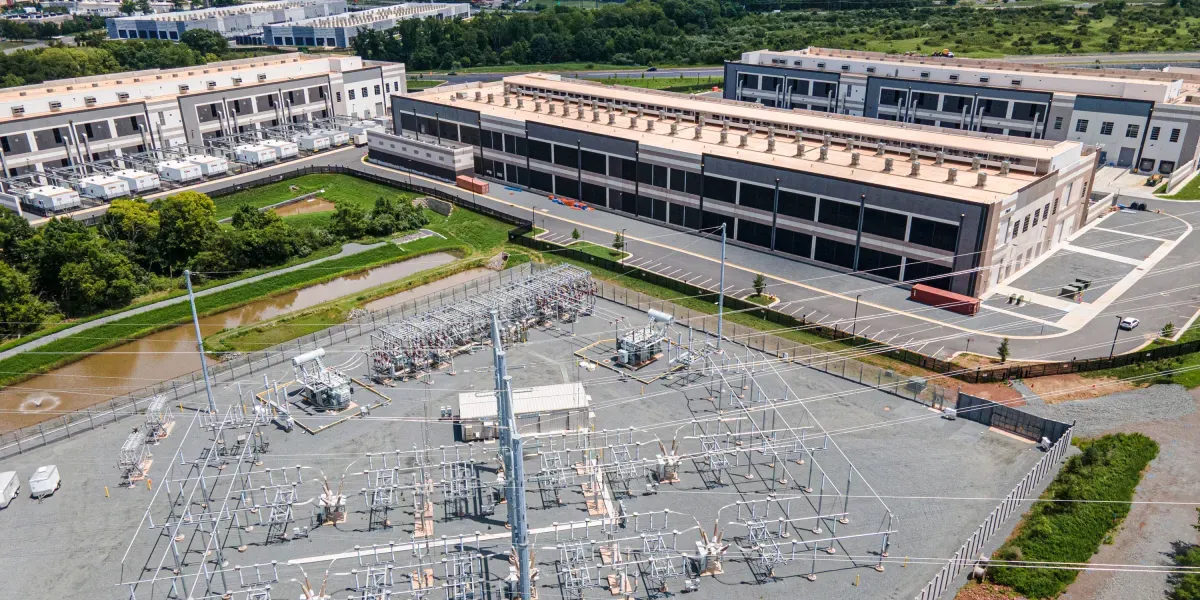
Restrictions or rejections of pro-development proposals won in 40 of 41 local data-center measures across 10 states. OpenAI's Chris Lehane described data centers as a proxy for worries about affordability and corporate power. The MIT Technology Review reporter instead points to physical scale. An average Loudoun County facility draws about 54 MW, AI training sites start around 300 MW, and ideal sites approach 6,000 MW, which is roughly what Chicago uses. [1] [2]
Regulators are making data centers pay for their grid impact. Virginia's State Corporation Commission ordered Dominion to write a tariff that charges new transmission costs directly to large-load customers. Under the GS-5 rate class, customers of about 25 MW or more are billed on at least 85% of their peak demand. Separately, an EPA rule rejected xAI's argument that its temporary turbines did not need permits, although the same rule loosened some limits on nitrogen oxides. [4] [12] [3]
As grid access tightens, developers are generating power onsite or building abroad, which moves the conflict rather than ending it. The Financial Times reported that Anthropic took over generator orders covering 1.7 GW of capacity for $3.4 billion. Google committed $15 billion to data centers in Malaysia. The article warns that onsite gas plants create new fights over pollution and siting. [1] [9] [11] [6]
Community concessions are becoming a standard cost of building. Under its compute-campus compact, OpenAI pledged to pay its own energy and infrastructure costs, report its water and power use, and stop asking officials to sign most NDAs. It also committed $80 million beyond taxes in Effingham County, Georgia. [2] [8] [5]
The ballot results and Virginia's tariff order are documented. The claim that electricity drives the backlash is one reporter's conclusion from interviews.
Read the full assessment
If it holds, access to power, grid-cost charges and curtailment terms will shape where AI compute gets built and what it costs.
Executive brief
According to an MIT Technology Review reporter's account, the data-center backlash is mainly about electricity, not culture-war resentment. Voters made the point concrete: they backed restrictions or rejected pro-development measures in 40 of 41 local data-center ballot measures across 10 states. OpenAI's Chris Lehane called data centers a stand-in for unease about affordability and corporate power. An average Loudoun County facility draws 54 MW, AI training sites start around 300 MW, and ideal sites approach 6,000 MW, about what Chicago uses. As grid access tightens, developers are building their own gas generation. That creates new pollution and siting fights instead of ending them.
Read the full section
According to an MIT Technology Review reporter's account, the data-center backlash is mainly about electricity, not culture-war resentment. Voters made the point concrete: they backed restrictions or rejected pro-development measures in 40 of 41 local data-center ballot measures across 10 states. OpenAI's Chris Lehane called data centers a stand-in for unease about affordability and corporate power. The article answers with physical scale. An average Loudoun County facility draws 54 MW, AI training sites start around 300 MW, and ideal sites approach 6,000 MW, about what Chicago uses. As grid access tightens, developers are building their own gas generation. That creates new pollution and siting fights instead of ending them.
What changed and event timeline
EPA closes the turbine loophole
The EPA finalized a Clean Air Act rule that rejects xAI's argument that its temporary turbines in Memphis did not need permits. The same rule loosened some limits on nitrogen oxides.
Virginia moves grid costs onto data centers
Virginia's State Corporation Commission (SCC) ordered Dominion to write a tariff that charges new transmission costs directly to large-load customers. The timing of a final tariff was still uncertain.
Midterm ballot rout
Restrictions or rejections of pro-development proposals won in 40 of 41 local measures. Axios's headline counted the result as.
Google turns to Malaysia
Google committed $15 billion to Malaysian data centers for 2027–28 and pledged more than 1 GW of new clean-energy capacity.
OpenAI's "compute campus" compact
OpenAI pledged to pay its own energy and infrastructure costs, report its water and power use, and stop asking officials to sign most NDAs.
More detail
Anthropic's $3.4B power buy reported
The Financial Times reported that Anthropic took over OnePWR's generator orders, covering 1.7 GW of capacity.
More detail
Capabilities and access
No AI model is involved.
Read the full section
No AI model is involved. The "capability" here is power:
- Grid-connected: Loudoun facilities such as Equinix's draw from Dominion's gas-heavy grid and keep diesel generators for backup (MIT TR).
- Behind-the-meter (generated onsite): rural AI campuses run their own gas generation. Anthropic's 1.7 GW of generators are reportedly expected within about two years, bypassing equipment backlogs (DCD).
Technical analysis for researchers and developers
- Scale gap: a 300 MW minimum for training sites versus a 54 MW average Loudoun site means one AI campus can match several conventional ones.
- Cost allocation: Virginia's GS-5 rate class targets customers of roughly 25 MW or more.
- Curtailment: developers expect rules that cut them off from grid power during peak demand (MIT TR).
Read the full section
- Scale gap: a 300 MW minimum for training sites versus a 54 MW average Loudoun site means one AI campus can match several conventional ones. Grids cannot connect loads that large quickly.
- Cost allocation: Virginia's GS-5 rate class targets customers of roughly 25 MW or more. It bills transmission on at least 85% of their highest demand, even if usage later falls (DCD). That raises the cost of grid power for workloads with low or bursty utilization.
- Curtailment: developers expect rules that cut them off from grid power during peak demand (MIT TR). Training jobs may need checkpointing and scheduling designed to tolerate those interruptions.
Claims and evidence
- The electricity thesis is the author's conclusion from a few days of interviews in Virginia. It is reporting and opinion, not survey data (MIT TR).
- Lehane's "proxy" framing is an interested party's view (Fortune).
- Anthropic's deal rests on FT reporting. Coverage variously describes the equipment as turbines or as Caterpillar generators (Bloomberg).
Read the full section
- The electricity thesis is the author's conclusion from a few days of interviews in Virginia. It is reporting and opinion, not survey data (MIT TR).
- Lehane's "proxy" framing is an interested party's view (Fortune).
- Anthropic's deal rests on FT reporting. The articles reviewed include no Anthropic confirmation. Coverage variously describes the equipment as turbines or as Caterpillar generators (Bloomberg).
- Google's figures for GDP impact and jobs are its own estimates (Google).
Context and prior work
Dominion expects about $7.6 billion in transmission investment through 2031, roughly 68% of it tied to data centers (DCD). In 2025, community groups served a notice of intent to sue xAI over unpermitted turbines rated above 400 MW (TechCrunch). Tennessee Lookout reported thermal drone footage of xAI's power plant in February 2026 (Tennessee Lookout).
Limitations, safety and contested findings
- Virginia rules: the article says the state now requires data centers to pay fully for new transmission.
- Ballot count: Fortune reports 40 of 41 measures; Axios's headline reports 43–1.
- xAI: E&E describes a general EPA rule that undercuts xAI's position, not a case-specific enforcement finding. The same rule weakened some NOx limits (E&E News).
Read the full section
- Virginia rules: the article says the state now requires data centers to pay fully for new transmission. WTOP describes the August order as an interim step with the final tariff's timing still open (WTOP).
- Ballot count: Fortune reports 40 of 41 measures; Axios's headline reports 43–1.
- xAI: E&E describes a general EPA rule that undercuts xAI's position, not a case-specific enforcement finding. The same rule weakened some NOx limits (E&E News).
- Other motives: the author acknowledges that job fears and misinformation, including about water use, also drive opposition.
Business and practitioner implications
- Site selection: expect a move toward sparsely populated, gas-rich areas such as the Permian Basin, and toward other countries (MIT TR).
- Securing power: reserving generation equipment early, as Anthropic reportedly did, is becoming a competitive advantage.
- Community concessions: these are becoming standard. OpenAI committed $80 million beyond taxes in Effingham County, Georgia (Fortune).
Read the full section
- Site selection: expect a move toward sparsely populated, gas-rich areas such as the Permian Basin, and toward other countries (MIT TR).
- Securing power: reserving generation equipment early, as Anthropic reportedly did, is becoming a competitive advantage.
- Community concessions: these are becoming standard. OpenAI committed $80 million beyond taxes in Effingham County, Georgia (Fortune).
- Cloud pricing: buyers should plan for transmission surcharges and peak-demand curtailment terms passing through to cloud and colocation prices.