
SafetyRisk, alignment & guardrails
US charges three men with using AI-cloned executive voices to steal $129 million from companies
Federal prosecutors in Manhattan allege three men used AI voice cloning, and sometimes fake video, to pose as CEOs and law-firm attorneys. They are accused of getting employees at hospitals, a bank and other companies to wire about $129 million between 2024 and 2026.
From the The Guardian · AI article of November 6, 2026 and cited sources: A newly unsealed indictment in the Southern District of New York charges Jacob Soall, Sharon Hazan and Guy Sheetrit with conspiracy to commit wire fraud, money-laundering conspiracy and aggravated identity theft. [1] [2]
SOURCES[1] Three men charged in US with using AI to impersonate CEOs… theguardian.com[2] CBS News: 3 allegedly used AI to steal some $129 million cbsnews.com
 AT Pulse research deskPublished · Updated · 5 min read · AI-assisted analysis
AI-assisted, not human-edited. Methodology Corrections Who owns this site
- What happened
- A newly unsealed indictment in the Southern District of New York charges Jacob Soall, Sharon Hazan and Guy Sheetrit with conspiracy to commit wire fraud, money-laundering conspiracy and aggravated identity theft. [1] [2]
- Original source
- The Guardian · AI article, independent perspective
- Brief by
- AT Pulse research desk AI-assisted; publisher and contact on the desk page
- When
- November 6, 2026 article published
- Covered
- Nov 7 edition
- Evidence
- 6 sources across 6 sites
- 1Three men charged in US with using AI to impersonate CEOs…theguardian.com
- 2CBS News: 3 allegedly used AI to steal some $129 millioncbsnews.com
- 3TNW: US charges three over $129m AI CEO impersonation schemethenextweb.com
- 4CNN: Arup revealed as $25 million deepfake scam victimedition.cnn.com
- 5SecurityWeek: 3 Charged in Scheme to Use AI to Impersonate…securityweek.com
- 6BleepingComputer: FBI says US officials targeted in voice…bleepingcomputer.com
Reach: not measured yet
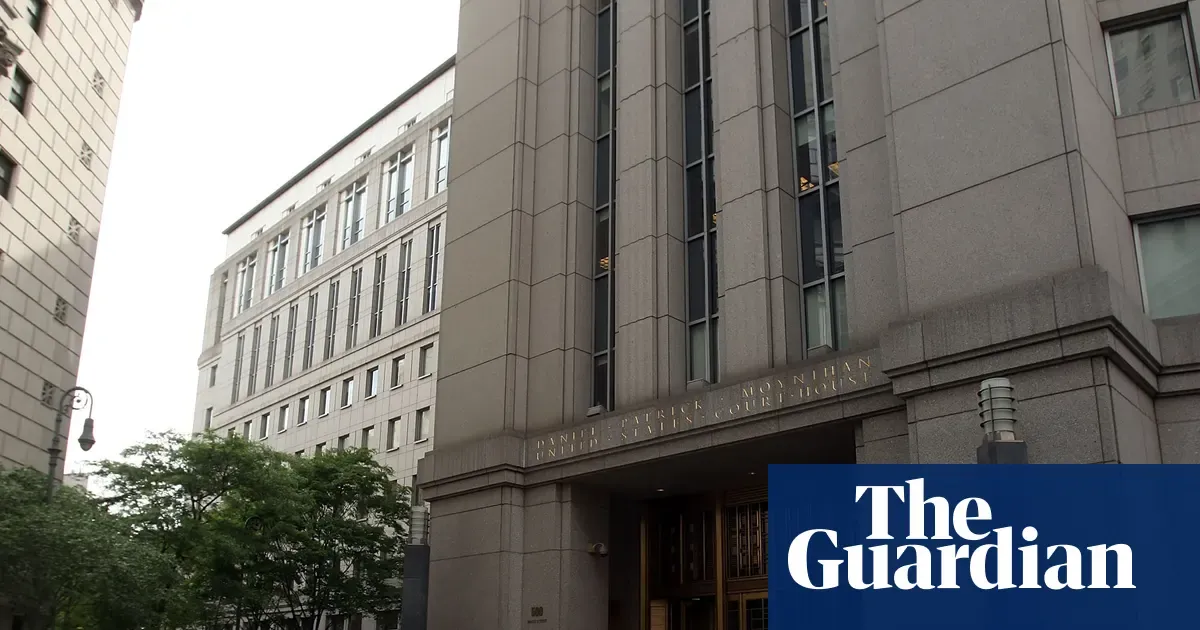
A newly unsealed indictment in the Southern District of New York charges Jacob Soall, Sharon Hazan and Guy Sheetrit with conspiracy to commit wire fraud, money-laundering conspiracy and aggravated identity theft. Prosecutors say the men targeted thousands of companies, took about $129 million, and moved the money through accounts in at least nine countries before converting it to cryptocurrency. [1] [2]
The alleged scheme followed a set sequence. An email asked for help with a confidential deal. A fake CEO then called the employee, and a fake attorney from a major law firm took over to arrange the wire transfer, sometimes reading from a written script. Because trust passed to a second fake identity, a check that only confirmed the CEO would not have caught it. [2] [5]
Spanish police arrested two of the men and UK police arrested the third in 2026, and the US is seeking to extradite all three. The charges have not been tested in court. Earlier cases, such as Arup's $25.6 million loss on a deepfake video call in 2024, led to no publicly reported arrests. [2] [3] [4]
the indictment links named defendants to a large, repeatable AI impersonation scheme that hit several sectors. Implication: payment approvals that rely on recognizing a voice or face are exposed.
Read the full assessment
Separate callbacks to known numbers, for both the executive and outside counsel, matter more than deepfake detection.
Executive brief
US prosecutors in Manhattan say three men used AI-cloned executive voices, and sometimes faces, to take about $129 million from companies between 2024 and 2026. The Guardian and CBS News report the newly unsealed indictment. The defendants are Jacob Soall, Sharon Hazan and Guy Sheetrit. They allegedly went after thousands of companies, including hospitals, a bank and a mutual fund. A fake CEO would call an employee, and an accomplice then posed as a lawyer at a major law firm to arrange the wire transfer. All three were arrested in Spain or the UK. These are allegations, and the case has not been tried.
What changed and event timeline
An early case of a faked CEO voice
Criminals faked a chief executive's voice to steal $243,000. Coverage of the new case treats it as the starting point for today's AI impersonation fraud ().
Arup loses $25.6m on a deepfake video call
An employee in Hong Kong joined a video meeting in which everyone else was fake. He then sent HK$200m to five accounts in 15 transfers ().
The alleged scheme runs
Prosecutors say the men posed as executives and lawyers to get wire payments, then moved the money into cryptocurrency (;).
Arrests in Spain and the UK
Spanish police arrested Soall and Hazan, and UK police arrested Sheetrit in September. The US has asked for all three to be extradited (;).
Indictment unsealed
The US Attorney's Office for the Southern District of New York (SDNY) announced charges of conspiracy to commit wire fraud, money-laundering conspiracy and aggravated identity theft ().
Capabilities and access
- The AI used: voice cloning on phone and video calls, plus image or video impersonation of CEOs "sometimes" (CBS News).
- The human side: an opening email asking for help with a confidential deal, a live call from the fake CEO, then a handoff to a fake lawyer.
- Getting the money out: accounts in at least nine countries, including the US, Spain, Portugal, Greece, the UAE, Singapore and China, followed by conversion to crypto (Guardian).
Read the full section
- The AI used: voice cloning on phone and video calls, plus image or video impersonation of CEOs "sometimes" (CBS News). None of the reviewed coverage names a model, product or vendor.
- The human side: an opening email asking for help with a confidential deal, a live call from the fake CEO, then a handoff to a fake lawyer. Soall allegedly worked from a handwritten script titled "Lawyer Call" (SecurityWeek).
- Getting the money out: accounts in at least nine countries, including the US, Spain, Portugal, Greece, the UAE, Singapore and China, followed by conversion to crypto (Guardian).
Technical analysis for researchers and developers
The public record contains no technical details: no synthesis method, no indication of real-time or pre-recorded audio, no tools named, and no description of how well the fakes held up on live calls.
Read the full section
The public record contains no technical details: no synthesis method, no indication of real-time or pre-recorded audio, no tools named, and no description of how well the fakes held up on live calls. Three points stand out from what is documented:
- AI was one part of a larger script. The fraud depended on a chain of identities (CEO, then lawyer) and on reusable scripts, which points to a repeatable playbook rather than one-off fakes (SecurityWeek).
- The law-firm handoff passes trust to a second fake person. A check that only confirms the CEO's identity would miss the fraud.
- The scale points to automation. Prosecutors say "thousands" of companies were targeted, but how many were defrauded has not been disclosed (CBS News).
Claims and evidence
All case facts come from DOJ allegations as reported in the press. None has been tested in court, and no independent forensic analysis of the AI is public.
Read the full section
All case facts come from DOJ allegations as reported in the press. None has been tested in court, and no independent forensic analysis of the AI is public.
- Total stolen: about $129m (CBS News). The Guardian's opening line says "over $100m" and its body says $129m (Guardian).
- Individual victims: reported figures differ a little. The Missouri hospital system lost about $5m per the Guardian and about $4.8m per TNW. The UK tech company lost over $11m per the Guardian and about $11.6m per TNW (TNW).
- Prior record: Hazan was convicted of conspiracy to commit bank fraud in New York in 2008 (SecurityWeek).
Context and prior work
- Business email compromise (BEC) is when fraudsters pose as executives or partners to redirect payments.
- The Arup case showed that a multi-person deepfake video call could work. No arrests were publicly reported there.
- The FBI warned in May 2025 about AI voice deepfakes impersonating senior US officials, a sign that voice cloning had become common (BleepingComputer).
Read the full section
- Business email compromise (BEC) is when fraudsters pose as executives or partners to redirect payments. It is an old fraud, and AI voice and video add a convincing live layer on top.
- The Arup case showed that a multi-person deepfake video call could work. No arrests were publicly reported there.
- The FBI warned in May 2025 about AI voice deepfakes impersonating senior US officials, a sign that voice cloning had become common (BleepingComputer).
- The new case is unusual because it names alleged perpetrators and attaches a large total loss to them.
Limitations, safety and contested findings
- Everything here is an allegation. The defendants are presumed innocent, and all three are still awaiting extradition (CBS News).
- The sources do not say how much of the success came from AI and how much from ordinary social engineering.
- Reported victim amounts differ slightly from outlet to outlet, and the indictment text was not among the reviewed sources.
Read the full section
- Everything here is an allegation. The defendants are presumed innocent, and all three are still awaiting extradition (CBS News).
- The sources do not say how much of the success came from AI and how much from ordinary social engineering.
- Reported victim amounts differ slightly from outlet to outlet, and the indictment text was not among the reviewed sources.
- Industry figures on deepfake losses that circulate online come mostly from vendors. They do not support conclusions about this case.
Business and practitioner implications
- Don't trust a voice or face on a call.
- Confirm the "executive" and the "outside counsel" separately, never using contact details that came with the request.
- Watch for the warning signs. Requests marked confidential, transfers abroad and multi-country payment routes match the pattern alleged here.
Read the full section
- Don't trust a voice or face on a call. Payment approvals should need confirmation through a separate, known channel, such as a call back to a number already on file.
- Check both identities. Confirm the "executive" and the "outside counsel" separately, never using contact details that came with the request.
- Watch for the warning signs. Requests marked confidential, transfers abroad and multi-country payment routes match the pattern alleged here.
- Know which sectors were hit. Hospitals, banks and asset managers were all named victims (Guardian).
- Deepfake detection is not enough on its own. Payment controls work no matter how good the fake is.
The source trail.
Sources (6)
Three men charged in US with using AI to impersonate CEOs and steal millions
Article text retrieved; extracted text may omit tables or interactive elements.
theguardian.com