
SafetyRisk, alignment & guardrails
Former OpenAI engineer Abdulrahman Alfozan pleads not guilty to bugging an executive conference room
Abdulrahman Alfozan, a former OpenAI engineer, pleaded not guilty to one count of intercepting oral communications. He is accused of hiding a recorder in a TV in an executive conference room. Prosecutors allege AI tools were used to scout rooms and plan the device.
From the CNBC · Technology article of November 6, 2026 and cited sources: Alfozan entered his plea on Nov. 6 to a single-count indictment. [1] [2] [6] [7]
SOURCES[1] CNBC: OpenAI bugging suspect Alfozan pleads not guilty cnbc.com[2] Ex-OpenAI employee accused of spying pleads not guilty ft.com[6] KQED: Judge denies bail to engineer accused of bugging… kqed.org
 AT Pulse research deskPublished · Updated · 5 min read · AI-assisted analysis
AI-assisted, not human-edited. Methodology Corrections Who owns this site
- Original source
- CNBC · Technology article, independent perspective
- Brief by
- AT Pulse research desk AI-assisted; publisher and contact on the desk page
- When
- November 6, 2026 article published
- Covered
- Nov 7 edition
- Evidence
- 9 sources across 9 sites
- 1CNBC: OpenAI bugging suspect Alfozan pleads not guiltycnbc.com
- 2Ex-OpenAI employee accused of spying pleads not guiltyft.com
- 3The Registertheregister.com
- 4NBC News: OpenAI employee arrested over hidden listening…nbcnews.com
- 5ABC News: OpenAI employee communicated with Saudi royal…abcnews.com
- 6KQED: Judge denies bail to engineer accused of bugging…kqed.org
QuietHow it’s measured
Hacker News · 4 likes
Reach blends public engagement (views, likes, comments, shares, stars) from the platforms where the story or its original source lives: YouTube, Hacker News, GitHub, Substack and similar. A video and the article written from its transcript share one score, taken from the video. Platforms with no data are left out rather than counted as zero, and the age of a story never lowers its score.
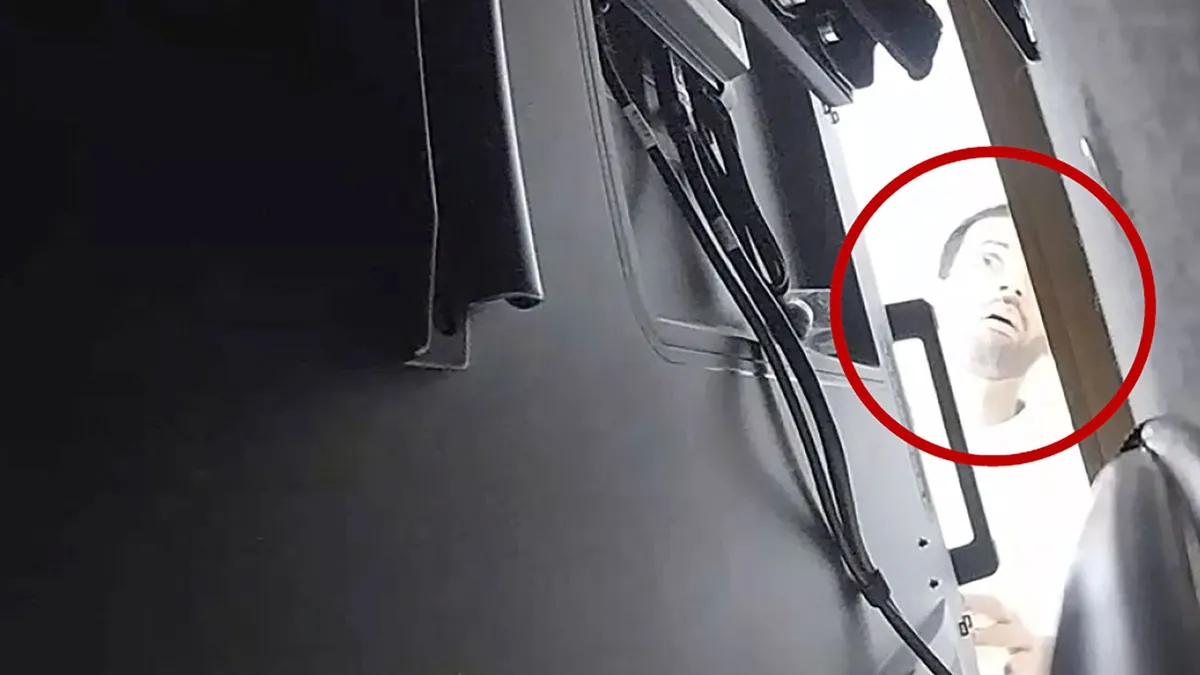
Alfozan entered his plea on Nov. 6 to a single-count indictment. He remains in jail without bail because a magistrate judge found him a flight risk and criticized the Saudi Consulate's offer to pay his full bond. His next court date is Nov. 17. [1] [2] [6] [7]
According to the complaint, he asked an internal productivity agent about office addresses, room capacities and calendars. A chatbot account linked to his wife was allegedly asked how to build and hide a recorder. The device was a small Seeed XIAO ESP32-S3 Sense board, and its microSD contents are encrypted. [3]
Prosecutors cite WhatsApp messages with a Saudi royal, a note titled 'Riyadh tasks,' and his family's one-way flight to Qatar after his arrest, on tickets they say a Saudi military official paid for. He has not been charged with espionage. The FBI director's talk of targeting superintelligence conversations goes beyond the actual interception charge. [5] [4] [1] [9]
Executives used the room for leadership meetings and for briefings with government officials and business partners. OpenAI says it has found no sign that model weights, source code or customer data were taken, but this is the company's own assessment and has not been independently checked. [4] [5]
None of the allegations has been tested in court. Still, they suggest that internal agents with calendar and facilities access can help with reconnaissance, and that prompt logs can become evidence.
Read the full assessment
For AI labs, cheap hardware and USB ports on shared screens are a real physical-security gap.
Executive brief
According to the federal complaint, an OpenAI engineer used AI tools to help plan the bugging of his own employer. He allegedly asked a company productivity agent about meeting rooms and calendars, and a chatbot account linked to his wife was asked how to build and hide an audio recorder (The Register). On Nov. 6, Abdulrahman Alfozan, a 35-year-old Saudi national, pleaded not guilty to one count of intercepting oral communications. He is accused of hiding a recorder in a TV in an OpenAI executive conference room (CNBC). OpenAI says it has found no sign that he took model weights, source code or customer data (NBC News).
Read the full section
According to the federal complaint, an OpenAI engineer used AI tools to help plan the bugging of his own employer. He allegedly asked a company productivity agent about meeting rooms and calendars, and a chatbot account linked to his wife was asked how to build and hide an audio recorder (The Register). On Nov. 6, Abdulrahman Alfozan, a 35-year-old Saudi national, pleaded not guilty to one count of intercepting oral communications. He is accused of hiding a recorder in a TV in an OpenAI executive conference room (CNBC). He stays in jail without bail. OpenAI says it has found no sign that he took model weights, source code or customer data (NBC News).
What changed and event timeline
Device planted, then found
Prosecutors say a recorder was plugged into a TV's USB port in an executive conference room on Sept. 28. OpenAI staff found it on Sept. 30, wrapped in toilet paper ().
Second device found
A similar device turned up in a bag Alfozan had left unattended in a different OpenAI room ().
Arrest, and family leaves
He was arrested and fired on Oct. 9. The next day his wife and son flew one-way to Qatar on business-class tickets that prosecutors say a Saudi military official paid for ().
Bail denied
Magistrate Judge Alex Tse ordered him held as a flight risk. Tse called the Saudi Consulate's offer to cover his full bond "problematic" (;).
Indictment
A grand jury charged him with a single count of interception of oral communications ().
Capabilities and access
- Role: He had been an OpenAI engineer since July 2025 (NBC News).
- Background: He studied at MIT and UC Berkeley, previously worked at Meta and Microsoft, and has been a US permanent resident since 2020 (Al Jazeera).
- The room: Executives used it for leadership meetings and for briefings with government officials and business partners (ABC News).
Read the full section
- Role: He had been an OpenAI engineer since July 2025 (NBC News). His bio at Raed Ventures, where he is a venture partner, describes him as Engineering Lead focused on AI agents and the data platform (CNBC).
- Background: He studied at MIT and UC Berkeley, previously worked at Meta and Microsoft, and has been a US permanent resident since 2020 (Al Jazeera).
- The room: Executives used it for leadership meetings and for briefings with government officials and business partners (ABC News).
Technical analysis for researchers and developers
- Hardware: A Seeed XIAO ESP32-S3 Sense, a cheap, thumb-sized board with a microphone, a camera sensor and microSD storage.
- Use of AI tools: Between Aug. 17 and Sept. 16, he allegedly asked a productivity agent about office addresses, room capacities and calendars.
- Neither the court reporting nor OpenAI says whether any safety filter flagged these prompts.
Read the full section
- Hardware: A Seeed XIAO ESP32-S3 Sense, a cheap, thumb-sized board with a microphone, a camera sensor and microSD storage. It may have been modified so it took only power from the TV and passed no data to it. The card's contents are encrypted, and forensic recovery has failed so far (The Register).
- Use of AI tools: Between Aug. 17 and Sept. 16, he allegedly asked a productivity agent about office addresses, room capacities and calendars. Prompts reportedly covered recording reliability, browser-based controls and a second unit that records when it hears speech (The Register).
- Implication: Prompt logs became forensic evidence. Neither the court reporting nor OpenAI says whether any safety filter flagged these prompts.
Claims and evidence
- The account of the planting, the devices and the prompts comes from the government's complaint.
- On ties to Saudi Arabia, prosecutors cite WhatsApp messages with a Saudi royal about an AI initiative. He is not charged with espionage.
- The statement that nothing was exfiltrated comes from OpenAI itself and has not been independently checked (NBC News).
Read the full section
- The account of the planting, the devices and the prompts comes from the government's complaint. None of it has been tested at trial, and he has pleaded not guilty (CNBC).
- On ties to Saudi Arabia, prosecutors cite WhatsApp messages with a Saudi royal about an AI initiative. When told Saudi Arabia needed him more than the US, he replied "100." They also cite a note titled "Riyadh tasks" (ABC News). He is not charged with espionage. One report says the FBI is weighing espionage charges (LetsDataScience), and no independent reporting confirms this.
- The statement that nothing was exfiltrated comes from OpenAI itself and has not been independently checked (NBC News).
Context and prior work
- Prosecutors pointed to the 2019 case of a Twitter employee accused of spying for Saudi Arabia, who fled after being confronted (KQED).
- A June executive order from President Trump made protecting US AI intellectual property from adversaries an explicit policy goal. OpenAI held talks with Saudi Arabia's Public Investment Fund about an investment earlier this year (CNBC).
Read the full section
- Prosecutors pointed to the 2019 case of a Twitter employee accused of spying for Saudi Arabia, who fled after being confronted (KQED).
- A June executive order from President Trump made protecting US AI intellectual property from adversaries an explicit policy goal. OpenAI held talks with Saudi Arabia's Public Investment Fund about an investment earlier this year (CNBC).
Limitations, safety and contested findings
- What was captured: Unknown. The recorded data could not be decrypted (The Register).
- Defense position: His lawyer, William Pernik, disputes the government's account of his intent.
- Framing gap: FBI Director Kash Patel described the target as conversations about "super intelligence technology" (NBC News).
Read the full section
- What was captured: Unknown. The recorded data could not be decrypted (The Register).
- Defense position: His lawyer, William Pernik, disputes the government's account of his intent. Pernik argued that a foreign agent would have fled right away, and noted that he offered $1 million in assets as bail (KQED; Khaleej Times).
- Framing gap: FBI Director Kash Patel described the target as conversations about "super intelligence technology" (NBC News). The actual charge is narrower: one count of interception.
- Reporting conflict: KQED dates the bail hearing to Oct. 20, while other outlets report Monday, Oct. 19.
Business and practitioner implications
- Physical security: AI labs need to sweep meeting rooms and lock down USB ports on shared screens.
- Internal agents: Agents that can see calendars and facilities data make reconnaissance easier. Scope their permissions narrowly and log every query.
- Insider and foreign-investment risk: Venture roles held outside the company and contacts with foreign governments are now part of insider-risk reviews.
Read the full section
- Physical security: AI labs need to sweep meeting rooms and lock down USB ports on shared screens. Hardware like this costs only a few dollars.
- Internal agents: Agents that can see calendars and facilities data make reconnaissance easier. Scope their permissions narrowly and log every query.
- Insider and foreign-investment risk: Venture roles held outside the company and contacts with foreign governments are now part of insider-risk reviews. That is especially true when sovereign funds are also potential investors, as with Saudi Arabia's PIF and OpenAI.
The source trail.
Sources (9)
CNBC: OpenAI bugging suspect Alfozan pleads not guilty
cnbc.comEx-OpenAI employee accused of spying pleads not guilty
Related coverage; assess separately
ft.com