
PolicyLaw, regulation & governance
Voters reject data centers in nearly every local ballot measure in the 2026 US midterms
Local measures to restrict data centers passed in all but one of about 40 contests across 10 states. An NBC exit poll found 56% of voters called AI and data centers a major factor. Democrats then called for moratoriums, and chip stocks fell.
From the The Verge · AI article of November 6, 2026 and cited sources: Data center restrictions won almost everywhere they were on the ballot. [3] [4] [5] [6]
SOURCES[3] CNBC — Top Democrats call to rein in AI buildout cnbc.com[4] Capital B News — Voters Reject Data Centers capitalbnews.org[5] TIME — How AI Backlash Shaped the 2026 Midterms time.com
 AT Pulse research deskPublished · Updated · 5 min read · AI-assisted analysis
AI-assisted, not human-edited. Methodology Corrections Who owns this site
- What happened
- Data center restrictions won almost everywhere they were on the ballot. [3] [4] [5] [6] [7]
- Original source
- The Verge · AI article, independent perspective
- Brief by
- AT Pulse research desk AI-assisted; publisher and contact on the desk page
- When
- November 6, 2026 article published
- Covered
- Nov 9 edition
- Evidence
- 8 sources across 7 sites
- 1Big Tech lost big in the 2026 electiontheverge.com
- 2Simon Willison — Quoting Nilay Patelsimonwillison.net
- 3CNBC — Top Democrats call to rein in AI buildoutcnbc.com
- 4Capital B News — Voters Reject Data Centerscapitalbnews.org
- 5TIME — How AI Backlash Shaped the 2026 Midtermstime.com
- 6Reason — It Was a Data Center Election After Allreason.com
Reach: not measured yet
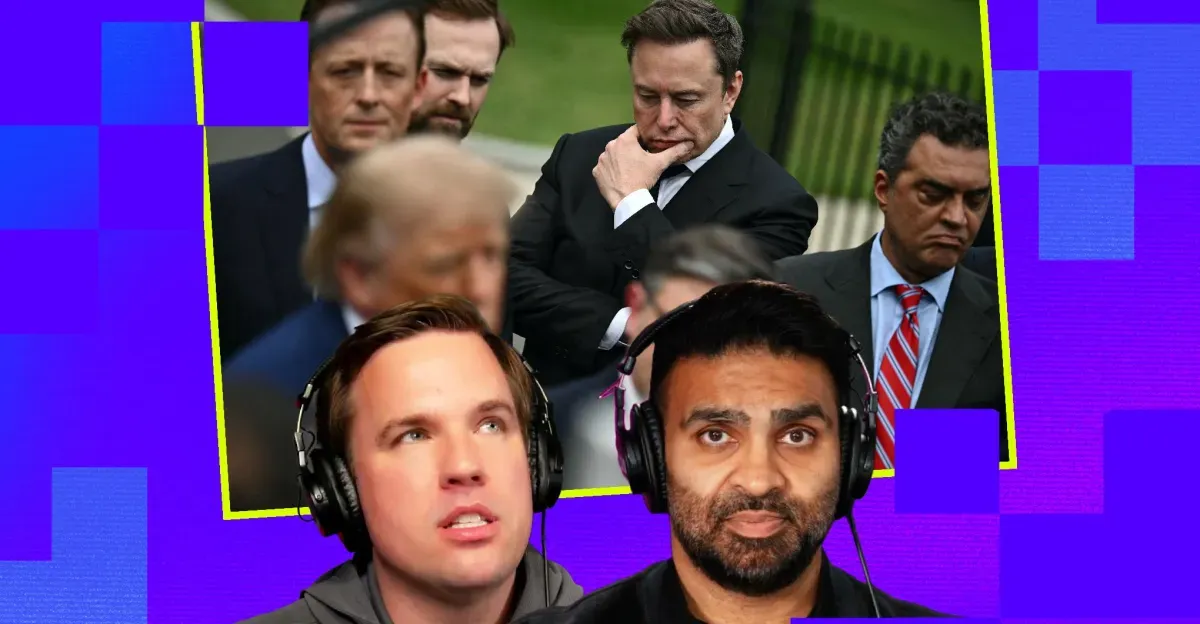
Data center restrictions won almost everywhere they were on the ballot. Outlets count about 40 or 41 measures in 10 states, and opponents lost only one of them, in Harwood, North Dakota. Reason's count is 39 of 41. In an NBC exit poll, 56% of voters said AI and data centers were a crucial or major factor in their House vote, and about two-thirds of that group voted Democratic. [3] [4] [5] [6] [7]
Elected officials are moving from campaign talk to concrete limits. Sen. Bernie Sanders called for a national moratorium on data centers. Texas governor-elect Gina Hinojosa promised to pause approvals until protective laws pass. Pennsylvania already has an executive order slowing development. Mayors in Piqua, Ohio, and Yukon, Oklahoma, were recalled over data center deals. [3] [5]
The ballot results, exit poll and stock moves show local opposition hardening. The likely result is that land, power and permits, not models, become the limit on how fast AI compute can expand.
Read the full assessment
Electricity costs and grid impact become central to getting projects approved.
Executive brief
Data centers turned out to be a deciding issue in the 2026 US midterms. An NBC exit poll found 56% of voters called AI and data centers a "crucial or major factor" in their House vote, and 65% of that group voted Democratic (CNBC). Local measures to restrict data centers passed almost everywhere they appeared, even though tech interests reportedly outspent local campaigns by about 100 to 1 (Capital B News). On The Vergecast, Nilay Patel argued the industry won't recover until its products are good enough to justify their costs to the public (Simon Willison).
What changed and event timeline
Pro-AI super PAC launches
Leading the Future started with more than $100 million to back candidates who favor fast AI development. Anthropic later put over $40 million into Public First Action, a group that pushes for AI safety ().
Midterms become a vote on data centers
About 40 data center measures were on local ballots in 10 states. Only Harwood, North Dakota, voted the industry's way ().
Analysts revise earlier doubts
Reason argued that pre-election polls showing only 3% naming data centers as their top issue understated how much it mattered ().
Democrats call for a pause and chip stocks fall
Bernie Sanders called for a "national data center moratorium." Yassamin Ansari called pausing AI development a Day 1 priority. The iShares Semiconductor ETF fell nearly 9% ().
OpenAI says it will keep building
CFO Sarah Friar said OpenAI will keep investing in infrastructure to meet customer demand. The Vergecast episode on the election came out the same day (;).
Capabilities and access
No model or product launched as part of this story. Josh Shapiro signed an executive order in August slowing data center development. Some local measures now ban or pause construction outright, for example in Edgewater, Florida, and Bloomington, Illinois (TIME).
Read the full section
No model or product launched as part of this story. The issue is access to the physical inputs AI depends on: land, power and local permits. Pennsylvania Gov. Josh Shapiro signed an executive order in August slowing data center development. Gina Hinojosa, who won the Texas governor's race, promised to pause data center approvals until protective laws pass (CNBC). Some local measures now ban or pause construction outright, for example in Edgewater, Florida, and Bloomington, Illinois (TIME).
Technical analysis for researchers and developers
- Compute supply is now a political risk. Anthropic reports $895.4 billion in committed spending, much of it on compute and infrastructure (CNBC).
- The core grievance is electricity prices. Reason links voter opposition mainly to power costs and wider cost-of-living worries (Reason).
- Reported tallies range from 39 of 41 measures to "all but one" (see Claims).
Read the full section
- Compute supply is now a political risk. Anthropic reports $895.4 billion in committed spending, much of it on compute and infrastructure (CNBC). Local bans and moratoriums directly threaten where that capacity can be built.
- The core grievance is electricity prices. Reason links voter opposition mainly to power costs and wider cost-of-living worries (Reason). That makes energy efficiency and grid impact part of the public case for a project, not just an engineering detail.
- The counts don't agree. Reported tallies range from 39 of 41 measures to "all but one" (see Claims).
Claims and evidence
- 56% of voters said AI and data centers mattered: reported by NBC's exit poll (TIME). Exit polls carry sampling error.
- Ballot results: CNBC reports 41 measures in 10 states, with opponents winning all but one (CNBC). Reason counts 39 of 41 (Reason).
- 100-to-1 spending gap: this comes from Data Center Resistance, an advocacy group (Capital B News).
Read the full section
- 56% of voters said AI and data centers mattered: reported by NBC's exit poll (TIME). Exit polls carry sampling error.
- Ballot results: CNBC reports 41 measures in 10 states, with opponents winning all but one (CNBC). Reason counts 39 of 41 (Reason). Capital B says "nearly 40" measures and 77% of voters against (Capital B News).
- 100-to-1 spending gap: this comes from Data Center Resistance, an advocacy group (Capital B News).
- Elon Musk's spending: TIME reports $446 million (TIME). Capital B reports $474 million (Capital B News).
Context and prior work
Opposition to data centers was already crossing party lines by January 2026 (NPR). Reason describes data centers going from a "practical non-issue" in 2025 to a major one by 2026. In key races the safety-oriented PACs outspent the other side (TIME).
Read the full section
Opposition to data centers was already crossing party lines by January 2026 (NPR). Reason describes data centers going from a "practical non-issue" in 2025 to a major one by 2026. It also links Republican losses partly to Trump's unusual support for the buildout (Reason). AI money split into two camps: groups favoring fast development and groups favoring safety. In key races the safety-oriented PACs outspent the other side (TIME).
Limitations, safety and contested findings
- Causation is unclear.
- Deepfakes had little effect. Maine senator-elect Jackson won despite deepfake videos. Wisconsin's Derrick Van Orden lost even though he posted deepfakes himself (TIME).
- Patel's view is commentary, not evidence. His case that AI agents "aren't real" and that the benefits don't justify the costs is opinion (Simon Willison).
Read the full section
- Causation is unclear. Democrats who campaigned hard against data centers did no better than those who avoided the topic, and general unpopularity also shaped results (Reason).
- Deepfakes had little effect. Maine senator-elect Jackson won despite deepfake videos. Wisconsin's Derrick Van Orden lost even though he posted deepfakes himself (TIME).
- Patel's view is commentary, not evidence. His case that AI agents "aren't real" and that the benefits don't justify the costs is opinion (Simon Willison). The episode also asks whether OpenAI's growth in search means much when even Google struggles to make money from AI search (The Verge).
Business and practitioner implications
- Expect more local bans, recall votes and conditions on approvals. Mayors in Piqua, Ohio, and Yukon, Oklahoma, were recalled over data center deals (TIME).
- Markets are pricing in policy risk. After the results, Nvidia fell 8% and AMD more than 14% (CNBC).
- Builders are sticking to their plans for now. OpenAI says it will keep investing (CNBC).
Read the full section
- Siting gets harder. Expect more local bans, recall votes and conditions on approvals. Mayors in Piqua, Ohio, and Yukon, Oklahoma, were recalled over data center deals (TIME).
- Markets are pricing in policy risk. After the results, Nvidia fell 8% and AMD more than 14% (CNBC).
- Builders are sticking to their plans for now. OpenAI says it will keep investing (CNBC).
- Products have to show value. Patel argues adoption depends on benefits users can see for themselves, without needing an ad campaign to convince them (Simon Willison).
The source trail.
Sources (8)
Big Tech lost big in the 2026 election
Article text retrieved; extracted text may omit tables or interactive elements.
theverge.com