
InfrastructureCompute, chips & cloud
Chip stocks plunge after midterms as voters back data center limits in 40 of 41 local measures
A one-day rally after the election reversed on November 5, 2026, when chip stocks had their worst day since March 2020. Voters had backed data center restrictions almost everywhere, and analysts now expect power and permits to set the pace of AI buildout.
From the CNBC · Technology article of November 6, 2026 and cited sources: Local opposition to data centers showed up clearly at the ballot box on November 3. [3] [5] [2]
SOURCES[3] Scientific American: 2026 election results show widespread… scientificamerican.com[5] Forbes: Where voters are rejecting data centers forbes.com[2] Fortune: Best post-midterm rally in 44 years lasted one day fortune.com
 AT Pulse research deskPublished · Updated · 5 min read · AI-assisted analysis
AI-assisted, not human-edited. Methodology Corrections Who owns this site
- What happened
- Local opposition to data centers showed up clearly at the ballot box on November 3. [3] [5] [2]
- Original source
- CNBC · Technology article, independent perspective
- Brief by
- AT Pulse research desk AI-assisted; publisher and contact on the desk page
- When
- November 6, 2026 article published
- Covered
- Nov 6 edition
- Evidence
- 11 sources across 9 sites
- 1CNBC: AI stocks hammered by midterm shockcnbc.com
- 2Fortune: Best post-midterm rally in 44 years lasted one dayfortune.com
- 3Scientific American: 2026 election results show widespread…scientificamerican.com
- 4Let's Data Science: Goldman models $7.6T buildoutletsdatascience.com
- 5Forbes: Where voters are rejecting data centersforbes.com
- 6CNBC: AI meltdown, Nvidia and Qualcomm drop more than 9%cnbc.com
Reach: not measured yet
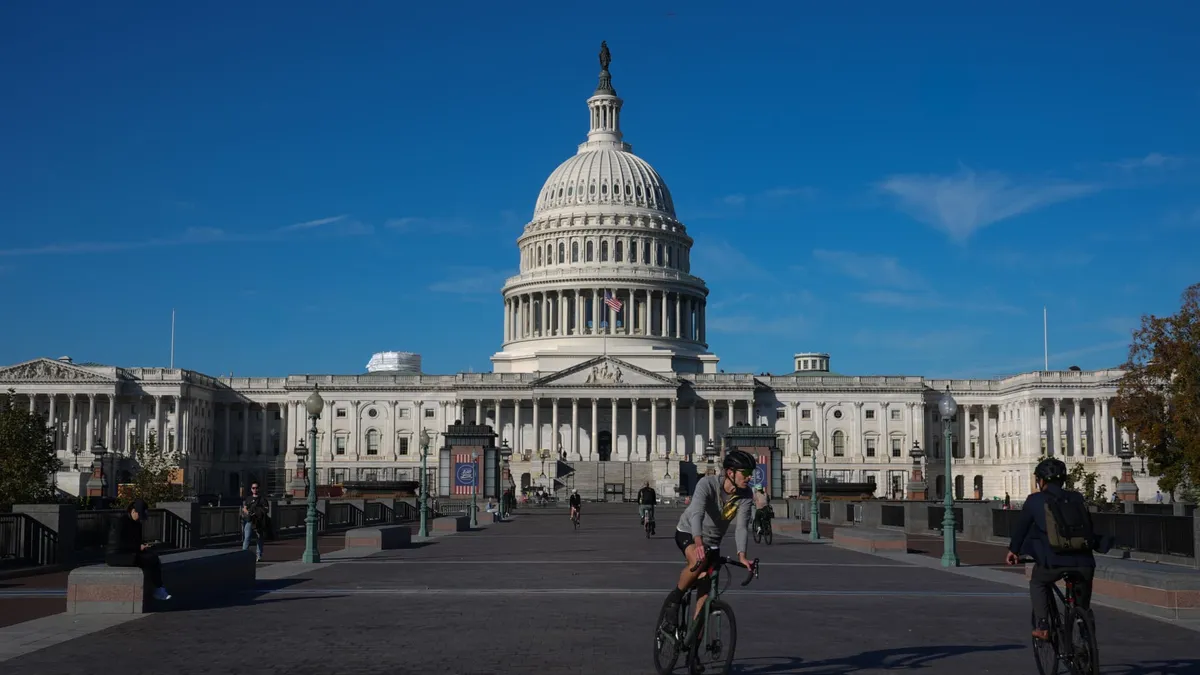
Local opposition to data centers showed up clearly at the ballot box on November 3. Restrictions won, or pro-development measures lost, in 40 of 41 local measures across 10 states. Harwood, North Dakota was the only exception. New Democratic governors in Texas, Georgia and Ohio had campaigned on regulating data centers. Wells Fargo estimates that Texas alone holds about 27% of planned data center gigawatts. [3] [5] [2]
The Dow had its best post-midterm day in 44 years, and the gain lasted one day. On November 5, the Philadelphia Semiconductor Index fell 9.75%, its worst session since March 2020. Weak Qualcomm guidance came out at the same time. Neocloud providers fell hardest: Nebius dropped about 15%, Iren 17% and CoreWeave 10%. [2] [6] [1]
Analysts expect resistance to make the buildout slower and more expensive rather than stop it. Barclays calls it a war of attrition in which scarce power favors the companies with the most capital. UBS estimates that construction pauses could put about 30% of planned 2028 U.S. capacity additions at risk. Dan Ives moved his forecast for when Big Tech capex growth peaks to 2027. [1] [7]
The vote results and price moves are documented, but the longer-term effects are analyst forecasts. If power and permits stay scarce in key states, new compute may arrive later and cost more.
Read the full assessment
That would favor hyperscalers over neoclouds and push builders toward other regions.
Executive brief
Democrats won both chambers of Congress on November 3, 2026. The Dow then had its best post-midterm day in 44 years. One day later, roughly $3 trillion in market value was gone, led by chip stocks (Fortune). The trigger was local as much as national. Voters backed restrictions in 40 of 41 data center ballot measures, and new Democratic governors in Texas, Georgia and Ohio had campaigned on data center regulation (Scientific American). Barclays describes the AI buildout as a "war of attrition" in which scarce power favors the largest balance sheets (CNBC).
What changed and event timeline
Goldman sizes the buildout
Goldman's framework puts cumulative AI capex for 2026–2031 at about $7.6 trillion, rising from $765 billion to $1.6 trillion a year. It is a supply-side scenario, not a demand forecast ().
Voters reject data centers
Restrictions won, or pro-development measures lost, in 40 of 41 local measures across 10 states. The only exception was Harwood, North Dakota (;).
Relief rally, early warnings
The Dow rose 1,569 points (3%) on hopes for steadier policy and an oil price drop of more than 8% (). Dan Ives and Barclays put out notes the same day warning about the data center pipeline ().
Chip meltdown
The Philadelphia Semiconductor Index fell 9.75%, its worst day since March 2020 (). Weak Qualcomm guidance hit at the same time. The Nasdaq had its worst session since April 2025 ().
Partial rebound, revised outlook
Ives moved his forecast for when Big Tech capex growth peaks to 2027, from 2028/2029 ().
Capabilities and access
This is not a model release. What is at stake is how much compute gets built, and where.
Read the full section
This is not a model release. What is at stake is how much compute gets built, and where.
- Texas holds about 27% of planned data center gigawatts, according to Wells Fargo (Fortune).
- UBS warns that construction pauses could put about 30% of planned 2028 U.S. capacity additions at risk (Al Jazeera).
- Qualcomm CEO Cristiano Amon described the company's constraint as supply, not demand (CNBC).
Technical analysis for researchers and developers
- Barclays argues that local pushback makes the buildout more expensive rather than stopping it.
- A large share of planned capacity sits in Texas, Georgia and Ohio, where the new governors favor regulation (Scientific American).
- Teams that plan training runs or inference capacity around specific U.S. sites should expect longer lead times and higher costs.
Read the full section
- Constraint shifts to power and permits. Barclays argues that local pushback makes the buildout more expensive rather than stopping it. Scarce power then favors the firms with the most capital (CNBC).
- Geographic concentration risk. A large share of planned capacity sits in Texas, Georgia and Ohio, where the new governors favor regulation (Scientific American).
- Implementation implication (inference). Teams that plan training runs or inference capacity around specific U.S. sites should expect longer lead times and higher costs. Diversifying across regions, as Moonshot did when it turned to Europe for Blackwell access, becomes more relevant (CNBC).
Claims and evidence
Read the full section
- Single-day moves differ by source. CNBC reports AMD down 17.3% and Micron down 17.5% (CNBC). Fortune puts both at about 15% (Fortune). Nasdaq losses range from 4.8% (Al Jazeera, probably an intraday figure) through 5.2% (Fortune) to 5.5% (CNBC).
- Ballot counts differ by tracker. Most outlets report 40 of 41. Al Jazeera, citing a different tracker, reports 39 of 45.
- Blocked projects. IDCA counts 46 projects worth more than $170 billion blocked or stalled between January 2024 and May 2026 (CNBC). Another report puts the value of the same set at $137–172 billion (Crypto Briefing).
- Forecasts are opinion. The 2027 capex peak (Ives) and the "war of attrition" framing (Barclays) are analyst views, not data.
Context and prior work
- Opposition was building before the election.
- Resistance to data centers had already crossed party lines (NPR). Georgia was a flashpoint (Axios).
- AI stocks had sold off in October over interest rates and overspending, and Magnificent Seven earnings were "undershooting" expectations, according to Capital.com (CNBC).
Read the full section
- Opposition was building before the election. Data Center Watch counted about 75 stalled projects worth roughly $130 billion in Q1 2026 and about 45 worth roughly $68 billion in Q2 (Let's Data Science).
- Resistance to data centers had already crossed party lines (NPR). Georgia was a flashpoint (Axios).
- AI stocks had sold off in October over interest rates and overspending, and Magnificent Seven earnings were "undershooting" expectations, according to Capital.com (CNBC).
Limitations, safety and contested findings
- The selloff has several causes that overlap: the election, Qualcomm's guidance, interest rates and a disappointing earnings season.
- The timing is unclear. Scientific American reports AI data center stocks falling on Wednesday (Scientific American), while Fortune describes a broad rally that day (Fortune).
- Some analysts expect regulatory pushback to deflate the AI bubble rather than pop it. Friday's partial rebound fits that reading.
Read the full section
- The selloff has several causes that overlap: the election, Qualcomm's guidance, interest rates and a disappointing earnings season. None of the reviewed sources separates out how much each contributed.
- The timing is unclear. Scientific American reports AI data center stocks falling on Wednesday (Scientific American), while Fortune describes a broad rally that day (Fortune).
- Some analysts expect regulatory pushback to deflate the AI bubble rather than pop it. Friday's partial rebound fits that reading.
Business and practitioner implications
- Scarce power favors the companies with the biggest balance sheets. Neoclouds took heavier hits: Nebius fell 15%, Iren 17% and CoreWeave 10% (CNBC).
- Many hyperscalers already have negative cash flow. Meta is seeking up to $25 billion in debt (CNBC).
- Expect higher costs per gigawatt, more weight on community agreements, and more interest in non-U.S. builds such as Brookfield's planned $27 billion UK site.
Read the full section
- Hyperscalers versus neoclouds. Scarce power favors the companies with the biggest balance sheets. Neoclouds took heavier hits: Nebius fell 15%, Iren 17% and CoreWeave 10% (CNBC).
- Financing pressure. Many hyperscalers already have negative cash flow. Meta is seeking up to $25 billion in debt (CNBC).
- Siting and procurement. Expect higher costs per gigawatt, more weight on community agreements, and more interest in non-U.S. builds such as Brookfield's planned $27 billion UK site.
- Capex guidance. If Ives is right, supplier revenue growth slows sooner than consensus expects.