
InfrastructureCompute, chips & cloud
Global stocks slide on fears that Democratic midterm wins and local votes against data centres will slow the AI buildout
After voters rejected or restricted data centres in 40 of 41 local ballot measures and Democrats won Congress, the Nasdaq fell 5.5% and a key chip index fell about 12%. Losses then spread to Asia and Europe as investors priced in slower AI infrastructure growth.
From the The Guardian · AI article of November 6, 2026 and cited sources: Voters in 10 states backed restrictions or rejected development in every local data-centre ballot measure except one, in Harwood, North Dakota. [5] [6] [7]
SOURCES[5] CNBC: Voters rebuff data centers in every ballot measure… cnbc.com[6] Scientific American: 2026 election results show widespread… scientificamerican.com[7] CNBC: Top Democrats call to rein in AI buildout cnbc.com
 AT Pulse research deskPublished · Updated · 5 min read · AI-assisted analysis
AI-assisted, not human-edited. Methodology Corrections Who owns this site
- What happened
- Voters in 10 states backed restrictions or rejected development in every local data-centre ballot measure except one, in Harwood, North Dakota. [5] [6] [7]
- Original source
- The Guardian · AI article, independent perspective
- Brief by
- AT Pulse research desk AI-assisted; publisher and contact on the desk page
- When
- November 6, 2026 article published
- Covered
- Nov 6 edition
- Evidence
- 11 sources across 7 sites
- 1Global stocks plunge amid AI slowdown fears after…theguardian.com
- 2Guardian: Nasdaq sees worst day in 19 monthstheguardian.com
- 3CNBC: AI meltdown: Nvidia and Qualcomm drop more than 9%cnbc.com
- 4Axios: OpenAI's post-election power playaxios.com
- 5CNBC: Voters rebuff data centers in every ballot measure…cnbc.com
- 6Scientific American: 2026 election results show widespread…scientificamerican.com
Reach: not measured yet
Voters in 10 states backed restrictions or rejected development in every local data-centre ballot measure except one, in Harwood, North Dakota. Ohio had 21 of the 41 measures. Newly elected Democratic governors in Texas, Georgia and Ohio campaigned on tougher rules. Texas holds about a quarter of planned US data-centre capacity, and its governor-elect has pledged to halt approvals until new legislation passes. Senator Bernie Sanders has called for a national moratorium. [5] [6] [7]
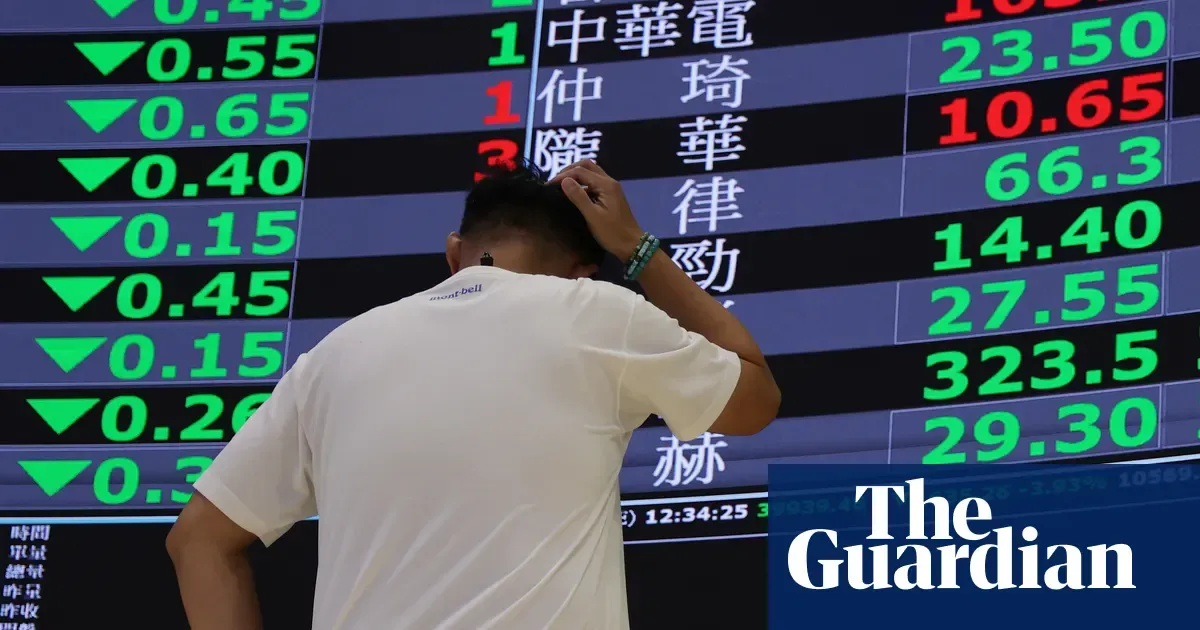
On 5 November the Nasdaq fell 5.5% and the S&P 500 fell 4.3%. The Philadelphia Semiconductor Index dropped about 12%. Memory and storage stocks were hit hardest: SanDisk lost 22% and Western Digital 17%. The next day South Korea's Kospi fell more than 8%, Japan's Nikkei fell about 6%, and London's FTSE 100 and Germany's Dax each lost 1.9%. [1] [3] [8]
It is unclear how much of the selloff the election caused. Qualcomm issued weak guidance the same day, and one analyst also pointed to Iran-conflict risk and oil prices. A Jefferies strategist argued that Democrats are unlikely to give up a source of growth and jobs. No moratorium has become law. [1] [3]
Documented: voters rejected data centres at the ballot box, and chip and memory stocks fell sharply.
Read the full assessment
Inferred: permitting delays and power-cost fights could slow capacity growth, especially in Texas, Ohio and Georgia, and affect timelines and costs for teams relying on new compute.
Executive brief
Voters in the US midterms (held 3 November 2026) turned against AI data centres on the ballot. In 40 of 41 local data-centre measures across 10 states, they backed restrictions or rejected development. Wall Street paid little attention on Wednesday. On Thursday it changed its mind: the Nasdaq fell 5.5%, its worst day since April 2025, and the selloff spread to Asia and Europe on Friday. Investors fear that a Democratic Congress, plus new Democratic governors in Texas, Georgia and Ohio who back moratoriums, will slow the AI infrastructure buildout. Some analysts think the market overreacted and that Democrats won't abandon a source of growth.
What changed and event timeline
OpenAI readies post-election push
Axios reported that OpenAI planned to start a policy and PR campaign after the vote, including renaming data centres "AI compute campuses" ().
Ballot results against data centres
Voters backed restrictions or rejected development in every data-centre measure except one, in Harwood, North Dakota. Ohio alone had 21 of the 41 measures (;).
Calls for a national moratorium
Bernie Sanders called for a national data-centre moratorium. Yassamin Ansari urged pausing AI development as a Day 1 priority for the new House majority, and Rep. Greg Casar endorsed her post ().
Nasdaq enters a correction
The Nasdaq fell 5.5%, the S&P 500 4.3% and the Dow 1,833 points. The Philadelphia Semiconductor Index dropped about 12% ().
The selloff goes global
The Kospi fell more than 8% and the Nikkei 6%. London's FTSE 100 dropped 1.9%, on course for its worst day since March, and Germany's Dax also fell 1.9% ().
Capabilities and access
No AI model or product launched.
Read the full section
No AI model or product launched. The story is about whether compute capacity will keep growing:
- Texas holds about 25% of planned US data-centre capacity. Its governor-elect, Gina Hinojosa, has pledged to halt all data-centre approvals until protective legislation passes (CNBC).
- The new Democratic governors of Georgia (Keisha Lance Bottoms) and Ohio (Amy Acton) also campaigned on tougher rules (Scientific American).
- Meta's president said building data centres will be "harder" after the election (CNBC).
Technical analysis for researchers and developers
The reviewed sources describe market and policy events, not technical systems.
Read the full section
The reviewed sources describe market and policy events, not technical systems. They document:
- Where it hurt most: memory and storage. SanDisk fell 22% and Western Digital 17% (Guardian). AMD, Micron and Applied Materials posted double-digit losses (CNBC).
- Local permitting is now the bottleneck. More than 80% of voters in Wells, Maine approved a retroactive 180-day moratorium (Scientific American). Anyone planning capacity should treat local votes as a real risk to timelines.
- More transparency at the siting stage. Amazon and Microsoft say they no longer use NDAs in negotiations with local governments (Implicator).
Claims and evidence
- Voter motive: 56% of voters in the CNBC Voter Poll called AI and data centres a crucial or major factor in their vote, and 65% of that group backed Democrats for Congress (CNBC).
- Size of the loss: The Guardian put the Nasdaq's lost value at more than $2tn (Guardian).
- Nikkei drop: reported as 6% (Guardian) and as 7% (The National). The two may reflect different times of day.
Read the full section
- Voter motive: 56% of voters in the CNBC Voter Poll called AI and data centres a crucial or major factor in their vote, and 65% of that group backed Democrats for Congress (CNBC). The poll was commissioned by a media outlet and is not independently replicated.
- Size of the loss: The Guardian put the Nasdaq's lost value at more than $2tn (Guardian). A lower-tier outlet put the Nasdaq-100's loss at $2.5tn (1023 Jack).
- Nikkei drop: reported as 6% (Guardian) and as 7% (The National). The two may reflect different times of day.
- Demand: Qualcomm CEO Cristiano Amon said the company has a supply problem, not a demand problem. The company still issued a weak forecast (CNBC).
Context and prior work
- Fights over data centres had already blurred party lines by January 2026.
- Pennsylvania's Democratic governor, Josh Shapiro, signed an executive order in August to slow data-centre development (CNBC).
- In Ohio, Sherrod Brown won by casting his opponent as "the face of data centers" (CNBC).
Limitations, safety and contested findings
- The causal story is disputed. Jefferies' Mohit Kumar doesn't see this as the start of the AI trade unwinding.
- Qualcomm's weak guidance came the same day, and IG's Chris Beauchamp also pointed to Iran-conflict risk and oil prices (Guardian).
- Context for the drop: the Nasdaq was still up 4.6% for the year (Guardian).
Read the full section
- The causal story is disputed. Jefferies' Mohit Kumar doesn't see this as the start of the AI trade unwinding. He argues Democrats won't give up a growth engine that also creates jobs (Guardian).
- Other causes overlap. Qualcomm's weak guidance came the same day, and IG's Chris Beauchamp also pointed to Iran-conflict risk and oil prices (Guardian).
- Context for the drop: the Nasdaq was still up 4.6% for the year (Guardian).
- No law has passed. The moratorium calls are proposals so far.
Business and practitioner implications
- Expect delays in permitting and siting, especially in Texas, Ohio and Georgia.
- Expect congressional hearings on who pays for the power that data centres use (The National).
- Copper is heading for its biggest weekly fall since March, and analysts say its price increasingly tracks sentiment about data-centre expansion (Guardian).
Read the full section
- Expect delays in permitting and siting, especially in Texas, Ohio and Georgia. One portfolio manager expects a "knee-jerk reaction" that could cause delays (CNBC).
- Expect congressional hearings on who pays for the power that data centres use (The National).
- The effects reach beyond chips. Copper is heading for its biggest weekly fall since March, and analysts say its price increasingly tracks sentiment about data-centre expansion (Guardian).
- Engaging with communities is now part of getting projects approved: dropping NDAs and giving local communities a say (Implicator).
The source trail.
Sources (11)
Global stocks plunge amid AI slowdown fears after Democrats’ midterm triumph
Article text retrieved; extracted text may omit tables or interactive elements.
theguardian.com