
InfrastructureCompute, chips & cloud
OpenAI pledges to stop using NDAs with public officials on future data center projects
OpenAI says it will no longer have public officials sign non-disclosure agreements for future data center projects. It also says it will pay full power and grid costs, publish job estimates and sign a compact with each host community. The change follows backlash over NDAs tied to its Georgia campus.
From the The Verge · AI article of November 6, 2026 and cited sources: OpenAI's National Community Compact drops NDAs with public officials for every future compute campus that OpenAI owns and operates. [1] [6]
SOURCES[1] OpenAI is stepping back from NDAs for data center projects theverge.com[6] Tech Insider: OpenAI Ends Data Center NDAs After 41 Ballot… tech-insider.org
 AT Pulse research deskPublished · Updated · 5 min read · AI-assisted analysis
AI-assisted, not human-edited. Methodology Corrections Who owns this site
- What happened
- OpenAI's National Community Compact drops NDAs with public officials for every future compute campus that OpenAI owns and operates. [1] [6]
- Original source
- The Verge · AI article, independent perspective
- Brief by
- AT Pulse research desk AI-assisted; publisher and contact on the desk page
- When
- November 6, 2026 article published
- Covered
- Nov 6 edition
- Evidence
- 10 sources across 10 sites
- 1OpenAI is stepping back from NDAs for data center projectstheverge.com
- 2AJC: How OpenAI's $20B plan secretly took root in Effinghamajc.com
- 3SELC: Residents sue over secretive approval of OpenAI data…selc.org
- 4Crypto Briefing: Amazon ends NDAs, following Microsoftcryptobriefing.com
- 5TechCrunch: Amazon says it no longer uses NDAstechcrunch.com
- 6Tech Insider: OpenAI Ends Data Center NDAs After 41 Ballot…tech-insider.org
Reach: not measured yet
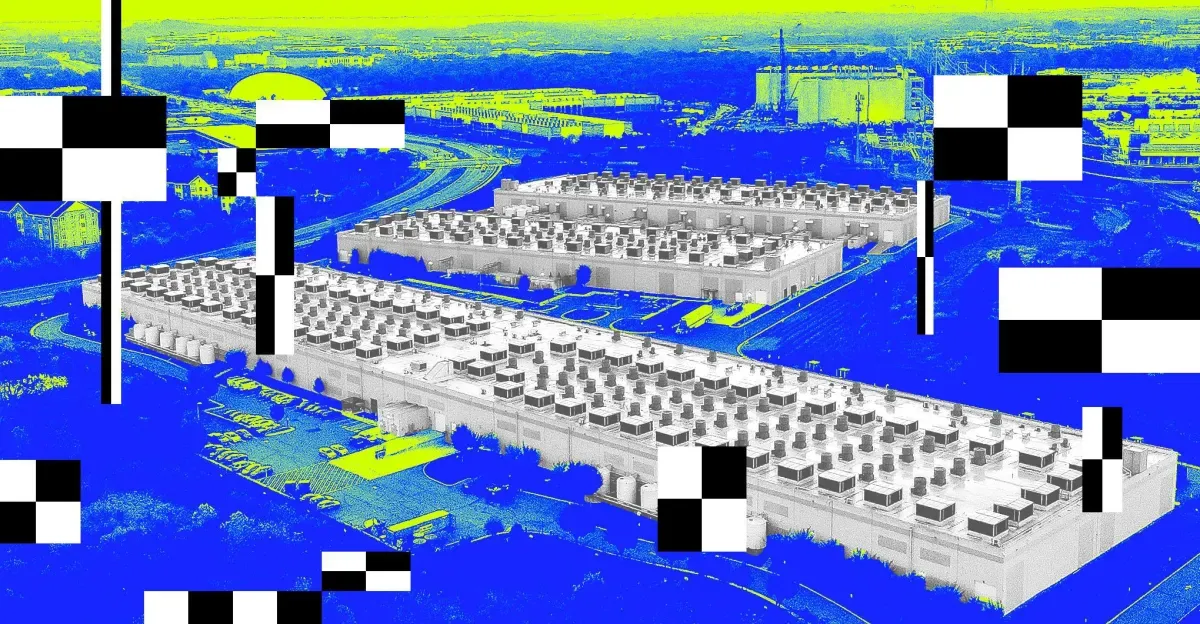
OpenAI's National Community Compact drops NDAs with public officials for every future compute campus that OpenAI owns and operates. Confidentiality still applies to security details, trade secrets and competitively sensitive information. Each site will get a local compact, a named point of contact and an annual public report. [1] [6]
OpenAI says it will pay the full cost of its electricity and the grid infrastructure needed to serve it. It also says it will give financial assurances before major spending, so utility customers are protected if a project is delayed or cancelled, and will publish expected jobs. How it will calculate 'full cost' has not been published. [1] [8]
The change came about four months after Effingham County, Georgia officials signed NDAs before OpenAI revealed its $20 billion campus there. Residents and conservation groups have since sued the county development authority, alleging violations of Georgia's open-meetings and open-records laws. OpenAI's move follows similar NDA reversals by Microsoft and Amazon, and midterm ballot measures that went against data centers. [2] [3] [4] [5] [9]
OpenAI is pairing these concessions with a policy blueprint. It asks for faster permitting, quicker grid interconnection, broader transmission authority and restored clean-energy tax credits. [8]
The pledge is OpenAI's own commitment, and no independent compliance check exists yet. If OpenAI honors it, earlier disclosure and paying full power costs could lengthen negotiations and raise compute costs.
Read the full assessment
Developers still using NDAs with officials face growing reputational and legal exposure.
Sources are checked. Here's the dossier.
Executive brief
OpenAI now says it will not use non-disclosure agreements (NDAs) with public officials on data center projects. This comes about four months after Effingham County, Georgia officials signed NDAs before OpenAI revealed its $20 billion campus there, a project that conservation groups are now suing over (AJC; SELC). OpenAI announced the change right after midterm elections in which voters pushed back against data centers. It also promised to pay the full cost of its electricity and grid infrastructure, publish expected jobs, and sign a "local compact" for each future site (The Verge). Microsoft and Amazon dropped similar NDAs earlier in 2026.
What changed and event timeline
Microsoft drops NDAs
Microsoft committed to ending NDAs with local governments in data center negotiations. Later coverage of Amazon's move treated this as the precedent ().
Effingham project revealed
OpenAI announced "Project Camellia" in Georgia. County officials had signed NDAs about the project during site selection. The local development authority's CEO said about 75% of his projects use NDAs ().
Lawsuit filed
The Southern Environmental Law Center (SELC), representing One Hundred Miles and local residents, sued the county development authority. The suit alleges violations of Georgia's open-meetings and open-records laws, and the project carries a tax abatement of nearly $900 million ().
AWS follows
AWS CEO Matt Garman wrote that Amazon no longer uses NDAs with the government agencies it works with on data center projects ().
- Early Nov 2026
Midterm backlash
Local ballot measures went against data centers. One count says voters rejected new data centers in 40 of 41 measures; other counts differ ().
OpenAI compact
OpenAI announced its National Community Compact, which includes the no-NDA pledge, and a Compute Campus Policy Blueprint (;).
Capabilities and access
No AI model is involved.
Read the full section
No AI model is involved. This is a governance commitment, and its scope is narrow:
- It covers every future "compute campus" (OpenAI's term for a data center) that OpenAI owns and operates (The Verge).
- It still allows confidentiality for security information, trade secrets and competitively sensitive information.
- Each site gets a local compact, a named local point of contact and an annual public report (Tech Insider).
- Planned disclosures cover water, energy, noise, traffic, lighting and hiring (The Neuron).
Technical analysis for researchers and developers
- Cost allocation: OpenAI says it will pay its full electricity cost and for the infrastructure needed to serve it.
- Measurement: Reporting methods, such as how "closed-loop" water use is defined and measured, are not specified.
- Policy asks: The blueprint asks for faster permitting, quicker grid interconnection, broader transmission authority and restored clean-energy tax credits (The Neuron).
Read the full section
- Cost allocation: OpenAI says it will pay its full electricity cost and for the infrastructure needed to serve it. It also says it will give financial assurances before major spending, so utility customers are protected if a project is delayed or cancelled (The Neuron). How it will calculate "full cost" has not been published.
- Measurement: Reporting methods, such as how "closed-loop" water use is defined and measured, are not specified. That makes it hard to compare sites or audit them (Tech Insider).
- Policy asks: The blueprint asks for faster permitting, quicker grid interconnection, broader transmission authority and restored clean-energy tax credits (The Neuron).
Claims and evidence
- The no-NDA pledge, full-cost power and job reporting are OpenAI's own commitments, as reported by The Verge. No independent compliance check exists yet.
- OpenAI cites local pledges as examples: free school meals for about 14,000 Effingham students and $6 million for childcare in Pike County, Ohio (Android Headlines).
- The Neuron says OpenAI voided its Effingham NDAs in July 2026 (The Neuron). No other reviewed source confirms this.
Read the full section
- The no-NDA pledge, full-cost power and job reporting are OpenAI's own commitments, as reported by The Verge. No independent compliance check exists yet.
- OpenAI cites local pledges as examples: free school meals for about 14,000 Effingham students and $6 million for childcare in Pike County, Ohio (Android Headlines).
- The Neuron says OpenAI voided its Effingham NDAs in July 2026 (The Neuron). No other reviewed source confirms this. AJC's August report does not say officials were released.
- Ballot tallies conflict and have not been reconciled (Tech Insider).
Context and prior work
- Before the vote, 34 data center measures were set for November ballots across eight states. Citizen petitions put 31 of them there (S&P Global).
- From January through July 2026, local governments adopted 294 moratoriums and bans (S&P Global).
- Jamie Raskin opened an investigation into NDA use by Amazon, Google, Meta and Oracle shortly before AWS announced its change (Implicator).
Read the full section
- Before the vote, 34 data center measures were set for November ballots across eight states; citizen petitions put 31 of them there (S&P Global).
- From January through July 2026, local governments adopted 294 moratoriums and bans (S&P Global).
- Rep. Jamie Raskin opened an investigation into NDA use by Amazon, Google, Meta and Oracle shortly before AWS announced its change (Implicator).
Limitations, safety and contested findings
- Voluntary and forward-only: There is no formal remedy if OpenAI doesn't comply, and existing sites are excluded (Tech Insider).
- Broad exceptions: The "proprietary or competitively sensitive" carve-out could cover much of what officials would otherwise discuss in public.
- Trust deficit: After Amazon's similar move, commentators noted that opponents often simply don't believe company pledges (TechCrunch).
Read the full section
- Voluntary and forward-only: There is no formal remedy if OpenAI doesn't comply, and existing sites are excluded (Tech Insider).
- Broad exceptions: The "proprietary or competitively sensitive" carve-out could cover much of what officials would otherwise discuss in public.
- Trust deficit: After Amazon's similar move, commentators noted that opponents often simply don't believe company pledges (TechCrunch).
- Effingham litigation: The SELC lawsuit is ongoing, so the dispute over how that deal was approved is unresolved.
Business and practitioner implications
- Industry norm: Microsoft, Amazon and now OpenAI have all dropped officials' NDAs.
- Site selection: Expect earlier public disclosure and land prices that rise once a project is known.
- Finance: Up-front financial assurances and per-site compacts add negotiating time and capital commitments to each project.
Read the full section
- Industry norm: Microsoft, Amazon and now OpenAI have all dropped officials' NDAs. Developers still using them face reputational and legal risk, including challenges under open-meetings laws.
- Site selection: Expect earlier public disclosure and land prices that rise once a project is known. Paying full power cost may also raise the effective cost of compute.
- Finance: Up-front financial assurances and per-site compacts add negotiating time and capital commitments to each project.
- Policy: OpenAI is pairing its concessions with requests for faster permitting and transmission, so expect it to lobby state legislatures.
The source trail.
Sources (10)
OpenAI is stepping back from NDAs for data center projects
Article text retrieved; extracted text may omit tables or interactive elements.
theverge.com