
PolicyLaw, regulation & governance
OpenAI pledges to pay full power costs at its data centers after voters reject 40 of 41 local ballot measures
Two days after voters sided against data centers in 40 of 41 local ballot measures, OpenAI published a compact pledging to cover power and grid costs at campuses it owns, and a blueprint urging lawmakers to impose similar terms industry-wide.
From the CNBC · Technology article of November 5, 2026 and cited sources: OpenAI's National Community Compact commits it to pay the full electricity and infrastructure costs of future campuses it owns and operates. [1] [2] [7] [8]
SOURCES[1] CNBC: OpenAI pledges to pay for data center power after… cnbc.com[2] OpenAI: Setting a new standard for responsible AI… openai.com[7] Runtime Wire: OpenAI promises to cover data center power… runtimewire.com
 AT Pulse research deskPublished · Updated · 5 min read · AI-assisted analysis
AI-assisted, not human-edited. Methodology Corrections Who owns this site
- What happened
- OpenAI's National Community Compact commits it to pay the full electricity and infrastructure costs of future campuses it owns and operates. [1] [2] [7] [8]
- Original source
- CNBC · Technology article, independent perspective
- Brief by
- AT Pulse research desk AI-assisted; publisher and contact on the desk page
- When
- November 5, 2026 article published
- Covered
- Nov 5 edition
- Evidence
- 9 sources across 8 sites
- 1CNBC: OpenAI pledges to pay for data center power after…cnbc.com
- 2OpenAI: Setting a new standard for responsible AI…openai.com
- 3DatacenterDynamics: OpenAI pledges to pay its own way to…datacenterdynamics.com
- 4The Next Web: OpenAI launches Grid Protectorsthenextweb.com
- 5CNBC: Voters rebuff data centers in every ballot measure…cnbc.com
- 6BusinessMirror (Bloomberg): OpenAI to change how it…businessmirror.com.ph
Reach: not measured yet
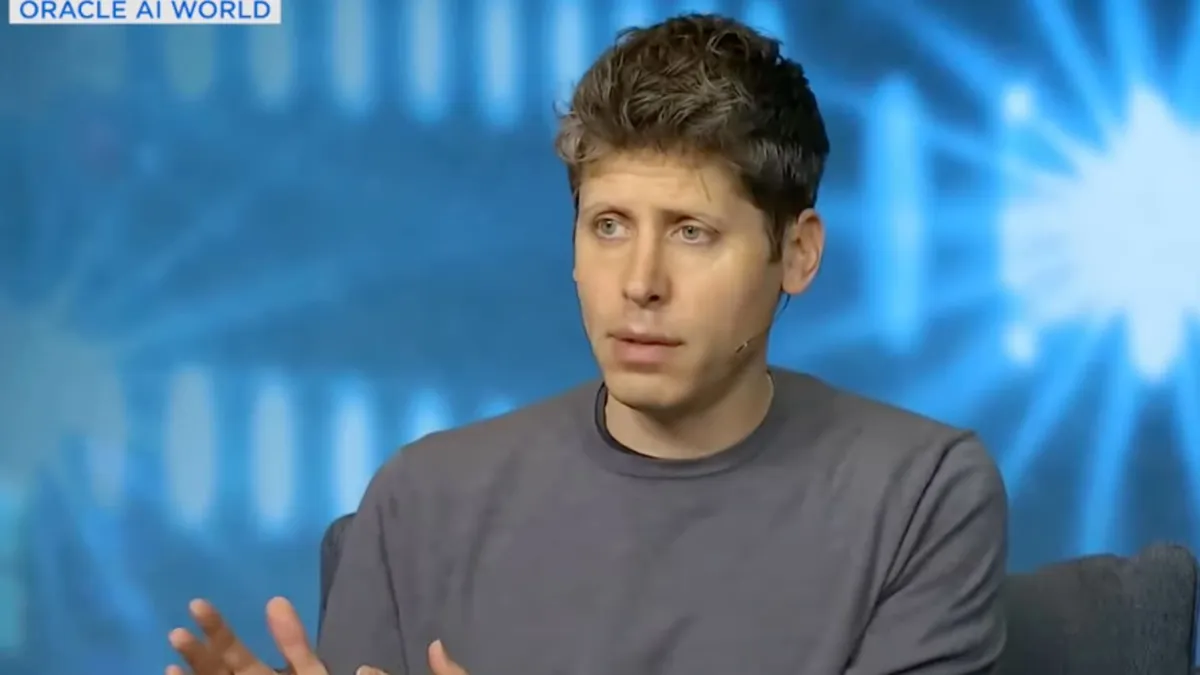
OpenAI's National Community Compact commits it to pay the full electricity and infrastructure costs of future campuses it owns and operates. The compact also commits it to give utilities realistic demand forecasts, provide financial assurances if projects are delayed or cancelled, publish construction plans and annual progress reports, and stop using NDAs with public officials. [1] [2] [7] [8]
The compact followed a broad ballot rebuke. On Nov. 3, voters in 41 local measures across 10 states restricted data center development or rejected pro-development proposals in every case except one, in Harwood, North Dakota. Ohio accounted for 21 of the measures. OpenAI says the plan was in the works before the election. [5] [1] [6]
Most of the compact repackages earlier pledges, such as the January Stargate commitment to fund its own power. The new element is a policy blueprint asking lawmakers to make these terms mandatory for the whole industry, through large-load utility tariffs, faster federal permitting and clean-electricity tax credits with clawback provisions. [1] [3] [8]
Under the Grid Protectors program, future self-built campuses will cut their power use when the grid is strained. The pilot is the 3.2 GW Effingham County, Georgia campus, where Georgia Power can curtail up to 1,000 MW. OpenAI acknowledges this kind of flexibility cannot replace new power plants and transmission lines. [4]
local opposition disrupted dozens of projects this year and prevailed in nearly every ballot measure.
Read the full assessment
Implication: if large-load tariffs become law, builders and compute tenants would absorb grid costs now shared by ratepayers, and contracts may carry curtailment terms.
Executive brief
Voters went to the polls on Nov. 3, 2026, in 41 local ballot measures on data centers across 10 states. In 40 of them they restricted development or rejected pro-development proposals. Two days later, OpenAI published a National Community Compact. In it, OpenAI promises to pay the full electricity and infrastructure costs of campuses it owns and operates, to publish construction plans, and to stop using NDAs with public officials (CNBC). Most of the compact repackages earlier pledges. The new part is a policy blueprint that asks lawmakers to make these terms mandatory for the whole industry. That would turn a voluntary corporate concession into a proposed regulatory floor for OpenAI's competitors.
What changed and event timeline
Stargate "pay our own way" pledge
OpenAI committed to fund the power its Stargate sites need, through new generation, storage or grid upgrades, so that local ratepayers do not bear the cost. Each site gets its own community plan ().
Grid Protectors launched
Future self-built campuses will cut their power demand when the grid is under strain. The pilot is the 3.2 GW Effingham County, Georgia campus, where Georgia Power can curtail up to 1,000 MW ().
Ballot rebuke
Voters sided against data centers in every measure except one in Harwood, North Dakota. Ohio accounted for 21 of the 41 measures ().
Reporter briefing
Chris Lehane, OpenAI's chief global affairs officer, said the blueprint had been in the works since August and that he had met dozens of lawmakers and candidates about it ().
Compact and blueprint published
The compact adds disclosure of noise, water and energy impacts, peak-demand reduction, sending power back to the grid, and local hiring goals ().
Capabilities and access
No model or product is involved.
Read the full section
No model or product is involved. The commitments cover:
- Scope: only future campuses that OpenAI owns and operates. Sites built by partners are not explicitly covered (CNBC).
- Energy: OpenAI pays for its electricity and the infrastructure needed to serve its sites. It also gives utilities realistic forecasts of how much power it will need and when (Runtime Wire).
- Utility protection: financial assurances if projects are delayed, scaled back or cancelled (Unite.AI).
- Reporting: annual public progress reports, independent noise studies, site-level water and electricity disclosure, and tracking of hiring and apprenticeships (Unite.AI).
Technical analysis for researchers and developers
- Demand flexibility: For each campus, OpenAI and the utility agree how much load can be shed, how quickly and for how long.
- Scale: OpenAI says the 1,000 MW Georgia curtailment equals the average demand of about 700,000 homes. That figure has not been independently checked.
- Policy mechanisms: The blueprint proposes large-load utility tariffs, voluntary flexibility programs, faster federal permitting, and technology-neutral clean-electricity tax credits with clawback provisions (Unite.AI).
Read the full section
- Demand flexibility: For each campus, OpenAI and the utility agree how much load can be shed, how quickly and for how long. Some sites may run on on-site generators or batteries during these events (The Next Web). In practice this means training jobs need to be interruptible, with checkpointing and schedulers that track grid conditions.
- Scale: OpenAI says the 1,000 MW Georgia curtailment equals the average demand of about 700,000 homes. That figure has not been independently checked.
- Policy mechanisms: The blueprint proposes large-load utility tariffs, voluntary flexibility programs, faster federal permitting, and technology-neutral clean-electricity tax credits with clawback provisions (Unite.AI).
- Verification: None of the reviewed sources describes an audit or measurement methodology.
Claims and evidence
- The 40-of-41 count comes from a Ballotpedia analysis plus CNBC's own tallies (CNBC).
- All of them come from OpenAI itself (OpenAI). No independent check that the commitments are being met has been found.
- OpenAI says the plan predates the election. Bloomberg reports that claim as the company's position (BusinessMirror/Bloomberg).
Read the full section
- The ballot results. The 40-of-41 count comes from a Ballotpedia analysis plus CNBC's own tallies (CNBC). The list of states differs between outlets, so treat the state breakdown with care.
- OpenAI's commitments. All of them come from OpenAI itself (OpenAI). No independent check that the commitments are being met has been found.
- The timing. OpenAI says the plan predates the election. Bloomberg reports that claim as the company's position (BusinessMirror/Bloomberg).
- Local investments. Unite.AI cites $80 million for Effingham County and, separately, $6 million from OpenAI and SB Energy for childcare in Pike County, Ohio (Unite.AI).
Context and prior work
- OpenAI told investors in February that it is targeting $600 billion in total compute spend by 2030. In Ohio it secured 8 GW at the PORTS-Pike campus (CNBC).
- Data Center Watch found that local resistance disrupted at least 45 projects worth $88 billion in Q2 2026 (BusinessMirror/Bloomberg).
Read the full section
- OpenAI told investors in February that it is targeting $600 billion in total compute spend by 2030. It has since announced projects in Georgia and Ohio (CNBC). In Ohio it secured 8 GW at the PORTS-Pike campus (CNBC).
- Data Center Watch found that local resistance disrupted at least 45 projects worth $88 billion in Q2 2026 (BusinessMirror/Bloomberg).
Limitations, safety and contested findings
- OpenAI acknowledges that demand flexibility cannot replace new power plants and transmission lines (The Next Web).
- The compact covers only owned-and-operated campuses, so OpenAI capacity hosted by partners may fall outside it.
- The group Data Center Resistance says tech companies and their allies outspent citizen campaigns about 100 to 1 on the ballot measures (Capital B News).
Read the full section
- OpenAI acknowledges that demand flexibility cannot replace new power plants and transmission lines (The Next Web).
- The compact covers only owned-and-operated campuses, so OpenAI capacity hosted by partners may fall outside it.
- The group Data Center Resistance says tech companies and their allies outspent citizen campaigns about 100 to 1 on the ballot measures (Capital B News). That estimate comes from an advocacy group.
- The reviewed coverage of the compact itself includes no named independent reaction.
Business and practitioner implications
- Siting risk is now political. Bloomberg reports that newly elected Democratic governors in Texas, Georgia, Ohio and Pennsylvania may step up scrutiny (BusinessMirror/Bloomberg).
- Costs move to the builder.
- Buyers should expect contracts to include curtailment terms, which affects SLAs and training schedules.
Read the full section
- Siting risk is now political. Bloomberg reports that newly elected Democratic governors in Texas, Georgia, Ohio and Pennsylvania may step up scrutiny (BusinessMirror/Bloomberg).
- Costs move to the builder. If large-load tariffs become law, hyperscalers and colocation tenants would bear power-infrastructure costs that are currently spread across all ratepayers.
- Compute contracts change. Buyers should expect contracts to include curtailment terms, which affects SLAs and training schedules.
- Timing. Lehane is aiming the push at the new Congress, which convenes in late January (CNBC).