
InfrastructureCompute, chips & cloud
Musk's midterm spending of nearly $500m mostly lost, and voters rejected data centers in 40 of 41 ballot measures
Elon Musk put roughly half a billion dollars behind Republicans in the 2026 midterms and lost most of the races he targeted. Voters also rejected data centers in 40 of 41 ballot measures, raising political risk for the compute buildout AI labs depend on.
From the The Guardian · AI article of November 5, 2026 and cited sources: Musk spent at least $474m by CNBC's count; the Guardian puts the figure at $446m. [1] [3]
SOURCES[1] Was Elon Musk the US midterms' biggest loser? – Stateside… theguardian.com[3] CNBC: Elon Musk suffers political setback in 2026 midterms cnbc.com
 AT Pulse research deskPublished · Updated · 4 min read · AI-assisted analysis
AI-assisted, not human-edited. Methodology Corrections Who owns this site
- What happened
- Musk spent at least $474m by CNBC's count; the Guardian puts the figure at $446m. [1] [3]
- Original source
- The Guardian · AI article, independent perspective
- Brief by
- AT Pulse research desk AI-assisted; publisher and contact on the desk page
- When
- November 5, 2026 article published
- Covered
- Nov 5 edition
- Evidence
- 8 sources across 7 sites
- 1Was Elon Musk the US midterms' biggest loser? – Stateside…theguardian.com
- 2Linked video: Was Elon Musk the US midterms' biggest…youtube.com
- 3CNBC: Elon Musk suffers political setback in 2026 midtermscnbc.com
- 4Star-Advertiser/Reuters: Musk spends $276 million to help…staradvertiser.com
- 5Let's Data Science: Microsoft cuts 2026 capex forecast to…letsdatascience.com
- 6CNBC: Voters rebuff data centers in every ballot measure…cnbc.com
RisingHow it’s measured
YouTube video · 725 views · 22 likes
Reach blends public engagement (views, likes, comments, shares, stars) from the platforms where the story or its original source lives: YouTube, Hacker News, GitHub, Substack and similar. A video and the article written from its transcript share one score, taken from the video. Platforms with no data are left out rather than counted as zero, and the age of a story never lowers its score.
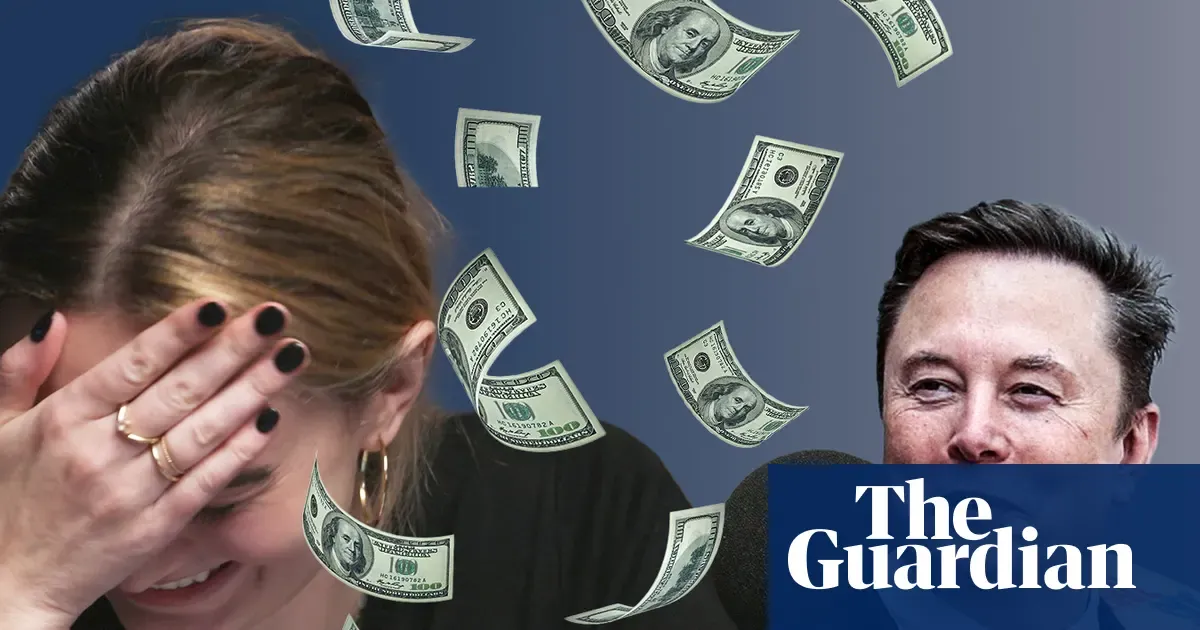
Musk spent at least $474m by CNBC's count; the Guardian puts the figure at $446m. His America PAC won 3 contests, lost 29 and had 12 uncalled. About 93% of its roughly $87m went to races Republicans lost. In Texas, where he spent $224m, Ken Paxton and Gov. Greg Abbott both lost. [1] [3]
Voters in 10 states decided 41 data center measures and sided against development in every one except Harwood, North Dakota. Ohio held 21 of the measures. Of voters polled, 56% called data centers a crucial or major factor in their vote. The Democratic governors-elect in Texas, Ohio and Georgia campaigned on pausing data center construction. Ohio's proposal would require data centers to pay all of their utility costs and use union labor. [6] [7] [2]
The constraint for AI is compute supply. Texas holds about a quarter of planned US data center capacity, and OpenAI has secured 8 GW at Ohio's PORTS-Pike campus. On the podcast, the Guardian's tech editor argued that without new data centers, smaller labs such as OpenAI and Anthropic are more exposed than Microsoft. Microsoft attributed its recent capex cut to delayed third-party GPU deliveries, not to local opposition. [7] [6] [2] [5]
The ballot results and the governors-elect's campaign pledges are on record, but no construction has stopped yet. If Texas, Ohio and Georgia enact pauses, siting, power procurement and capacity timelines for AI training and inference could slip.
Read the full assessment
Smaller labs are arguably most exposed.
Executive brief
Elon Musk spent at least $474m on the 2026 elections, by CNBC's count, and his America PAC lost 29 contests and won 3, with 12 uncalled. The Guardian episode page says Democrats won all five Senate races where the PAC spent the most. The bigger story for AI may be at the local level. Voters went against data centers in 40 of 41 ballot measures, and Democratic governors-elect in Texas, Ohio and Georgia campaigned on limiting data center construction. Billionaire money did appear to beat California's wealth tax, so the record on whether spending works is mixed.
What changed and event timeline
Musk's spending passes $366m
Reuters records show $276m spent since July. The money went mainly to the Senate Leadership Fund ($158m) and America PAC ($76m), plus $10m backing Ken Paxton in Texas.
Microsoft trims its capex forecast
Microsoft cut its calendar-2026 capex forecast from $175bn to $170bn. It blamed third-party GPU capacity deliveries that slipped to the second half of the fiscal year.
Data centers lose at the ballot box
Voters in 10 states decided 41 data center measures and sided against development in every one except Harwood, North Dakota. Ohio held 21 of the measures.
Musk's losses tallied; Prop 40 trails
Democrats won Congress, and Paxton and Gov. Greg Abbott lost in Texas, where Musk spent $224m. California's billionaire tax was trailing.
More detail
Guardian asks if Musk was the biggest loser
The Stateside podcast, with tech editor Blake Montgomery, argues that tech money backed one side and lost. It frames data centers as the next major casualty.
Capabilities and access
No AI model or product launched as part of this story.
Read the full section
No AI model or product launched as part of this story. The AI assets at stake are compute and Musk's AI holdings:
- Compute: OpenAI has secured 8 GW at Ohio's PORTS-Pike campus, which is developed by SoftBank/SB Energy with Nvidia backing (CNBC). Ohio's new governor wants a conditional moratorium on data centers.
- xAI: Montgomery says xAI is a SpaceX subsidiary with a military contract. He calls that contract a likelier political target than SpaceX's NASA work (10:05). The reviewed sources do not independently confirm this.
Technical analysis for researchers and developers
The reviewed sources do not document any architecture or benchmarks.
Read the full section
The reviewed sources do not document any architecture or benchmarks. The technical issue is supply:
- Montgomery argues compute is the binding constraint. Without new data centers, labs cannot train their next models and investors stop funding them. He says smaller labs such as OpenAI and Anthropic are more exposed than Microsoft (14:14).
- Texas holds about a quarter of planned US data center capacity (Scientific American). A Texas pause would therefore hit siting, power procurement and capacity timelines for training and inference.
Claims and evidence
- The Guardian says $446m to Republican-aligned groups; CNBC says at least $474m. The podcast says "nearly half a billion" (01:03).
- America PAC's record: 93% of its roughly $87m went to races Republicans lost (CNBC).
- Prop 40 spending: The podcast says opponents spent "more than $400m" (05:38). CalMatters reports $316.7m, including $102m from Sergey Brin.
Read the full section
- Musk's total: The figures differ. The Guardian says $446m to Republican-aligned groups; CNBC says at least $474m. The podcast says "nearly half a billion" (01:03).
- America PAC's record: 93% of its roughly $87m went to races Republicans lost (CNBC).
- Prop 40 spending: The podcast says opponents spent "more than $400m" (05:38). CalMatters reports $316.7m, including $102m from Sergey Brin.
- Voter priority: 56% of voters called data centers a crucial or major factor in their vote (CNBC).
Context and prior work
- The episode opens with the January 2025 inauguration photo of tech CEOs.
- Musk's spending came as House Democrats called for investigations into his SpaceX contracts and his DOGE role (Star-Advertiser).
- Tesla investor Ron Baron warned in March 2025 that Musk's political activism risked alienating half the population (CNBC).
Read the full section
- The episode opens with the January 2025 inauguration photo of tech CEOs. Montgomery says it now reads like a target list for congressional investigations (02:04).
- Musk's spending came as House Democrats called for investigations into his SpaceX contracts and his DOGE role (Star-Advertiser).
- Tesla investor Ron Baron warned in March 2025 that Musk's political activism risked alienating half the population (CNBC).
Limitations, safety and contested findings
- Microsoft's delays: The podcast links Microsoft's disclosed delays to the backlash against data centers (13:00). On its earnings call, Microsoft cited third-party capacity delays.
- Did money fail? Not everywhere. Prop 40 trailed at about 44–45% support, and the countermeasure Prop 42 was leading. Results were still preliminary (CalMatters).
- Grok and the economy: Montgomery's characterizations of Grok and his claim that Democrats could slow US growth are commentary.
Read the full section
- Microsoft's delays: The podcast links Microsoft's disclosed delays to the backlash against data centers (13:00). On its earnings call, Microsoft cited third-party capacity delays. Local opposition as a cause was only speculation in press coverage (Let's Data Science).
- Did money fail? Not everywhere. Prop 40 trailed at about 44–45% support, and the countermeasure Prop 42 was leading. Results were still preliminary (CalMatters).
- Grok and the economy: Montgomery's characterizations of Grok and his claim that Democrats could slow US growth are commentary. The reviewed sources do not corroborate them.
Business and practitioner implications
- Siting risk is now political. Expect moratoria and cost-recovery conditions.
- Oversight is likelier than legislation.
- AI as a 2028 issue. OpenAI's Chris Lehane predicts AI will be the defining issue of the 2028 presidential race (Scientific American).
Read the full section
- Siting risk is now political. Expect moratoria and cost-recovery conditions. Ohio's proposal requires data centers to pay 100% of their utility costs and use union labor (CNBC).
- Oversight is likelier than legislation. Montgomery expects congressional hearings before any federal AI law, with the real regulation happening at state and local level (16:05; 18:19).
- AI as a 2028 issue. OpenAI's Chris Lehane predicts AI will be the defining issue of the 2028 presidential race (Scientific American).
The source trail.
Sources (8)
Was Elon Musk the US midterms' biggest loser? – Stateside with Kai and Carter
Article text retrieved; extracted text may omit tables or interactive elements. A transcript of the video linked from this page is supplied (linked video auto captions; https://www.youtube.com/watch?v=Ujta44_scY4); automatic text may contain errors.
theguardian.comLinked video: Was Elon Musk the US midterms' biggest loser? – Stateside with Kai and Carter
linked video auto captions
www.youtube.com