
InfrastructureCompute, chips & cloud
Voters reject most local data center ballot measures in the 2026 midterms, and 76% in the NBC exit poll oppose a local facility
Most local data center ballot measures in the 2026 midterms went against the industry, and 76% of exit-poll respondents opposed a facility in their own community. Local permission now appears to limit AI infrastructure alongside power and chips.
From the The Verge · AI article of November 4, 2026 and cited sources: Local ballot measures mostly went against the industry, though the trackers count differently. [1] [2] [7] [8]
SOURCES[1] Data centers lost the midterms theverge.com[2] CNBC — Voters rebuff data centers in every ballot measure… cnbc.com[7] Reason — It was a data center election after all reason.com
 AT Pulse research deskPublished · Updated · 5 min read · AI-assisted analysis
AI-assisted, not human-edited. Methodology Corrections Who owns this site
- What happened
- Local ballot measures mostly went against the industry, though the trackers count differently. [1] [2] [7] [8]
- Original source
- The Verge · AI article, independent perspective
- Brief by
- AT Pulse research desk AI-assisted; publisher and contact on the desk page
- When
- November 4, 2026 article published
- Covered
- Nov 5 edition
- Evidence
- 9 sources across 9 sites
- 1Data centers lost the midtermstheverge.com
- 2CNBC — Voters rebuff data centers in every ballot measure…cnbc.com
- 3Unite.AI — NBC News Exit Poll finds AI and data centers…unite.ai
- 4Ballotpedia News — Ohio leads states in data center ballot…news.ballotpedia.org
- 5Kitco/Reuters — Investors see risk from US midterms to AI…kitco.com
- 6Scientific American — 2026 election results show…scientificamerican.com
Reach: not measured yet
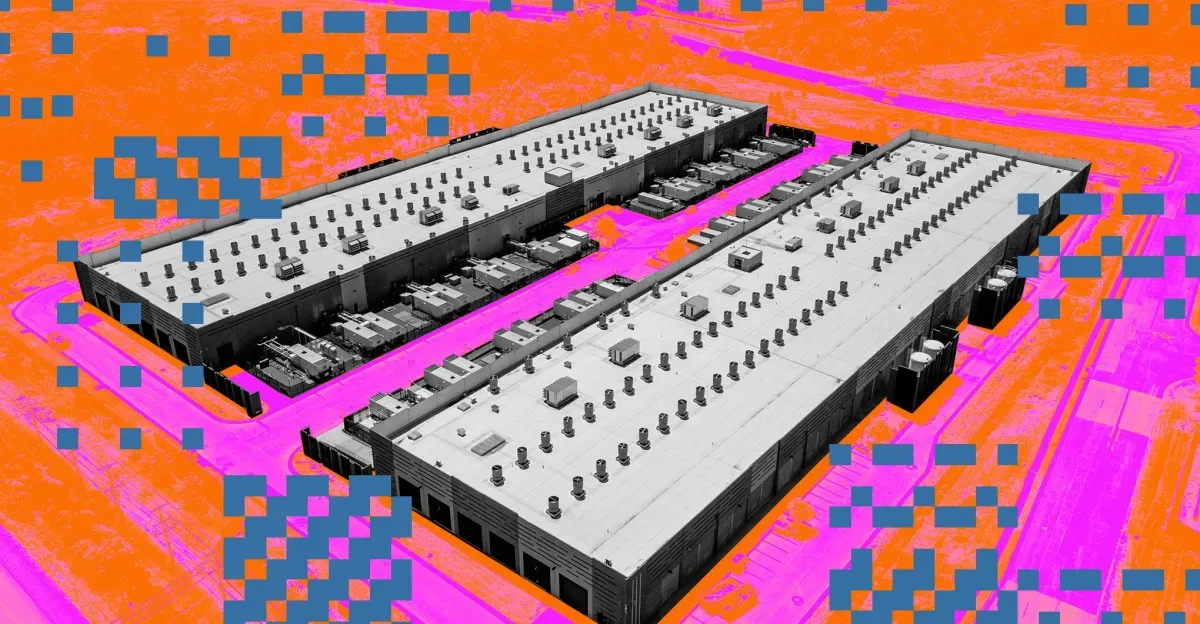
Local ballot measures mostly went against the industry, though the trackers count differently. CNBC reports 40 of 41 results against the industry, with Harwood, North Dakota the one exception. Reason reports 39 of 41. Redbud Consulting, cited by The Verge, counts 33 of 45 results restricting development. By Ballotpedia's pre-election tally, about 13 of the measures decided would have made development easier, so some anti-industry results are rejections of those measures rather than new bans. [1] [2] [7] [8]
Several restrictions are defined by peak electrical load, not by building size. Several Ohio cities voted to ban facilities over 25MW. El Dorado, Kansas barred sites with peak load over 10MW for 10 years. Wells, Maine approved a 180-day moratorium on large data centers, backdated to mid-June. Hyperscale AI campuses fall under these limits; small edge sites mostly do not. [1] [6]
The NBC News exit poll, conducted by SSRS with more than 75,000 respondents, found 76% opposed a new data center in their community, and 56% called AI and data centers a crucial or major factor in their vote for Congress. Only 3% named data centers as their top issue, and corruption and cost of living ranked higher as concerns. [3] [7]
Candidates who back moratoriums won the governor's races in Texas and Georgia and a Senate seat in Michigan. In Ohio, Sherrod Brown beat Jon Husted after making data centers a campaign attack. Florida's Byron Donalds and Iowa's Rob Sand opposed moratoriums and also won. Proposals from both parties would make developers pay their own energy, water or grid costs. [1] [7]
many local bans, moratoriums and load caps passed, and candidates who back moratoriums won major statewide races.
Read the full assessment
Implication: AI infrastructure plans should budget for permitting delays and for paying their own power and grid costs, as tax breaks lose support in both parties.
Executive brief
In the NBC News Exit Poll, 76% of voters on November 3, 2026 opposed a new data center in their own community, and 56% called AI and data centers a crucial or major factor in their vote for Congress. Where data centers were on the ballot, they mostly lost. CNBC counts 41 local measures in 10 states that went against the industry, with one exception. Candidates who backed moratoriums won governor's races in Texas and Georgia and a Senate seat in Michigan. For AI infrastructure, the hard limit is now local permission as well as power and chips.
What changed and event timeline
Ballot pipeline mapped
Ballotpedia counted 38 data-center measures across 35 jurisdictions in eight states. Ohio had 20 of them, and 82% were placed on the ballot by citizen petition.
Markets price political risk
Strategists at BCA Research, Stifel and Morgan Stanley warned that a strong Democratic showing could slow the AI buildout. Industry infrastructure spending was projected to top $1 trillion next year.
Voters restrict locally
More than 80% of voters in Wells, Maine approved a retroactive 180-day moratorium. Alhambra, California voted for a ban, and El Dorado and Emporia, Kansas appear to have approved bans on "high impact" facilities.
Exit poll registers the issue
Of more than 75,000 voters surveyed by SSRS, 76% opposed a local data center. Those voters backed Democrats 63–35.
Statewide flips tallied
Hinojosa (Texas), Bottoms (Georgia) and El-Sayed (Michigan), who all back moratoriums, won. Sherrod Brown beat Jon Husted in Ohio after calling him "the face of data centers."
Capabilities and access
No AI model is involved.
Read the full section
No AI model is involved. What changes is where and how large facilities can be built:
Technical analysis for researchers and developers
- Rules are written in megawatts. Bans use peak electrical load (10MW, 25MW) rather than floor area.
- Cost allocation is converging across parties.
- Shapiro's executive order bars nondisclosure agreements on data center projects in Pennsylvania, and Rep. Barrett proposed similar legislation (The Verge).
Read the full section
- Rules are written in megawatts. Bans use peak electrical load (10MW, 25MW) rather than floor area. That puts hyperscale AI campuses in scope while leaving small edge sites outside it (The Verge).
- Cost allocation is converging across parties. Donalds' Protecting Ratepayers Act and Husted's Ratepayer Protection Act would both make developers pay for their own energy, water or grid upgrades (The Verge).
- Transparency rules. Shapiro's executive order bars nondisclosure agreements on data center projects in Pennsylvania, and Rep. Barrett proposed similar legislation (The Verge).
- Poll method. The exit poll combined in-person interviews with mail, phone and online surveys (Unite.AI).
Claims and evidence
- The Verge, citing Redbud Consulting, reports 33 of 45 results restricting development. CNBC reports 40 of 41 against the industry, with Harwood, North Dakota the exception. Reason says 39 of 41.
- "Against the industry" covers two kinds of vote. Voting those down counts as an anti-industry result alongside new bans.
- "AI data center stocks tumbled" (Scientific American). No price data was found to quantify the move.
Read the full section
- The ballot-measure count differs by tracker. The Verge, citing Redbud Consulting, reports 33 of 45 results restricting development. CNBC reports 40 of 41 against the industry, with Harwood, North Dakota the exception. Reason says 39 of 41.
- "Against the industry" covers two kinds of vote. Ballotpedia's pre-election tally shows 13 of the 41 measures decided November 3 would have made development easier (Ballotpedia via search). Voting those down counts as an anti-industry result alongside new bans.
- Market reaction. "AI data center stocks tumbled" (Scientific American). No price data was found to quantify the move.
Context and prior work
- Before the election, polls already showed majority opposition: 69% in an NBC/SurveyMonkey poll from Aug–Sep (TechRadar).
- Maine's legislature passed what would have been the first statewide moratorium, but the governor vetoed it (The Verge).
- Over the summer, a leaked National Republican Senatorial Committee memo warned that if Husted's loss were blamed on data centers, the issue would look poisonous to future candidates (The Verge).
Read the full section
- Before the election, polls already showed majority opposition: 69% in an NBC/SurveyMonkey poll from Aug–Sep (TechRadar).
- Maine's legislature passed what would have been the first statewide moratorium, but the governor vetoed it (The Verge).
- Over the summer, a leaked National Republican Senatorial Committee memo warned that if Husted's loss were blamed on data centers, the issue would look poisonous to future candidates (The Verge).
Limitations, safety and contested findings
- The Verge itself says it is hard to link any single candidate's win directly to the data center backlash (The Verge).
- Not every winner was a restrictionist. Byron Donalds (Florida) and Rob Sand (Iowa) both opposed moratoriums and won (The Verge).
- Only 3% of voters named data centers as their top issue.
Read the full section
- The Verge itself says it is hard to link any single candidate's win directly to the data center backlash (The Verge).
- Not every winner was a restrictionist. Byron Donalds (Florida) and Rob Sand (Iowa) both opposed moratoriums and won (The Verge).
- Only 3% of voters named data centers as their top issue. Reason also reports that Democrats who leaned on anti-data-center messaging did not do better than those who didn't (Reason).
- On the question of which issues voters cared about, AI ranked below corruption (90%) and cost of living (89%) (Unite.AI).
Business and practitioner implications
- Siting: expect more moratoriums, voter-approval requirements and load caps, especially in Ohio, Texas, Georgia and Michigan.
- Costs: tax breaks are losing support in both parties. Plan for paying your own power and grid costs.
- Compute planning: permitting risk can delay capacity, so it belongs in capex models and procurement schedules.
Read the full section
- Siting: expect more moratoriums, voter-approval requirements and load caps, especially in Ohio, Texas, Georgia and Michigan.
- Costs: tax breaks are losing support in both parties. Candidates in Iowa, Wisconsin and Nevada all backed ending or pausing them (The Verge). Plan for paying your own power and grid costs.
- Compute planning: permitting risk can delay capacity, so it belongs in capex models and procurement schedules.
- Outlook: OpenAI's Chris Lehane predicts AI will be the defining issue of the 2028 presidential election (Scientific American).
The source trail.
Sources (9)
Data centers lost the midterms
Article text retrieved; extracted text may omit tables or interactive elements.
theverge.com