
MultimodalImage, audio & video
Guardian report examines AI ghost-hunting apps like GhostTube SEER as paranormal researchers raise grief and copyright concerns
A Guardian survey examines AI ghost-hunting apps such as GhostTube SEER, which turns phone magnetometer readings into dictionary words and then generated images, alongside paranormal researchers' worries about grief, copyright and echo chambers, and a rejected bid to turn Pennhurst Asylum into a datacenter.
From the The Guardian · AI article of October 30, 2026 and cited sources: GhostTube SEER is sold by subscription and has more than 1m Google Play downloads, a store-listing figure that has not been independently confirmed. [1] [2] [3] [9]
SOURCES[1] Ghost in the machine: how AI is haunting the search for… theguardian.com[2] Linked video: Ghost in the machine: how AI is haunting the… youtube.com[3] GhostTube SEER – App Store apps.apple.com
 AT Pulse research deskPublished · Updated · 5 min read · AI-assisted analysis
AI-assisted, not human-edited. Methodology Corrections Who owns this site
- What happened
- GhostTube SEER is sold by subscription and has more than 1m Google Play downloads, a store-listing figure that has not been independently confirmed. [1] [2] [3] [9]
- Original source
- The Guardian · AI article, independent perspective
- Brief by
- AT Pulse research desk AI-assisted; publisher and contact on the desk page
- When
- October 30, 2026 article published
- Covered
- Oct 31 edition
- Evidence
- 10 sources across 9 sites
- 1Ghost in the machine: how AI is haunting the search for…theguardian.com
- 2Linked video: Ghost in the machine: how AI is haunting the…youtube.com
- 3GhostTube SEER – App Storeapps.apple.com
- 4Mental Floss: Edison's spirit phonementalfloss.com
- 5Atlas Obscura: Dial-a-Ghostatlasobscura.com
- 6Gizmodo: What's scarier than a haunted house?gizmodo.com
StrongHow it’s measured
YouTube video · 55.2K views · 3.8K likes
Reach blends public engagement (views, likes, comments, shares, stars) from the platforms where the story or its original source lives: YouTube, Hacker News, GitHub, Substack and similar. A video and the article written from its transcript share one score, taken from the video. Platforms with no data are left out rather than counted as zero, and the age of a story never lowers its score.
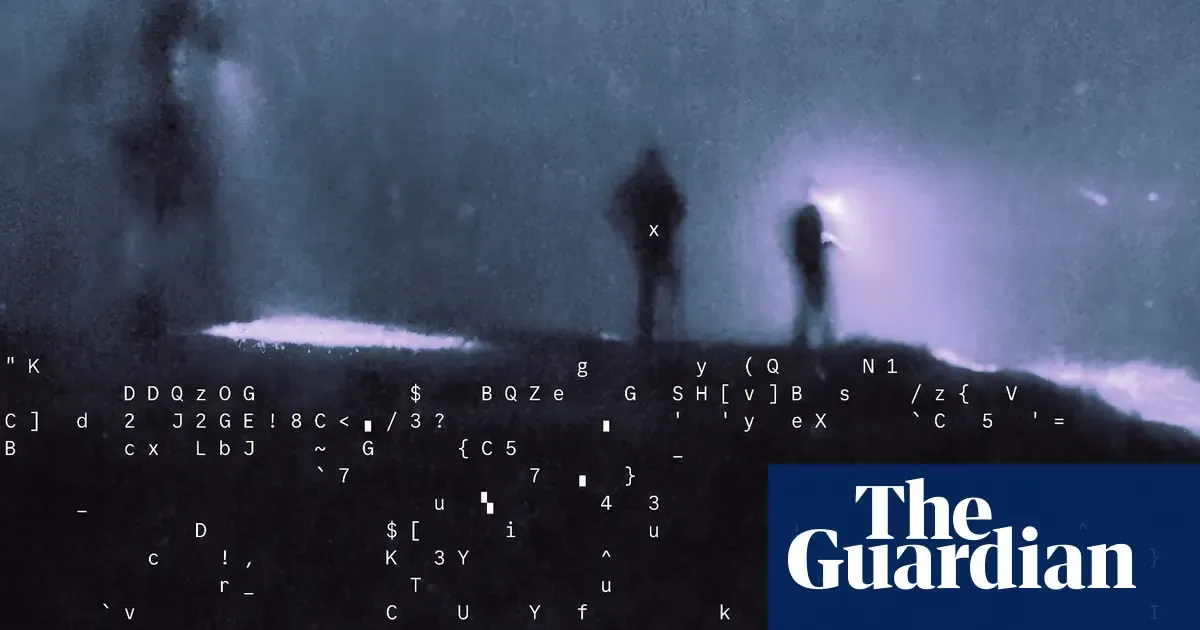
GhostTube SEER is sold by subscription and has more than 1m Google Play downloads, a store-listing figure that has not been independently confirmed. It reads the phone's magnetometer, uses those readings to pick words from a fixed dictionary, and feeds the words to an unnamed image generator. Its creators admit that magnets, nearby electronics and sudden movement can all trigger output. Other apps, such as Spirit Phone Innovations, say they use AI to detect voices. [1] [2] [3] [9]
The only test of SEER's results is people deciding afterwards what an image means. In one session the creators first saw a hell-like cave, then later reread the same image as a bathtub. No control condition, prompt logging or blinding is described. The developer's own store listing calls the tools experimental and warns against using the app to cope with grief. [2] [3]
Author Alex Matsuo, quoted in the Guardian, says many people come to ghost hunting through trauma or grief. She raises concerns about copyright, training data and paranormal echo chambers, and compares the trend to AI 'deathbots' that simulate people who have died. [1]
The operator of the Pennhurst Asylum haunted attraction explored turning the site into a hyperscale datacenter. East Vincent township supervisors rejected the plan in May 2026, but the developer's attorney said they were prepared to take the fight to court. The Guardian's description of the project as successfully blocked therefore leaves out that it may still be litigated. [1] [6] [7] [8]
SEER's output depends on a sensor that magnets, electronics and movement can trigger, and its 'hits' are judged after the fact.
Read the full assessment
Implication: AI tools that turn noisy signals into vivid images can encourage over-interpretation, especially among grieving users.
Executive brief
GhostTube SEER calls itself "the world's first AI ghost hunting tool", and the Guardian reports more than 1m Google Play downloads. It does not detect ghosts. It reads a phone's magnetometer, picks words from a fixed dictionary and feeds them to an unnamed image generator. The developer's own App Store listing says every tool should be treated as experimental and should not be used to cope with grief. The Guardian piece pairs this with pushback from paranormal researchers and a fight over a haunted asylum that was proposed as an AI datacenter site.
What changed and event timeline
- Context
1920: Edison's "spirit phone"
Thomas Edison publicised a device meant to reach the dead. No schematic or prototype has ever been found. Historians suspect the announcement was publicity (;).
SEER launches
In the launch video, Amy Waine and Jarrad Cutting say SEER will arrive in March and pre-orders are open (). The Guardian dates the release to 2023, but the App Store lists an initial launch in 2022 ().
Pennhurst datacenter plan
Derek Strine runs the Pennhurst Asylum haunted attraction on a 130-acre site. He was reported to be pursuing a hyperscale datacenter there, with more than $16m already invested (;).
Township rejects datacenter
The East Vincent supervisors voted the proposal down after months of hearings. The developer's attorney said they were prepared to seek judicial review ().
Guardian survey
AW Ohlheiser's article sets SEER and other AI paranormal apps against skeptics' concerns about training data, copyright and "paranormal echo chambers" ().
Capabilities and access
- GhostTube SEER is made by GhostTube Pty Ltd for iOS and Android. The latest version noted is 6.2.0 (September 2025).
- GhostTube Lens is an optional VR headset. Users watch "visual white noise" until an image is generated, which the creators call "digital scrying" (video, 4:42).
- Spirit Phone Innovations (SPI), from TV investigator Sean Austin, claims to detect electronic voice phenomena (EVP) with AI.
Read the full section
- GhostTube SEER is made by GhostTube Pty Ltd for iOS and Android. It costs $3.99 a month, $14.99 a year or $49.99 for a bundle. The latest version noted is 6.2.0 (September 2025). The image model is not named (App Store).
- GhostTube Lens is an optional VR headset. Users watch "visual white noise" until an image is generated, which the creators call "digital scrying" (video, 4:42).
- Spirit Phone Innovations (SPI), from TV investigator Sean Austin, claims to detect electronic voice phenomena (EVP) with AI. Its paid tier adds age and gender detection and translation (App Store).
Technical analysis for researchers and developers
- The magnetometer signal selects words from a pre-populated dictionary, those words become a prompt, and an image generator produces the picture (video, 1:40).
- The creators acknowledge that magnets, electronics and sudden movement all trigger output (video, 12:22).
- Results are judged by people deciding after the fact what an image means.
Read the full section
- Pipeline. The magnetometer signal selects words from a pre-populated dictionary, those words become a prompt, and an image generator produces the picture (video, 1:40). This is the same word-bank method as the original GhostTube app, with image generation added at the end.
- Confounds. The creators acknowledge that magnets, electronics and sudden movement all trigger output (video, 12:22). There is no control condition, no logging of the seed or prompt, and no blinding.
- Evaluation. Results are judged by people deciding after the fact what an image means. In one session, a "hell-like cave" was later reread as a bathtub (video, 7:41).
Claims and evidence
- This is the developer's own claim (video, 0:40).
- More than 1m downloads. The figure comes from the Google Play listing, as cited by the Guardian.
- Could verify psychic readings. The creators suggest this (video, 3:28). The reviewed sources contain no evidence for it.
Read the full section
- "World first" AI paranormal tool. This is the developer's own claim (video, 0:40).
- More than 1m downloads. The figure comes from the Google Play listing, as cited by the Guardian. The reviewed sources do not independently confirm it.
- Could verify psychic readings. The creators suggest this (video, 3:28). The reviewed sources contain no evidence for it.
- Images relevant to a site's history. In the video's Adelaide Gaol session, the app produced a man with a red bushy beard against bar-like shapes (video, 2:29). All such "hits" are the creators' own interpretations, with no independent evaluation.
Context and prior work
- Paranormal investigators have long repurposed technology. Examples include Edison's spirit phone, 19th-century spirit photography and EMF meters (Guardian).
- Author Alex Matsuo compares the trend to AI "deathbots" built to simulate people who have died.
- r/nosleep bans AI-written stories, even ones the poster prompted and edited (r/nosleep rules summary).
Limitations, safety and contested findings
- The App Store listing says the paranormal is unproven and the app should not be used for life decisions or to cope with grief (App Store).
- Matsuo says many people come to ghost hunting through trauma or grief. She also raises copyright and echo-chamber concerns (Guardian).
- The Guardian says the site was "sold to a datacenter developer". Earlier reports describe the attraction's own operator pursuing the conversion (Gizmodo).
Read the full section
- The developer's own disclaimers. The App Store listing says the paranormal is unproven and the app should not be used for life decisions or to cope with grief (App Store). The video says not to expect everything that comes through to be paranormal (video, 12:46).
- Grief and ethics. Matsuo says many people come to ghost hunting through trauma or grief. She also raises copyright and echo-chamber concerns (Guardian).
- Pennhurst accounts differ. The Guardian says the site was "sold to a datacenter developer". Earlier reports describe the attraction's own operator pursuing the conversion (Gizmodo). The Guardian calls the project "successfully blocked", but the developer had signalled it would go to court (WFMZ).
Business and practitioner implications
- A cheap product can sell at scale.
- Interpretation is the product. Designers of "AI insight" tools in other fields should watch for the same pattern.
- The app is listed under Entertainment, but its marketing presents it as an investigative tool.
Read the full section
- A cheap product can sell at scale. SEER pairs a low-cost subscription with a generic image model and a creator-led YouTube audience, and the Guardian reports more than 1m Play downloads.
- Interpretation is the product. People find meaning in noisy sensor input turned into a generated image. Designers of "AI insight" tools in other fields should watch for the same pattern.
- Disclaimers versus marketing. The app is listed under Entertainment, but its marketing presents it as an investigative tool. That gap carries consumer-protection and reputational risk, especially with grieving users.
- Local resistance to datacenters. The Pennhurst vote shows communities can block datacenter projects, though litigation risk remains.
The source trail.
Sources (10)
Ghost in the machine: how AI is haunting the search for the supernatural
Article text retrieved; extracted text may omit tables or interactive elements. A transcript of the video linked from this page is supplied (linked video auto captions; https://www.youtube.com/watch?v=2iBjBznBvcI); automatic text may contain errors.
theguardian.comLinked video: Ghost in the machine: how AI is haunting the search for the supernatural
linked video auto captions
www.youtube.com