
InfrastructureCompute, chips & cloud
Sam Altman says scarce DRAM is better used in cloud data centers than in personal computers
OpenAI's CEO told Stripe's John Collison that scarce DRAM is poorly allocated when it sits in personal computers. He argued cloud data centers keep memory far busier, even as OpenAI's own Stargate buildout adds to a multi-year shortage.
From the The Verge · AI article of October 30, 2026 and cited sources: On the Cheeky Pint interview, Altman pushed back on the idea that open-source models running locally reduce the need for data centers. [1] [3] [7]
SOURCES[1] Sam Altman says it’s better for RAM to be in a data center… theverge.com[3] Linked video: Sam Altman says it’s better for RAM to be in… youtube.com[7] Tom's Hardware tomshardware.com
 AT Pulse research deskPublished · Updated · 4 min read · AI-assisted analysis
AI-assisted, not human-edited. Methodology Corrections Who owns this site
- What happened
- On the Cheeky Pint interview, Altman pushed back on the idea that open-source models running locally reduce the need for data centers. [1] [3] [7]
- Source caveat
- Altman said market forces are not fixing the supply gap. [3]
- Original source
- The Verge · AI article, independent perspective
- Brief by
- AT Pulse research desk AI-assisted; publisher and contact on the desk page
- When
- October 30, 2026 article published
- Covered
- Oct 31 edition
- Evidence
- 12 sources across 10 sites
- 1Sam Altman says it’s better for RAM to be in a data center…theverge.com
- 2Sam Altman sympathizes with mathematicians, but says…theverge.com
- 3Linked video: Sam Altman says it’s better for RAM to be in…youtube.com
- 4The Register: OpenAI–Samsung/SK Hynixtheregister.com
- 5TechCrunchtechcrunch.com
- 6The Register: SK Hynix 2030theregister.com
RisingHow it’s measured
YouTube video · 307.6K views · 2.4K likes
Reach blends public engagement (views, likes, comments, shares, stars) from the platforms where the story or its original source lives: YouTube, Hacker News, GitHub, Substack and similar. A video and the article written from its transcript share one score, taken from the video. Platforms with no data are left out rather than counted as zero, and the age of a story never lowers its score.
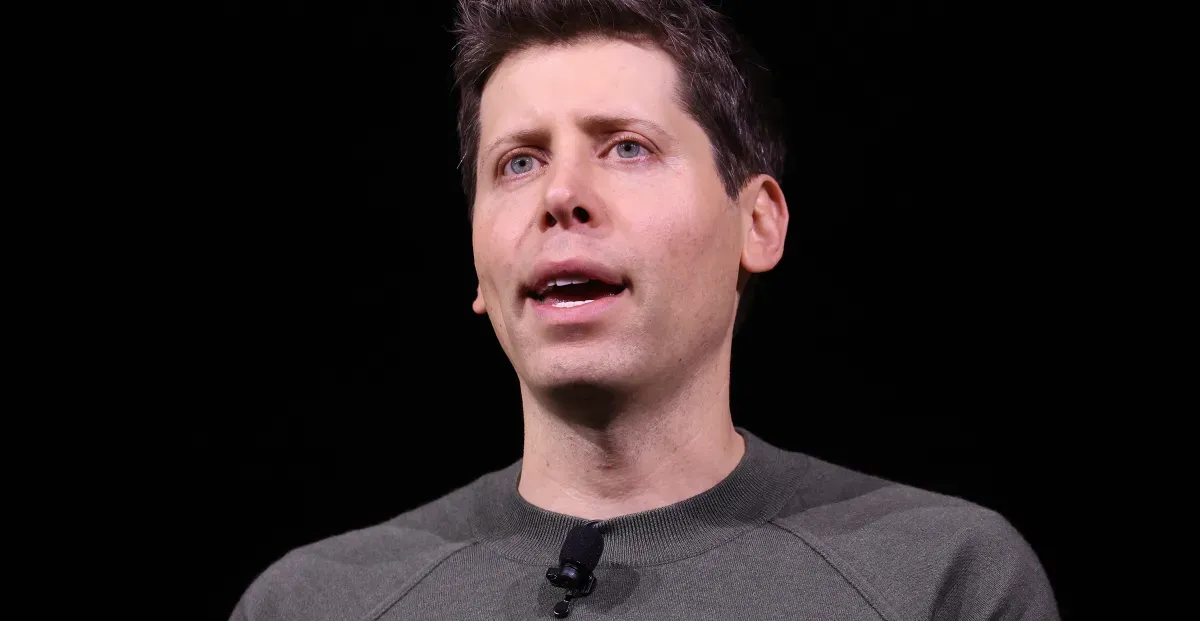
On the Cheeky Pint interview, Altman pushed back on the idea that open-source models running locally reduce the need for data centers. In his view, when DRAM is in short supply, spreading it across personal machines that use it about 5% of the time wastes it. Pooled cloud capacity can be kept close to fully utilized. [1] [3] [7]
OpenAI is one of the largest sources of demand in this market. In 2025, Samsung and SK Hynix signed letters of intent to supply Stargate with roughly 900,000 DRAM wafer starts a month. SK Hynix now expects shortages to last until 2030. It says long-term contracts cover more than half of its 2027–28 output and expects PC and phone shipments to fall. These figures are company-reported. Samsung's outlook runs to at least 2028. [1] [4] [5] [6]
Altman said market forces are not fixing the supply gap. By his rough account, memory makers historically spent about as much on capex as they earned in revenue and nearly went bankrupt after overbuilding. That history keeps them cautious now, even though he expects each to make around $100 billion in free cash flow. [3]
Critics noted that OpenAI's own buildout is straining memory supply and that its cloud business gains from the position Altman is arguing. They also said local inference has real value: it works offline, avoids network latency and keeps data on the device. Microsoft recommends a hybrid approach that sends lighter tasks to on-device models. [8] [9] [10]
The evidence shows a multi-year DRAM squeeze and a large OpenAI claim on wafer supply.
Read the full assessment
The likely result is costlier local hardware through at least 2028, which forces teams to weigh cloud dependence against on-device privacy, latency and offline use.
Executive brief
OpenAI CEO Sam Altman said it is "quite terrible," from a global allocation point of view, for scarce DRAM to sit in personal computers that use it about 5% of the time. He argued that memory belongs in cloud data centers, where it can be kept close to fully busy (The Verge; video, 29:11). The timing is what makes the remark notable. OpenAI is one of the biggest buyers driving the shortage: its 2025 letters of intent with Samsung and SK Hynix covered roughly 900,000 DRAM wafer starts a month (The Register). Meanwhile, SK Hynix now expects shortages to last through 2030.
What changed and event timeline
OpenAI signs memory letters of intent
Samsung and SK Hynix signed non-binding letters of intent to supply Stargate with about 900,000 DRAM wafer starts a month. SK Group said this would more than double current HBM industry capacity (;).
SK Hynix forecasts shortage to 2030
The company reported Q3 revenue of ₩104.6 trillion, up 328% year over year. It said 14 long-term contracts cover more than half of its 2027–28 output, and its CFO warned that PC and phone shipments will fall ().
Samsung expects shortage until at least 2028
The Verge's memory-shortage coverage recorded Samsung's outlook one day before the Altman story ().
Altman's Cheeky Pint remarks reported
In the interview with Stripe's John Collison, Altman argued against local inference on memory-allocation grounds. The reviewed sources do not give the date the interview was recorded (;).
Pushback follows
Critics pointed out that OpenAI's own data-center buildout is straining supply. They also defended local inference on privacy and ownership grounds (;).
Capabilities and access
This story involves no new model release.
Read the full section
This story involves no new model release. In the same episode Altman mentioned:
Technical analysis for researchers and developers
- The core argument is about utilization. Memory in a shared cloud pool is kept busy; memory in a personal device mostly sits idle (29:22).
- The 5% figure is undefined. Altman gave no study or measurement method for it (Windows Forum).
- The Stargate commitment is measured in wafer starts, not finished chips. SK Hynix is prioritizing HBM4 (The Register).
Read the full section
- The core argument is about utilization. Memory in a shared cloud pool is kept busy; memory in a personal device mostly sits idle (29:22). The following is inference, not something the sources document: servers can batch many users against one copy of the model weights, while every local machine has to hold its own full copy.
- The 5% figure is undefined. Altman gave no study or measurement method for it (Windows Forum).
- The Stargate commitment is measured in wafer starts, not finished chips. Consumer DRAM and AI memory compete for the same fab capacity (The Register). SK Hynix is prioritizing HBM4 (The Register).
Claims and evidence
- Altman says memory makers stay cautious because of their history. These are his estimates, not audited figures.
- The record SK Hynix results and long-term contracts are company-reported (The Register).
- The 900,000-wafer figure comes from letters of intent, not final contracts. Some outlets estimate it at about 40% of global DRAM output (3DTested).
Read the full section
- Altman says memory makers stay cautious because of their history. By his account, they historically spent about $20B in capex to earn about $19B, and now expect around $100B of free cash flow each, but past near-bankruptcies keep their capex conservative (27:48). These are his estimates, not audited figures.
- The record SK Hynix results and long-term contracts are company-reported (The Register).
- The 900,000-wafer figure comes from letters of intent, not final contracts. Some outlets estimate it at about 40% of global DRAM output (3DTested). No independent corroboration of that share was found in the reviewed sources.
Context and prior work
- Altman said the "invisible hand is failing" on memory supply (27:27).
- He put the five-year total cost of a gigawatt of AI capacity at about $70B and said $20B would be much better (38:51).
- The Verge's companion piece covered the same episode's discussion of OpenAI's AI-generated math results (The Verge).
Read the full section
- Altman said the "invisible hand is failing" on memory supply (27:27).
- He put the five-year total cost of a gigawatt of AI capacity at about $70B and said $20B would be much better (38:51).
- The Verge's companion piece covered the same episode's discussion of OpenAI's AI-generated math results (The Verge).
- A Wikipedia entry tracks the 2024–present memory shortage (Wikipedia).
Limitations, safety and contested findings
- High utilization is not the same as high value to the owner.
- Altman has a conflict of interest. OpenAI's cloud business benefits from the position he is arguing (Slashdot).
- Elsewhere in the episode, Altman raised safety concerns.
Read the full section
- High utilization is not the same as high value to the owner. Local inference works offline, avoids network latency and keeps data on the device. Microsoft recommends a hybrid setup that sends light tasks to on-device models (Windows Forum).
- Altman has a conflict of interest. OpenAI's cloud business benefits from the position he is arguing (Slashdot).
- Elsewhere in the episode, Altman raised safety concerns. He was doubtful that sandboxes can contain much smarter models, and pointed to activation monitoring and alignment as the next lines of defense (10:08).
Business and practitioner implications
- Hardware costs: Expect higher prices and fewer shipments for PCs and phones through at least 2028 (The Register).
- Architecture choice: A hybrid local/cloud design hedges against both memory prices and cloud dependence.
- AI budgets: Collison said Stripe spends roughly 1% of operating expenses on tokens and expects that to rise to 5–20% (36:36).
Read the full section
- Hardware costs: Expect higher prices and fewer shipments for PCs and phones through at least 2028 (The Register). Plan purchases of local-inference hardware accordingly.
- Architecture choice: A hybrid local/cloud design hedges against both memory prices and cloud dependence.
- AI budgets: Collison said Stripe spends roughly 1% of operating expenses on tokens and expects that to rise to 5–20% (36:36). That kind of growth makes compute budgeting a board-level question.
The source trail.
Sources (12)
Sam Altman says it’s better for RAM to be in a data center than on your desk
Article text retrieved; extracted text may omit tables or interactive elements. A transcript of the video linked from this page is supplied (linked video manual captions; https://www.youtube.com/watch?v=iMsUcCYNKqY); automatic text may contain errors.
theverge.comSam Altman sympathizes with mathematicians, but says OpenAI’s math onslaught won’t stop
Related coverage; assess separately
theverge.comLinked video: Sam Altman says it’s better for RAM to be in a data center than on your desk
linked video manual captions
www.youtube.com