
PolicyLaw, regulation & governance
Musk and Zuckerberg adopt Trump's 'super intelligence' label on earnings calls, while Nadella, Pichai and Jassy stick with 'AI'
A September executive order requires federal agencies to say 'SI' instead of 'AI' without changing which technologies are covered. On third-quarter calls, Musk and Zuckerberg used the new language, while Microsoft, Alphabet and Amazon chiefs kept saying AI.
From the CNBC · Technology article of October 30, 2026 and cited sources: The September 29 executive order makes executive-branch agencies use 'SI' in place of 'AI' in official communications. [2] [7] [8]
SOURCES[2] White House fact sheet: Era of Super Intelligence whitehouse.gov[7] Wiley: EO rebrands AI as "Super Intelligence" wiley.law[8] Freshfields: EO mandates shift to "Super Intelligence" freshfields.com
 AT Pulse research deskPublished · Updated · 5 min read · AI-assisted analysis
AI-assisted, not human-edited. Methodology Corrections Who owns this site
- What happened
- The September 29 executive order makes executive-branch agencies use 'SI' in place of 'AI' in official communications. [2] [7] [8]
- Original source
- CNBC · Technology article, independent perspective
- Brief by
- AT Pulse research desk AI-assisted; publisher and contact on the desk page
- When
- October 30, 2026 article published
- Covered
- Oct 30 edition
- Evidence
- 14 sources across 12 sites
- 1Musk and Zuckerberg echo Trump's push to rebrand AI as…cnbc.com
- 2White House fact sheet: Era of Super Intelligencewhitehouse.gov
- 3Al Jazeera: How does Trump's White House AI accord work?aljazeera.com
- 4Jensen Huang on Xx.com
- 5CNBC: SpaceX Q3 2026 live updatescnbc.com
- 6Meta Q3 2026 earnings call transcripts21.q4cdn.com
QuietHow it’s measured
Hacker News · 2 likes
Reach blends public engagement (views, likes, comments, shares, stars) from the platforms where the story or its original source lives: YouTube, Hacker News, GitHub, Substack and similar. A video and the article written from its transcript share one score, taken from the video. Platforms with no data are left out rather than counted as zero, and the age of a story never lowers its score.
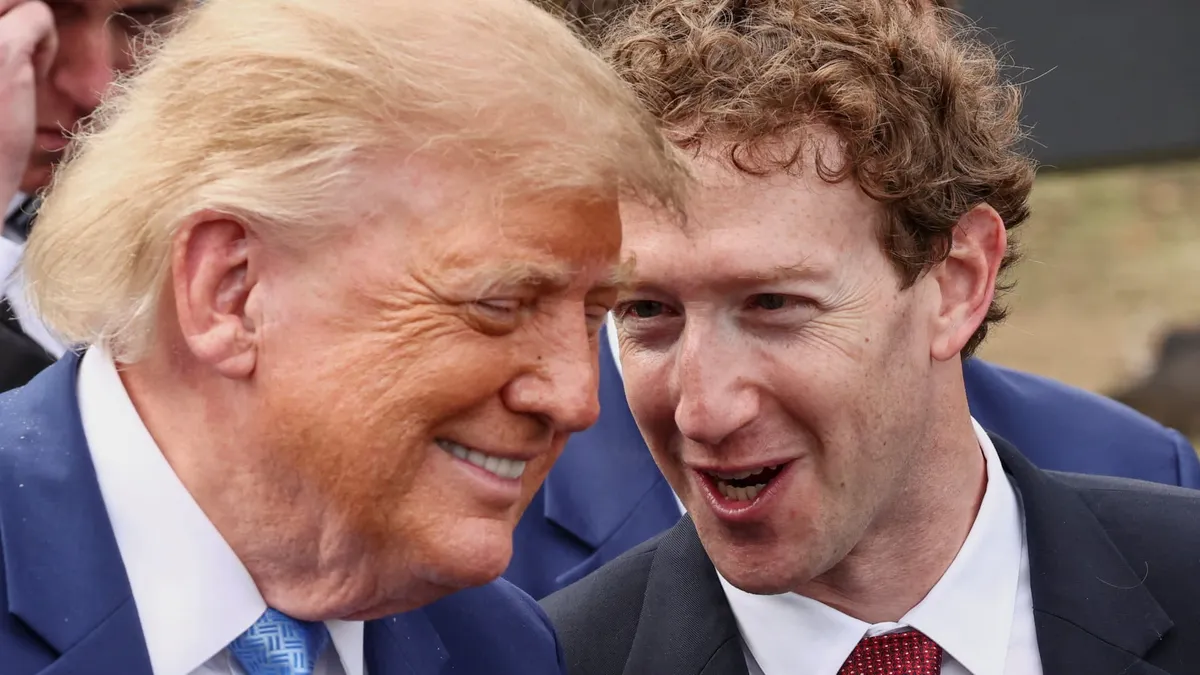
The September 29 executive order makes executive-branch agencies use 'SI' in place of 'AI' in official communications. The new term covers the same systems already in the federal statutory definition of AI, and the order does not define 'Super Intelligence' itself. Existing regulations, contracts and grants still say 'AI', so compliance and procurement tracking needs to match both terms. [2] [7] [8]
Executives split on the new wording. Musk used superintelligence framing on the SpaceX and Tesla calls and had already renamed SpaceX's AI unit SpaceXSI. Zuckerberg restated Meta's 'personal superintelligence' goal, but Meta used that branding well before the order, so calling him a convert overstates the shift. Nadella, Pichai and Jassy kept saying 'AI', although Microsoft's shareholder letter refers to a 'Super Intelligence era.' [1] [5] [6] [9] [10]
At the same event, six companies signed a voluntary White House accord. It sets out layered oversight, including internal safeguards, an oversight team, independent auditors and a board committee. It has no enforcement or penalties, audit results don't have to be published, and Trump described it as 'morally binding.' [3] [14]
The evidence shows a change of label, not capability: 'SI' covers the same systems as before.
Read the full assessment
The practical effect is that procurement and compliance searches must match both terms, and executives' 'superintelligence' talk may signal political alignment more than technical progress.
Sources are gathered and checked; writing the dossier now.
Executive brief
Calling AI "super intelligence" is now federal policy. A September 29, 2026 executive order tells executive-branch agencies to stop using "AI" in official communications and say "SI" instead. On third-quarter earnings calls, CNBC reports that Elon Musk and Mark Zuckerberg picked up the new term, while Satya Nadella, Sundar Pichai and Andy Jassy kept saying "AI." The executives who held out still let it slip in elsewhere: Microsoft's annual shareholder letter talks about a "Super Intelligence era." For now this is about branding, not capability. Any legal effect depends on a federal definition that has not been written yet.
Read the full section
Calling AI "super intelligence" is now federal policy. A September 29, 2026 executive order tells executive-branch agencies to stop using "AI" in official communications and say "SI" instead. The technology it covers doesn't change. On third-quarter earnings calls, CNBC reports that Elon Musk and Mark Zuckerberg picked up the new term, while Satya Nadella, Sundar Pichai and Andy Jassy kept saying "AI." The executives who held out still let it slip in elsewhere: Microsoft's annual shareholder letter talks about a "Super Intelligence era." For now this is about branding, not capability. Any legal effect depends on a federal definition that has not been written yet.
What changed and event timeline
Executive order and voluntary accord
Trump ordered the switch from "AI" to "SI" across the executive branch. At the same event, six companies signed a non-binding "White House Accord on Super Intelligence" with safety commitments (;).
Holdouts and partial adopters
Nadella, Pichai and Jassy used "AI" on their calls. Intel's Lip-Bu Tan blamed chip shortages on demand for "super intelligence," and IBM's Arvind Krishna used both terms ().
Capabilities and access
No model, product or capability was released as part of this change.
Read the full section
No model, product or capability was released as part of this change.
- The order says "SI" covers the same technologies already in the federal statutory definition of AI, 15 U.S.C. § 9401(3).
- The order itself contains no definition of "Super Intelligence." The President's science adviser is to propose legislative language for one by November 28, 2026 (Freshfields).
Technical analysis for researchers and developers
- Terms vs. technology: "SI" in federal documents does not mean artificial superintelligence in the research sense.
- Document and data hygiene: Agency solicitations and guidance will start saying "SI," but existing regulations, contracts and grants still say "AI" (Freshfields).
- Accord mechanics: Signatories commit to four layers of oversight: internal safeguards, an oversight team, independent auditors and a board committee.
Read the full section
- Terms vs. technology: "SI" in federal documents does not mean artificial superintelligence in the research sense. It is a new label for the same set of systems the statute already covers (Wiley).
- Document and data hygiene: Agency solicitations and guidance will start saying "SI," but existing regulations, contracts and grants still say "AI" (Freshfields). Keyword-based compliance tracking, procurement search and policy-text corpora need to match both terms.
- Accord mechanics: Signatories commit to four layers of oversight: internal safeguards, an oversight team, independent auditors and a board committee. Audit results don't have to be made public (Al Jazeera).
Claims and evidence
- The terminology mandate: confirmed by the White House fact sheet and law-firm analysis (Wiley). Wiley identifies it as EO 14434.
- Musk's use of "superintelligence": independently reported by CNBC's live coverage and CNN.
- Zuckerberg as a convert: this overstates it.
Read the full section
- The terminology mandate: confirmed by the White House fact sheet and law-firm analysis (Wiley). Wiley identifies it as EO 14434.
- Musk's use of "superintelligence": independently reported by CNBC's live coverage and CNN.
- Zuckerberg as a convert: this overstates it. Meta formed Meta Superintelligence Labs the year before the order (CNBC), and the call transcript also uses "AI."
- A Truth Social post banning "AI" in "everything else": only CNBC reports this. No independent corroboration was found.
- Microsoft, IBM and Intel quotes: rely on CNBC's reporting alone.
Context and prior work
- "Superintelligence" was already industry branding before the order, for example Meta's "personal superintelligence" push.
- The order builds on earlier deregulatory moves, including EO 14179 and the AI Action Plan.
- At the summit, Trump called for "tremendous self-regulation" by AI companies (NBC News).
Read the full section
- "Superintelligence" was already industry branding before the order, for example Meta's "personal superintelligence" push.
- The order builds on earlier deregulatory moves, including EO 14179 and the AI Action Plan.
- At the summit, Trump called for "tremendous self-regulation" by AI companies (NBC News).
- CNBC places the rebrand just ahead of the midterms, with Trump's economic approval at a record low in its own survey.
Limitations, safety and contested findings
- Enforcement: the accord has none, and no penalties. Asked whether it was binding, Trump said it is "morally binding" (Fox Business).
- Signatories disagree with its approach: OpenAI, Anthropic and Google DeepMind leaders have separately called for mandatory federal rules (Al Jazeera).
- Signatory list: reports differ on who signed for Musk's companies. Al Jazeera lists xAI; other coverage names Musk as head of "SpaceXAI" (Fox Business).
Read the full section
- Enforcement: the accord has none, and no penalties. Asked whether it was binding, Trump said it is "morally binding" (Fox Business).
- Signatories disagree with its approach: OpenAI, Anthropic and Google DeepMind leaders have separately called for mandatory federal rules (Al Jazeera).
- Signatory list: reports differ on who signed for Musk's companies. Al Jazeera lists xAI; other coverage names Musk as head of "SpaceXAI" (Fox Business).
- Legal risk: a new federal definition could diverge from state AI laws (Wiley).
Business and practitioner implications
- Federal contractors: expect "SI" wording in RFPs. Map it to existing AI obligations and don't assume requirements have changed (Freshfields).
- Watch the November 28 proposal: the definition it proposes could feed into incentives, export controls and contract terms.
- Investors and analysts: "superintelligence" on an earnings call now partly reflects political alignment, not a statement about what the technology can do.
Read the full section
- Federal contractors: expect "SI" wording in RFPs. Map it to existing AI obligations and don't assume requirements have changed (Freshfields).
- Watch the November 28 proposal: the definition it proposes could feed into incentives, export controls and contract terms.
- Investors and analysts: "superintelligence" on an earnings call now partly reflects political alignment, not a statement about what the technology can do. Discount it accordingly.
- Communications teams: CNBC's reporting shows companies splitting their wording, keeping "AI" on calls while using "SI" in documents.
The source trail.
Sources (14)
Musk and Zuckerberg echo Trump's push to rebrand AI as 'super intelligence' on earnings calls. Others did not
Article text retrieved; extracted text may omit tables or interactive elements.
cnbc.com