
AgentsAutonomy & tool use
Spawn founder says agents running Claude Fable models develop and deploy its multiplayer game builder hourly
A ten-person game studio says autonomous agents built on Anthropic's Claude Fable models now develop its live product. They deploy hourly and rely on fast, targeted rollback, and the studio spends about 30 times its payroll on tokens.
From the Simon Willison article of October 29, 2026 and cited sources: Founder Jacob Sansbury says Spawn has about ten people, spends more than $3M a month on tokens and shipped 77,000 substantial changes in 30 days. [2] [1]
SOURCES[2] Sansbury: How I Built the Most AI-Pilled Company in the… x.com[1] Willison: Building a multiplayer game world with… simonwillison.net
 AT Pulse research deskPublished · Updated · 5 min read · AI-assisted analysis
AI-assisted, not human-edited. Methodology Corrections Who owns this site
- What happened
- Founder Jacob Sansbury says Spawn has about ten people, spends more than $3M a month on tokens and shipped 77,000 substantial changes in 30 days. [2] [1]
- Original source
- Simon Willison article, independent perspective
- Brief by
- AT Pulse research desk AI-assisted; publisher and contact on the desk page
- When
- October 29, 2026 article published
- Covered
- Oct 30 edition
- Evidence
- 13 sources across 11 sites
- 1Willison: Building a multiplayer game world with…simonwillison.net
- 2Sansbury: How I Built the Most AI-Pilled Company in the…x.com
- 3CNBC: Claude Fable 5cnbc.com
- 4Anthropic: Redeploying Claude Fable 5anthropic.com
- 5InfoQ: Anthropic Releases and Temporarily Suspends Claude…infoq.com
- 6SD Times: Fable 5.1 and Mythos 5.1sdtimes.com
QuietHow it’s measured
Hacker News · 1 like
Reach blends public engagement (views, likes, comments, shares, stars) from the platforms where the story or its original source lives: YouTube, Hacker News, GitHub, Substack and similar. A video and the article written from its transcript share one score, taken from the video. Platforms with no data are left out rather than counted as zero, and the age of a story never lowers its score.
Founder Jacob Sansbury says Spawn has about ten people, spends more than $3M a month on tokens and shipped 77,000 substantial changes in 30 days. These are the company's own figures, not benchmark results. [2] [1]
The operating model treats production as the work queue. A triage agent sorts errors, logs and bug reports. Agents ship small changes every hour because they can only keep a few hours of work coherent. A broken change can be rolled back in 30 seconds in just the affected area, alerts start an agent that owns the incident, and the team breaks things on purpose to test recovery. [1] [2]
Spawn picks models by task. Fable 5 and 5.1 do development, and Opus 5.5 is the default for the in-game assistant. GPT-6 Astra, asked to apply security fixes, disabled every insecure feature. Sansbury's view that Opus 5.5 falls short for development conflicts with reports that it matches Fable 5.1 on most tasks. [1] [10] [9]
one company's account of agent-run development and an outside hands-on test showing the product works.
Read the full assessment
Implications: fast rollback and automated incident handling look like prerequisites for agent autonomy, and relying on one model is an availability risk.
I've gathered the sources and am writing the dossier now.
Executive brief
Spawn is a game company with about ten people. Its founder, Jacob Sansbury, says it spends about 30 times its payroll on AI tokens, which comes to more than $3M a month. He also says it shipped 77,000 substantial changes in 30 days, about 108 per hour (Sansbury's post). According to Sansbury, a group of agents running Anthropic's Claude Fable 5 and then 5.1 now develops the live product with little human involvement, and an hour without a production deploy counts as a top-severity incident. Simon Willison called the account "fascinating" but questioned whether the method would carry over to higher-stakes software (Willison). No independent audit of the figures exists.
What changed and event timeline
Fable 5 launches
Anthropic released Claude Fable 5, a "Mythos-class" model, to paying and enterprise customers. Requests that hit its safeguards are sent to Opus 4.8 instead ().
To 06-30: Suspension and redeploy
After a jailbreak reported by Amazon, a US export directive forced Anthropic to suspend access. Fable 5 came back with a classifier that Anthropic says blocks the reported bypass in more than 99% of cases (;).
02: Fable 5.1
Anthropic released Fable 5.1 and Mythos 5.1. Its internal tests show 5.1 beating Fable 5 on coding and knowledge work, and expected usage costs about 25% less (;).
GPT-6 Astra
OpenAI launched GPT-6 Astra, its first model rated "Critical" for cyber capability under its Preparedness Framework ().
Opus 5.5
Anthropic launched Claude Opus 5.5, reported to match Fable 5.1 on most tasks at lower cost ().
Spawn's playbook goes public
Sansbury published his account of Spawn's methods, and Willison linked to it the same day ().
Capabilities and access
- The product: Spawn is a browser-based multiplayer game builder. The about page names Claude Opus 5.5 as Savi's default model.
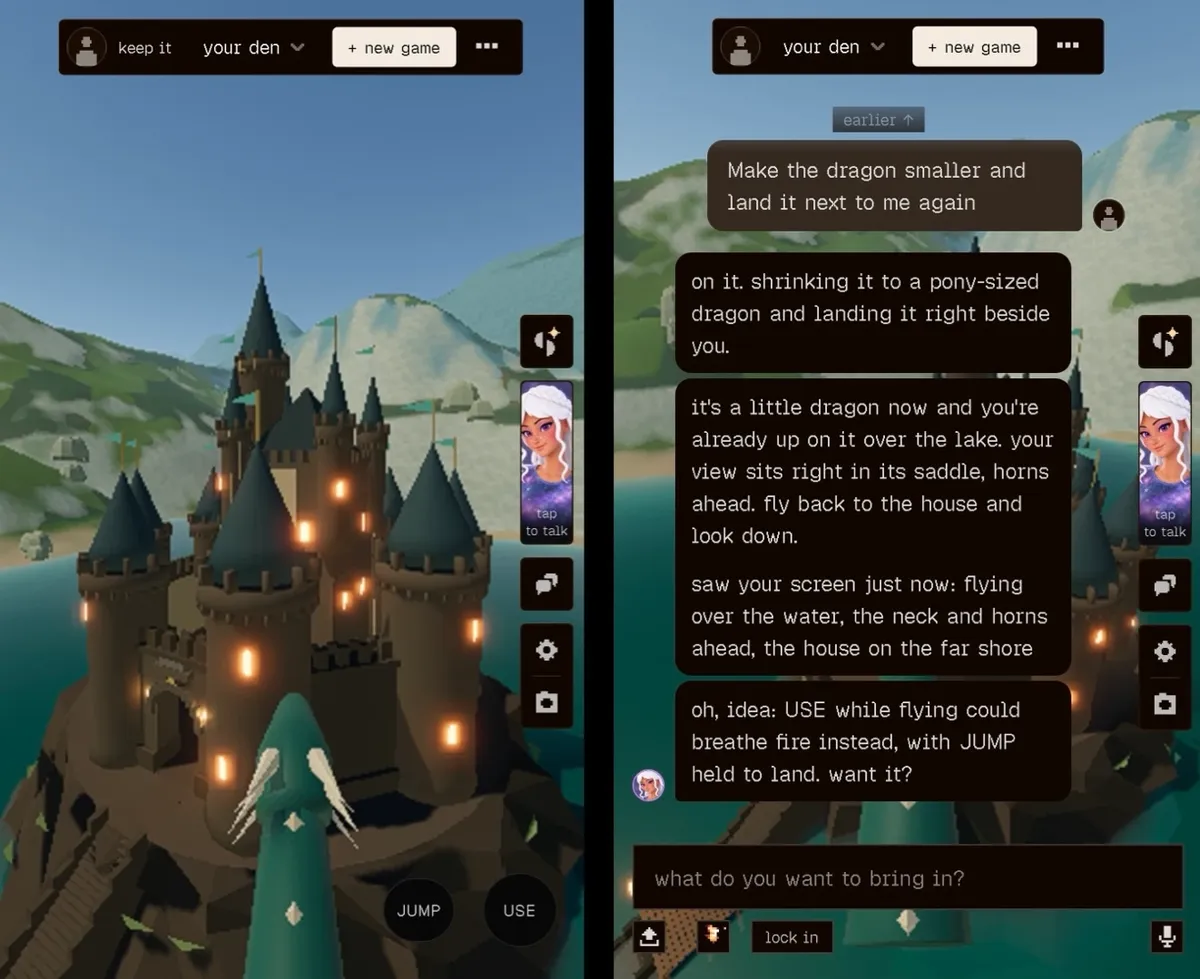
- Willison's test: on his phone, he prompted a castle and then a dragon into existence, and then rode the dragon (Willison).
- Development agents: these use Fable 5 and 5.1, which cost $10 per million input tokens and $50 per million output tokens at launch, with a 1M-token context window (InfoQ).
Read the full section
- The product: Spawn is a browser-based multiplayer game builder. Players describe what they want to Savi, the in-game AI, and the games run on phones by default. The about page names Claude Opus 5.5 as Savi's default model.
- Willison's test: on his phone, he prompted a castle and then a dragon into existence, and then rode the dragon (Willison).
- Development agents: these use Fable 5 and 5.1, which cost $10 per million input tokens and $50 per million output tokens at launch, with a 1M-token context window (InfoQ).
Technical analysis for researchers and developers
The setup Sansbury describes (Willison excerpt): No evaluation method, test data or code has been published, so none of this can be reproduced.
Read the full section
The setup Sansbury describes (Willison excerpt):
- Where work comes from: about 60% of tasks start from a production error, an odd log entry, a feature request or a bug report filed by Savi. A triage agent sorts each one into fix, won't-fix or "needs a design decision."
- Shipping: agents edit live code and deploy every hour. The stated reason is that an agent can only keep a few hours of work in its head, so small, frequent changes keep it coherent.
- Recovery: a broken change can be rolled back in 30 seconds, in just the affected area. Alerts start or wake an agent that owns the incident, and the team breaks things on purpose to test recovery.
No evaluation method, test data or code has been published, so none of this can be reproduced.
Claims and evidence
- The figures on team size, token spend, throughput and the 60% share of production-driven work all come from Sansbury's post, and the reviewed sources don't corroborate any of them.
- Sansbury's claim that Fable made this level of autonomy possible and that Opus 5.5 "doesn't quite hack it" is one team's experience.
- Willison's hands-on test shows the product works. It doesn't show how the product was built.
Read the full section
- The figures on team size, token spend, throughput and the 60% share of production-driven work all come from Sansbury's post, and the reviewed sources don't corroborate any of them. Investor-commentator Matt Shumer praised the company and said one run he was shown cost over $100k (Shumer). He is a supporter, not an auditor.
- Sansbury's claim that Fable made this level of autonomy possible and that Opus 5.5 "doesn't quite hack it" is one team's experience. It sits awkwardly with reports that Opus 5.5 matches Fable 5.1 on most tasks (TechNews).
- Willison's hands-on test shows the product works. It doesn't show how the product was built.
Context and prior work
- A day earlier, Willison argued that October 2026 was an "inflection point" for vibe game development (building games mostly by prompting), with Opus 5.5 the strongest for making fun games (Willison, Oct 28).
- Spawn's practices push continuous deployment, the long-standing practice of releasing every change automatically, to an extreme.
- Sansbury previously led agentic AI at Robinhood (TheOrg).
Read the full section
- A day earlier, Willison argued that October 2026 was an "inflection point" for vibe game development (building games mostly by prompting), with Opus 5.5 the strongest for making fun games (Willison, Oct 28). That ranking differs from Spawn's preference for Fable when building infrastructure.
- Spawn's practices push continuous deployment, the long-standing practice of releasing every change automatically, to an extreme.
- Sansbury previously led agentic AI at Robinhood (TheOrg).
Limitations, safety and contested findings
- Over-cautious security fixes: when Spawn asked GPT-6 Astra to apply fixes from a security review, it disabled every insecure feature, which effectively switched the product off (Willison).
- Stakes: Willison doubts the approach would suit software where failures cost more than they do in a game.
- Platform risk: Fable's three-week suspension in June shows how much a business depends on one model staying available (Anthropic).
Read the full section
- Over-cautious security fixes: when Spawn asked GPT-6 Astra to apply fixes from a security review, it disabled every insecure feature, which effectively switched the product off (Willison). That is a warning about agents optimizing too literally.
- Stakes: Willison doubts the approach would suit software where failures cost more than they do in a game.
- Platform risk: Fable's three-week suspension in June shows how much a business depends on one model staying available (Anthropic).
Business and practitioner implications
- Spending: shifting from payroll to tokens on this scale ($3M+ a month) only pays off if model access stays available and prices keep falling.
- Prerequisites: the transferable lessons are the operational ones Spawn describes.
- Model choice: pick models per task, informed by your own tests.
Read the full section
- Spending: shifting from payroll to tokens on this scale ($3M+ a month) only pays off if model access stays available and prices keep falling. Fable 5.1 and Opus 5.5 both cut costs.
- Prerequisites: the transferable lessons are the operational ones Spawn describes. Fast, targeted rollback, incident handling that starts agents automatically and deliberate failure testing all come before giving agents more autonomy.
- Model choice: pick models per task, informed by your own tests. Spawn rates Fable for building, Opus 5.5 for its in-game agent and Astra as too blunt for security fixes.
- Caution: throughput claims from a single company aren't benchmarks.