
ModelsArchitectures & capability
IBM releases Granite Switch 4.1.1, retraining only its speech encoder and Decision adapter while leaving the base model unchanged
IBM's Granite Switch 4.1.1 retrains two plug-in components, the speech encoder and the Decision adapter, and leaves the base model untouched. Speech now transcribes multiple languages with punctuation. IBM presents the release as a backwards-compatible update that needs no migration.
From the Hugging Face article of October 29, 2026 and cited sources: Two weeks after Granite Switch 4.1, the 4.1.1 revision updates only the speech-to-text encoder and the Decision adapter. [1] [2]
SOURCES[1] Granite Switch 4.1.1 — Update models like you update… huggingface.co[2] ibm-granite/granite-switch-4.1-30b model card huggingface.co
 AT Pulse research deskPublished · Updated · 5 min read · AI-assisted analysis
AI-assisted, not human-edited. Methodology Corrections Who owns this site
- What happened
- Two weeks after Granite Switch 4.1, the 4.1.1 revision updates only the speech-to-text encoder and the Decision adapter. [1] [2]
- Original source
- Hugging Face article, company source
- Brief by
- AT Pulse research desk AI-assisted; publisher and contact on the desk page
- When
- October 29, 2026 article published
- Covered
- Oct 30 edition
- Evidence
- 11 sources across 7 sites
- 1Granite Switch 4.1.1 — Update models like you update…huggingface.co
- 2ibm-granite/granite-switch-4.1-30b model cardhuggingface.co
- 3ibm-granite/granite-speech-5.0-470m-turboctc model cardhuggingface.co
- 4Granite Speech 5.0 Turbo CTC Explained (Bibigpt)growth.bibigpt.co
- 5Jev Decision Index ranks 30+ open-weight decision models…aiweekly.co
- 6IBM Releases Modular Granite Switch 4.1 Models (Unite.ai)unite.ai
Reach: not measured yet
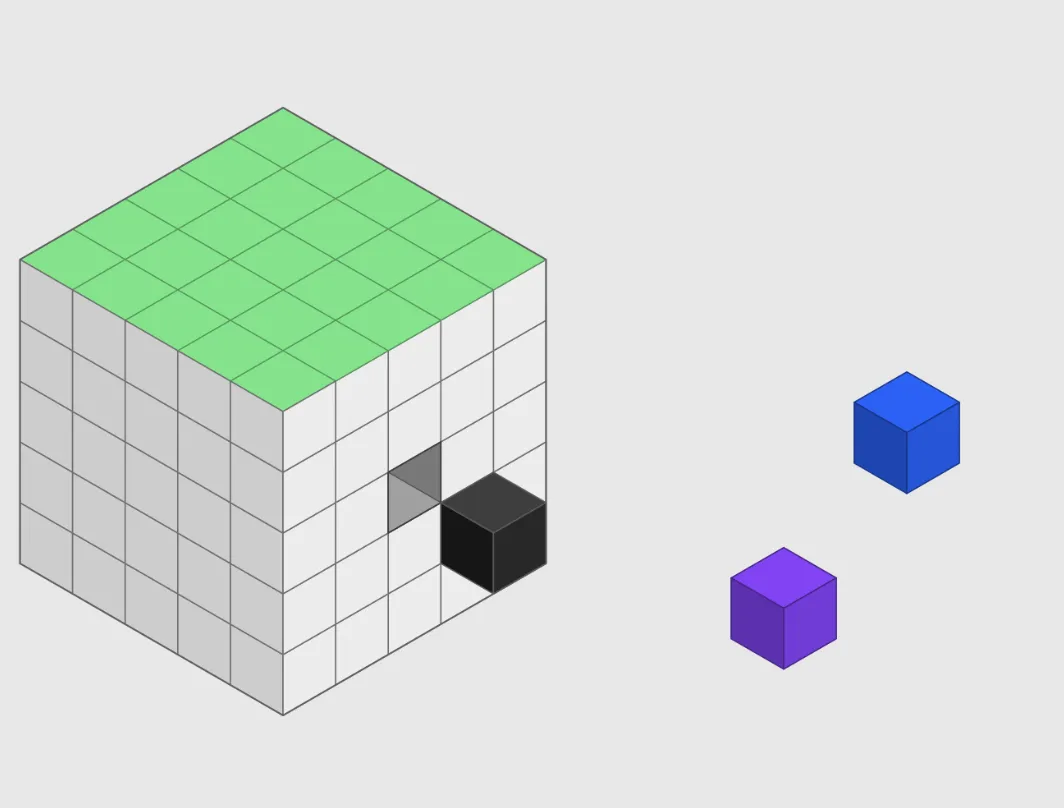
Two weeks after Granite Switch 4.1, the 4.1.1 revision updates only the speech-to-text encoder and the Decision adapter. The base model and prompt format stay the same. IBM describes it as fully backwards compatible and says a third-party Adapter SDK is coming. [1] [2]
At launch, the speech path was English-only, lowercase and unpunctuated. The updated Granite Speech 5.0 TurboCTC encoder adds punctuated multilingual transcription, and its English word error rate drops from 5.78% to 5.51%. IBM's sources disagree on the language count: the blog says 10, while the model cards list seven. [1] [2] [3] [7]
The new Decision adapter scores 51.33 on Jev Decision Index v0.3, according to IBM's model card. The 4.1 launch score of 50.1 was reported without an index version, and scores have shifted between index versions before. That makes the roughly one-point gain hard to interpret, and no independent rerun has been found. [2] [6] [11]
Independent updates rely on the design. The adapters are Activated LoRAs trained against the base model's shared KV cache, and a small switch layer applies one adapter across all decoder layers for a continuous stretch of tokens. As a result, adapters can be built separately, combined and switched without recomputing the prompt. [2] [9]
What the sources show: two components changed while the base model stayed fixed. What may follow: teams could adopt capability updates without re-validating the base model.
Read the full assessment
They would still need to check narrowly pinned vLLM and Transformers versions.
Executive brief
IBM's Granite Switch 4.1.1 is a patch release that IBM shipped two weeks after Granite Switch 4.1, and IBM says it did so without retraining the base model. It retrained only two plug-in parts: the speech-to-text encoder and the "Decision" adapter. Everything else stayed the same, so IBM pitches the release as updating a model the way you update software. The two upgrades are multilingual transcription with punctuation and a better decision score. IBM's own pages disagree on the language count. The blog says 10 languages, while the 30B model card lists seven.
What changed and event timeline
English-only speech encoder ships
IBM released Granite Speech 5.0 470M TurboCTC. It is a Conformer encoder trained with CTC loss and has no language-model decoder, according to the and.
Community decision benchmark appears
The Jev Decision Index launched as a Hugging Face Space. It tests models on a fixed set of 132,422 requests across 37 benchmarks ().
Granite Switch 4.1 launches
The 8B and 30B models combine a base model, a decision adapter, a safety adapter and a speech encoder behind one endpoint. Speech output at launch was English-only, lowercase and unpunctuated (;).
Speech encoder goes multilingual
The TurboCTC update added six languages to English, giving seven, and IBM reports average English word error rate improved from 5.78% to 5.51% ().
Revision 4.1.1 posted
The model card lists updated decision weights, an unchanged prompt format and multilingual speech ().
Patch announced
IBM describes the release as fully backwards compatible, needing no migration, and says an Adapter SDK for third parties is coming ().
Capabilities and access
- Checkpoints:
ibm-granite/granite-switch-4.1-30b(revision 4.1.1) and an 8B variant. Both are Apache 2.0 with a 128K context window (Unite.ai). - Components: the Guardian Core safety adapter, the Decision adapter (from
granitelib-core-r1.0) and the Granite Speech 5.0 TurboCTC encoder. - Speech languages on the model card: English, French, German, Spanish, Portuguese, Italian and Japanese (30B card).
Read the full section
- Checkpoints:
ibm-granite/granite-switch-4.1-30b(revision 4.1.1) and an 8B variant. Both are Apache 2.0 with a 128K context window (Unite.ai). - Components: the Guardian Core safety adapter, the Decision adapter (from
granitelib-core-r1.0) and the Granite Speech 5.0 TurboCTC encoder. - Speech languages on the model card: English, French, German, Spanish, Portuguese, Italian and Japanese (30B card).
- Serving: Transformers or vLLM (versions ≥0.26 and <0.31).
- Demo: a Speech-to-Decisions Space.
Technical analysis for researchers and developers
- A small attention-based "switch" layer detects control tokens. It then applies one adapter across all decoder layers for a continuous stretch of tokens (30B card).
- The adapters are Activated LoRAs (aLoRAs) trained against the base model's normalized KV cache.
- You pick an adapter with one chat-template field,
adapter_name(daily.dev summary).
Read the full section
- Coarse-grained switching. A small attention-based "switch" layer detects control tokens. It then applies one adapter across all decoder layers for a continuous stretch of tokens (30B card).
- Shared KV cache. The adapters are Activated LoRAs (aLoRAs) trained against the base model's normalized KV cache. That lets them be developed separately, combined with
compose_granite_switch, and switched without recomputing the prompt (GitHub). - Selecting an adapter. You pick an adapter with one chat-template field,
adapter_name(daily.dev summary). - Limits of the speech encoder. It is a CTC encoder that was not trained jointly with the LLM (30B card).
Claims and evidence
- Decision score. The 4.1.1 Decision adapter scores 51.33 overall (chance-corrected) on Jev Decision Index v0.3 (30B card). No independent rerun has been found.
- IBM's telemetry shows a 74% KV-cache hit rate for aLoRA versus 29% for standard LoRA (GitHub). This is vendor-reported.
- IBM says a 3B variant makes 60–100 decisions per second (IBM 4.1 blog). This is not independently corroborated.
Read the full section
- Decision score. The 4.1.1 Decision adapter scores 51.33 overall (chance-corrected) on Jev Decision Index v0.3 (30B card). At launch, 4.1 was reported at 50.1, with no index version stated (Unite.ai). Scores have moved between index versions before (Redreamality), so the 4.1 and 4.1.1 numbers cannot safely be compared. No independent rerun has been found.
- Cache efficiency. IBM's telemetry shows a 74% KV-cache hit rate for aLoRA versus 29% for standard LoRA (GitHub). This is vendor-reported.
- Speed. IBM says a 3B variant makes 60–100 decisions per second (IBM 4.1 blog). This is not independently corroborated.
Context and prior work
- The "Decision" category grew around Jev, a model that returns choices, scores or true/false answers with probabilities rather than prose.
- IBM claimed in its 4.1 launch that its safety adapter beats Jev 1.13 and other models on safety decisions (IBM 4.1 blog).
- Granite Switch adds a different idea to that market: many small adapters on one shared cache, rather than one standalone decision model.
Read the full section
- The "Decision" category grew around Jev, a model that returns choices, scores or true/false answers with probabilities rather than prose. Community leaderboards were built to check vendor claims about such models (AI Weekly).
- IBM claimed in its 4.1 launch that its safety adapter beats Jev 1.13 and other models on safety decisions (IBM 4.1 blog).
- Granite Switch adds a different idea to that market: many small adapters on one shared cache, rather than one standalone decision model.
Limitations, safety and contested findings
- The blog says 10 languages; both model cards say seven.
- IBM calls the probabilities "a prior," not a certified classification (30B card).
- The checkpoint includes no factuality or policy-guardrail adapters. Guardian Core does not replace application-level safety testing.
Read the full section
- Language count. The blog says 10 languages; both model cards say seven.
- Decision outputs. IBM calls the probabilities "a prior," not a certified classification (30B card).
- Missing adapters. The checkpoint includes no factuality or policy-guardrail adapters. Guardian Core does not replace application-level safety testing.
- Benchmark caution. Decision benchmarks have shown large drops on new domains and overconfident calibration. One model fell from 61.71 to 41.88 on unseen domains (Redreamality).
Business and practitioner implications
- If adapters really version independently, teams can take capability updates without re-validating the base model or redeploying.
- Tight dependencies. vLLM and Transformers versions are pinned to narrow ranges, so check your stack before upgrading.
- Re-test decision accuracy and calibration on your own data instead of relying on leaderboard gains of about one point.
Read the full section
- Upgrades without migration. If adapters really version independently, teams can take capability updates without re-validating the base model or redeploying.
- Tight dependencies. vLLM and Transformers versions are pinned to narrow ranges, so check your stack before upgrading.
- Evaluate in your own domain. Re-test decision accuracy and calibration on your own data instead of relying on leaderboard gains of about one point.
- Third-party adapters. The promised Adapter SDK could open a market for outside adapters, but it has not shipped yet.