
BusinessMarkets, money & strategy
Instagram's Adam Mosseri says public anger at AI is rising and expects it to get worse
Instagram head Adam Mosseri told the Colin and Samir podcast that frustration with AI is rising month over month and will likely grow over the next couple of years. He also said Instagram probably ranks AI content worse than human-made posts.
From the The Verge · AI article of October 28, 2026 and cited sources: Mosseri described a steady month-over-month rise in anxiety and anger about AI, and he expects more of it over the next couple of years. [1] [2] [10]
SOURCES[1] Adam Mosseri says negativity around AI is ‘going to get… theverge.com[2] Linked video: Adam Mosseri says negativity around AI is… youtube.com[10] Pew Research Center pewresearch.org
 AT Pulse research deskPublished · Updated · 4 min read · AI-assisted analysis
AI-assisted, not human-edited. Methodology Corrections Who owns this site
- What happened
- Mosseri described a steady month-over-month rise in anxiety and anger about AI, and he expects more of it over the next couple of years. [1] [2] [10]
- Original source
- The Verge · AI article, independent perspective
- Brief by
- AT Pulse research desk AI-assisted; publisher and contact on the desk page
- When
- October 28, 2026 article published
- Covered
- Oct 29 edition
- Evidence
- 12 sources across 12 sites
RisingHow it’s measured
YouTube video · 67.4K views · 995 likes
Reach blends public engagement (views, likes, comments, shares, stars) from the platforms where the story or its original source lives: YouTube, Hacker News, GitHub, Substack and similar. A video and the article written from its transcript share one score, taken from the video. Platforms with no data are left out rather than counted as zero, and the age of a story never lowers its score.
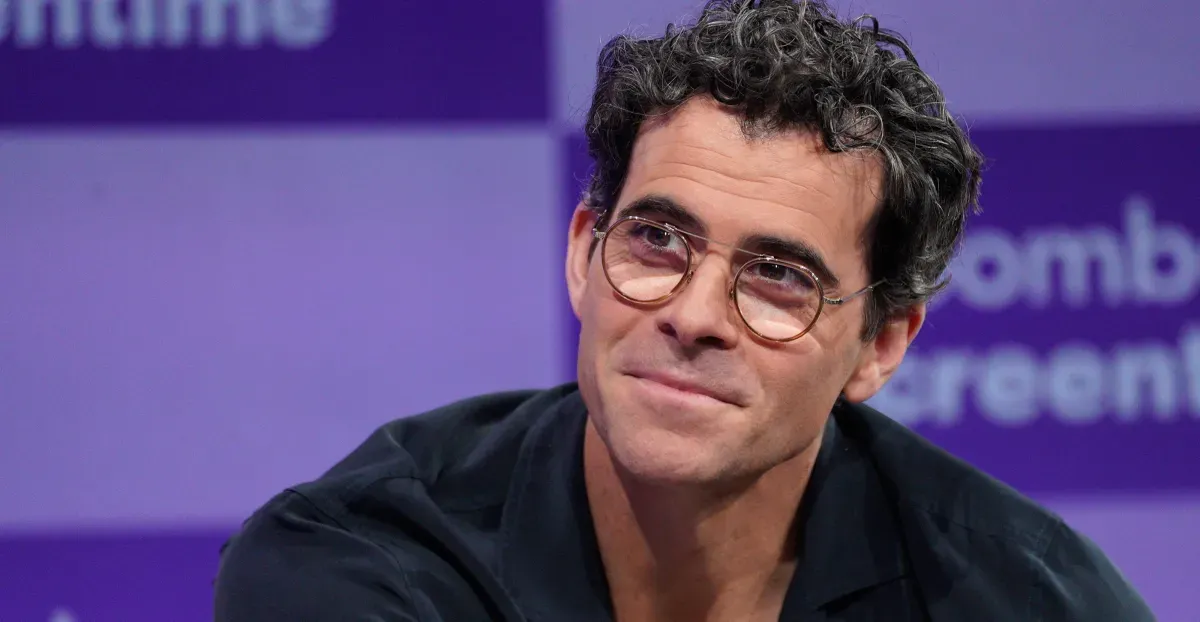
Mosseri described a steady month-over-month rise in anxiety and anger about AI, and he expects more of it over the next couple of years. Pew survey data supports the trend so far: the share of U.S. adults more concerned than excited about AI rose from 37% in 2021 to 50% in June 2025. His prediction about the years ahead is his own forecast. [1] [2] [10]
Instagram has no policy that penalizes AI creators, but Mosseri said its ranking systems probably score AI content lower in practice. He called this a cold-start problem: any category of content that appears quickly is poorly understood at first. He pointed to two signals where AI content likely trails: like rates adjusted for feed position and the platform's 'worth your time' survey scores. [1] [2]
AI personas are breaking Instagram's usual ways of telling original from copied content. A consistent face across an account used to suggest original work, but AI characters now deliver stand-up comedians' stolen jokes, so the joke itself has to be matched. Instagram's response is to require disclosure: since August, profiles showing an undisclosed AI-generated person lose reach. Mosseri's stated long-term plan is to verify real media through signing at the moment of capture, rather than trying to detect fakes. [2] [3] [6]
The evidence: surveys show U.S. concern about AI rising, and Instagram now cuts reach for unlabeled AI personas.
Read the full assessment
The likely result: creators and brands using AI face both audience skepticism and weaker distribution, so disclosure and originality become practical necessities.
Executive brief
Instagram head Adam Mosseri said on the Colin and Samir podcast that hostility toward AI is getting worse "month over month." He expects more anger over the next couple of years, some of it justified and some not. He also admitted that Instagram probably ranks AI content less well than human content, even though AI creators aren't penalized by policy (The Verge; video, 00:38). He made the remarks while promoting Instagram's long-form video push. Survey data back up the trend of rising public concern, but his two-year forecast is his own view.
What changed and event timeline
Mosseri says detection will lose
He argued it will be more practical to fingerprint real media than fake media, through cryptographic signing by camera makers, because platforms will get worse at spotting AI over time ().
Graduates boo pro-AI speakers
University of Arizona graduates booed Eric Schmidt on May 15. Speakers at other campuses who praised AI were also booed, and students cited job and environmental fears (;).
Undisclosed AI personas lose reach
Instagram renamed its label "AI-generated profile." Profiles that show an AI-generated person without the label now lose reach, including in recommendations ().
Instagram launches "Features."
These are horizontal videos up to 90 minutes long, tested with select US creators after an earlier test in Brazil. Unlike YouTube, Instagram doesn't share ad revenue with creators yet (;).
The Verge reports the podcast remarks
Mosseri said banning AI content isn't practical and that AI accounts must now label themselves (;).
Capabilities and access
- Features: up to 90-minute horizontal uploads, available to select US creators, with Reels clips that link to the full video and a TV viewing experience (9to5Google).
- "AI-generated profile" label: required for accounts built around AI-generated people. AI editing, captions and graphics are exempt (TechCrunch).
- Muse: Mosseri says creators use this AI assistant to look up things like their influential followers, but admits it is "not as good as it should be" (video, 59:51).
Read the full section
No new AI model is involved.
- Features: up to 90-minute horizontal uploads, available to select US creators, with Reels clips that link to the full video and a TV viewing experience (9to5Google).
- "AI-generated profile" label: required for accounts built around AI-generated people. AI editing, captions and graphics are exempt (TechCrunch).
- Muse: Mosseri says creators use this AI assistant to look up things like their influential followers, but admits it is "not as good as it should be" (video, 59:51).
Technical analysis for researchers and developers
- Cold start: Mosseri says ranking systems handle any fast-emerging content category poorly.
- Originality detection breaks: In the past, a consistent face across an account suggested original work.
- Provenance over detection: this is the stated long-term direction (Engadget).
Read the full section
- Cold start: Mosseri says ranking systems handle any fast-emerging content category poorly. He points to position-normalized like rates and a "worth your time" survey as the signals where AI content likely lags (video, 56:15).
- Originality detection breaks: In the past, a consistent face across an account suggested original work. AI personas that deliver stolen comedy bits defeat that signal, so the bit itself has to be matched (video, 54:10).
- Provenance over detection: this is the stated long-term direction (Engadget).
- Long-form success metric: Watch time alone doesn't count. Long-form video has to avoid cutting into sends, DMs and revenue per hour (video, 42:25).
Claims and evidence
- Concern is rising: independently supported.
- It will "continue to get worse": Mosseri's forecast, not a measurement (The Verge).
- AI creators aren't ranked differently: company-reported. Mosseri himself says AI content probably ranks worse in practice (video, 56:02).
Read the full section
- Concern is rising: independently supported. Pew found 50% of US adults more concerned than excited about AI in June 2025, up from 37% in 2021 (Pew).
- It will "continue to get worse": Mosseri's forecast, not a measurement (The Verge).
- AI creators aren't ranked differently: company-reported. Mosseri himself says AI content probably ranks worse in practice (video, 56:02).
- Label enforcement: Instagram hasn't published how it detects unlabeled AI profiles (TechCrunch).
Context and prior work
Read the full section
- Meta began labeling AI-generated images in 2024 (Axios).
- Meta removed its own AI character accounts after users criticized them (NBC News).
- Pew found that 76% of Americans think it is very important to be able to tell AI-made content from human-made content (Pew).
- Mosseri compares the long-form push to IGTV, which used the right format but the wrong length (video, 20:36).
Limitations, safety and contested findings
- Self-labeling gap: The Verge notes that celebrity deepfakes remain a problem, which self-labeling doesn't solve (The Verge).
- AI scam personas: Mosseri cites AI characters, such as an AI "monk" selling supplements, as an area needing care (video, 56:54).
- Joke theft: He says rights management for jokes "isn't a thing" (video, 54:25).
Read the full section
- Self-labeling gap: The Verge notes that celebrity deepfakes remain a problem, which self-labeling doesn't solve (The Verge).
- AI scam personas: Mosseri cites AI characters, such as an AI "monk" selling supplements, as an area needing care (video, 56:54).
- Joke theft: He says rights management for jokes "isn't a thing" (video, 54:25).
- Contested "slop": Mosseri says the word is used too liberally. The hosts counter that their audience starts from a negative view of AI (video, 1:01:45).
- Transcript reliability: the transcript is auto-captioned and may contain errors.
Business and practitioner implications
- Disclose: AI personas without the label lose reach. Mosseri calls originality "the principle" for handling AI copycats (video, 55:34).
- Expect a ranking handicap for AI-generated content until Instagram's ranking signals catch up.
- Plan for provenance: capture-time signing is Mosseri's stated long-term direction for authenticating media.
Read the full section
- Disclose: AI personas without the label lose reach. Mosseri calls originality "the principle" for handling AI copycats (video, 55:34).
- Expect a ranking handicap for AI-generated content until Instagram's ranking signals catch up.
- Plan for provenance: capture-time signing is Mosseri's stated long-term direction for authenticating media.
- Messaging risk: public AI boosterism draws backlash, as the commencement booing showed (eWEEK).
- Long-form monetization is unsettled: Mosseri wants creator payouts to break even and is weighing pre-roll and mid-roll ads, which users dislike (video, 12:33).
The source trail.
Sources (12)
Adam Mosseri says negativity around AI is ‘going to get worse’
Article text retrieved; extracted text may omit tables or interactive elements. A transcript of the video linked from this page is supplied (linked video auto captions; https://www.youtube.com/watch?v=sxizdQ2hRfk); automatic text may contain errors.
theverge.comLinked video: Adam Mosseri says negativity around AI is ‘going to get worse’
linked video auto captions
www.youtube.com