
BusinessMarkets, money & strategy
Google Chrome's Gemini-powered autofill now pulls form details from Gmail
Chrome's Gemini-powered autofill now searches users' Gmail inboxes to suggest form entries such as order numbers, tracking details and flight bookings. The U.S. rollout arrived 12 days after Google let connected Gmail data personalise ads, though Google has not linked the two.
From the TechCrunch AI article of October 28, 2026 and cited sources: Chrome's autofill can now suggest values it finds in Gmail, such as order numbers, tracking information and flight bookings. [5] [1] [12] [4]
SOURCES[5] Google: Chrome's enhanced autofill helps you fill out… blog.google[1] Chrome’s AI-powered Autofill can now dig through your… techcrunch.com[12] Droid Life: Chrome's Enhanced Autofill gets Personal… droid-life.com
 AT Pulse research deskPublished · Updated · 5 min read · AI-assisted analysis
AI-assisted, not human-edited. Methodology Corrections Who owns this site
- What happened
- Chrome's autofill can now suggest values it finds in Gmail, such as order numbers, tracking information and flight bookings. [5] [1] [12] [4] [11]
- Original source
- TechCrunch AI article, independent perspective
- Brief by
- AT Pulse research desk AI-assisted; publisher and contact on the desk page
- When
- October 28, 2026 article published
- Covered
- Oct 29 edition
- Evidence
- 14 sources across 14 sites
- 1Chrome’s AI-powered Autofill can now dig through your…techcrunch.com
- 2Chrome’s enhanced autofill can now pull info from Gmail to…theverge.com
- 3The Hacker News: Google says Gmail and Photos data…thehackernews.com
- 4Android Authority: Chrome's Gemini-powered autofill can…androidauthority.com
- 5Google: Chrome's enhanced autofill helps you fill out…blog.google
- 6Business Today: Chrome expands autofill to passports…businesstoday.in
Reach: not measured yet
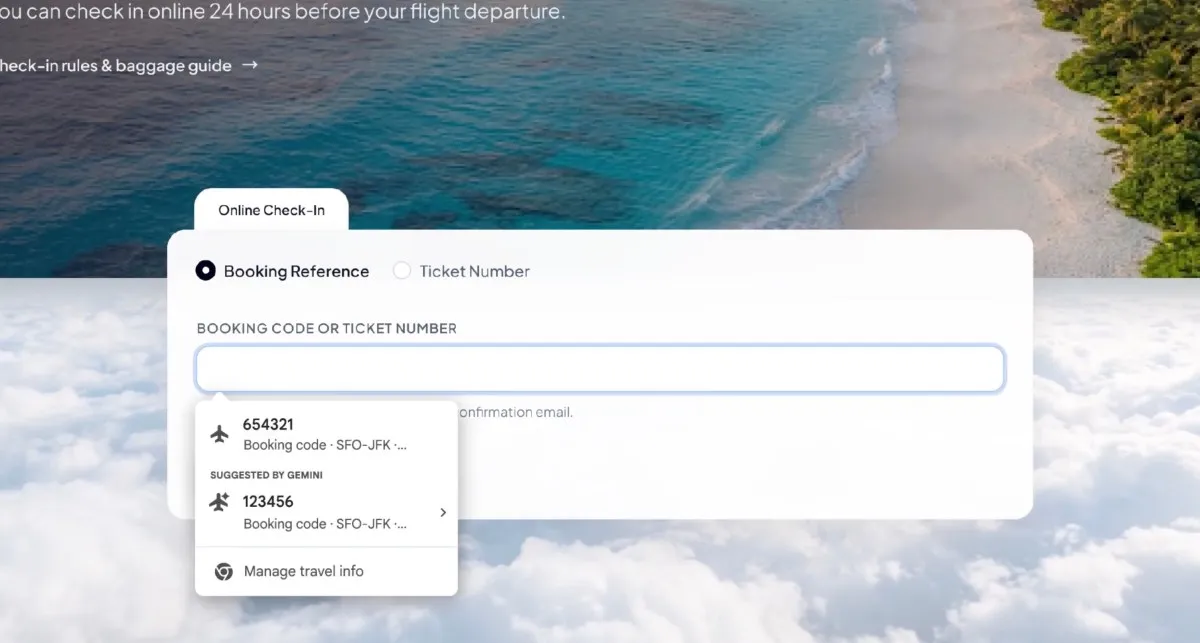
Chrome's autofill can now suggest values it finds in Gmail, such as order numbers, tracking information and flight bookings. These suggestions appear in the usual autofill dropdown, labelled as suggested by Gemini, and the email they came from is highlighted. The feature is rolling out in the U.S. on desktop, Android and iOS. It requires Gemini in Chrome and Personal Intelligence to be turned on, and Google says Photos images will be added later. [5] [1] [12] [4] [11]
A privacy policy change that took effect October 16 lets Gmail data connected through Personal Intelligence shape ads when users make it available to ad-supported services. This ends an exclusion in place since 2021. Google has not said whether data used by autofill is treated the same way. Turning off personalised ads in My Ad Center does not necessarily stop connected-app data being used for AI personalisation. [3] [9] [4] [14]
Google has published no architecture, accuracy figures or security details. Its statement that sensitive data is encrypted comes from Google alone and does not say how or where encryption is applied. Teams that build checkout and booking forms should expect more fields to be filled by AI and should keep server-side validation in place. [5] [4]
What is documented: the feature is U.S.-only, requires Personal Intelligence and shows its source email. The likely result is that more form fields will be filled by AI from inbox data.
Read the full assessment
That raises the stakes for errors and privacy in checkout flows and on managed accounts.
Executive brief
Chrome's autofill can now read your Gmail inbox to fill in web forms. This arrived 12 days after Google changed its privacy policy so that Gmail data connected through Personal Intelligence can be used to personalise ads. Google has not said that autofill data goes into ads, but Android Authority raised that question. The feature suggests items such as order numbers, tracking details and flight bookings. It is labelled "Suggested by Gemini" and is rolling out in the U.S. on desktop, Android and iOS for Gemini in Chrome users who have turned Personal Intelligence on (Google).
Read the full section
Chrome's autofill can now read your Gmail inbox to fill in web forms. This arrived 12 days after Google changed its privacy policy so that Gmail data connected through Personal Intelligence can be used to personalise ads. That policy change took effect October 16, 2026. Google has not said that autofill data goes into ads, but Android Authority raised that question. The feature suggests items such as order numbers, tracking details and flight bookings. It is labelled "Suggested by Gemini" and is rolling out in the U.S. on desktop, Android and iOS for Gemini in Chrome users who have turned Personal Intelligence on (Google).
What changed and event timeline
Enhanced autofill expands
Chrome autofill gained passport, driver's licence and vehicle details, moving beyond names and addresses ().
Personal Intelligence beta
Gemini became able to connect Gmail, Photos, YouTube and Search, opt-in and off by default, in a U.S. beta ().
Wallet autofill on mobile
Chrome on iOS and Android began filling passport and licence fields from Google Wallet ().
Ads exception takes effect
The privacy policy now lets connected Gmail, Drive and Photos data personalise ads once a user makes it available to services that support personalised ads. This ends an exclusion in place since 2021 (;).
Capabilities and access
- What it fills: Google lists order numbers, tracking information and flight bookings (Google).
- Requirements: U.S. location, Gemini in Chrome, and Personal Intelligence turned on.
- Model: Google does not name a model version for autofill. Personal Intelligence runs on the Gemini 3 family, according to DataCamp.
Read the full section
- What it fills: Google lists order numbers, tracking information and flight bookings (Google). TechCrunch's list is longer: membership IDs, addresses, phone numbers and credit card numbers (TechCrunch).
- Requirements: U.S. location, Gemini in Chrome, and Personal Intelligence turned on. Users switch the feature on or off, and control what it can access, in Chrome settings.
- Model: Google does not name a model version for autofill. Personal Intelligence runs on the Gemini 3 family, according to DataCamp.
- Coming next: Google says autofill will soon pull from images in Google Photos, with no timeline (Thurrott).
Technical analysis for researchers and developers
Google has published no architecture, retrieval design or accuracy figures.
Read the full section
Google has published no architecture, retrieval design or accuracy figures. What is documented:
- The feature works inside Chrome's normal autofill dropdown. A Gemini suggestion appears after Gemini has searched the inbox, and the email it came from is highlighted (Droid Life; Android Authority).
- The Chrome Canary test build drew on Gmail, Photos and "other connected apps." The stable release appears to use Gmail only (Android Authority).
- For form developers, this means more fields may be filled by an AI model rather than from a user's saved profile. Validating inputs on your side matters more as a result.
- There is no public benchmark or evaluation of how often it extracts the wrong value.
Claims and evidence
- "Sensitive data is encrypted" comes from Google only (Google).
- User control in settings: Android Authority had not yet seen these controls in practice (Android Authority).
- No training on Gmail content: Google says it does not directly train models on Gmail or Photos content.
Read the full section
- "Sensitive data is encrypted" comes from Google only (Google). The reviewed sources do not say what encryption is used, where, or who holds the keys.
- User control in settings: Android Authority had not yet seen these controls in practice (Android Authority).
- No training on Gmail content: Google says it does not directly train models on Gmail or Photos content. It does train on filtered prompts and responses (afaqs!).
- Independent corroboration: none of the reviewed sources tests the feature's accuracy or its security.
Context and prior work
- Earlier autofill expansions: Chrome's enhanced autofill grew in steps, first with Wallet IDs and vehicle details on desktop in November 2025, then on mobile in June 2026 (Android Central).
- Apple comparison: TechCrunch likens the feature to Apple's one-tap entry of verification codes from text messages (TechCrunch).
- Personal Intelligence reach: Google is extending Personal Intelligence across its products.
Read the full section
- Earlier autofill expansions: Chrome's enhanced autofill grew in steps, first with Wallet IDs and vehicle details on desktop in November 2025, then on mobile in June 2026 (Android Central).
- Apple comparison: TechCrunch likens the feature to Apple's one-tap entry of verification codes from text messages (TechCrunch).
- Personal Intelligence reach: Google is extending Personal Intelligence across its products. The Search version is rolling out as a beta to adults worldwide, except in the EEA, Switzerland, the UK and Nigeria (The Hacker News).
Limitations, safety and contested findings
- Ads question: The October 16 policy change lets connected Gmail data shape ads when users make it available to services that support personalised ads.
- Ad-off switch is not enough: Turning off personalised ads in My Ad Center does not necessarily stop connected-app data being used for AI personalisation (Relevant Audience).
- Reader poll: In a self-selected, non-representative Android Authority poll, 45% welcomed the feature, 32% rejected Gmail access outright and 23% wanted more granular controls.
Read the full section
- Ads question: The October 16 policy change lets connected Gmail data shape ads when users make it available to services that support personalised ads. Android Authority asks whether autofill data could be treated the same way; Google has not addressed this (Android Authority).
- Ad-off switch is not enough: Turning off personalised ads in My Ad Center does not necessarily stop connected-app data being used for AI personalisation (Relevant Audience).
- Reader poll: In a self-selected, non-representative Android Authority poll, 45% welcomed the feature, 32% rejected Gmail access outright and 23% wanted more granular controls.
- Conflicting data lists: Google and TechCrunch describe different sets of data types the feature can fill.
Business and practitioner implications
- Lock-in: The feature gives users a further reason to stay in Chrome and Google's AI ecosystem (TechCrunch).
- Checkout and booking flows: Expect more fields to be pre-filled, such as order and confirmation numbers.
- Enterprise: Admins should review whether Gemini in Chrome and Personal Intelligence are allowed on managed or work accounts, given the ad-policy change.
Read the full section
- Lock-in: The feature gives users a further reason to stay in Chrome and Google's AI ecosystem (TechCrunch). Browsers without access to the user's inbox cannot match it.
- Checkout and booking flows: Expect more fields to be pre-filled, such as order and confirmation numbers. Keep server-side validation in place.
- Enterprise: Admins should review whether Gemini in Chrome and Personal Intelligence are allowed on managed or work accounts, given the ad-policy change. The feature is U.S.-only for now.
The source trail.
Sources (14)
Chrome’s AI-powered Autofill can now dig through your Gmail to fill out forms
Article text retrieved; extracted text may omit tables or interactive elements.
techcrunch.comChrome’s enhanced autofill can now pull info from Gmail to help you fill out forms
Related coverage; assess separately
theverge.com