
InfrastructureCompute, chips & cloud
Modal CEO Erik Bernhardsson explains how the company turns multi-year GPU contracts into on-demand AI compute after its $750M Series D
Modal CEO Erik Bernhardsson explains how the company turns fixed, multi-year GPU contracts from roughly 25 clouds into flexible compute for inference and agent sandboxes. He also explains why he thinks short-lived sandboxes that can be snapshotted are the right model for agent workloads.
From the Latent Space podcast episode of October 22, 2026 and cited sources: GPU capacity is sold in fixed blocks of capacity over fixed terms, which the episode calls "rectangles," while customer demand spikes and shifts. [1] [2]
SOURCES[1] Latent Space episode page latent.space[2] Transcript: Why AI Compute Comes in Rectangles — Erik… rss.beehiiv.com
 AT Pulse research deskPublished · Updated · 5 min read · AI-assisted analysis
AI-assisted, not human-edited. Methodology Corrections Who owns this site
- What happened
- GPU capacity is sold in fixed blocks of capacity over fixed terms, which the episode calls "rectangles," while customer demand spikes and shifts. [1] [2]
- Original source
- Latent Space podcast episode, independent perspective
- Brief by
- AT Pulse research desk AI-assisted; publisher and contact on the desk page
- When
- October 22, 2026 podcast episode published
- Covered
- Oct 23 edition
- Evidence
- 9 sources across 7 sites; transcript sourced
- 1Latent Space episode pagelatent.space
- 2Transcript: Why AI Compute Comes in Rectangles — Erik…rss.beehiiv.com
- 3RuntimeWire: Modal $750M Series Druntimewire.com
- 4Modal blog: Sandbox launchmodal.com
- 5Tech Startups: Modal raises $355Mtechstartups.com
- 6TechCrunch: Modal closing in on $750M roundtechcrunch.com
RisingHow it’s measured
YouTube video · 3K views · 27 likes
Reach blends public engagement (views, likes, comments, shares, stars) from the platforms where the story or its original source lives: YouTube, Hacker News, GitHub, Substack and similar. A video and the article written from its transcript share one score, taken from the video. Platforms with no data are left out rather than counted as zero, and the age of a story never lowers its score.
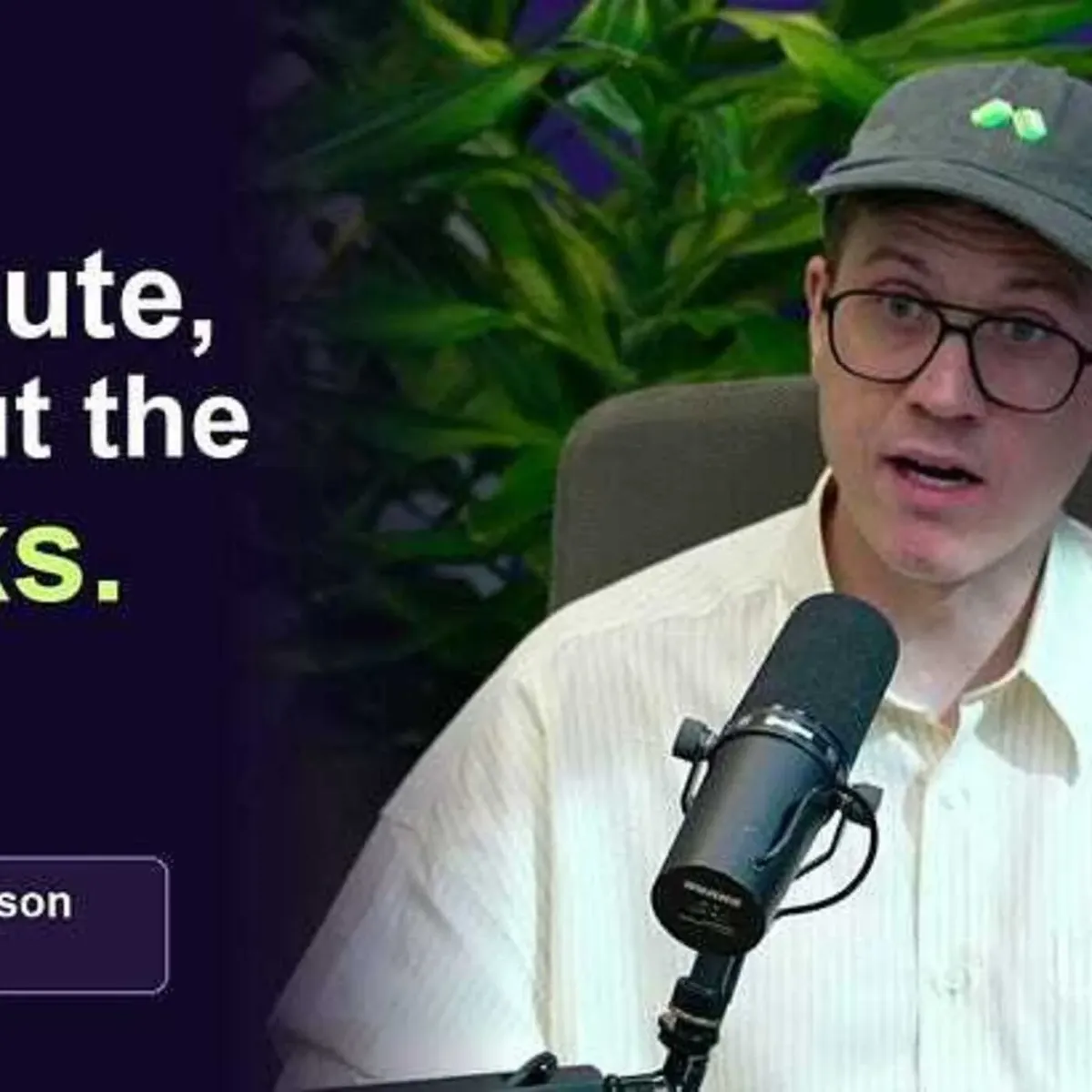
GPU capacity is sold in fixed blocks of capacity over fixed terms, which the episode calls "rectangles," while customer demand spikes and shifts. Modal now rents from almost 25 clouds, usually on three-year deals with significant upfront payment, and pools demand across many customers to fill those blocks. Bernhardsson says this required building a four-person procurement desk and a team of about 10 engineers who run bare-metal capacity. [1] [2]
Bernhardsson describes a supplier-vetting process: a spec sheet covering IOPS, CPU scores and bandwidth, acceptance tests on a single node, and an informal internal reliability score. He compares that score to SemiAnalysis's ClusterMAX ratings. He also warns that falling prices, falling utilization and a vanishing resale market could all hit at once, which would make extra GPUs bought on fixed commitments hard to offload. [2] [9]
For agents, he argues against moving persistent dev boxes into the cloud. His preferred model is a long-running agent that starts a sandbox in about 100 ms, runs a few commands, snapshots it and shuts it down. That would make forking and massively parallel work, such as running each CI test in its own sandbox, practical. Modal's new VM runtime and its snapshot types are steps toward this. [2] [7] [8]
Modal's Series D was $750M at a $15.75B post-money valuation. The company says annualized revenue is above $1B, with about $300M from Sandboxes. These revenue figures are company-reported and repeated in the press, not independently confirmed. The Series C, announced in May, was $355M. [3] [5] [6]
Modal says it commits to three-year GPU terms while selling elastic capacity. Implication: pooling platforms take on financing and utilization risk that bursty AI users can't carry themselves, and that exposure grows as the commitments get bigger.
Executive brief
Modal sells GPU capacity that customers can scale up and down, but it buys that capacity on fixed terms. In the Latent Space episode, CEO Erik Bernhardsson says Modal now rents GPUs from almost 25 clouds, usually on three-year deals paid partly up front, with contracts sometimes worth "tens or hundreds of millions" (transcript 00:14:44; transcript 00:23:31). The episode's title refers to this: GPU contracts are "rectangles" of fixed capacity over fixed time, while real workloads spike and shift. Modal pools many customers to smooth out demand (episode page). This explanation carries more weight after the October 2026 Series D: $750M at a $15.75B valuation, with a run rate above $1B (RuntimeWire).
What changed and event timeline
Sandboxes launch
Modal launched isolated environments for running code that AI agents or users write. On the podcast, Bernhardsson credits much of Modal's later growth to them ().
Series C
Modal raised $355M at a $4.65B valuation as demand for AI infrastructure rose ().
Series D reported
TechCrunch, citing an unnamed source, reported that Accel was leading a $750M round. It put annualized revenue at $300M+ as of May and headcount at about 150 ().
VM Sandboxes generally available
Modal released a virtual-machine runtime for agents that need Docker, FUSE filesystems or other kernel features. gVisor remains the default runtime ().
Series D announced
The round was $750M at $15.75B post-money, with run rate above $1B and Sandboxes alone at $300M. Kleiner Perkins joined as a new investor ().
Latent Space interview published
Bernhardsson covered capacity procurement, how he thinks about agent compute, and hiring ().
Capabilities and access
- Modal Functions (launched 2021): serverless compute with autoscaling, mostly used for inference. The episode page puts it at about two-thirds of revenue (episode page).
- Modal Sandboxes: gVisor runtime by default.
- Snapshots come in three types: filesystem (kept until deleted), directory (deleted after 30 days) and memory (expire after 7 days; "early preview, pre-beta") (Modal docs).
Read the full section
- Modal Functions (launched 2021): serverless compute with autoscaling, mostly used for inference. The episode page puts it at about two-thirds of revenue (episode page).
- Modal Sandboxes: gVisor runtime by default; the VM runtime (
runtime="vm") is built on Cloud Hypervisor, with sub-second cold starts and support for hundreds of thousands of concurrent sandboxes (Modal blog). - Snapshots come in three types: filesystem (kept until deleted), directory (deleted after 30 days) and memory (expire after 7 days; "early preview, pre-beta") (Modal docs).
- In development: products for training, batch jobs and post-training RL (transcript 00:35:41).
Technical analysis for researchers and developers
Modal has published no benchmarks of its own for any of these points.
Read the full section
- Agent compute as short bursts. Bernhardsson argues against "lift and shift" dev boxes. He prefers long-running agents that act like durable workflows: a sandbox starts in about 100 ms, runs a few commands, is snapshotted and shut down. Fast start/stop would allow forking and running hundreds of agent branches at once (transcript 00:43:37).
- CI example. Running each test in its own sandbox is limited by start/stop overhead. He compares this to Amdahl's law (transcript 00:45:20).
- Inference work is mostly systems work. He says KV caching and routing are still largely systems problems. Modal's forward-deployed engineers train draft models and tune vLLM and SGLang (transcript 01:14:44).
- Vetting suppliers. Vendors get a spec sheet (IOPS, CPU scores, north-south bandwidth), and Modal runs acceptance tests on a single node first (transcript 00:23:04).
Modal has published no benchmarks of its own for any of these points.
Claims and evidence
- $1B+ run rate, $300M from Sandboxes, usage up 3x since the Series C: these figures come from the company and were repeated in the press (RuntimeWire).
- One reports $4.65B (TechCrunch); another describes about $5.2B implied (RuntimeWire).
- Headcount: TechCrunch reported about 150.
Read the full section
- $1B+ run rate, $300M from Sandboxes, usage up 3x since the Series C: these figures come from the company and were repeated in the press (RuntimeWire). No reviewed source confirms them independently.
- Series C valuation: sources disagree. One reports $4.65B (TechCrunch); another describes about $5.2B implied (RuntimeWire).
- Headcount: TechCrunch reported about 150. In the interview, Bernhardsson says Modal "recently crossed 200" with about 150 engineers, and projects roughly 700 people next year (transcript 01:11:32; transcript 01:13:56).
- Early revenue: about $100/month in November 2022, then about $30K in January 2023, mostly from one customer, Mage (transcript 00:08:38). This is anecdotal.
Context and prior work
- Bernhardsson built Spotify's music recommendation system and then spent five years as CTO of Better.com (transcript 00:01:32).
- He compares Modal's informal internal vendor score to SemiAnalysis's ClusterMAX ratings. ClusterMAX grades GPU clouds on ten criteria, including reliability, networking and security (Blocks & Files).
- He describes how neoclouds finance growth: sign a multi-year contract with a large buyer, borrow against it, then buy the hardware.
Read the full section
- Bernhardsson built Spotify's music recommendation system and then spent five years as CTO of Better.com (transcript 00:01:32).
- He compares Modal's informal internal vendor score to SemiAnalysis's ClusterMAX ratings. ClusterMAX grades GPU clouds on ten criteria, including reliability, networking and security (Blocks & Files).
- He describes how neoclouds finance growth: sign a multi-year contract with a large buyer, borrow against it, then buy the hardware. He calls nScale the most extreme example (transcript 00:28:53).
Limitations, safety and contested findings
- Bernhardsson warns that falling prices, falling utilization and a disappearing resale market could all happen together.
- TechCrunch notes that margins at inference providers stay thin because compute is expensive (TechCrunch).
- Security testing with agents. Bernhardsson says they have found nothing so far. This is a self-report with no published method (transcript 00:49:37).
Read the full section
- Correlated risk. Bernhardsson warns that falling prices, falling utilization and a disappearing resale market could all happen together. That would make it hard to offload extra GPUs bought through fixed commitments (transcript 00:24:50).
- Thin margins. TechCrunch notes that margins at inference providers stay thin because compute is expensive (TechCrunch).
- Security testing with agents. Modal has had agents try to escape its sandboxes for "a few months." Bernhardsson says they have found nothing so far. This is a self-report with no published method (transcript 00:49:37).
- Preview feature. Memory snapshots are still pre-beta (Modal docs).
Business and practitioner implications
- Pooled demand is the core business.
- Capacity has become a procurement job. Modal runs a four-person desk that does nothing but procure capacity, plus a 10-person bare-metal engineering team (transcript 00:15:02).
- No on-prem push. Bernhardsson calls BYOC and VPC peering an outdated security model and says Modal is not pursuing on-prem (transcript 01:06:59).
Read the full section
- Pooled demand is the core business. Platforms that pool many customers take on the long fixed GPU commitments that bursty AI workloads cannot carry themselves, and they absorb the financing risk.
- Capacity has become a procurement job. Modal runs a four-person desk that does nothing but procure capacity, plus a 10-person bare-metal engineering team (transcript 00:15:02).
- No on-prem push. Bernhardsson calls BYOC and VPC peering an outdated security model and says Modal is not pursuing on-prem (transcript 01:06:59).
- Agent builders: design around short-lived, snapshottable sandboxes rather than persistent dev boxes.
The source trail.
Sources (9)
Latent Space episode page
latent.spaceTranscript: Why AI Compute Comes in Rectangles — Erik Bernhardsson, Modal CEO
published_transcript
rss.beehiiv.com