
AgentsAutonomy & tool use
Vanguard's Jing Wang Outlines What It Takes to Scale Agentic AI in Finance at EmTech Future
At MIT Technology Review's EmTech Future, Vanguard AI leader Jing Wang argued that scaling AI in a regulated industry requires data, engineering, platforms, operating models and governance to converge, as Vanguard pitches agentic AI to investors who remain wary of it.
From the MIT Technology Review · AI article of October 22, 2026 and cited sources: Wang's Vanguard-sponsored session argued that AI scales only when data, engineering, platforms, operating models and governance develop together. [1] [7]
SOURCES[1] The Foundations of Scalable AI — MIT Technology Review technologyreview.com[7] Jing Wang — EmTech Future 2026 speaker page event.technologyreview.com
 AT Pulse research deskPublished · Updated · 4 min read · AI-assisted analysis
AI-assisted, not human-edited. Methodology Corrections Who owns this site
- What happened
- Wang's Vanguard-sponsored session argued that AI scales only when data, engineering, platforms, operating models and governance develop together. [1] [7]
- Original source
- MIT Technology Review · AI article, independent perspective
- Brief by
- AT Pulse research desk AI-assisted; publisher and contact on the desk page
- When
- October 22, 2026 article published
- Covered
- Oct 24 edition
- Evidence
- 12 sources across 12 sites
- 1The Foundations of Scalable AI — MIT Technology Reviewtechnologyreview.com
- 2AI financial advice lifts demand for human advisors, says…investmentnews.com
- 3FINRA Issues 2026 Regulatory Oversight Report — Sidley…datamatters.sidley.com
- 4Vanguard's CIO on an AI digital advisor — Fortunefortune.com
- 5Responsibly scaling AI to better serve our clients —…corporate.vanguard.com
- 6EmTech Future 2026 — MIT Events Calendarcalendar.mit.edu
QuietHow it’s measured
Hacker News · 2 likes
Reach blends public engagement (views, likes, comments, shares, stars) from the platforms where the story or its original source lives: YouTube, Hacker News, GitHub, Substack and similar. A video and the article written from its transcript share one score, taken from the video. Platforms with no data are left out rather than counted as zero, and the age of a story never lowers its score.
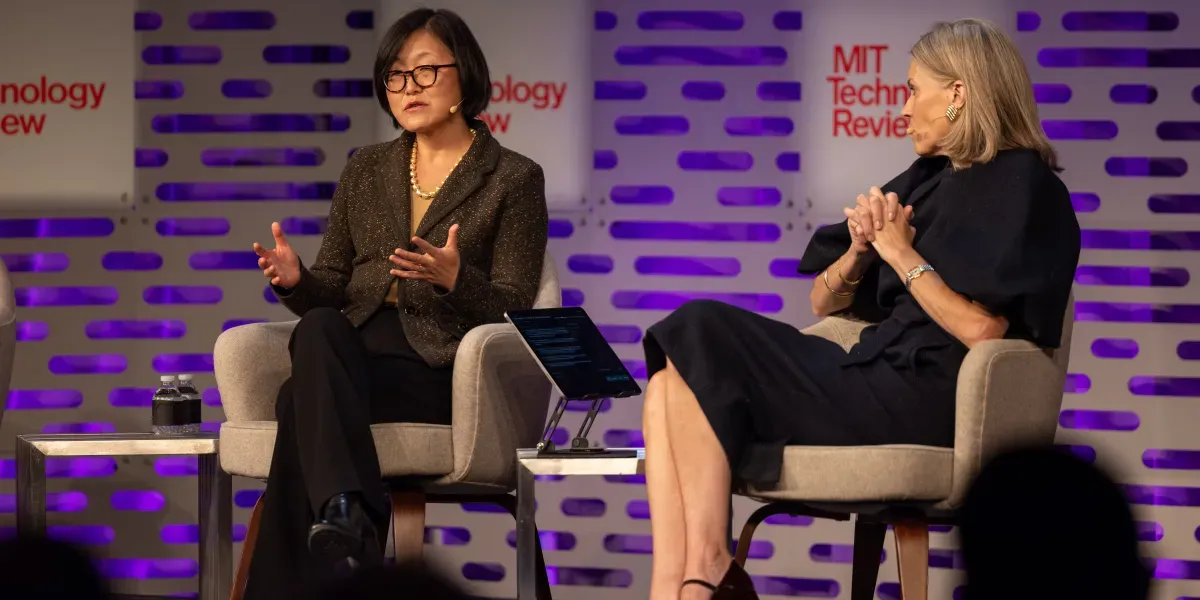
Wang's Vanguard-sponsored session argued that AI scales only when data, engineering, platforms, operating models and governance develop together. The session page does not name any models or platforms, and it gives no architecture details or performance metrics. [1] [7]
Vanguard surveyed 6,686 investors. A third had used AI for financial guidance, and 37% of those users said they had received incorrect or misleading information. Between 80% and 85% said they were uncomfortable with AI acting on their behalf. The survey is Vanguard's own, and its finding that AI raises the value of human advice supports the firm's advisor-centered strategy. [2]
FINRA's 2026 oversight report says autonomous agents may need new controls. Examples include tracking agent actions, limiting what systems agents can access, and having humans monitor outputs. It also names hallucination, bias and cybersecurity as risks. [3] [12]
Vanguard's rollout so far has focused on internal and advisor-facing uses, with AI presented as support for human advisors. Its CIO says 97% of staff use AI tools. Advisor products include client-ready article summaries and Expert Insights, a portfolio-analysis tool that is still in pilot. [4] [5] [8] [9]
investors report frequent AI errors and little comfort with autonomous agents, and FINRA expects agents to have logging and access controls.
Read the full assessment
Implication: regulated firms are likely to scale agents through internal and advisor workflows first, where accuracy measurement matters more than adoption counts.
Sources are gathered; writing the dossier now.
Executive brief
Vanguard is promoting agentic AI as a source of "lasting value" for investors, but its own June 2026 survey found that 80–85% of respondents are uncomfortable with AI acting on their behalf (InvestmentNews). The story itself is a sponsored session page. Jing Wang, who leads Vanguard's Center for AI and Insights, spoke at EmTech Future about building scalable AI in a regulated industry. The page has an abstract and a speaker bio but no metrics, named models or architecture (MIT Technology Review). No independent coverage of the session turned up. The useful context comes from Vanguard's other disclosures and from FINRA's guidance on AI.
What changed and event timeline
FINRA flags AI agents
FINRA's 2026 oversight report adds a generative AI section. It says autonomous agents may need new oversight, such as tracking their actions and restricting their system access ().
CIO describes adoption
Vanguard's CIO, Nitin Tandon, tells Fortune that 97% of staff use AI tools and that he envisions a voice "digital advisor." He also stresses guardrails against hallucinations ().
Vanguard states its scaling philosophy
Vanguard frames AI as built into the "fabric" of its systems to help human advisors, not replace them, for more than 50 million investors ().
To 10-01: EmTech Future held
The conference runs at the MIT Media Lab and online (). Wang's Vanguard-sponsored session is on the agenda ().
Survey published
A Vanguard survey of 6,686 investors finds that 33% have used AI for financial guidance, and 37% of those users say they got incorrect or misleading information ().
Session page posted
MIT Technology Review publishes the sponsored session page about three weeks after the event ().
Capabilities and access
- The session page names no model, version or platform (MIT Technology Review).
- Vanguard's documented tools include:
- Client-Ready Article Summaries, its first client-facing generative AI feature (MyChesCo)
Read the full section
- The session page names no model, version or platform (MIT Technology Review).
- Vanguard's documented tools include:
- Client-Ready Article Summaries, its first client-facing generative AI feature (MyChesCo)
- Expert Insights, a portfolio-analysis tool for advisors, in pilot (Wealth Professional)
- Internal tools include Microsoft Copilot and coding assistants. Vanguard has investments in Writer and Norm Ai (Fortune).
Technical analysis for researchers and developers
- Documented methods: Wang has described reinforcement learning and "next best action" models that send personalized behavioral nudges to investors.
- Not documented: architecture, evaluation methods, benchmarks or results for the agentic systems in the session.
- Implementation pattern implied by FINRA: agents need logged actions, least-privilege access, continuous human monitoring of outputs, and documentation and data controls on model development (Sidley).
Read the full section
- Documented methods: Wang has described reinforcement learning and "next best action" models that send personalized behavioral nudges to investors. She has also described plans to train language models that reflect Vanguard's values (Sama podcast, Dec 2024).
- Not documented: architecture, evaluation methods, benchmarks or results for the agentic systems in the session.
- Implementation pattern implied by FINRA: agents need logged actions, least-privilege access, continuous human monitoring of outputs, and documentation and data controls on model development (Sidley).
Claims and evidence
- The session's central claim is that data, engineering, platforms, operating models and governance must "converge" to scale AI.
- 97% staff AI use; about 2,000 employees in a chatbot pilot. These figures come from an executive interview, not an audit (Fortune).
- AI increases the value investors place on human advice (32% vs 2.9%).
Read the full section
- The session's central claim is that data, engineering, platforms, operating models and governance must "converge" to scale AI. The page offers it without supporting evidence (MIT Technology Review).
- 97% staff AI use; about 2,000 employees in a chatbot pilot. These figures come from an executive interview, not an audit (Fortune).
- AI increases the value investors place on human advice (32% vs 2.9%). This comes from Vanguard's own survey of its own investors, which matters because the result supports Vanguard's advisor-centered strategy (InvestmentNews).
- Corroboration: no independent report on the session itself was found.
Context and prior work
- Wang ran the earlier Center for Analytics and Insights, which focused on machine-learning nudges (Sama).
- Vanguard's marketing team describes a similar progression from generative to agentic AI, with "governed" speed and humans kept in the loop (Adobe).
- Across the industry, firms mostly pilot generative AI for internal summarization and data extraction rather than client advice (Sidley).
Read the full section
- Wang ran the earlier Center for Analytics and Insights, which focused on machine-learning nudges (Sama).
- Vanguard's marketing team describes a similar progression from generative to agentic AI, with "governed" speed and humans kept in the loop (Adobe).
- Across the industry, firms mostly pilot generative AI for internal summarization and data extraction rather than client advice (Sidley).
Limitations, safety and contested findings
- The source is sponsored content with no data behind it (MIT Technology Review).
- Investors are wary of agents. That sits uneasily with the session's pitch for agentic AI.
- Regulators name specific risks: hallucination, bias, cybersecurity and use of AI by bad actors (Sidley).
Read the full section
- The source is sponsored content with no data behind it (MIT Technology Review).
- Investors are wary of agents. In Vanguard's survey, 80–85% were uncomfortable with AI acting on their behalf, and only 5–6% of younger investors reported high trust in AI guidance (InvestmentNews). That sits uneasily with the session's pitch for agentic AI.
- Regulators name specific risks: hallucination, bias, cybersecurity and use of AI by bad actors (Sidley).
Business and practitioner implications
- Client acceptance of autonomous action is low, so internal workflows and advisor-facing tools are the realistic first step.
- Build in agent controls from the start. Action logs, access limits and human monitoring are now regulator expectations in US broker-dealer settings (Sidley).
- With 37% of AI users reporting misleading information, accuracy evaluation matters more than adoption counts (InvestmentNews).
Read the full section
- Start agents internally. Client acceptance of autonomous action is low, so internal workflows and advisor-facing tools are the realistic first step. Vanguard's own rollout follows this order (Vanguard).
- Build in agent controls from the start. Action logs, access limits and human monitoring are now regulator expectations in US broker-dealer settings (Sidley).
- Measure errors. With 37% of AI users reporting misleading information, accuracy evaluation matters more than adoption counts (InvestmentNews).