
SafetyRisk, alignment & guardrails
Eiliko robot maker Energize Lab pledges independent security review and pulls memory features after fleet-wide flaws are exposed
Energize Lab says it will hire an independent security firm, has taken Eiliko's cloud memory and custom avatars offline, and will delete stored data. On the same day, The Verge found customer photos and audio still publicly exposed and researcher SSH access still working.
From the The Verge · AI article of October 22, 2026 and cited sources: In an October statement from its CTO, Energize Lab said it had rotated credentials, closed external backend access and disabled the remote interface that could change robot responses. [1]
SOURCES[1] Eiliko maker says it’s hiring an ‘independent security… theverge.com
 AT Pulse research deskPublished · Updated · 5 min read · AI-assisted analysis
AI-assisted, not human-edited. Methodology Corrections Who owns this site
- What happened
- In an October statement from its CTO, Energize Lab said it had rotated credentials, closed external backend access and disabled the remote interface that could change robot responses. [1]
- Original source
- The Verge · AI article, independent perspective
- Brief by
- AT Pulse research desk AI-assisted; publisher and contact on the desk page
- When
- October 22, 2026 article published
- Covered
- Oct 23 edition
- Evidence
- 8 sources across 8 sites
- 1Eiliko maker says it’s hiring an ‘independent security…theverge.com
- 2TechSpot: Energize Lab left its entire fleet of 68,000…techspot.com
- 3AHA!: Multiple EnergizeLab Eilik / Eiliko Platform…takeonme.org
- 4Silicon Noon: 68,000 robot toys left 13 million private…siliconnoon.com
- 5Malwarebytes: Eiliko robot companion exposes private chats…malwarebytes.com
- 6Gridinsoft: Eiliko Robot Report: Private Chats and…blog.gridinsoft.com
Reach: not measured yet
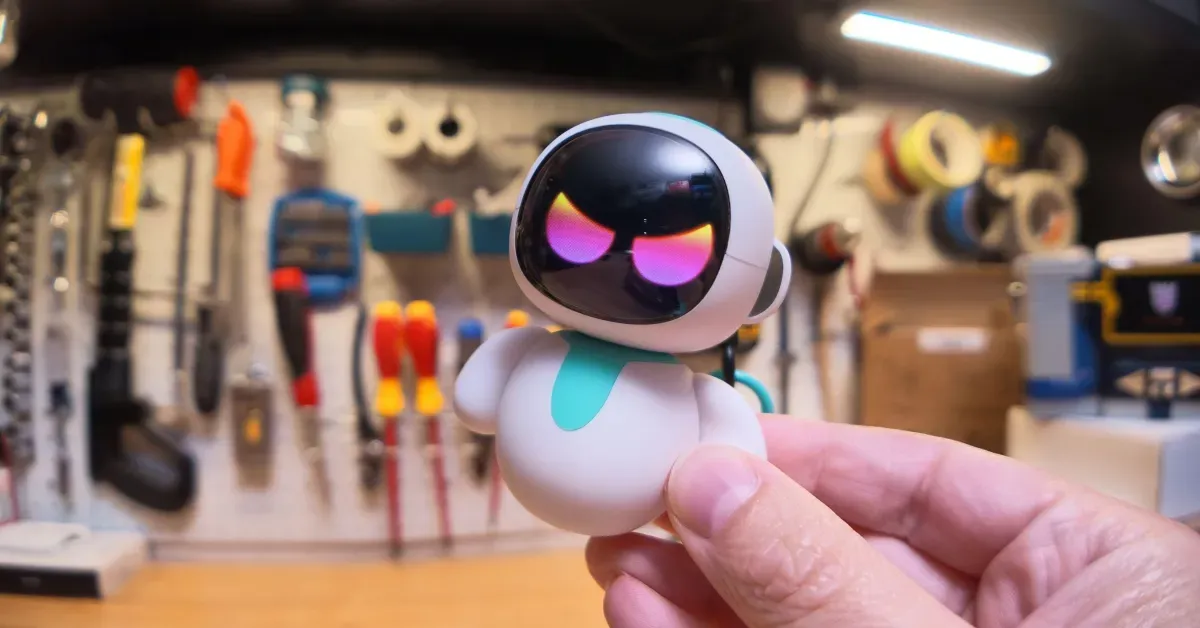
In an October statement from its CTO, Energize Lab said it had rotated credentials, closed external backend access and disabled the remote interface that could change robot responses. When the email arrived, The Verge and researcher Sammy Azdoufal still found photos and audio at unprotected public addresses, and Azdoufal still had full SSH access to the robots. [1]
The flaws were serious and affected the whole platform. They include nine CVEs, among them a path traversal that reads secrets, AI model administration with no authentication, admin APIs with no authorization checks, default SSH credentials and unsigned firmware downloaded over HTTP. Together they affect roughly 68,000 robots and millions of stored conversations. [2] [3] [4]
The cloud long-term memory feature became an attack surface. Editable user profiles were fed back as trusted context, so prompt injections persisted across conversations. Endpoints also skipped ownership checks, so one account could read other families' records. A test robot was made to spread falsehoods, invent personal details and produce sexually explicit, coercive dialogue. [3] [6] [8]
Disclosure stalled for weeks. According to the advisory, the company never answered the researcher. A September 14 retest found 42 of 44 issues still exploitable, a 72-hour deadline expired on September 18, and details went public on October 15. [3]
Cloud-stored LLM memory, missing per-record authorization and default credentials exposed families' data across an entire device fleet.
Read the full assessment
For builders and buyers, memory profiles should be treated as untrusted input, and outside testing should confirm fixes before devices are trusted again.
Executive brief
Energize Lab, the maker of the Eiliko AI robot charm, says it has "closed all external access" to its backend. On the day the company sent that statement, The Verge and researcher Sammy Azdoufal found customers' photos and audio recordings still sitting at unprotected public web addresses, and Azdoufal said he still had full SSH access to the robots (The Verge). The company broke more than a month of silence on October 21–22. It said it will hire an independent security firm, has taken its memory and custom-avatar features offline, and will delete stored conversations and profiles. Reporting puts the exposure at about 13 million conversations from roughly 68,000 robots (TechSpot).
What changed and event timeline
- Late Aug 2026
Vendor ignores first contact
Azdoufal started trying to reach Energize Lab after studying the platform from June to August. According to his advisory, the company never replied at any point in the disclosure process ().
Retest and deadline pass
A third retest found 42 of 44 issues still exploitable. A 72-hour deadline set on September 15 expired on September 18 with no response from the vendor ().
Public disclosure
AHA published nine CVEs plus eight further findings. Coverage of The Verge's investigation reported about 13 million exposed conversations from about 68,000 robots (;).
Security press amplifies
Malwarebytes advised owners to take the devices off Wi-Fi. TechSpot reported weak admin passwords, conversations stored on Alibaba Cloud, and only automated replies from the company (;).
Company responds; flaws persist
The CTO's statement lists credential rotation, closed backend access and features taken offline. The Verge found exposed media and continuing SSH access at the time of the email ().
Capabilities and access
- Product: Eiliko is a bag-charm robot that holds AI conversations. Both are now offline, and the app offers built-in avatars only (The Verge).
- Affected versions: Android app 3.0.0, Windows app 3.1.2, robot firmware v2.1_20260617182218_release, and AI Station firmware (AHA).
- Hardware: devices built on the Rockchip RK3562.
Read the full section
- Product: Eiliko is a bag-charm robot that holds AI conversations. It had a cloud-based "long-term memory" that turned chats into user profiles, plus custom avatars. Both are now offline, and the app offers built-in avatars only (The Verge).
- Affected versions: Android app 3.0.0, Windows app 3.1.2, robot firmware v2.1_20260617182218_release, and AI Station firmware (AHA).
- Hardware: devices built on the Rockchip RK3562.
- Language model: the reviewed sources do not name the specific model.
Technical analysis for researchers and developers
- Stack: FastAPI inference services, NestJS middleware and authentication services, and legacy PHP telemetry (AHA).
- Most severe CVEs:
- CVE-2026-105037 (CVSS 9.9): a path traversal that reads secrets.
Read the full section
- Stack: FastAPI inference services, NestJS middleware and authentication services, and legacy PHP telemetry (AHA).
- Most severe CVEs:
- CVE-2026-105037 (CVSS 9.9): a path traversal that reads secrets.
- CVE-2026-105038 (9.8): AI model administration with no authentication.
- CVE-2026-105039 (9.6): admin APIs with no authorization checks.
- CVE-2026-105033: default SSH credentials.
- CVE-2026-105036: firmware downloaded unsigned over HTTP.
- Memory as an attack surface: an editable cloud profile was treated as trusted context for future replies, and prompt injection persisted in user memory (Gridinsoft; AHA).
- Missing ownership checks: endpoints did not verify that a record belonged to the requesting device, so one account could read other families' records.
Claims and evidence
- Remediation: Energize Lab says it has rotated credentials, closed external access and disabled the remote interface that changed robot responses.
- Scale: the figures depend on the source.
- About 13 million conversations and more than 31,000 child profiles, per the Verge-based coverage (TechSpot).
Read the full section
- Remediation: Energize Lab says it has rotated credentials, closed external access and disabled the remote interface that changed robot responses. This is the company's own account. The Verge contradicted it on the same day: media URLs were still unprotected and SSH access still worked (The Verge).
- Scale: the figures depend on the source.
- About 13 million conversations and more than 31,000 child profiles, per the Verge-based coverage (TechSpot).
- 9,124,055 conversations and 32,228 child profiles in the disclosed dataset (Gridinsoft).
- Fixed vs open issues: AHA reports 42 of 44 issues still open on September 14. Gridinsoft reports 32 of 40 still open on October 13.
- Corroboration: all of these figures trace back to Azdoufal's work. No separate independent check of them appears in the reviewed sources.
Context and prior work
The product line includes the earlier Eilik desk robot, and the advisory covers both the Eilik and Eiliko platforms (AHA). Cybernews separately reported that Eilik had exposed more than 8 million chats (Cybernews). This case fits a familiar connected-toy pattern: data processed in the cloud, a privacy policy promising deletion that did not happen, and a vendor that did not answer researchers.
Limitations, safety and contested findings
- Manipulated outputs: Azdoufal made a test robot claim the Earth is flat, invent personal details, and deliver sexually explicit and coercive dialogue (Dexerto; Gridinsoft).
- Broken deletion promise: photos and audio stayed online despite a stated policy of deleting them immediately after processing (Malwarebytes).
- Plans to resume collection: the company says memory features will return once a security review clears them, so the halt on data collection is conditional (The Verge).
Read the full section
- Manipulated outputs: Azdoufal made a test robot claim the Earth is flat, invent personal details, and deliver sexually explicit and coercive dialogue (Dexerto; Gridinsoft).
- Broken deletion promise: photos and audio stayed online despite a stated policy of deleting them immediately after processing (Malwarebytes).
- Plans to resume collection: the company says memory features will return once a security review clears them, so the halt on data collection is conditional (The Verge).
- Conflicting numbers: the counts of conversations and of open issues differ by source, as noted under Claims and evidence.
Business and practitioner implications
- Treat memory as untrusted input.
- Ignoring researchers for about seven weeks turned a private fix into a public breach.
- Verify fixes, not statements. Anyone procuring AI toys or companion devices should require signed firmware, encrypted transport and an outside audit of retention claims.
Read the full section
- Treat memory as untrusted input. Profiles generated by an LLM need per-object authorization, integrity checks and prompt-injection defenses before they are fed back as context (AHA).
- Disclosure readiness matters. Ignoring researchers for about seven weeks turned a private fix into a public breach. A monitored security inbox (Energize Lab has now set up security@energizelab.com) is the minimum.
- Verify fixes, not statements. Anyone procuring AI toys or companion devices should require signed firmware, encrypted transport and an outside audit of retention claims.
- Owners: Malwarebytes advises taking devices off Wi-Fi until the fixes are confirmed (Malwarebytes).
The source trail.
Sources (8)
Eiliko maker says it’s hiring an ‘independent security firm’ after Verge report on its insecure robots
Article text retrieved; extracted text may omit tables or interactive elements.
theverge.com