
ResearchPapers, evidence & method
Jack Clark tells the IMF the singularity has arrived, citing GPT-6-Astra's 49-of-50 score on a new theoretical-physics benchmark
At the IMF Annual Meetings in Bangkok, Anthropic co-founder Jack Clark said the singularity has arrived. He pointed to TheoPhysEval, where GPT-6-Astra solved 49 of 50 unpublished physics problems, and to a scenario putting 2030 US GDP at $44.4 trillion.
From the Import AI article of October 19, 2026 and cited sources: TheoPhysEval is a public set of 50 unpublished research-level physics problems. [2] [4] [9]
SOURCES[2] TheoPhysEval, arXiv HTML arxiv.org[4] TheoPhysEval, arXiv abstract arxiv.org[9] TheoPhysEval dataset, Hugging Face huggingface.co
 AT Pulse research deskPublished · Updated · 4 min read · AI-assisted analysis
AI-assisted, not human-edited. Methodology Corrections Who owns this site
- What happened
- TheoPhysEval is a public set of 50 unpublished research-level physics problems. [2] [4] [9]
- Original source
- Import AI article, independent perspective
- Brief by
- AT Pulse research desk AI-assisted; publisher and contact on the desk page
- Studies
- arXiv 2610.16733 (Oct 2026) [4] date from arXiv ID
- When
- October 19, 2026 article published
- Covered
- Oct 20 edition
- Evidence
- 12 sources across 9 sites
Reach: not measured yet
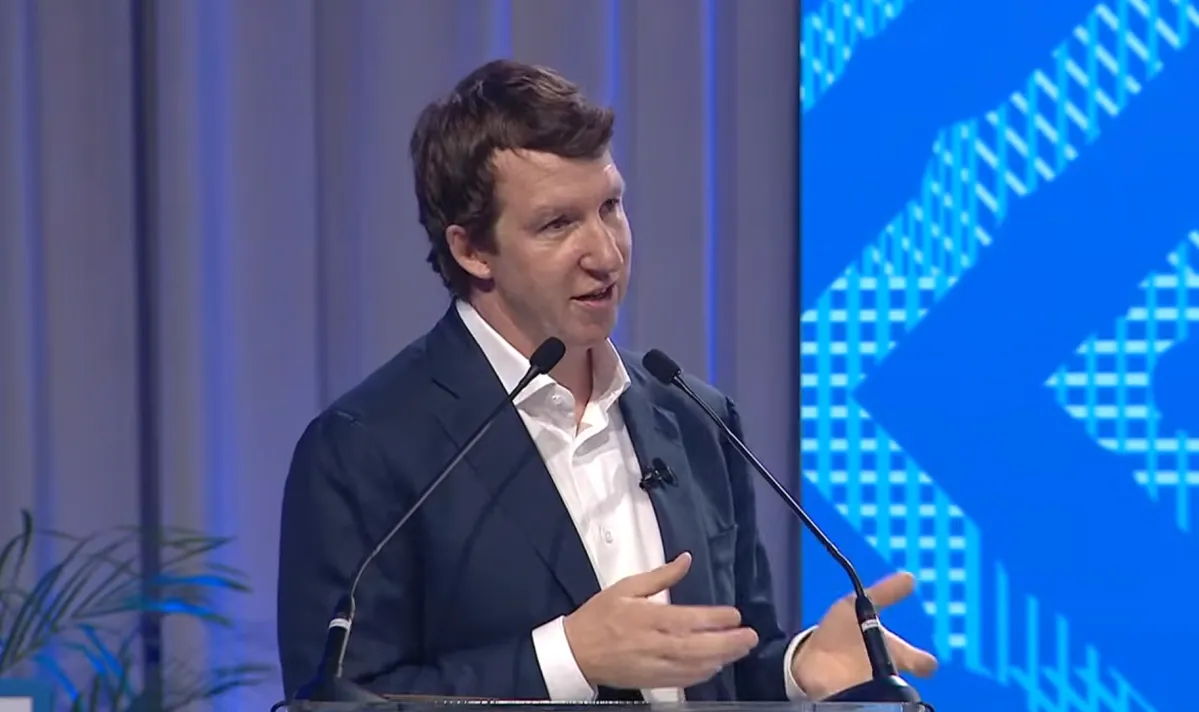
TheoPhysEval is a public set of 50 unpublished research-level physics problems. With literature search, GPT-6-Astra running in Codex solved 49, and 46 without search. Claude Opus 5.5 in Claude Code solved 46 on both tracks. The best agent cost under $3 per problem, and several of Astra's apparent misses turned out to be errors in the experts' own reference answers. [2] [4] [9]
The $44.4 trillion GDP figure Clark presented is the most extreme of three Anthropic scenarios. The other two are $34.1 trillion and $36.3 trillion, and none carried a probability. The same model projects labor's share of income falling from 60% to 45.2%. [1] [6] [7] [11]
Some of the lecture's other claims don't match the reviewed sources. No FrontierMath result of 94% appears, and aggregator scores vary by version and tier. Claims that AI solved Navier–Stokes and the Jacobian Conjecture are uncorroborated. On genuinely open problems, Astra solved only 2 of 68 FrontierMath Erdős problems. [1] [3] [10] [12]
The physics result rests on a public paper and dataset. It suggests agent harnesses can handle routine research calculations for a few dollars per problem.
Read the full assessment
The economic claims are weaker: the GDP figure is a scenario, and several cited breakthroughs lack corroboration.
Executive brief
In TheoPhysEval, a new test of 50 unpublished theoretical-physics problems, OpenAI's GPT-6-Astra solved 49. Several of its "wrong" answers turned out to be right once the experts found subtle errors in their own reference solutions (arXiv). Anthropic co-founder Jack Clark used that result as the centrepiece of his IMF Per Jacobsson Lecture in Bangkok, where he said the singularity "is here." He also cited an Anthropic model in which US GDP reaches $44 trillion by 2030 (Import AI 477). The physics result has a public paper and dataset. The GDP figure is the most extreme of three Anthropic scenarios.
What changed and event timeline
Astra sets Epoch records
Epoch AI reports that GPT-6 Astra set new records on its capability index and math benchmarks. On FrontierMath Erdős, a set of 68 unsolved problems, it solved 2 (3%) ().
TheoPhysEval posted
A 33-author team posts 50 unpublished research-level physics problems and tests five agent setups. The best agent scores 98% at under $3 per problem ().
Economists amplify
Alex Tabarrok highlights Suvrat Raju's account that Astra pushed back against flawed expert answer keys and was proved right ().
IMF lecture
Clark delivers "Inside the Event Horizon" at the IMF Annual Meetings in Bangkok, focused on AI-driven science, growth and restraint (;).
Text published, scrutiny follows
Critics point out that the $44.4T slide was one of three scenarios and carried no probability ().
Capabilities and access
Read the full section
- GPT-6-Astra in Codex: 49/50 on TheoPhysEval with web search, 46/50 without (arXiv).
- Claude Opus 5.5 in Claude Code CLI: 46/50 on both tracks (arXiv). On Humanity's Last Exam it scores 67.7% with tools and 64.4% without (BenchLM).
- Others on TheoPhysEval: Gemini 3.8 Flash 34/50, DeepSeek-V4.1-Flash 27/50, GLM 5.3 21/50 with search (arXiv).
- Dataset: public on Hugging Face.
Technical analysis for researchers and developers
- Grading: answers come in many symbolic forms, so the authors converted them to numbers by plugging in values for both relevant and irrelevant quantities.
- Two tracks: a "realistic" track with literature search and scripting, and an "isolated" track without search. Scores barely changed between them.
- Efficiency: Astra used 37.41M tokens on the realistic track; Opus used 211.18M (arXiv).
Read the full section
- Grading: answers come in many symbolic forms, so the authors converted them to numbers by plugging in values for both relevant and irrelevant quantities. This allows automated checking and makes guessing hard (arXiv).
- Two tracks: a "realistic" track with literature search and scripting, and an "isolated" track without search. Scores barely changed between them. The authors read this as the models having memorized large parts of the physics literature (arXiv).
- Efficiency: Astra used 37.41M tokens on the realistic track; Opus used 211.18M (arXiv).
- Reproducibility: each agent was run once. The score depends on the agent harness as well as the model.
Claims and evidence
Read the full section
- TheoPhysEval 98% and the answer-key corrections: documented in the paper (arXiv). Clark says Raju described Astra's early score as "late eighties" with Opus "close behind." In the final results Opus scored 92% to Astra's 98%.
- HLE 67.7%, up from about 8% at launch: the 67.7% figure is with tools and matches leaderboards (BenchLM).
- FrontierMath "94%": not matched in the reviewed sources. Aggregator figures depend on the version and tier: 100% (GPT-6.1 Sol) on v2 Tier 4, 84.4% on Tiers 1–3 (BenchLM).
- Anthropic researchers write about 10× more code, and AI cracked Navier–Stokes and the Jacobian Conjecture: Clark asserts both; the reviewed sources do not corroborate either (Import AI 477).
- $44.4T GDP: an internal Anthropic scenario, discussed below (36Kr).
Context and prior work
Clark builds on Vernor Vinge's 1993 essay on the singularity and on the economics finding that "ideas are getting harder to find" (Import AI 477). Benchmarks have been saturating fast: Epoch reports that every FrontierMath Tier 4 problem has now been solved by AI (Epoch on X). Genuinely open problems are still much harder: 3% on FrontierMath Erdős (Epoch).
Limitations, safety and contested findings
- The TheoPhysEval authors describe their problems as "turn-the-crank" research, not breakthroughs.
- The GDP model has three scenarios: modest $34.1T, substantial $36.3T, extreme $44.4T. Only the extreme one was headlined (36Kr).
- Clark himself flags bio and cyber misuse and loss of control from AI-driven AI research.
Read the full section
- The TheoPhysEval authors describe their problems as "turn-the-crank" research, not breakthroughs. The benchmark was not built to be adversarial, and some problems involved information gaps between the agent and the problem's author (arXiv).
- The GDP model has three scenarios: modest $34.1T, substantial $36.3T, extreme $44.4T. Only the extreme one was headlined (36Kr). The fine print projects labor's share of income falling from 60% to 45.2% (Vocal).
- Clark himself flags bio and cyber misuse and loss of control from AI-driven AI research.
Business and practitioner implications
- Cost: research-grade calculation now costs a few dollars per problem with an agent harness. Benchmark against Astra and Opus on your own domain problems.
- Answer keys: expert-written references can be wrong. Investigate disputes between model and key before scoring.
- Verification is the bottleneck: cheap generation pushes the constraint to verification, lab capacity and clinical throughput (Vocal; Import AI 477).
Read the full section
- Cost: research-grade calculation now costs a few dollars per problem with an agent harness. Benchmark against Astra and Opus on your own domain problems.
- Answer keys: expert-written references can be wrong. Investigate disputes between model and key before scoring.
- Verification is the bottleneck: cheap generation pushes the constraint to verification, lab capacity and clinical throughput (Vocal; Import AI 477).
- Planning: treat $44.4T as a stress-test scenario, not a forecast.