
AgentsAutonomy & tool use
Replika founder Eugenia Kuyda opens Wabi 2.0, a multithreaded AI agent messenger, to all users
Eugenia Kuyda, who pitched an AI concierge at Disrupt in 2014, has opened Wabi 2.0 to everyone: a free messenger that gives each task its own agent thread with generated mini apps, and lets users share threads with friends and family.
From the TechCrunch AI article of October 19, 2026 and cited sources: Wabi 2.0 is now free on iOS, Android and Mac with no waitlist. [1] [4] [5] [6]
SOURCES[1] TechCrunch: Replika's founder built the AI assistant she… techcrunch.com[4] RuntimeWire: Wabi recasts its mini-app platform as an… runtimewire.com[5] Unite.AI: Wabi Opens Its Personal AI Assistant on iOS… unite.ai
 AT Pulse research deskPublished · Updated · 5 min read · AI-assisted analysis
AI-assisted, not human-edited. Methodology Corrections Who owns this site
- Original source
- TechCrunch AI article, independent perspective
- Brief by
- AT Pulse research desk AI-assisted; publisher and contact on the desk page
- When
- October 19, 2026 article published
- Covered
- Oct 20 edition
- Evidence
- 8 sources across 6 sites
- 1TechCrunch: Replika's founder built the AI assistant she…techcrunch.com
- 2TechCrunch: Startup Battlefield Companies: Where Are They…techcrunch.com
- 3TechCrunch: Replika founder raises $20M pre-seed for Wabitechcrunch.com
- 4RuntimeWire: Wabi recasts its mini-app platform as an…runtimewire.com
- 5Unite.AI: Wabi Opens Its Personal AI Assistant on iOS…unite.ai
- 6Gaming Ideology: Wabi 2.0 Shifts From App Builder to AI…gamingideology.com
Reach: not measured yet
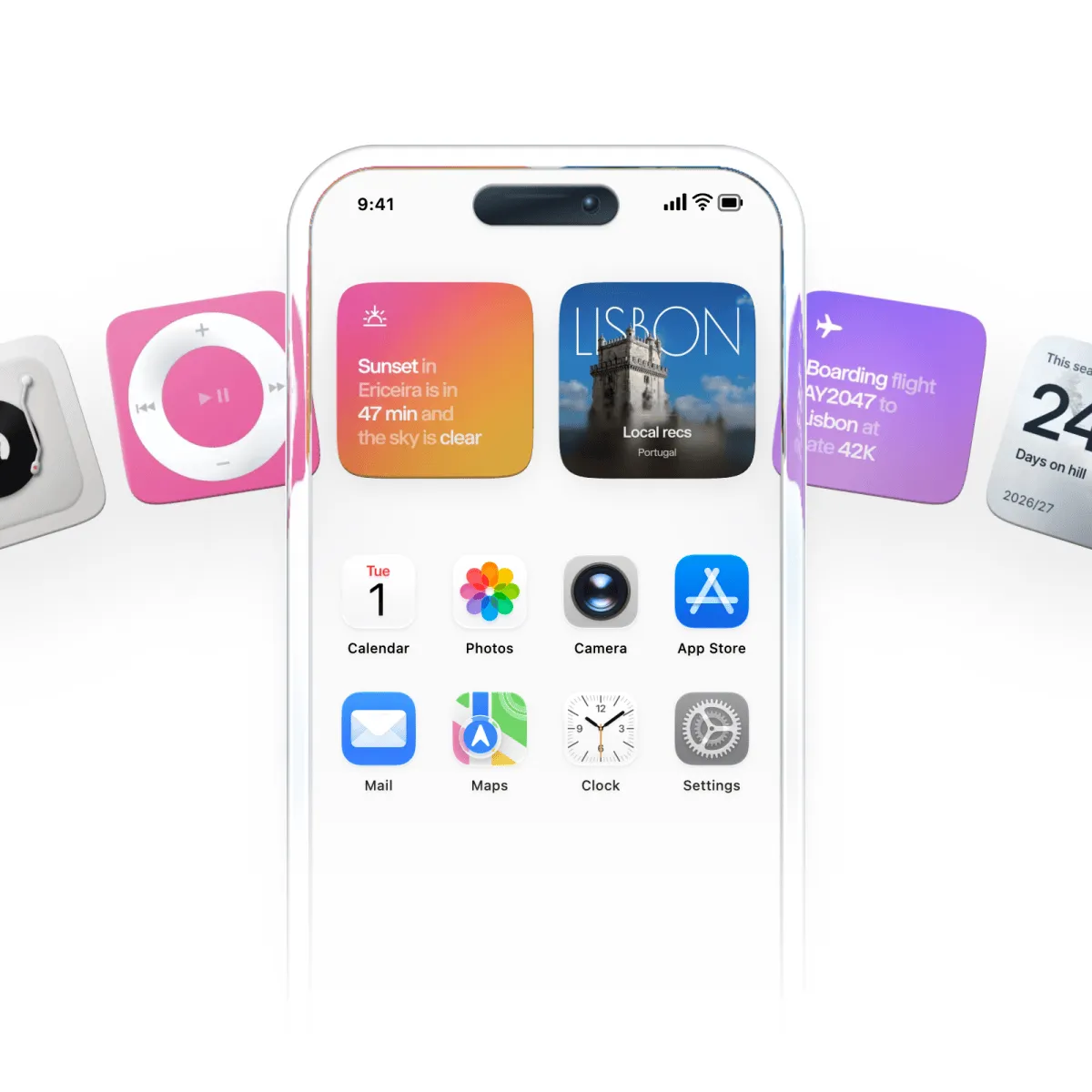
Wabi 2.0 is now free on iOS, Android and Mac with no waitlist. Its October 19, 2026 opening followed an invite-only relaunch in late September. Each goal gets its own agent thread, and each thread holds generated apps that stay in place and can pull in live data such as Apple Health. After a user connects email, the agent sets up its own starter threads. [1] [4] [5] [6]
Kuyda says separate threads keep context from building up, which she sees as a weakness of single-chat assistants like Muse and Instinct. Research supports the underlying problem: Chroma found that all 18 models it tested got worse as input length grew. No one has measured whether Wabi's design actually avoids that decline. [1] [7]
Shared threads raise new privacy questions. Users choose which data to connect, such as email, calendar, contacts, location, photos, health data and even bank details. Access is limited to a single chat, everyone in the chat can see when someone's data is requested, and Wabi asks for approval before significant actions. These limits reduce the risk of one person's information reaching others in a group, but they don't remove it. [1] [5]
Research shows models get worse as inputs grow, so separate task threads are a reasonable design for assistant builders to test. It is still unknown whether Wabi's version improves reliability or keeps personal data safe in shared threads.
Executive brief
Wabi, Eugenia Kuyda's startup, is trying a personal AI agent built around shared group chats. Kuyda pitched an AI concierge called IO at TechCrunch Disrupt Europe in 2014. On October 19, 2026 she released Wabi 2.0 to all users. It's a free messenger that splits tasks into separate threads, builds small apps for each thread automatically, and lets people share threads with friends and family. Kuyda says the separate threads keep context from piling up, which she thinks is a weakness of single-chat assistants like Muse and Instinct (TechCrunch). No outside group has tested any of these claims yet.
Read the full section
Wabi, Eugenia Kuyda's startup, is trying a personal AI agent built around shared group chats. Kuyda pitched an AI concierge called IO at TechCrunch Disrupt Europe in 2014. That project later became Replika. On October 19, 2026 she released Wabi 2.0 to all users. It's a free messenger that splits tasks into separate threads, builds small apps for each thread automatically, and lets people share threads with friends and family. Kuyda says the separate threads keep context from piling up, which she thinks is a weakness of single-chat assistants like Muse and Instinct (TechCrunch). No outside group has tested any of these claims yet.
What changed and event timeline
IO pitched at Disrupt Europe
At Startup Battlefield in London, Kuyda's team demoed IO, a chat service for restaurant recommendations. The team renamed itself Luka, moved to San Francisco and joined Y Combinator's Winter 2015 batch ().
$20M pre-seed for Wabi
Wabi raised $20M as a "YouTube for apps": users made mini apps from prompts and shared them. Angel investors included Naval Ravikant, Garry Tan and Sarah Guo ().
Wabi 2.0, invite-only
Wabi relaunched as an agentic messenger with access by invitation through iOS (;).
Android and Mac
Android support was announced October 6 and a Mac app followed on October 14 ().
Open to everyone
The waitlist ended on iOS, Android and Mac. The app is free and has no business model yet (;).
Capabilities and access
- Product: Wabi 2.0, free on iOS, Android and Mac (Unite.AI).
- Underlying model: not disclosed for 2.0. In 2025, Wabi let users choose a model such as ChatGPT or Gemini (TechCrunch, 2025).
- Setup: once email is connected, the agent creates its own starter threads and apps (TechCrunch).
Read the full section
- Product: Wabi 2.0, free on iOS, Android and Mac (Unite.AI).
- Underlying model: not disclosed for 2.0. In 2025, Wabi let users choose a model such as ChatGPT or Gemini (TechCrunch, 2025).
- Setup: once email is connected, the agent creates its own starter threads and apps (TechCrunch).
- Data access: users pick which connections to grant, including email, calendar, contacts, location, photos and health data. Wabi asks for approval before significant actions (Unite.AI).
Technical analysis for researchers and developers
- Design: each goal gets its own agent thread, and each thread holds generated apps that persist.
- Why threads: keeping context per thread is a sensible response to known long-context problems.
- Permissions: shared threads limit personal-data access to that one chat, and everyone in the chat can see when someone's data is requested (TechCrunch).
Read the full section
- Design: each goal gets its own agent thread, and each thread holds generated apps that persist. One outlet calls these "durable UI" components, filled with live data such as Apple Health (Gaming Ideology).
- Why threads: keeping context per thread is a sensible response to known long-context problems. Chroma tested 18 models and found that all of them got worse as input length grew (Chroma Research).
- Permissions: shared threads limit personal-data access to that one chat, and everyone in the chat can see when someone's data is requested (TechCrunch).
- Not published: benchmarks, model details, how memory works, and an API. The system can't be reproduced from public information.
Claims and evidence
- Multithreading avoids single-thread context decay. This is Kuyda's claim (TechCrunch).
- "No one has cracked multiplayer." This is Kuyda's opinion (TechCrunch).
- SOC 2 compliance and mostly US data storage. Both are company statements. No audit report has been published (TechCrunch).
Read the full section
- Multithreading avoids single-thread context decay. This is Kuyda's claim (TechCrunch). General research supports the problem (Chroma), but no one has measured whether Wabi actually fixes it.
- "No one has cracked multiplayer." This is Kuyda's opinion (TechCrunch).
- SOC 2 compliance and mostly US data storage. Both are company statements. No audit report has been published (TechCrunch).
- Who led the funding round, and Replika's user count. Reports conflict:
- Lead investor: Unite.AI says Andreessen Horowitz (Unite.AI) and Gaming Ideology says Kleiner Perkins (Gaming Ideology). TechCrunch in 2025 lists a16z's Anish Acharya among the investors (TechCrunch, 2025).
- Replika users: TechCrunch said 35M in 2025 and Unite.AI says 40M.
Context and prior work
- Origins: Luka launched a restaurant-recommendation iOS app in San Francisco in early 2015 and later became Replika (TechCrunch, 2015; Wikipedia).
- Sources disagree on IO's history: TechCrunch now calls IO "Luka's first product," while its 2015 piece says IO was renamed Luka.
- Competitors: Muse and Instinct, both single-thread personal assistants (TechCrunch).
Read the full section
- Origins: Luka launched a restaurant-recommendation iOS app in San Francisco in early 2015 and later became Replika (TechCrunch, 2015; Wikipedia).
- Sources disagree on IO's history: TechCrunch now calls IO "Luka's first product," while its 2015 piece says IO was renamed Luka.
- Competitors: Muse and Instinct, both single-thread personal assistants (TechCrunch).
Limitations, safety and contested findings
- Sensitive data in group chats: users can share email, calendar and even bank details inside a shared thread.
- Long conversations: AI researchers interviewed by TechCrunch say long conversations make chatbots more likely to hallucinate and slip past safety guardrails.
- Independent testing: none on reliability, accuracy or how safely Wabi takes actions.
Read the full section
- Sensitive data in group chats: users can share email, calendar and even bank details inside a shared thread. This makes it easier for one person's information to reach others in the chat, though per-chat limits and visible data requests reduce the risk (TechCrunch).
- Long conversations: AI researchers interviewed by TechCrunch say long conversations make chatbots more likely to hallucinate and slip past safety guardrails. That supports the case for threads, but shared threads can still grow long.
- Independent testing: none on reliability, accuracy or how safely Wabi takes actions.
- Funding facts: the lead investor remains disputed (see Claims and evidence).
Business and practitioner implications
- Product pattern: separate task threads with persistent generated apps, instead of one endless chat, is a design other assistant builders can test against.
- Group features: adding other people may help with distribution and repeat use. RuntimeWire frames the pivot in those terms (RuntimeWire).
- Commercial risk: there's no revenue model yet, and Kuyda says Wabi is in talks to raise more money (TechCrunch).
Read the full section
- Product pattern: separate task threads with persistent generated apps, instead of one endless chat, is a design other assistant builders can test against.
- Group features: adding other people may help with distribution and repeat use. RuntimeWire frames the pivot in those terms (RuntimeWire).
- Commercial risk: there's no revenue model yet, and Kuyda says Wabi is in talks to raise more money (TechCrunch).
- For enterprise or regulated users: ask for the SOC 2 report, data-residency details and documentation of action approvals before connecting financial or health data.