
InfrastructureCompute, chips & cloud
AWS releases TorchNeuron in open beta so PyTorch code can run natively on Trainium chips
AWS's TorchNeuron, an Apache 2.0 PyTorch backend now in public beta, lets existing PyTorch models target Trainium by switching the device setting, replacing the older PyTorch/XLA path. AWS is also proposing upstream PyTorch changes to remove chip-specific code.
From the TechCrunch AI article of October 19, 2026 and cited sources: TorchNeuron plugs into PyTorch as a device through the PrivateUse1 mechanism, so the dispatcher sends operators straight to Neuron implementations without the XLA lazy-tensor layer. [8] [6] [4] [5]
SOURCES[8] AWS Neuron docs: What is TorchNeuron? awsdocs-neuron.readthedocs-hosted.com[6] AWS Neuron: PyTorch/XLA to TorchNeuron transition… awsdocs-neuron.readthedocs-hosted.com[4] GitHub: aws-neuron/torch-neuronx github.com
 AT Pulse research deskPublished · Updated · 5 min read · AI-assisted analysis
AI-assisted, not human-edited. Methodology Corrections Who owns this site
- What happened
- TorchNeuron plugs into PyTorch as a device through the PrivateUse1 mechanism, so the dispatcher sends operators straight to Neuron implementations without the XLA lazy-tensor layer. [8] [6] [4] [5]
- Original source
- TechCrunch AI article, independent perspective
- Brief by
- AT Pulse research desk AI-assisted; publisher and contact on the desk page
- When
- October 19, 2026 article published
- Covered
- Oct 20 edition
- Evidence
- 9 sources across 7 sites
- 1Amazon is taking its biggest shot at Nvidia yet with new…techcrunch.com
- 2Hugging Face: TorchNeuron, running HF models on AWS Trainiumhuggingface.co
- 3About Amazon: TorchNeuron runs PyTorch on AWS Trainium chipsaboutamazon.com
- 4GitHub: aws-neuron/torch-neuronxgithub.com
- 5AWS Neuron docs: PyTorch support overviewawsdocs-neuron.readthedocs-hosted.com
- 6AWS Neuron: PyTorch/XLA to TorchNeuron transition…awsdocs-neuron.readthedocs-hosted.com
Reach: not measured yet
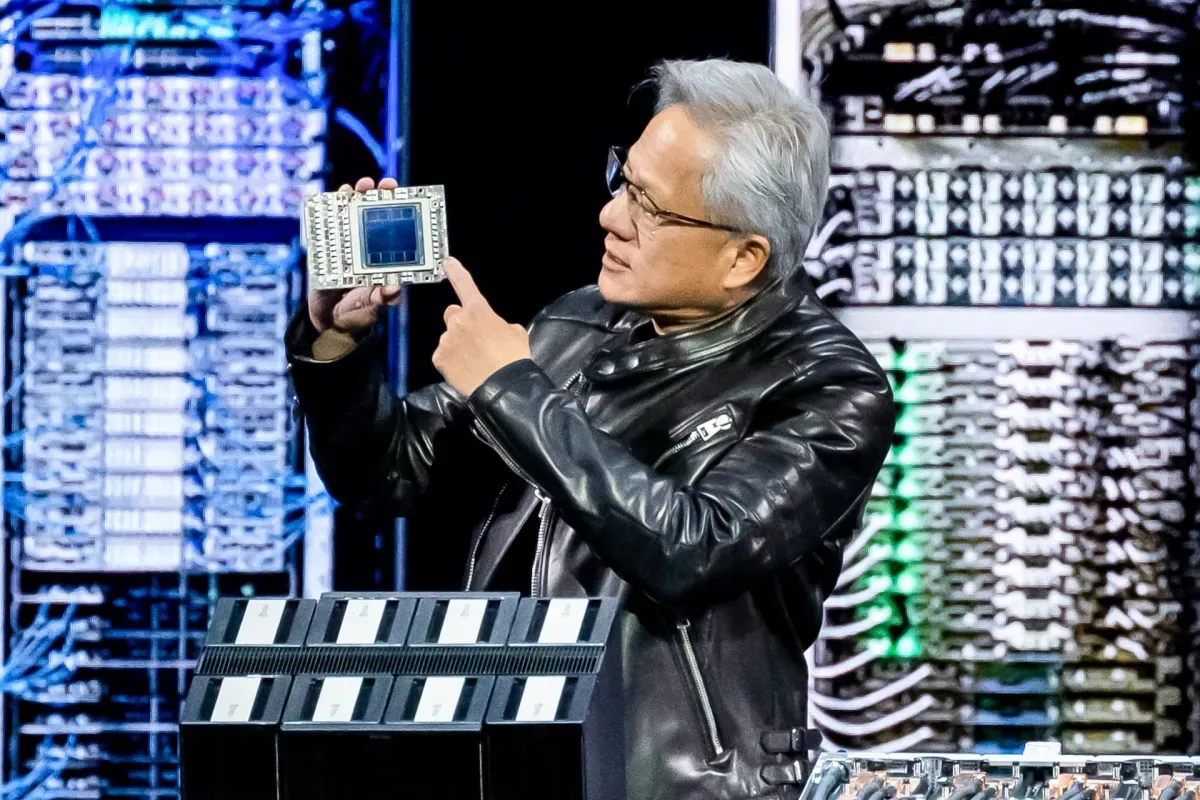
TorchNeuron plugs into PyTorch as a device through the PrivateUse1 mechanism, so the dispatcher sends operators straight to Neuron implementations without the XLA lazy-tensor layer. It supports eager mode and torch.compile, runs only on Trn2 and Trn3 instances, and replaces PyTorch/XLA, which ends with PyTorch 2.9. [8] [6] [4] [5]
The beta has clear limits. torch.compile does not handle dynamic shapes or symbolic integers. Operators without Neuron support fall back to the CPU, which can quietly slow a job. Each operation also pays a compilation cost the first time it runs. Hugging Face integrations require static shapes, and some diffusion pipelines are still being made compatible. [4] [2]
Hugging Face, a launch partner, reports that 89% of the top 100 text-generation architectures now run on Trainium, up from 46% under Optimum Neuron. It also added native Trainium paths to its libraries on launch day. [2]
Strategically, AWS is going after CUDA's position as PyTorch's default and pitching one chip for both training and inference against Nvidia-focused neoclouds. PyTorch could already target AMD GPUs and Apple silicon with a configuration change, so AWS is not the first to offer this kind of path. [1] [3]
The evidence shows a working beta with documented limits. The likely implication is that moving off Nvidia GPUs could get cheaper for static-shape workloads. Any price-performance gains remain unproven until teams benchmark their own jobs.
Executive brief
AWS says the PyTorch code most AI teams already have can now run on its Trainium chips by changing one device setting. The tool, TorchNeuron, is open source under Apache 2.0 and is in public beta. AWS is also sending changes to the main PyTorch project to strip out code tied to specific chips, which goes after the software default that favours Nvidia's CUDA (TechCrunch; About Amazon). The tool is new but not finished. It does not handle dynamic shapes, and the cost savings AWS cites come from AWS and its customers, with no outside benchmark (GitHub README).
What changed and event timeline
TorchNeuron unveiled at re:Invent
AWS announced a native PyTorch backend for Trainium that does not use XLA. Its first version shipped in Neuron SDK 2.27.0 alongside Trainium3 support ().
PyTorch/XLA end-of-line set
AWS said PyTorch 2.9 would be the last Neuron release built on PyTorch/XLA. From PyTorch 2.10 onward, support moves to TorchNeuron ().
Launch publicity
AWS described the tool as a one-line change with no rewrite. Colin Brace of AWS framed it as ending developer lock-in (;).
Open-source public beta
The code was released at PyTorch Conference North America and installs with
pip install torch-neuronx. Hugging Face added native Trainium paths to its libraries the same day ().
Capabilities and access
- Package:
torch-neuronx(TorchNeuron), in beta in Neuron 2.33. It targets PyTorch 2.14.0 on Python 3.12–3.14 (GitHub; Neuron docs). - Hardware: Trn2 and Trn3 instances only. FP8 and MXFP8 need Trainium3.
- Usage:
model.to("neuron"),torch.compile(backend="neuron"), and Hugging Face'sdevice_map="neuron".
Read the full section
- Package:
torch-neuronx(TorchNeuron), in beta in Neuron 2.33. It targets PyTorch 2.14.0 on Python 3.12–3.14 (GitHub; Neuron docs). - Hardware: Trn2 and Trn3 instances only. FP8 and MXFP8 need Trainium3.
- Usage:
model.to("neuron"),torch.compile(backend="neuron"), and Hugging Face'sdevice_map="neuron". - Distributed training: FSDP v1/v2, HSDP, DTensor, tensor and pipeline parallelism, and TorchTitan (SiliconANGLE).
Technical analysis for researchers and developers
- How it plugs in: TorchNeuron registers with PyTorch as a device through its
PrivateUse1mechanism. - Eager mode: each operator compiles to its own NEFF executable. An opt-in flag,
TORCH_NEURONX_ENABLE_CONCATENATION=1, fuses queued operators. - Compiled mode: TorchDynamo captures the graph, AOT Autograd builds forward and backward graphs, the backend lowers them to StableHLO, and
neuronx-cccompiles each graph into a single NEFF.
Read the full section
- How it plugs in: TorchNeuron registers with PyTorch as a device through its
PrivateUse1mechanism. The PyTorch dispatcher then sends ATen operators to Neuron's own implementations, so the XLA lazy-tensor layer is gone (Neuron docs). - Eager mode: each operator compiles to its own NEFF executable. An opt-in flag,
TORCH_NEURONX_ENABLE_CONCATENATION=1, fuses queued operators. Operators it does not support fall back to the CPU with a warning, which can silently slow a job. - Compiled mode: TorchDynamo captures the graph, AOT Autograd builds forward and backward graphs, the backend lowers them to StableHLO, and
neuronx-cccompiles each graph into a single NEFF. Custom NKI kernels (@nki.jit) work in both modes. - Practical effects: the first call to each operation pays a compilation cost, which a persistent cache reduces. Float64 runs as float32 (GitHub).
Claims and evidence
- Share of AI code in PyTorch (about 85%): an AWS figure (About Amazon).
- Deepgram processes 70% more audio per dollar: stated by an AWS executive in TechCrunch.
- Model coverage: Hugging Face reports that 89% of the top 100 text-generation architectures now run, up from 46% with Optimum Neuron, and up to 2.4× speedups on vision transformers (Hugging Face).
Read the full section
- Share of AI code in PyTorch (about 85%): an AWS figure (About Amazon).
- Deepgram processes 70% more audio per dollar: stated by an AWS executive in TechCrunch. No workload details or baseline were published, and there is no independent corroboration.
- Model coverage: Hugging Face reports that 89% of the top 100 text-generation architectures now run, up from 46% with Optimum Neuron, and up to 2.4× speedups on vision transformers (Hugging Face). Hugging Face is a launch partner, so this is partner testing rather than neutral evaluation.
- Test coverage: AWS says hundreds of thousands of models are tested on every build (About Amazon).
Context and prior work
- Earlier Trainium software: previous Neuron support ran through PyTorch/XLA. TorchNeuron keeps the old package name but is a new backend (Neuron docs).
- Other non-Nvidia paths: PyTorch can already target AMD GPUs and Apple silicon with a configuration change, so AWS is not first here (TechCrunch).
- Named adopters: Cartesia, the Lieber Institute, Hugging Face, Deepgram and Uber (SiliconANGLE; The Next Web).
Read the full section
- Earlier Trainium software: previous Neuron support ran through PyTorch/XLA. TorchNeuron keeps the old package name but is a new backend (Neuron docs).
- Other non-Nvidia paths: PyTorch can already target AMD GPUs and Apple silicon with a configuration change, so AWS is not first here (TechCrunch).
- Named adopters: Cartesia, the Lieber Institute, Hugging Face, Deepgram and Uber (SiliconANGLE; The Next Web).
Limitations, safety and contested findings
- Shapes:
torch.compiledoes not support dynamic shapes or symbolic integers. FlexAttention support is limited, and non-contiguous tensors are copied on every call (GitHub). - Hugging Face caveats: static shapes are required, asynchronous weight loading is disabled, and some diffusion pipelines are still being made compatible (Hugging Face).
- Skipped tests: The Next Web reports about 22,000 skipped tests in the first release. The README publishes no coverage figures, so this number is not confirmed there.
Read the full section
- Shapes:
torch.compiledoes not support dynamic shapes or symbolic integers. FlexAttention support is limited, and non-contiguous tensors are copied on every call (GitHub). - Hugging Face caveats: static shapes are required, asynchronous weight loading is disabled, and some diffusion pipelines are still being made compatible (Hugging Face).
- Skipped tests: The Next Web reports about 22,000 skipped tests in the first release. The README publishes no coverage figures, so this number is not confirmed there.
- Version mismatch: the transition notice says native support starts at PyTorch 2.10, while the current docs list 2.14+.
- Upstream risk: TechCrunch asks whether removing Nvidia-specific code from PyTorch will give developers real choice or just more configuration headaches.
Business and practitioner implications
- AWS's pitch: one chip for both training and inference, plus the rest of AWS, as the alternative to Nvidia-centric neoclouds such as CoreWeave and Nebius.
- Strategic weight: The Next Web reports that Amazon's custom-chip business runs at about $25B a year.
- Practical advice:
Read the full section
- AWS's pitch: one chip for both training and inference, plus the rest of AWS, as the alternative to Nvidia-centric neoclouds such as CoreWeave and Nebius. AWS argues total cost is lower even where its per-token price is not the cheapest (TechCrunch).
- Strategic weight: The Next Web reports that Amazon's custom-chip business runs at about $25B a year.
- Practical advice:
- Run your own price-performance tests before moving production work.
- Workloads with static shapes, such as fixed-length inference and standard training, fit first.
- Code that depends on dynamic shapes should wait for later releases.
- Watch whether AWS's PyTorch changes get merged upstream.
The source trail.
Sources (9)
Amazon is taking its biggest shot at Nvidia yet with new TorchNeuron dev tool
Article text retrieved; extracted text may omit tables or interactive elements.
techcrunch.com