
BusinessMarkets, money & strategy
Replit makes OpenAI the default model for Replit Agent, while Claude stays available
Replit CEO Amjad Masad said at TechCrunch Disrupt that the company no longer works with Anthropic. He later narrowed that: OpenAI models are now Replit Agent's default, and Claude remains selectable. The change moves spending toward OpenAI without fully ending the Anthropic relationship.
From the TechCrunch AI article of October 16, 2026 and cited sources: On stage, Masad said Replit had stopped working with Anthropic, once one of its five largest customers. [1] [2]
SOURCES[1] Replit is no longer working with Anthropic, CEO says techcrunch.com[2] TechCrunch: Replit makes OpenAI its default over Anthropic… techcrunch.com
 AT Pulse research deskPublished · Updated · 4 min read · AI-assisted analysis
AI-assisted, not human-edited. Methodology Corrections Who owns this site
- What happened
- On stage, Masad said Replit had stopped working with Anthropic, once one of its five largest customers. [1] [2]
- Original source
- TechCrunch AI article, independent perspective
- Brief by
- AT Pulse research desk AI-assisted; publisher and contact on the desk page
- When
- October 16, 2026 article published
- Covered
- Oct 18 edition
- Evidence
- 9 sources across 8 sites
- 1Replit is no longer working with Anthropic, CEO saystechcrunch.com
- 2TechCrunch: Replit makes OpenAI its default over Anthropic…techcrunch.com
- 3StartupHub.ai: GPT-5.6 Luna Free Modestartuphub.ai
- 4Replit blog: Free the Models (Sep 29)replit.com
- 5byteiota: The Story Doesn't Add Upbyteiota.com
- 6Unite.AIunite.ai
RisingHow it’s measured
Hacker News · 4 likes · 1 comment
Reach blends public engagement (views, likes, comments, shares, stars) from the platforms where the story or its original source lives: YouTube, Hacker News, GitHub, Substack and similar. A video and the article written from its transcript share one score, taken from the video. Platforms with no data are left out rather than counted as zero, and the age of a story never lowers its score.
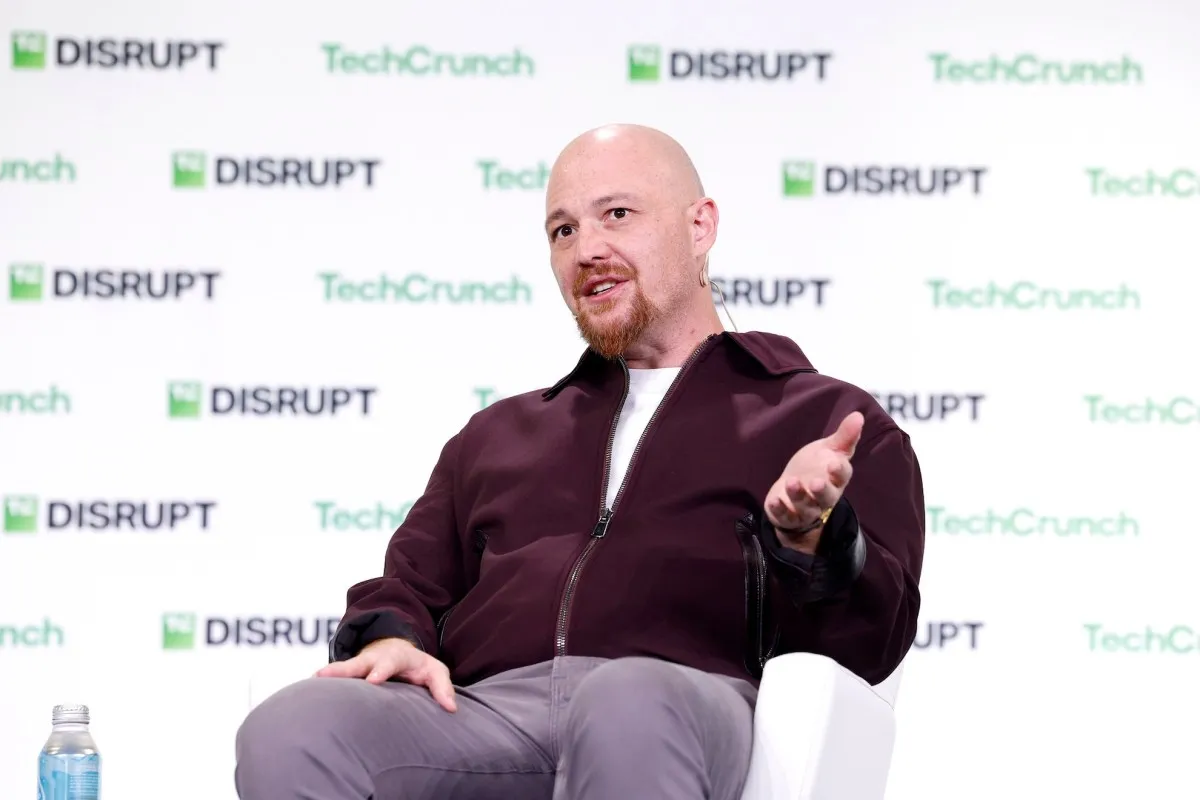
On stage, Masad said Replit had stopped working with Anthropic, once one of its five largest customers. He cited cost, partnership terms and performance. A day later he said Replit stays model-agnostic, with OpenAI as its preferred partner and Agent default. People familiar with the matter said the Anthropic partnership is still in place. [1] [2]
Switching the default model changes how the agent behaves. In the same Replit harness, GPT-6 Astra handed work to a general worker on 20% of turns. Claude Fable 5 did so on 0.9% and Fable 5.1 on 2.3%. Replit argues the frontier model, not a fixed router, should decide effort and when to hand off work. [4]
Masad says OpenAI's models perform better, but no published head-to-head against Claude Fable 5.1 supports that. Replit co-authored ViBench, a public benchmark that tests whether finished apps work. Its published results cover only older models, and the gaps were small: Opus 4.8 at 87.8% vs GPT-5.5 at 86.5%. [7] [8]
The move to OpenAI started before the announcement. In August, Replit launched a Free Mode for Core and Pro subscribers that runs on GPT-5.6 Luna and moves up to a stronger model when a task needs it. Replit's president called it the first of several joint efforts with OpenAI, and lower model prices helped make it possible. [3]
OpenAI now holds the Replit Agent default, and since most users keep defaults, spending likely shifts away from Anthropic.
Read the full assessment
Delegation behavior differs sharply between models, so builders should re-test their workflows rather than assume equivalent results.
Executive brief
Replit CEO Amjad Masad said on stage at TechCrunch Disrupt that Replit no longer works with Anthropic, even though Replit had until recently been one of Anthropic's five largest customers. He gave cost, partnership terms and performance as the reasons. Within a day he narrowed that claim: OpenAI is now Replit Agent's default model, and Claude is still available to users (TechCrunch). People familiar with the Anthropic relationship told TechCrunch the partnership is still in place. Most users keep the default model, so the real story is a large shift of spending from Anthropic to OpenAI, not a full break.
What changed and event timeline
Replit launches OpenAI-powered Free Mode
Free Mode runs on GPT-5.6 Luna and moves up to Sol when a task needs it. Replit president Michele Catasta called it the first of many joint efforts with OpenAI ().
Replit engineering post shows a mixed-vendor stack
"Free the Models" lists Claude Fable 5, Fable 5.1 and GPT-6 Astra all running in Replit Agent production during August and September ().
Masad announces the split on stage
He said "ChatGPT is better now" and cited cost, partnership and performance. Insiders disputed his account ().
The story is reframed as a change of default
TechCrunch updated the headline. Masad said Replit "remains model agnostic," with OpenAI as its preferred partner for Replit Agent (;).
Capabilities and access
- Default model: OpenAI. Masad named "Sol and Astra," which other outlets identify as GPT-6 Sol and GPT-6 Astra (Unite.AI).
- Free Mode: GPT-5.6 Luna, for $20/month Core and $100/month Pro subscribers (StartupHub.ai).
- Still selectable: Claude models. The reviewed sources do not say which Claude versions remain available after the switch (TechCrunch).
Technical analysis for researchers and developers
- Harness design: Replit's September post argues against fixed routers that assign tasks to models.
- Models behave differently in the same harness: GPT-6 Astra handed work to a subagent on 36% of turns and to a general worker 20% of the time.
- Benchmarks with costs: Replit Agent with Astra as its core loop scored 72% at $2.11 per task on DeepSWE v1.1 and 49% at $2.53 per task on Terminal-Bench 4.0.
Read the full section
- Harness design: Replit's September post argues against fixed routers that assign tasks to models. Instead, the frontier model decides how much effort to spend and when to hand work to subagents (Replit blog).
- Models behave differently in the same harness: GPT-6 Astra handed work to a subagent on 36% of turns and to a general worker 20% of the time. The figures were 32% and 0.9% for Fable 5, and 21% and 2.3% for Fable 5.1. Changing the default model therefore changes how the agent behaves, not just output quality.
- Benchmarks with costs: Replit Agent with Astra as its core loop scored 72% at $2.11 per task on DeepSWE v1.1 and 49% at $2.53 per task on Terminal-Bench 4.0. Each figure is the mean of four runs with 95% confidence intervals; GPU tasks were excluded.
Claims and evidence
- "No longer working with Anthropic": Masad walked this back to a change of default (TechCrunch). An unnamed source says the partnership continues.
- "Sol and Astra perform better" on Replit's public benchmark: Replit co-authored the public vibe-coding benchmark ViBench.
- Revenue mix: enterprise was about 2% of revenue last year and is about 15% now. More than 50% of revenue is B2B.
Read the full section
- "No longer working with Anthropic": Masad walked this back to a change of default (TechCrunch). An unnamed source says the partnership continues. No independent confirmation either way.
- "Sol and Astra perform better" on Replit's public benchmark: Replit co-authored the public vibe-coding benchmark ViBench. Its published results compare older models: Opus 4.6 at 46% vs GPT-5.2 at 42% Pass@1 (CAIS 2026), then Opus 4.8 at 87.8% vs GPT-5.5 at 86.5% in May (Georgian). No published head-to-head of Sol/Astra against Fable 5.1 turned up in the reviewed sources.
- Revenue mix: enterprise was about 2% of revenue last year and is about 15% now; more than 50% of revenue is B2B. These are Masad's own figures.
Context and prior work
- Replit previously ran its platform on Claude, and that relationship is credited with helping Replit grow its revenue sharply (TechCrunch).
- ViBench was built by Georgian and Replit researchers, with Catasta as an author.
- Claude Fable 5.1 launched Sept. 1 at $10 per million input tokens and $50 per million output tokens (BuildFastWithAI).
Read the full section
- Replit previously ran its platform on Claude, and that relationship is credited with helping Replit grow its revenue sharply (TechCrunch).
- ViBench was built by Georgian and Replit researchers, with Catasta as an author. It grades whether a finished app works by driving it in a browser, not by reading the code (CAIS 2026).
- Claude Fable 5.1 launched Sept. 1 at $10 per million input tokens and $50 per million output tokens (BuildFastWithAI).
Limitations, safety and contested findings
- The stage claim and the later clarification contradict each other, and Anthropic-side sources dispute the "breakup" framing.
- As recently as late September, Replit's own blog and a Replit product employee were promoting Claude models (TechCrunch).
- A deeper structural tension: Replit depends on AI labs whose own coding tools, such as Claude Code and Codex, compete with it, and switching vendors doesn't remove that (byteiota).
Read the full section
- The stage claim and the later clarification contradict each other, and Anthropic-side sources dispute the "breakup" framing.
- As recently as late September, Replit's own blog and a Replit product employee were promoting Claude models (TechCrunch).
- A deeper structural tension: Replit depends on AI labs whose own coding tools, such as Claude Code and Codex, compete with it, and switching vendors doesn't remove that (byteiota).
- Masad framed safety as giving agents a "habitat": orchestration, error recovery, sandboxing, and identity and authorization.
Business and practitioner implications
- Defaults decide spend: most users never change the default model, so the default is where vendor revenue is won or lost.
- Price drives strategy: price cuts helped make the Luna-based Free Mode possible, which shows how pricing shapes platform choices.
- Builders on Replit: check which model your agent runs and re-test your workflows.
Read the full section
- Defaults decide spend: most users never change the default model, so the default is where vendor revenue is won or lost.
- Price drives strategy: price cuts helped make the Luna-based Free Mode possible, which shows how pricing shapes platform choices.
- Builders on Replit: check which model your agent runs and re-test your workflows. Delegation behaviour differs sharply between models.
- Evaluate on your own work: use public, cost-aware benchmarks like ViBench alongside your own tasks rather than relying on vendor statements.
The source trail.
Sources (9)
Replit is no longer working with Anthropic, CEO says
Article text retrieved; extracted text may omit tables or interactive elements.
techcrunch.com