
ResearchPapers, evidence & method
AI-generated bacteriophage genomes yield 16 viable viruses that kill E. coli
Genome language models fine-tuned on Microviridae produced hundreds of thousands of candidate phage designs; 302 were synthesized and 16 proved functional, marking complete genomes designed end-to-end by a model and exposing a gap in DNA-synthesis screening.
From the MIT Technology Review · AI article of October 16, 2026 and cited sources: Whole-genome generative design now works at bacteriophage scale: models prompted with conserved fragments of the 5,386-nucleotide ΦX174 template produced complete genomes, 285 of 302 ordered designs assembled, and 16 were viable — an… [2] [3] [5]
SOURCES[2] AI-Designed Phages — Asimov Press press.asimov.com[3] Stanford and Arc Institute build 16 AI-designed viruses… implicator.ai[5] AI designs viable bacteriophage genomes, combats… genengnews.com
 AT Pulse research deskPublished · Updated · 4 min read · AI-assisted analysis
AI-assisted, not human-edited. Methodology Corrections Who owns this site
- What happened
- Whole-genome generative design now works at bacteriophage scale: models prompted with conserved fragments of the 5,386-nucleotide ΦX174 template produced complete genomes, 285 of 302 ordered designs assembled, and 16 were viable — an… [2] [3] [5]
- Original source
- MIT Technology Review · AI article, independent perspective
- Brief by
- AT Pulse research desk AI-assisted; publisher and contact on the desk page
- When
- October 16, 2026 article published
- Covered
- Oct 17 edition
- Evidence
- 8 sources across 6 sites
- 1Roundtables: A Conversation With the Creator of…technologyreview.com
- 2AI-Designed Phages — Asimov Presspress.asimov.com
- 3Stanford and Arc Institute build 16 AI-designed viruses…implicator.ai
- 4He asked an AI to design viruses … and it workedtechnologyreview.com
- 5AI designs viable bacteriophage genomes, combats…genengnews.com
- 6Stanford Evo AI-designed bacteriophages: biosecurity…casrai.org
QuietHow it’s measured
Hacker News · 1 like
Reach blends public engagement (views, likes, comments, shares, stars) from the platforms where the story or its original source lives: YouTube, Hacker News, GitHub, Substack and similar. A video and the article written from its transcript share one score, taken from the video. Platforms with no data are left out rather than counted as zero, and the age of a story never lowers its score.
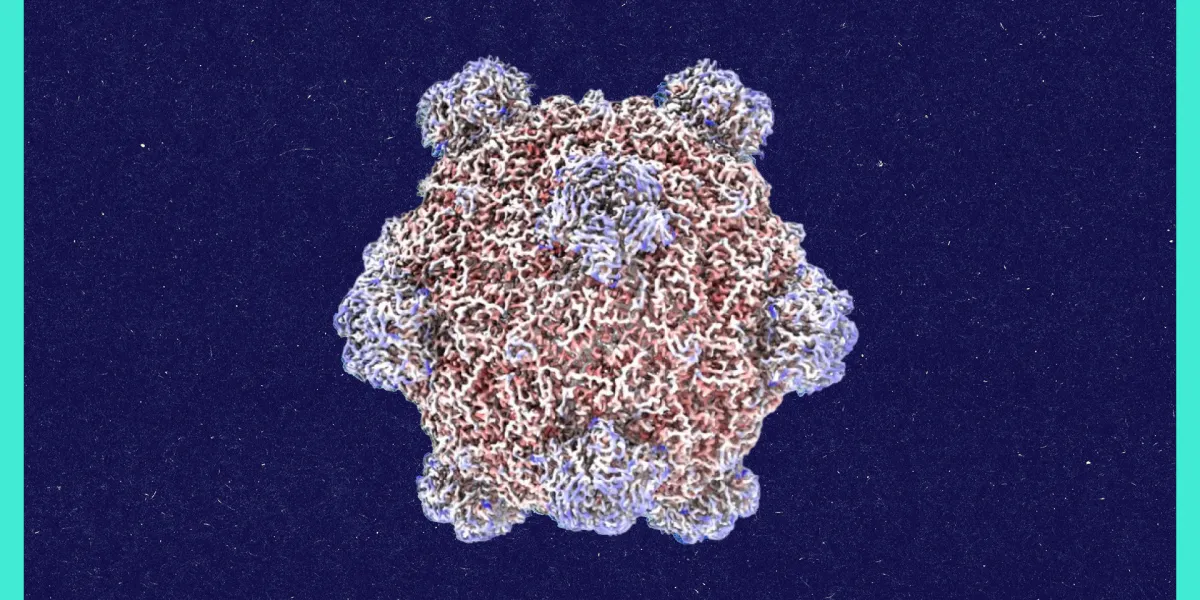
Whole-genome generative design now works at bacteriophage scale: models prompted with conserved fragments of the 5,386-nucleotide ΦX174 template produced complete genomes, 285 of 302 ordered designs assembled, and 16 were viable — an advance past earlier generative biology limited to single proteins or regulatory elements. [2] [3] [5]
The method behaves like a search-and-screen funnel rather than a design oracle. Hit rates sat near 5.6% overall and clustered close to the template, with roughly 46% viability among designs at least 98% identical to natural ΦX174, so synthesis cost and wet-lab attrition dominate the economics. [2] [3]
Performance claims need narrow reading: the headline expansion advantage for the top design came from a specific six-hour competition assay against wild type, and the author-reported result that engineered cocktails cleared resistant E. coli where natural phage mixtures failed points to phage therapy and biocontrol as the first commercial surfaces. [3] [5]
Governance lags capability. Synthesis screening matches orders against known-pathogen databases, so novel-but-functional generated sequences may match nothing on a watchlist — pushing biosafety review toward function- or model-based screening and toward excluding sensitive viral sequences from training sets. [6] [3]
functional genomes from model output, with low hit rates and a template-bound design space.
Read the full assessment
Implication: sequence-level generative design becomes a practical research tool for antimicrobials, while database-matching biosecurity controls need redesign before capability spreads to larger genomes.
Executive brief
A generative model trained on viral genomes produced roughly 700,000 candidate designs; 302 were synthesized, and just 16 worked — a ~5.6% hit rate that nonetheless yielded the first complete, functional genomes designed end-to-end by AI (Asimov Press, implicator.ai). The viruses are bacteriophages that kill E. coli, built on ΦX174, a 5,386-nucleotide, 11-gene template chosen partly because it is among the easiest genomes to synthesize. Lead author Samuel King, a Stanford/Arc Institute PhD candidate, is the subject of an MIT Technology Review Roundtables conversation. Viruses are not alive, so this is not AI-designed life — but it is a working governance problem today.
What changed and event timeline
Preprint posts to bioRxiv
King, Brian Hie and colleagues report generative design of complete bacteriophage genomes using Evo models, with 16 viable phages from 302 synthesized designs (,).
First mainstream coverage, with immediate pushback
J. Craig Venter warned he would have "grave concerns" if the method were applied to smallpox or anthrax; the article stresses viruses are not alive ().
Biosecurity analysts flag a structural screening gap
DNA-synthesis screening matches orders against known-pathogen databases; novel-but-functional AI sequences may not match anything on a watchlist ().
Peer-reviewed publication in Science
Coverage dates the paper to this day, with accompanying commentary from Johns Hopkins biosecurity researchers Thomas Inglesby and Moritz Hanke (,).
Roundtables conversation recorded
AI reporter James O'Donnell interviews King on the phage work, his Innovators Under 35 recognition and new ways of seeing biology ().
Capabilities and access
Two model versions were used: Evo 1 and Evo 2, genome language models pretrained on roughly 2 million bacteriophage genomes, then fine-tuned on approximately 15,000 Microviridae genomes (implicator.ai, Asimov Press). Generation was prompted with 4–9 conserved fragments of the natural ΦX174 sequence. Eukaryote-infecting viruses were excluded from training; work used a non-pathogenic phage and host (implicator.ai).
Read the full section
Two model versions were used: Evo 1 and Evo 2, genome language models pretrained on roughly 2 million bacteriophage genomes, then fine-tuned on approximately 15,000 Microviridae genomes (implicator.ai, Asimov Press). Generation was prompted with 4–9 conserved fragments of the natural ΦX174 sequence. Eukaryote-infecting viruses were excluded from training; work used a non-pathogenic phage and host (implicator.ai). Evo weights have been publicly released by Arc Institute; the wet-lab pipeline is not a product.
Technical analysis
The pipeline is prompt-conditioned sequence generation plus hard computational filters — genome length 4,000–6,000 bases, required genes present — before synthesis (Asimov Press). Of 302 designs ordered, 285 assembled; 16 were viable. Viable phages carried 67–392 novel mutations, some under 95% identity to known phages (Asimov Press).
Read the full section
The pipeline is prompt-conditioned sequence generation plus hard computational filters — genome length 4,000–6,000 bases, required genes present — before synthesis (Asimov Press). Of 302 designs ordered, 285 assembled; 16 were viable. Viability concentrated near the template: ~46% among designs with ≥98% identity to natural ΦX174. Evaluation used head-to-head competition assays in shared host cells with sequencing to track dominance. Viable phages carried 67–392 novel mutations, some under 95% identity to known phages (Asimov Press). Scaling is gated by synthesis cost: bacterial genomes are three orders of magnitude larger.
Claims and evidence
- 16 functional phages from ~300 designs — consistent across coverage (GEN, Asimov Press).
- Top design Evo-Φ69 expanded 16–65-fold in six hours vs 1.3–4-fold for wild type — the "up to 65×" figure traces to this assay, not general superiority (implicator.ai).
- **Cocktails cleared resistant E. coli that natural phage mixtures could not** — author-reported (GEN).
Read the full section
- 16 functional phages from ~300 designs — consistent across coverage (GEN, Asimov Press).
- Top design Evo-Φ69 expanded 16–65-fold in six hours vs 1.3–4-fold for wild type — the "up to 65×" figure traces to this assay, not general superiority (implicator.ai).
- **Cocktails cleared resistant E. coli that natural phage mixtures could not** — author-reported (GEN).
- Publication venue/date conflict: coverage cites Science, August 6, 2026; GEN still described the work as a preprint awaiting review.
Context and prior work
ΦX174 has a long synthetic-biology pedigree as a whole-genome synthesis target, which is why it was chosen for establishing design principles (GEN). Prior generative biology largely produced single proteins or regulatory elements, often without functional validation; Hie frames the advance as "breaking out of the single gene space."
Read the full section
ΦX174 has a long synthetic-biology pedigree as a whole-genome synthesis target, which is why it was chosen for establishing design principles (GEN). Prior generative biology largely produced single proteins or regulatory elements, often without functional validation; Hie frames the advance as "breaking out of the single gene space." Venter's lab previously built synthetic genomes by hand, and he characterizes the AI approach as a faster trial-and-error search rather than new science (MIT Technology Review).
Limitations, safety and contested findings
Designs retained the template's function — infecting E. coli — rather than acquiring new ones (Asimov Press). Jef Boeke called performance "surprisingly good" while noting complexity barriers at larger scales; Tom Ellis (Imperial College London) and Hsu Li Yang (Asia Centre for Health Security) raised criticisms (MIT Technology Review, implicator.ai).
Read the full section
Designs retained the template's function — infecting E. coli — rather than acquiring new ones (Asimov Press). Jef Boeke called performance "surprisingly good" while noting complexity barriers at larger scales; Tom Ellis (Imperial College London) and Hsu Li Yang (Asia Centre for Health Security) raised criticisms (MIT Technology Review, implicator.ai). Inglesby and Hanke: the ability to compose viral genomes with generative AI exists; the governance to steer it does not. Database-matching synthesis screening is described as structurally incomplete for novel sequences (CASRAI).
Business and practitioner implications
Treat sequence-level generative design as a search-and-screen funnel, not a design oracle: budget for ~5% wet-lab hit rates and for synthesis as the dominant cost. The near-term commercial surface is phage therapy and agricultural biocontrol, where rapid cocktail redesign against resistant strains is the differentiator.
Read the full section
Treat sequence-level generative design as a search-and-screen funnel, not a design oracle: budget for ~5% wet-lab hit rates and for synthesis as the dominant cost. The near-term commercial surface is phage therapy and agricultural biocontrol, where rapid cocktail redesign against resistant strains is the differentiator. Biosafety committees relying on negative database screens should move toward function- or model-based screening and exclude sensitive viral sequences from training (CASRAI). For most pipelines, targeted gene or regulatory-region design remains more efficient than whole-genome generation (Asimov Press).
The source trail.
Sources (8)
Roundtables: A Conversation With the Creator of AI-Designed Viruses
Article text retrieved; extracted text may omit tables or interactive elements.
technologyreview.com