
SafetyRisk, alignment & guardrails
AI-generated photo of Mia Goth spreads from verified Instagram fan account to gossip blogs and Google's AI Overview
An AI-generated image of Mia Goth in a shirt referencing her ex spread from a verified Instagram fan account to gossip blogs and Google's AI Overview. The case shows gaps in Meta's labeling rules and patchy protection against celebrity deepfakes.
From the The Verge · AI article of October 15, 2026 and cited sources: Days after Goth filed for divorce from Shia LaBeouf, a fan account with a paid blue checkmark and more than a million followers posted a fake still image of her. [1] [7] [8]
SOURCES[1] Nobody is safe from celebrity AI deepfakes theverge.com[7] TheWrap: Mia Goth calls out Instagram thewrap.com[8] IBTimes UK: Meta removes verified fan account ibtimes.co.uk
 AT Pulse research deskPublished · Updated · 5 min read · AI-assisted analysis
AI-assisted, not human-edited. Methodology Corrections Who owns this site
- What happened
- Days after Goth filed for divorce from Shia LaBeouf, a fan account with a paid blue checkmark and more than a million followers posted a fake still image of her. [1] [7] [8]
- Original source
- The Verge · AI article, independent perspective
- Brief by
- AT Pulse research desk AI-assisted; publisher and contact on the desk page
- When
- October 15, 2026 article published
- Covered
- Oct 18 edition
- Evidence
- 12 sources across 12 sites
- 1Nobody is safe from celebrity AI deepfakestheverge.com
- 2Linked video: Nobody is safe from celebrity AI deepfakesyoutube.com
- 3Meta: Approach to labeling AI-generated contentabout.fb.com
- 4Proskauer: Take It Down Act signed into lawproskauer.com
- 5Sen. Klobuchar: Take It Down Act signedklobuchar.senate.gov
- 6Dataconomy: YouTube likeness detection expandeddataconomy.com
RisingHow it’s measured
YouTube video · 1.5M views · 3.2K likes
Reach blends public engagement (views, likes, comments, shares, stars) from the platforms where the story or its original source lives: YouTube, Hacker News, GitHub, Substack and similar. A video and the article written from its transcript share one score, taken from the video. Platforms with no data are left out rather than counted as zero, and the age of a story never lowers its score.
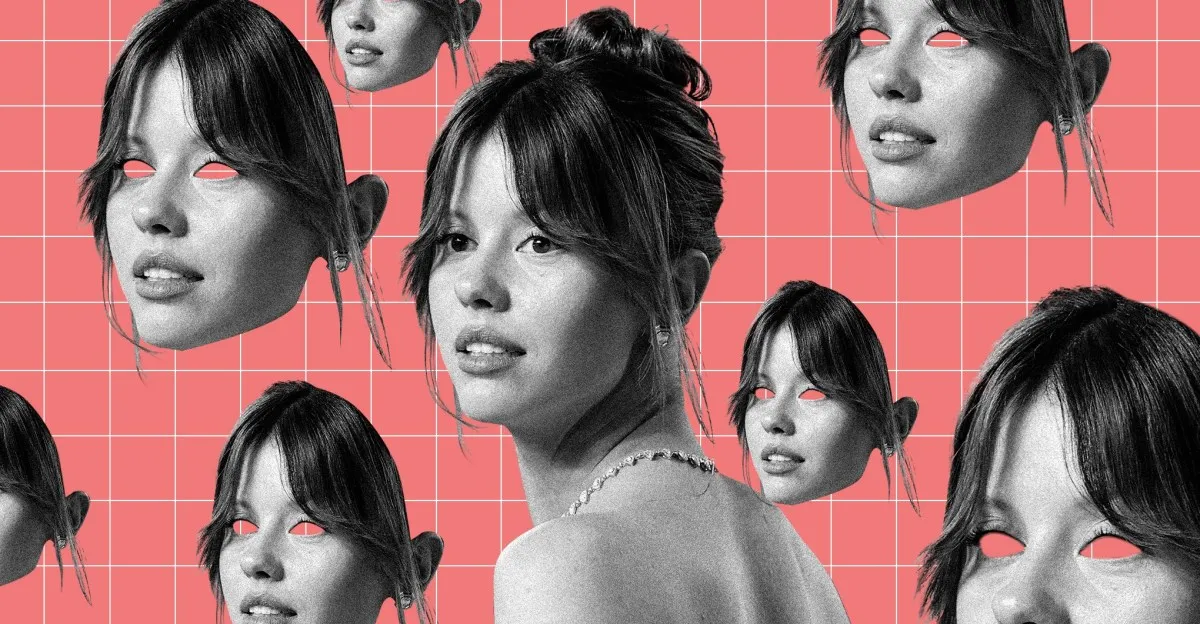
Days after Goth filed for divorce from Shia LaBeouf, a fan account with a paid blue checkmark and more than a million followers posted a fake still image of her. The post drew nearly 500,000 likes, celebrity blogs repeated it, and Google's AI Overview then described it as real. Meta's rules did not require an AI label because the fake was a still image. Goth's representatives said she has no social media, said they had already complained about the account, and called Instagram's handling incomprehensible. [1] [7] [8]
The Goth image is not an isolated case. Celebrity deepfakes are widespread on Instagram, much of the content about female celebrities is sexualised, and some posts steer viewers to paid Patreon and Telegram subscriptions. Viral AI clips of Taylor Swift have reached millions of views. When The Verge asked Meta about eight deepfake accounts, Meta removed some of them, but one Scarlett Johansson impersonation account with more than 300,000 followers was still live. [1]
Current defences are partial. Meta labels AI content based on provenance metadata and self-disclosure, so a still image that is never declared as AI slips through. YouTube now lets any adult enrol their face for likeness matching, with humans deciding on takedowns. YouTube says it removed more than 95% of videos reported through the program in the first half of 2026; that figure comes only from YouTube. The Take It Down Act covers only intimate imagery, so it does not reach non-sexual impersonation like the Goth fake. [1] [3] [4] [6] [9] [10]
a still-image fake passed through a paid verification badge, celebrity blogs and an AI search summary without being challenged.
Read the full assessment
Implication: verification badges and repeated reporting are weak signs of authenticity, and retrieval systems need provenance checks before presenting claims as fact.
Executive brief
A fan account with a paid-for blue "verified" checkmark and more than a million followers posted an AI-generated photo of actress Mia Goth wearing a "MY EX IS MY BIGGEST FAN" shirt. It came days after she filed for divorce from Shia LaBeouf. The post got nearly 500,000 likes, celebrity blogs repeated it, and Google's AI Overview then described it as real, according to The Verge. Meta's rules didn't require an AI label because the fake was a still image. The same report finds sexualised and viral celebrity deepfakes across Instagram, some with millions of views.
What changed and event timeline
LaBeouf filmed in Germany
Footage aired by ET shows LaBeouf, after an argument with Goth, saying he would have "killed her" if he had stayed (). The Verge cites this to explain why the 2026 fake carried real risk.
Meta sets AI labeling rules
Meta began applying "AI info" labels and stopped removing content under its manipulated-video policy alone, following Oversight Board advice. Later it moved labels for AI-edited content into the post menu ().
Take It Down Act signed
The law criminalises publishing nonconsensual intimate imagery, real or AI-generated, and requires platforms to remove it within 48 hours of notice. Platforms had to comply by May 2026 (;).
YouTube opens likeness detection to all adults
The tool was previously limited to selected creators and public figures. Any user 18 or older can now enrol with a government ID and a selfie video ().
Fake Goth photo spreads; her representatives object
The team says Goth has no social media and had already complained to Instagram about the account. They called Instagram's handling "incomprehensible" (;).
The Verge's wider investigation
The Verge asked Meta about eight deepfake accounts. Meta removed some, including the Goth and Johansson accounts, but another Johansson account with more than 300,000 followers was still live ().
Capabilities and access
- The reviewed sources don't name the generation models behind the fakes.
- On the defence side:
- YouTube likeness detection is in YouTube Studio under Content detection > Likeness.
Read the full section
- The reviewed sources don't name the generation models behind the fakes.
- On the defence side:
- YouTube likeness detection is in YouTube Studio under Content detection > Likeness. Enrolment is one-time, and users can opt out and have their face data deleted (Dataconomy).
- Meta offers "AI info" labels and separate "AI-generated profile" labels for accounts whose avatar isn't a real person (The Verge).
Technical analysis for researchers and developers
- YouTube works like Content ID, but for faces: it matches a verified face template against uploaded videos and flags hits for the person to review.
- Meta detects AI content through industry provenance signals (such as C2PA metadata) and user self-disclosure, and is working on classifiers for unmarked content (Meta; Spectrum News).
- Neither company has published precision, recall or false-match rates.
Read the full section
- YouTube works like Content ID, but for faces: it matches a verified face template against uploaded videos and flags hits for the person to review. Humans then decide takedowns, weighing realism, AI labeling, whether the person is identifiable, and parody or satire exceptions (Exchange4media).
- Meta detects AI content through industry provenance signals (such as C2PA metadata) and user self-disclosure, and is working on classifiers for unmarked content (Meta; Spectrum News).
- Neither company has published precision, recall or false-match rates.
- Self-disclosure rules can't catch still images that bad actors simply don't declare.
Claims and evidence
- @miagoth_ had more than 1 million followers, and the fake got nearly 500,000 likes (The Verge). PetaPixel and AV Club report the same incident, but they draw on the same rep statements.
- An AI video of Taylor Swift rapping a Drake song has 1.8 million views, and an F1 lip-sync clip has 2.9 million.
- YouTube says it removed more than 95% of videos reported through the program in the first half of 2026.
Read the full section
- @miagoth_ had more than 1 million followers, and the fake got nearly 500,000 likes (The Verge). PetaPixel and AV Club report the same incident, but they draw on the same rep statements.
- An AI video of Taylor Swift rapping a Drake song has 1.8 million views, and an F1 lip-sync clip has 2.9 million. These counts are The Verge's own observations.
- YouTube says it removed more than 95% of videos reported through the program in the first half of 2026. That figure comes only from YouTube (The Verge).
Context and prior work
- Earlier likeness disputes include:
- An AI Drake sound-alike song pulled from YouTube after copyright strikes.
- Scarlett Johansson's dispute with OpenAI over a ChatGPT voice (TheWrap).
Read the full section
- Earlier likeness disputes include:
- An AI Drake sound-alike song pulled from YouTube after copyright strikes.
- Scarlett Johansson's dispute with OpenAI over a ChatGPT voice (TheWrap).
- Trump posting fake images suggesting Taylor Swift endorsed him (The Verge).
- The US has no national right-of-publicity law, so platform policies are effectively deciding these cases.
- The Take It Down Act covers only intimate imagery. It doesn't reach non-sexual impersonation like the Goth fake (Proskauer).
Limitations, safety and contested findings
- Does YouTube cover voices? The Verge says YouTube recently added sound-alike detection. The voice coverage may have arrived after May.
- YouTube's view of the harm differs from the Goth case.
- Meta's labeling gap: Meta says it bans impersonation whether the content is real or AI-generated, yet still images still don't need a label (The Verge).
Read the full section
- Does YouTube cover voices? The sources disagree. The Verge says YouTube recently added sound-alike detection. May 2026 coverage said the tool covered faces only, not voice clones (Dataconomy). The voice coverage may have arrived after May.
- YouTube's view of the harm differs from the Goth case. A YouTube executive said much of the flagged content is "fairly benign or additive" for creators.
- Meta's labeling gap: Meta says it bans impersonation whether the content is real or AI-generated, yet still images still don't need a label (The Verge).
- Sexualised content: much of the deepfake content of female celebrities is sexualised and steers viewers to Patreon and Telegram subscriptions.
Business and practitioner implications
- Paid blue checks gave a fan account credibility. Trust-and-safety teams shouldn't treat them as an authenticity signal.
- The fake travelled from Instagram to gossip blogs to a Google AI Overview.
- Talent and brand teams should use likeness monitoring like YouTube's, but keep in mind it covers only YouTube and its accuracy is undisclosed.
Read the full section
- Verification isn't proof of authenticity. Paid blue checks gave a fan account credibility. Trust-and-safety teams shouldn't treat them as an authenticity signal.
- Fakes spread through search. The fake travelled from Instagram to gossip blogs to a Google AI Overview. Retrieval and summarisation systems need provenance checks before treating repeated claims as confirmed.
- Talent and brand teams should use likeness monitoring like YouTube's, but keep in mind it covers only YouTube and its accuracy is undisclosed.
- Compliance teams need 48-hour takedown processes for intimate imagery under the Take It Down Act.
The source trail.
Sources (12)
Nobody is safe from celebrity AI deepfakes
Article text retrieved; extracted text may omit tables or interactive elements. A transcript of the video linked from this page is supplied (linked video auto captions; https://www.youtube.com/watch?v=Ezs8UH789HE); automatic text may contain errors.
theverge.comLinked video: Nobody is safe from celebrity AI deepfakes
linked video auto captions
www.youtube.com