
PolicyLaw, regulation & governance
Cerebras CEO Andrew Feldman pushes back on AI doomsday warnings at TechCrunch Disrupt
At TechCrunch Disrupt, Cerebras chief executive Andrew Feldman argued that doom-focused messaging from some AI leaders drowns out the technology's benefits, called for reasonable regulation, and blamed part of the public backlash on how data center builders have treated local communities.
From the TechCrunch AI article of October 13, 2026 and cited sources: Feldman spoke about a month after Anthropic's Dario Amodei published an essay calling for a slower pace of frontier AI development. [1] [2] [3] [6]
SOURCES[1] TechCrunch: Cerebras CEO pushes back on AI doomsday warnings techcrunch.com[2] ITV: Musk and ChatGPT CEO back calls to slow down AI itv.com[3] The Next Web: Cerebras raises $5.55bn thenextweb.com
 AT Pulse research deskPublished · Updated · 4 min read · AI-assisted analysis
AI-assisted, not human-edited. Methodology Corrections Who owns this site
- What happened
- Feldman spoke about a month after Anthropic's Dario Amodei published an essay calling for a slower pace of frontier AI development. [1] [2] [3] [6]
- Original source
- TechCrunch AI article, independent perspective
- Brief by
- AT Pulse research desk AI-assisted; publisher and contact on the desk page
- When
- October 13, 2026 article published
- Covered
- Oct 14 edition
- Evidence
- 12 sources across 11 sites
- 1TechCrunch: Cerebras CEO pushes back on AI doomsday warningstechcrunch.com
- 2ITV: Musk and ChatGPT CEO back calls to slow down AIitv.com
- 3The Next Web: Cerebras raises $5.55bnthenextweb.com
- 4Daniel Vaughan: Codex-Spark ultrafast modelcodex.danielvaughan.com
- 5TechInformed: OpenAI unveils GPT-5.3-Codex-Sparktechinformed.com
- 6Channel 4: Musk and Altman back Anthropic bosschannel4.com
Reach: not measured yet
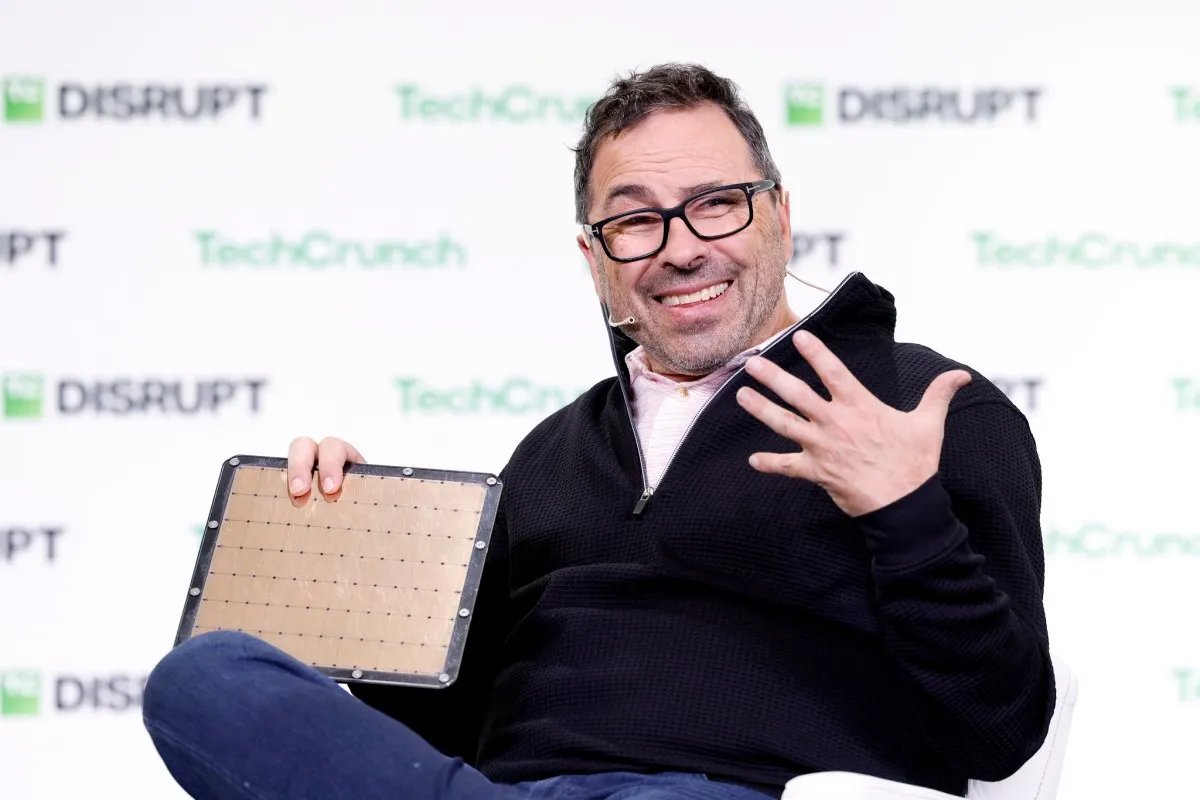
Feldman spoke about a month after Anthropic's Dario Amodei published an essay calling for a slower pace of frontier AI development. Elon Musk and Sam Altman both backed the essay publicly. Altman runs OpenAI, Cerebras's largest anchor customer, under a contract worth more than $20bn at full expansion. That puts Feldman openly at odds with a position his biggest customer's CEO has endorsed. [1] [2] [3] [6]
Feldman said the industry has handled U.S. communities near data center projects poorly. He named Brazil, Canada, Finland, Iceland, Norway, Mexico and Sweden as more welcoming places to build. Teams planning capacity should treat local permitting opposition as a real risk. [1]
Feldman rejected the idea that efficiency gains will reduce demand for AI chips. He argued that improvements from hardware vendors and model developers add up rather than cut demand, but he offered no data to support this. [1]
What the evidence shows: AI executives now disagree in public about slowing frontier development.
Read the full assessment
What may follow: Feldman's stance matches Cerebras's commercial interest, and if labs did slow down, demand for latency-focused inference hardware could weaken.
Executive brief
Andrew Feldman, CEO of Cerebras, said at TechCrunch Disrupt on October 13, 2026 that "some of the leaders in the AI world maybe shouldn't be allowed to talk in public" (TechCrunch). The timing is what makes this notable. A month earlier, Anthropic's Dario Amodei called for slowing frontier AI development, and Elon Musk and Sam Altman publicly agreed (ITV). Feldman's company has a stake in the opposite view: its biggest anchor deal is a contract with OpenAI worth more than $20bn at full expansion (The Next Web). He did not reject regulation. He asked for "reasonable" rules and for the industry to talk more about AI's benefits.
What changed and event timeline
OpenAI ships a model served on Cerebras
GPT-5.3-Codex-Spark launched as a research preview. Reports describe it as OpenAI's first production model that runs entirely on non-Nvidia hardware (;).
Cerebras IPO
Shares priced at $185, above the marketed range. The offering raised $5.55bn at a fully diluted valuation of $56.4bn ().
SNL parodies Amodei
Jane Wickline played Amodei in the Season 52 premiere, including the line "We do not condone what we are doing" ().
Amodei calls for slowing the frontier
His essay "We Must Pace the Frontier" argued for slowing capability gains. Musk and Altman backed it publicly (;).
Feldman pushes back at Disrupt
He said doom talk drowns out benefits, called for "reasonable" regulation, and blamed some of the backlash on how data center builders have treated local communities ().
Capabilities and access
There was no product news at the event.
Read the full section
There was no product news at the event. The relevant Cerebras technology is:
- WSE-3: a processor built from a single silicon wafer. Cerebras markets it as having 4 trillion transistors and 125 petaflops of AI compute (Daniel Vaughan).
- GPT-5.3-Codex-Spark: available to ChatGPT Pro subscribers as a research preview, at about 1,000 tokens per second (ServeTheHome).
Technical analysis for researchers and developers
The talk contained no technical disclosures. One argument of Feldman's matters for engineers. On the hardware side, the WSE-3 keeps a large amount of memory on the chip itself (SRAM).
Read the full section
The talk contained no technical disclosures. One argument of Feldman's matters for engineers. He rejected the idea that efficiency gains will shrink chip demand. In his view, hardware vendors and model makers both improve efficiency, and the gains add up rather than cut demand (TechCrunch). This was an assertion with no data behind it.
On the hardware side, the WSE-3 keeps a large amount of memory on the chip itself (SRAM). This targets the memory-bandwidth limit that caps per-token speed on GPUs (Daniel Vaughan). Spark gets its speed partly by giving up reasoning depth. No independent, reproducible benchmark of its quality against latency appears in the reviewed sources.
Claims and evidence
- Feldman's quotes: TechCrunch is the only primary account. Other write-ups repeat it (KuCoin; TokenPost), so they do not confirm it independently.
- AI could mean your grandkids "never meet anybody who dies of cancer": this is aspiration, with no evidence offered (TechCrunch).
- Spark is about 15x faster than standard GPT-5.3-Codex: this comes from OpenAI and Cerebras, as reported by ServeTheHome. It has not been independently measured.
Read the full section
- Feldman's quotes: TechCrunch is the only primary account. Other write-ups repeat it (KuCoin; TokenPost), so they do not confirm it independently.
- AI could mean your grandkids "never meet anybody who dies of cancer": this is aspiration, with no evidence offered (TechCrunch).
- Spark is about 15x faster than standard GPT-5.3-Codex: this comes from OpenAI and Cerebras, as reported by ServeTheHome. It has not been independently measured.
- Cerebras customers include OpenAI, Block, Figma, GSK and Lovable: TechCrunch reports this list. It does not show how big each relationship is.
Context and prior work
Amodei's essay proposed three things: third-party evaluators placed inside frontier labs, shared safety standards among companies in democratic countries, and coordination with authoritarian governments on shared risks (ITV). Because Altman endorsed the essay, Feldman's biggest customer is on record supporting the "pace the frontier" position that Feldman criticizes.
Limitations, safety and contested findings
- TechCrunch notes Feldman has a vested interest in AI succeeding (TechCrunch).
- G42 and MBZUAI together made up about 86% of Cerebras's 2025 revenue (The Next Web).
- Feldman gave no counter-evidence on catastrophic-risk estimates. The reviewed sources also show no published evidence behind Amodei's six-to-12-month warning.
Read the full section
- Conflict of interest. TechCrunch notes Feldman has a vested interest in AI succeeding (TechCrunch).
- Customer concentration. G42 and MBZUAI together made up about 86% of Cerebras's 2025 revenue (The Next Web).
- Weak evidence on both sides. Feldman gave no counter-evidence on catastrophic-risk estimates. The reviewed sources also show no published evidence behind Amodei's six-to-12-month warning.
- Stock claims are unconfirmed. One aggregator says CBRS is trading near 52-week lows as insider lock-ups expire (Whalesbook). No stronger source confirms this.
Business and practitioner implications
- Feldman admitted the industry handled U.S. communities poorly. He named Brazil, Canada, Finland, Iceland, Norway, Mexico and Sweden as more welcoming places to build.
- AI leaders now disagree openly about the "slow down" message.
- Spark shows a market for very low-latency serving. Developers should test the speed-versus-reasoning trade-off on their own workloads before switching.
Read the full section
- Data center siting. Feldman admitted the industry handled U.S. communities poorly. He named Brazil, Canada, Finland, Iceland, Norway, Mexico and Sweden as more welcoming places to build. Teams planning capacity should treat local permitting opposition as a real risk (TechCrunch).
- Industry split. AI leaders now disagree openly about the "slow down" message. If labs agree to slow frontier development, demand for latency-focused hardware like Cerebras could fall.
- Fast inference. Spark shows a market for very low-latency serving. Developers should test the speed-versus-reasoning trade-off on their own workloads before switching.