
ModelsArchitectures & capability
PolyAI and Otter executives say voice AI still lacks fast reasoning and reliable speech recognition
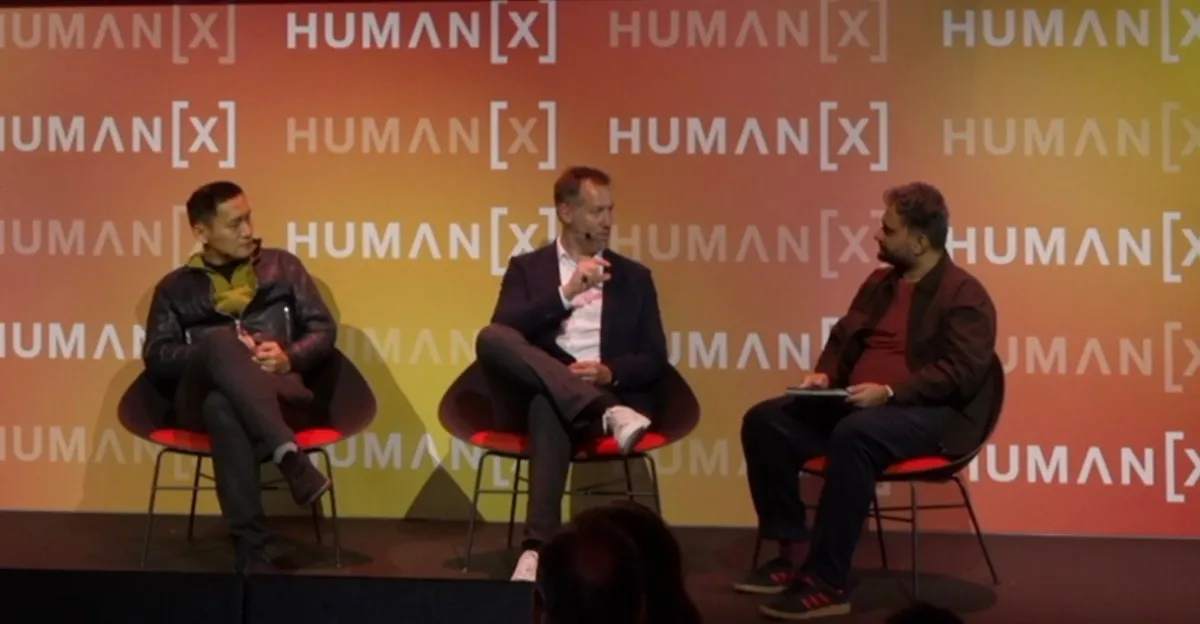
Speaking at HumanX Amsterdam, PolyAI CTO Shawn Wen and Otter CMO Alex Gay said voice AI has not had its ChatGPT moment. Full-duplex conversation works, but fast reasoning, keyword recognition, language coverage and transparency still hold deployments back.
Reach: not measured yet
 AT Pulse research deskPublished · 5 min read · AI-assisted analysis
Wen said quick turn-taking is now largely solved, but quick reasoning is not. Full-duplex models such as Kyutai's Moshi listen and speak at the same time, and its paper reports about 200 ms of latency in practice. Evaluations should therefore measure answer quality under latency limits, not just response speed. [1] [2]
Gay said a speech recognition error, such as a missed keyword, carries into every automated action built on the transcript, and that language coverage remains weak. A separate full-duplex benchmark covering English and Japanese found results vary by model, language and domain. [1] [4]
Trust and disclosure are now design requirements. Wen argued callers decide within the first two or three turns whether to keep talking without a human. Since August 2, 2026, the EU AI Act requires telling people they are talking to an AI unless that is obvious. Otter is exploring how to notify meeting participants even when its bot is not in the meeting. [1] [5] [14]
full-duplex latency is published and benchmarked, with results varying by language and domain.
Read the full assessment
Implication: buyers should test recognition on their own vocabulary and measure task completion under real latency, especially for EU deployments that require AI disclosure.
Executive brief
The executives behind two well-funded voice AI products say the technology is still unreliable. At HumanX Amsterdam, PolyAI CTO Shawn Wen said voice AI hasn't had its "ChatGPT moment" yet, even though full-duplex models (which can listen and speak at the same time) now exist. In his view the bottleneck has moved to fast reasoning. Otter CMO Alex Gay said errors in speech recognition carry through into every automated action built on top of the transcript (TechCrunch). These cautions come as investors put large sums into voice AI and as EU rules requiring AI disclosure come into force.
What changed and event timeline
Moshi shows full-duplex speech works
Kyutai's Moshi models the user's speech and its own as parallel streams, so the model doesn't need explicit turn-taking. The paper reports 160 ms theoretical and 200 ms practical latency ().
ElevenLabs raises $500M
The round valued ElevenLabs at $11B. It was among the year's largest voice-sector deals, alongside Sierra ($950M) and Parloa ($350M) ().
Full-duplex benchmark broadens testing
M3-DuplexBench scores timing and content in English and Japanese, covering casual conversation and multi-turn question answering. Results vary by model, language and domain ().
EU AI-disclosure duty applies
Under Article 50(1) of the EU AI Act, people must be told they are talking to an AI unless that is obvious ().
Wen speaks at HumanX Amsterdam
His session, "Emotion, Intent and the Future of Voice AI," covered intent, emotion and trust when running voice agents at scale ().
TechCrunch publishes the panel views
Wen and Gay named reasoning speed, recognition of keywords, language coverage and transparency as the remaining gaps ().
Capabilities and access
- The article is about opinions, not a product launch. It names no model or version (TechCrunch).
- PolyAI sells an enterprise platform for voice agents. It lists FedEx, Marriott, PG&E and UniCredit among the companies using it (HumanX).
- Otter launched AI meeting agents in 2025 (Business Wire). Gay referred to these as "digital twins."
Read the full section
- The article is about opinions, not a product launch. It names no model or version (TechCrunch).
- PolyAI sells an enterprise platform for voice agents. It lists FedEx, Marriott, PG&E and UniCredit among the companies using it (HumanX).
- Otter launched AI meeting agents in 2025 (Business Wire). CEO Sam Liang has demonstrated an avatar that attends meetings in his place (Storyboard18). Gay referred to these as "digital twins."
- Moshi's code is available on GitHub from Kyutai Labs (arXiv 2410.00037).
Technical analysis for researchers and developers
- Cascaded systems run speech recognition, then a language model, then speech synthesis (ASR→LLM→TTS). Full-duplex models like Moshi drop fixed turns.
- Wen's point is that quick turn-taking is solved, but quick reasoning is not (TechCrunch).
- M3-DuplexBench scores both timing and content, and includes optional diagnostics for how sensitive a model is to dialogue history. The code is public (arXiv 2607.29125).
Read the full section
- Two architectures. Cascaded systems run speech recognition, then a language model, then speech synthesis (ASR→LLM→TTS). Full-duplex models like Moshi drop fixed turns. Moshi predicts text tokens before audio tokens ("Inner Monologue") so the reply stays coherent while it streams (arXiv 2410.00037).
- Where the bottleneck sits now. Wen's point is that quick turn-taking is solved, but quick reasoning is not (TechCrunch). Evaluations should therefore measure answer quality under latency limits, not just how fast the model responds.
- Benchmark design. M3-DuplexBench scores both timing and content, and includes optional diagnostics for how sensitive a model is to dialogue history. The code is public (arXiv 2607.29125).
- Error propagation. In a cascaded system, a keyword the ASR misses flows into every downstream action, so improving recognition is the first lever (TechCrunch).
Claims and evidence
- "Full-duplex is achieved." Independent benchmarking finds behaviour that differs by model and language, which tempers the claim (M3-DuplexBench).
- "ASR misses key terms" and "voice must sound human to earn trust." These are executives' views from a conference panel.
- Total funding is disputed.
Read the full section
- "Full-duplex is achieved." Supported by the published latency figures (Moshi). Independent benchmarking finds behaviour that differs by model and language, which tempers the claim (M3-DuplexBench).
- "ASR misses key terms" and "voice must sound human to earn trust." These are executives' views from a conference panel. The article presents no measurements behind them (TechCrunch).
- Total funding is disputed.
- One aggregator reports more than $7B in Q1 2026 (AI Weekly).
- Tracxn reports $559M across 10 rounds through March (Tracxn).
- The gap probably comes from different definitions of which companies count as "voice AI."
- Otter's $100M ARR comes from the company's own announcement (Business Wire).
Context and prior work
- Surveys of spoken dialogue models trace the shift from cascaded pipelines to end-to-end, full-duplex designs (WavChat survey).
- Funding continues to rise.
- The TechCrunch author, Ivan Mehta, also keeps the funding tracker cited above (Voice AI funding tracker 2026).
Read the full section
- Surveys of spoken dialogue models trace the shift from cascaded pipelines to end-to-end, full-duplex designs (WavChat survey).
- Funding continues to rise. Modulate raised $25M on Sep 28, 2026 for "audio-native" models that read tone and intent directly from audio rather than from transcripts (SiliconANGLE).
- The TechCrunch author, Ivan Mehta, also keeps the funding tracker cited above (Voice AI funding tracker 2026).
Limitations, safety and contested findings
- The source is a panel recap from two vendors. No independent corroboration of the executives' diagnoses appeared in the reviewed sources.
- Full-duplex results don't carry over cleanly between languages or domains (M3-DuplexBench). This fits Gay's point that language coverage is weak.
- Otter is exploring how to notify meeting participants even when its bot isn't present in the meeting (TechCrunch).
Read the full section
- The source is a panel recap from two vendors. No independent corroboration of the executives' diagnoses appeared in the reviewed sources.
- Full-duplex results don't carry over cleanly between languages or domains (M3-DuplexBench). This fits Gay's point that language coverage is weak.
- Both executives back disclosure. Otter is exploring how to notify meeting participants even when its bot isn't present in the meeting (TechCrunch).
- Avatars that stand in for people raise issues of consent and impersonation. Commentators have already raised this for executive avatars in meetings (Bloomberg).
Business and practitioner implications
- Phone agents serving people in the EU must disclose that they are AI unless it is obvious, effective now (Stibbe).
- Test speech recognition on your own domain vocabulary, and measure task completion under real latency, not demo smoothness.
- Wen argues callers decide in the first two or three turns whether to keep going without a human (TechCrunch).
Read the full section
- Compliance. Phone agents serving people in the EU must disclose that they are AI unless it is obvious, effective now (Stibbe).
- Vendor evaluation. Test speech recognition on your own domain vocabulary, and measure task completion under real latency, not demo smoothness.
- Designing for trust. Wen argues callers decide in the first two or three turns whether to keep going without a human (TechCrunch). That makes the opening exchanges the place to put quality effort.
- Benchmarking. Use public multilingual full-duplex benchmarks before deploying beyond English.
The source trail.
Sources (14)
These execs think voice AI hasn’t reached its ChatGPT moment yet
Article text retrieved; extracted text may omit tables or interactive elements.
techcrunch.com