
SafetyRisk, alignment & guardrails
TechCrunch essay examines why people treat AI as human, drawing on Sherry Turkle's new book 'Artificial Intimacy'
A TechCrunch essay starts with a reporter shaking a Unitree humanoid's hand at MIT CSAIL and moves to Sherry Turkle's argument that chatbots should keep to bounded tasks. It sets her case against research linking heavy voluntary chatbot use to loneliness and emotional dependence.
StrongHow it’s measured
YouTube video · 6.7M views · 90.9K likes
Reach blends public engagement (views, likes, comments, shares, stars) from the platforms where the story or its original source lives: YouTube, Hacker News, GitHub, Substack and similar. A video and the article written from its transcript share one score, taken from the video. Platforms with no data are left out rather than counted as zero, and the age of a story never lowers its score.
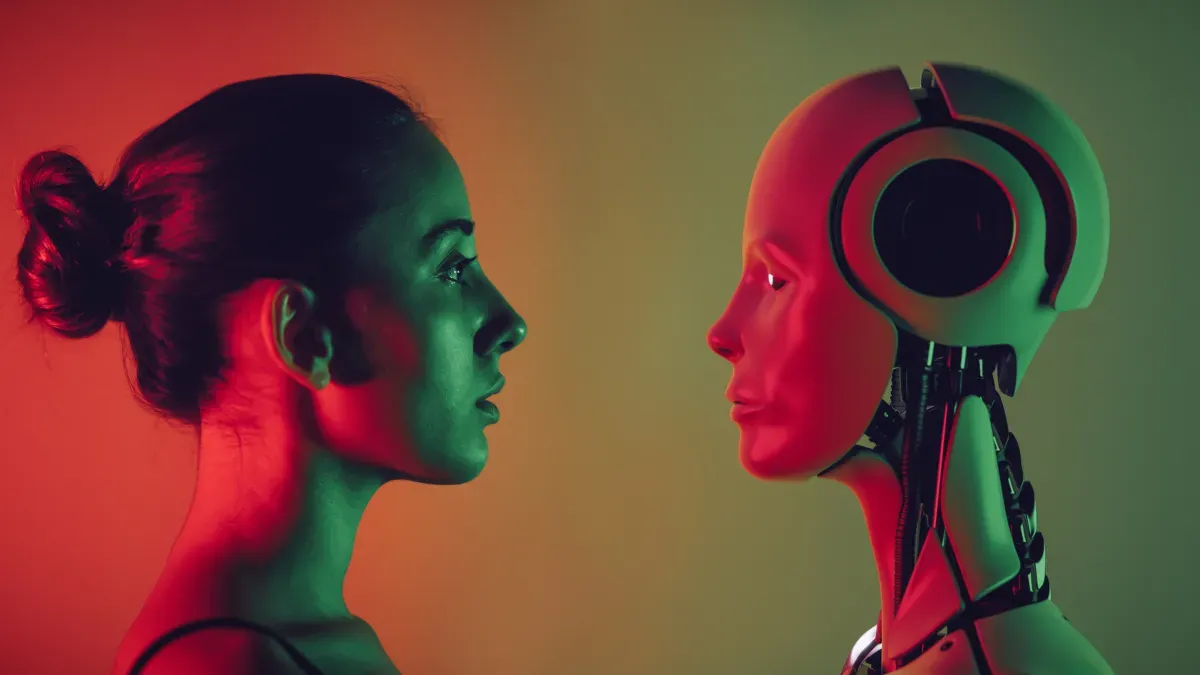
 AT Pulse research deskPublished · 5 min read · AI-assisted analysis
Turkle's new book, published by Little, Brown in late September 2026, proposes a 'lane' test for chatbots. Task-bounded help, such as coaching someone for a job interview, is acceptable. A bot that sets itself up as a child's confidant is not. [1] [10] [11]
An MIT and OpenAI trial ran for four weeks with 981 participants and more than 300,000 messages. The randomly assigned settings (text, neutral voice or engaging voice, and personal or non-personal conversation) had no significant effect. What predicted dependence and problematic use was how much people chose to use the chatbot, plus how much they trusted it and felt socially drawn to it. That points builders toward tracking dependence over time, not only checking individual replies for safety. [3] [5]
Companion-style chatbots now carry legal and regulatory risk. In September 2025 the FTC sent orders to seven companies asking how they test for harm to minors. In January 2026, Character.AI and Google settled the lawsuit over a 14-year-old's suicide, along with related cases. The terms were not disclosed and no finding was reported. [6] [7] [8]
in one trial, how much people used a chatbot tracked with dependence more closely than voice or persona settings did, and US regulators are examining companion bots.
Read the full assessment
Implication: teams building relational chatbots may need dependence metrics and clearer task limits, especially for minors.
Executive brief
An MIT/OpenAI randomized trial with 981 participants found that people who chose to use a chatbot more ended up with worse outcomes: more loneliness, more emotional dependence and more problematic use. That held across text and voice modes (arXiv). This is the evidence behind TechCrunch's essay on anthropomorphism. The essay starts with a reporter shaking hands with a Unitree humanoid at MIT CSAIL and moves on to Sherry Turkle's new book, Artificial Intimacy. Turkle's position is that chatbots should "stay in their lane": job-interview coaching is fine, but a bot that sets itself up as a child's confidant is not.
What changed and event timeline
Unitree prices G1 at $16,000
The base humanoid was announced at ICRA 2024. Unitree's earlier H1 cost more than $150,000. An MIT PhD student quoted by TechCrunch says the robots actually cost about $50,000 each (;).
MIT–OpenAI affective-use studies released
Heavier daily ChatGPT use was associated with more loneliness and dependence. The authors cautioned that causation is unclear and that the work had not been peer reviewed ().
FTC opens companion-chatbot inquiry
The FTC sent 6(b) orders to Alphabet, Character.AI, Instagram, Meta, OpenAI, Snap and xAI. The orders ask how each company tests for harm to minors ().
Character.AI and Google settle
The settlement covers the suit over 14-year-old Sewell Setzer III's 2024 suicide and related cases in four states. Terms were not disclosed (;).
Unitree G1s on America's Got Talent
Eight G1s danced with Wu Yufei, who performs as "Flying Bug," and got through on unanimous yeses. The YouTube recap passed 1 million views in a day ().
Artificial Intimacy published
Little, Brown published Turkle's book, a follow-up to Reclaiming Conversation (;).
Capabilities and access
- Unitree G1: 1.27 m tall, 35 kg, up to 43 degrees of freedom, top speed 2 m/s. The base model is $16,000.
- No specific AI model is the subject of the article.
- Book: 288 pages, hardcover (Porchlight).
Read the full section
- Unitree G1: 1.27 m tall, 35 kg, up to 43 degrees of freedom, top speed 2 m/s. The base model is $16,000. The more dexterous EDU version is priced on request (heise; BGR). CSAIL's ~$50,000 figure is one researcher's statement. The reviewed sources don't say which variant CSAIL has.
- No specific AI model is the subject of the article.
- Book: 288 pages, hardcover (Porchlight).
Technical analysis for researchers and developers
- Design: a four-week RCT with 981 participants and more than 300,000 messages.
- Conditions: three modalities (text, neutral voice, engaging voice) crossed with three conversation types (open-ended, non-personal, personal).
- Result: the assigned conditions had no significant effect.
Read the full section
The strongest data point comes from Fang, Pataranutaporn, Maes, Phang et al.:
- Design: a four-week RCT with 981 participants and more than 300,000 messages.
- Conditions: three modalities (text, neutral voice, engaging voice) crossed with three conversation types (open-ended, non-personal, personal).
- Result: the assigned conditions had no significant effect. Voluntary usage volume, along with users' trust in and social attraction to the AI, predicted dependence and problematic use.
- Implication for builders: persona and voice choices may matter less than how much engagement the product encourages and which users it draws. Dependence should be measured over time, not only with per-turn safety evaluations.
Claims and evidence
- "About 70% are polite to AI": this comes from a survey of more than 1,000 people run by Future, the publisher of TechRadar.
- Politeness rises after the first exchange: corroboration is unavailable. TechCrunch did not name the study.
- Pataranutaporn served as an expert in the Setzer suit: this is the article's own claim. Corroboration is unavailable.
Read the full section
- "About 70% are polite to AI": this comes from a survey of more than 1,000 people run by Future, the publisher of TechRadar. The figure was 67% in the US and 71% in the UK (TechRadar). Because it is a publisher-run survey, read it as a rough signal rather than a measured rate.
- Politeness rises after the first exchange: corroboration is unavailable. TechCrunch did not name the study.
- Pataranutaporn served as an expert in the Setzer suit: this is the article's own claim. Corroboration is unavailable.
- Usage–loneliness link: correlational only. The trial had no non-user control group (MIT Media Lab).
Context and prior work
Turkle has studied how people relate to computers since joining MIT in 1976. Artificial Intimacy continues Alone Together and Reclaiming Conversation (Hachette). The video linked from the article shows the AGT performance, and its exchanges illustrate the same anthropomorphizing impulse: The auto captions render the performer's name as "Flying Bob" (00:09); press reports give it as "Flying Bug."
Read the full section
Turkle has studied how people relate to computers since joining MIT in 1976. Artificial Intimacy continues Alone Together and Reclaiming Conversation (Hachette). The video linked from the article shows the AGT performance, and its exchanges illustrate the same anthropomorphizing impulse:
- A judge says the robots don't look human "but they're all staring at me" (03:35).
- Another says it "was like watching people dance" (03:58).
- One robot is named "Jackie" because "he really love Kung Fu" (04:15), and a judge asks if she can have Jackie (04:45).
The auto captions render the performer's name as "Flying Bob" (00:09); press reports give it as "Flying Bug."
Limitations, safety and contested findings
Read the full section
- MIT/OpenAI work: not peer reviewed at release. The authors themselves say it is unclear whether chatbots make people lonelier or lonely people use chatbots more (MIT Media Lab).
- Setzer case: settled with no admission or finding reported, so its allegations remain allegations (WTOP/AP).
- Robot-act details conflict: reports say eight G1s at the premiere and four in the final crew (Euronews). In the clip, an audience member says the performer "moves them with his hands" (01:13). The reviewed sources don't say how the robots were controlled.
- Turkle's statistics: her publisher's materials say 70% of teens use AI for companionship. The source of that figure is not cited there (BookBrowse).
Business and practitioner implications
- Regulation: the FTC inquiry and the Character.AI settlement have made companion-style design a regulatory and litigation risk, especially around minors (Decrypt).
- Scope: Turkle's "lane" test gives teams a practical boundary. Task-bounded uses such as coaching are defensible; open-ended relational personas are riskier.
- Metrics: the RCT suggests that engagement-maximizing metrics may themselves correlate with harm, so dependence indicators belong in product dashboards.
Read the full section
- Regulation: the FTC inquiry and the Character.AI settlement have made companion-style design a regulatory and litigation risk, especially around minors (Decrypt).
- Scope: Turkle's "lane" test gives teams a practical boundary. Task-bounded uses such as coaching are defensible; open-ended relational personas are riskier.
- Metrics: the RCT suggests that engagement-maximizing metrics may themselves correlate with harm, so dependence indicators belong in product dashboards.
- Humanoids: at $16,000 and up, humanoid robots are reaching consumer-entertainment settings, and the social reactions they provoke are now part of product design.
The source trail.
Sources (15)
We can’t help treating AI like it’s human. But should we?
Article text retrieved; extracted text may omit tables or interactive elements. A transcript of the video linked from this page is supplied (linked video auto captions; https://www.youtube.com/watch?v=y7ojRmPxqNg); automatic text may contain errors.
techcrunch.comLinked video: We can’t help treating AI like it’s human. But should we?
linked video auto captions
www.youtube.com