
BusinessMarkets, money & strategy
Ben Affleck explains InterPositive, the AI post-production startup Netflix bought for about $587 million
In a widely shared GQ interview, Affleck described InterPositive's approach: fine-tuning open models on a purpose-shot film dataset for narrow post-production jobs like relighting and background replacement, rather than generating films from prompts. Netflix's filing puts the price near $587 million.
RisingHow it’s measured
YouTube video · 156.9K views · 1.9K likes
Reach blends public engagement (views, likes, comments, shares, stars) from the platforms where the story or its original source lives: YouTube, Hacker News, GitHub, Substack and similar. A video and the article written from its transcript share one score, taken from the video. Platforms with no data are left out rather than counted as zero, and the age of a story never lowers its score.
 AT Pulse research deskPublished · 5 min read · AI-assisted analysis
Netflix bought InterPositive in March 2026 without disclosing terms. Its July 10-Q later listed a cash purchase price of about $587 million. Affleck says the figure does not reflect his personal payout because he did not own the whole company. Netflix plans to make the tools available only to its creative partners and not to sell them commercially. [4] [5] [9] [3]
Affleck argues that video models trained on compressed clips scraped from the web lack the paired, ordered camera metadata that raw footage carries natively, which makes camera control unreliable. His answer was to film a proprietary multi-camera dataset over many months and use it to fine-tune open models for specific tasks. [1] [3]
The tools work on a production's own footage. They handle color, relighting, visual effects, background replacement and missing shots, and they are not text-to-video generators. Affleck says nobody will ever simply type out a whole movie, and he notes that generating video takes far more compute than running language models. [5] [8] [3]
What the evidence shows: a purchase price from Netflix's filing and Affleck's own account of the method. What it may mean: in narrow film AI, the value may lie in rights-cleared, purpose-shot data plus fine-tuned open models.
Read the full assessment
Keeping the tools in-house also denies rival studios a version they can license.
Executive brief
Ben Affleck's viral explanation of how AI works matters less than the deal behind it. Netflix's July 2026 Form 10-Q put the price of InterPositive, the 16-person AI post-production startup he founded in 2022, at about $587 million in cash (Variety). Affleck says that figure is "not right" for him personally because he didn't own the whole company (TechCrunch). In interviews in October, he described the company's method: fine-tune open models on a purpose-shot film dataset for narrow post-production tasks, not generating films from text prompts. No benchmark of the technology has been published.
What changed and event timeline
Netflix buys InterPositive
The tools build a model from a production's own dailies (the raw footage shot each day) for relighting, color work and background replacement. Affleck becomes a senior adviser at Netflix.
The 10-Q reveals the price
Netflix's filing lists a purchase price of about $587 million. Bloomberg reported the total could reach $600 million if performance targets are met. Ted Sarandos said about 300 Netflix titles used generative AI this year.
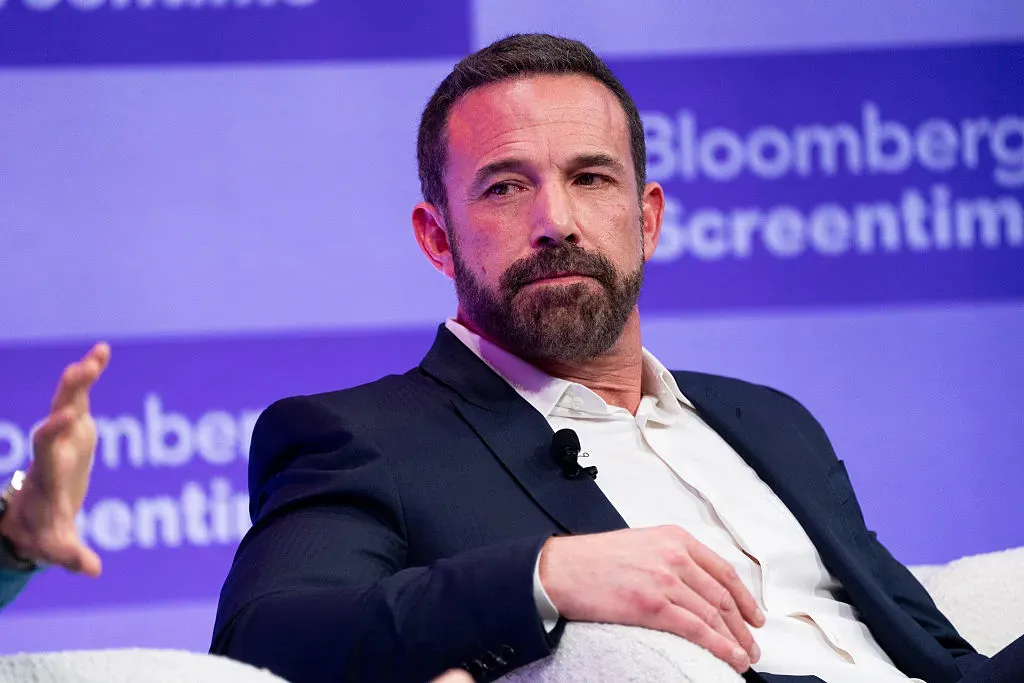
Affleck speaks at Bloomberg Screentime
He told Lucas Shaw he fine-tunes open models by unfreezing their weights, said he used AI "for lots of things" in Animals, and said he doesn't worry about Skynet.
More detail
The GQ clip spreads
Affleck explains tensors and convolutional neural networks (CNNs) to Zach Baron on GQ's "One More Question." Simon Willison quoted the passage under the tag "Pythonista."
More detail
Capabilities and access
- What the tools do: post-production work on real footage, including color correction, relighting, visual effects, background replacement and missing shots.
- Models: no base model, version or parameter count has been named publicly.
- Netflix has no plans to sell the tools commercially (KUOW).
Read the full section
- What the tools do: post-production work on real footage, including color correction, relighting, visual effects, background replacement and missing shots. They are not text-to-video generators (Variety; Gulf News).
- Models: no base model, version or parameter count has been named publicly.
- Access: only Netflix's creative partners. Netflix has no plans to sell the tools commercially (KUOW).
Technical analysis for researchers and developers
- Training data: Affleck says he spent about eight months filming a proprietary dataset with many cameras.
- Why he thinks web data falls short: generative models learn from paired inputs and outputs through backpropagation.
- How much of the model is retrained: it is unclear. TechCrunch reports he unfreezes the weights. These describe different methods.
Read the full section
- Training data: Affleck says he spent about eight months filming a proprietary dataset with many cameras. It serves as late-stage training data so that open models can handle specific tasks (TechCrunch; video).
- Why he thinks web data falls short: generative models learn from paired inputs and outputs through backpropagation. Compressed H.265 clips scraped from the web lack the ordered metadata that raw camera footage carries natively. He says this makes camera control in current models inconsistent (video).
- How much of the model is retrained: it is unclear. TechCrunch reports he unfreezes the weights. A widely shared post summarizing the clip says only the last "cinematic layer" was trained (Rohan Paul on X). These describe different methods.
- Reproducibility: there is no paper, no evaluation and no public dataset.
Claims and evidence
- $587 million price: this comes from Netflix's own filing, which makes it the strongest number in the story (Variety).
- The tools have been used across about 300 titles: Sarandos said about 300 titles used some form of generative AI.
- A 30% rise in A grades at colleges over three years: this is Affleck's figure, and none of the reviewed sources corroborate it (Fox News).
Read the full section
- $587 million price: this comes from Netflix's own filing, which makes it the strongest number in the story (Variety). Affleck disputes it only as a measure of his own payout (video).
- The tools have been used across about 300 titles: Sarandos said about 300 titles used some form of generative AI. Linking that number to InterPositive's tools comes from a secondary blog (AI Films). Sarandos's specific example, The American Experiment being made "twice as fast at half the cost," is Netflix's own claim, not an independent measurement (Variety).
- A 30% rise in A grades at colleges over three years: this is Affleck's figure, and none of the reviewed sources corroborate it (Fox News).
- **AI used in Animals:** Affleck confirms it but has declined to say how.
Context and prior work
- InterPositive is a sequel of sorts.
- Affleck's history is accurate in outline: visual-effects pipelines used CNNs for edge detection and matting (separating subjects from backgrounds such as green screens) long before transformers.
- Affleck says his visits to AI labs, including OpenAI, shaped the venture (TechCrunch).
Read the full section
- InterPositive is a sequel of sorts. In 1999 Affleck co-founded LivePlanet, which used an algorithm to sort screenplay-contest and video submissions for Project Greenlight (video).
- Affleck's history is accurate in outline: visual-effects pipelines used CNNs for edge detection and matting (separating subjects from backgrounds such as green screens) long before transformers.
- Affleck says his visits to AI labs, including OpenAI, shaped the venture (TechCrunch).
Limitations, safety and contested findings
- Reliability: Affleck argues that stochastic (probabilistic) models shouldn't control life-or-death systems such as weapons targeting or security.
- Cost: he says generating video takes far more compute than running language models, and he compares "tokenmaxxing" (maximizing token use regardless of cost) to burning cash (video, video).
- The interview format itself: in the clip Affleck defines terms loosely, for example calling a tensor the RGB values arranged by batch and frame.
Read the full section
- Reliability: Affleck argues that stochastic (probabilistic) models shouldn't control life-or-death systems such as weapons targeting or security. He calls fears of AI takeover overblown (video).
- Cost: he says generating video takes far more compute than running language models, and he compares "tokenmaxxing" (maximizing token use regardless of cost) to burning cash (video, video).
- The interview format itself: in the clip Affleck defines terms loosely, for example calling a tensor the RGB values arranged by batch and frame. TechCrunch notes that it is "not just that simple."
Business and practitioner implications
- Data strategy: the deal puts a price on a purpose-shot, rights-cleared dataset combined with fine-tuning open models, rather than on a frontier model.
- Labor terms: Affleck presents Netflix's status as a guild signatory as a guarantee that likeness and pay protections apply (video).
- Competition: keeping the tools in-house gives Netflix a post-production advantage that rival studios can't license.
Read the full section
- Data strategy: the deal puts a price on a purpose-shot, rights-cleared dataset combined with fine-tuning open models, rather than on a frontier model.
- Labor terms: Affleck presents Netflix's status as a guild signatory as a guarantee that likeness and pay protections apply (video).
- Competition: keeping the tools in-house gives Netflix a post-production advantage that rival studios can't license.
- For builders: sell to filmmakers on control, consistency and native camera metadata, not on prompt-to-film generation.
The source trail.
Sources (10)
TechCrunch: Ben Affleck is an AI nerd
techcrunch.comSimon Willison: Quoting Ben Affleck
simonwillison.netLinked video: Ben Affleck is an AI nerd, and the internet is impressed
linked video manual captions
www.youtube.com