
RoboticsMachines in the physical world
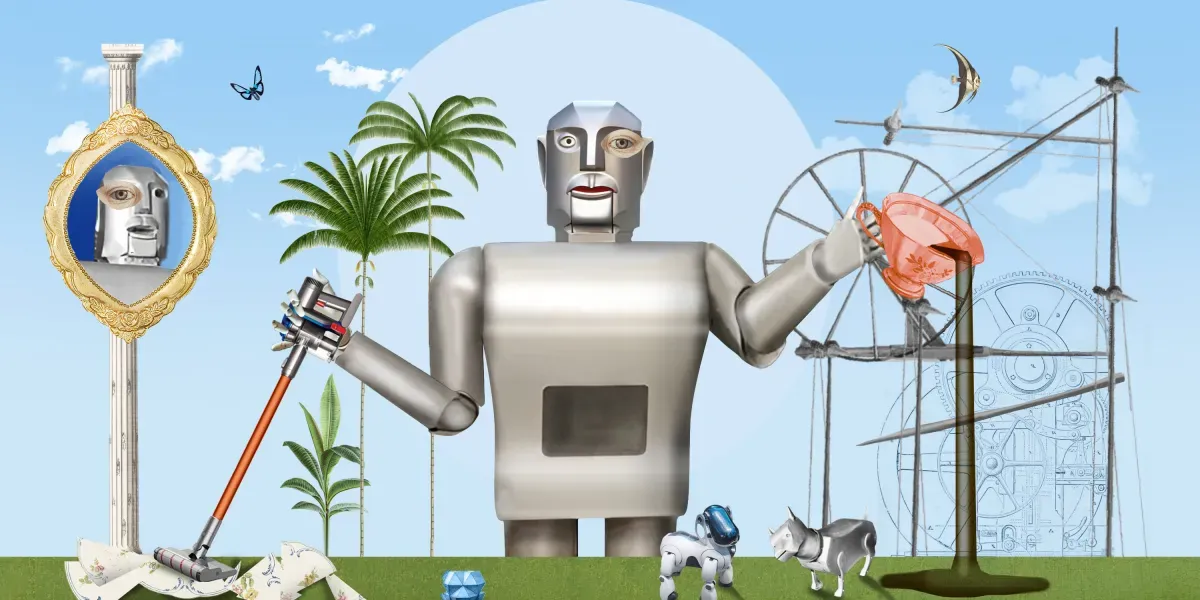
Robot AI's 'unseen task' claims outpace the evidence as forecasts for home humanoids diverge
Physical Intelligence said π0.7 attempted a task it had never seen, but related examples turned up in its training data. That shows how hard robot models are to evaluate. Reliability and scarce data still keep humanoids out of homes.
 AT Pulse research deskOctober 8, 2026 · 5 min read · AI-assisted analysis
Physical Intelligence's π0.7 claims of compositional generalization are hard to verify. The model got partway through loading a sweet potato into an air fryer, a task presented as new. The company later found two related air-fryer demonstrations in its training data. It also concedes that, with a dataset this large, it is hard to tell which tasks are truly new. Claims about unseen tasks therefore need audits of the training data, not just demo videos. [1] [6]
Reliability, not polished demos, decides whether a robot can be deployed. Boston Dynamics founder Marc Raibert argues that a 70% success rate means the robot effectively does not work. Many demos are teleoperated or scripted. The $20,000 1X Neo still depends on a remote human operator for most tasks. Deployments that work today are narrow, such as Agility moving bins and totes for logistics and manufacturing customers. [1]
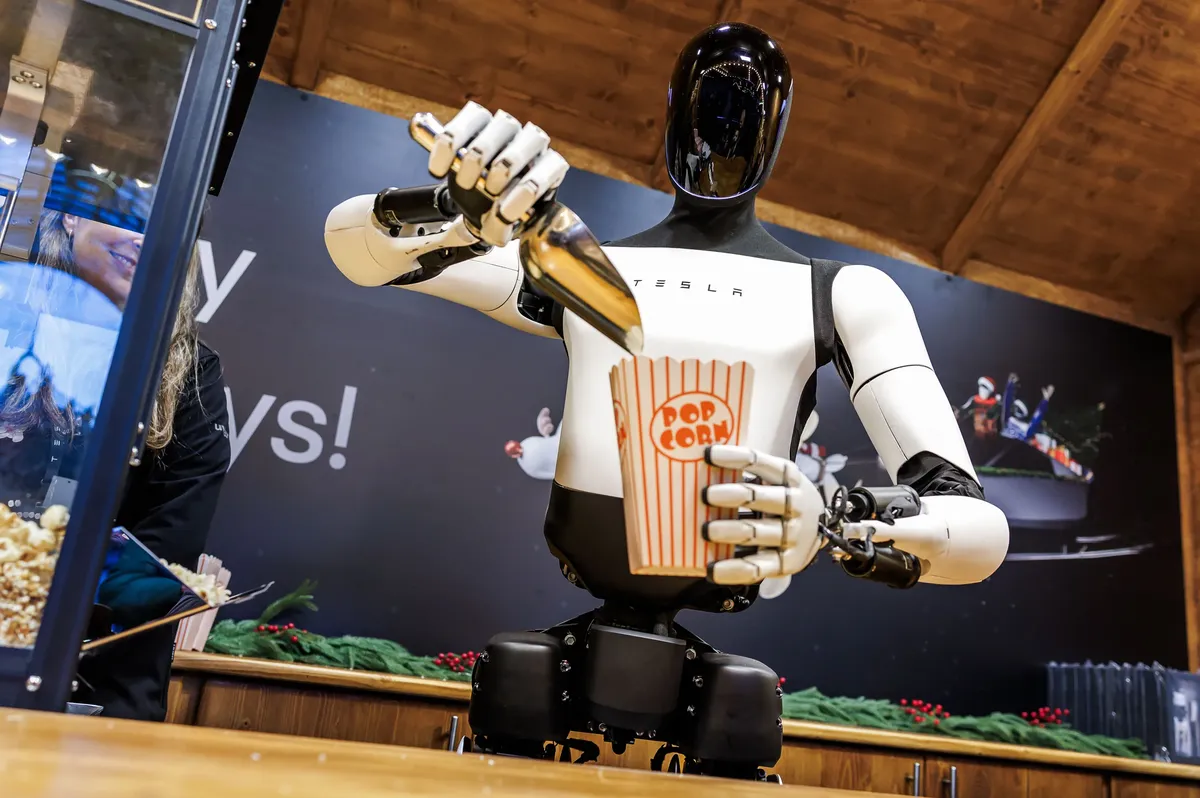
Forecasts for when humanoids arrive in homes vary widely. Elon Musk says Optimus could go on public sale by the end of 2027, but his earlier promise of thousands of Optimus robots working in Tesla factories was not met. Agility Robotics cofounder Jonathan Hurst estimates about a decade before robots do useful work in homes. A key bottleneck is training data: teleoperation is costly, human videos are low quality, and collecting data from deployed robots is risky. [1]
Large sums are going into world models as the proposed next step for robotics. AMI Labs, cofounded by Yann LeCun, raised a $1.03B seed round. AMD agreed to buy World Labs in an all-stock deal valued at about $8.2B, which is still pending closing. Neither has yet shown a direct route to general-purpose robots. [1] [5] [7] [8]
key performance figures come from the vendors themselves, and some demos are teleoperated.
Read the full assessment
Implication: buyers and investors should ask for training-data audits and disclosure of how much robots do autonomously before treating results as deployable capability.
Executive brief
Physical Intelligence's most-cited "generalization" result shows how hard it is to judge progress in robot AI. Elon Musk says Optimus could go on sale to the public by the end of 2027. Agility Robotics cofounder Jonathan Hurst estimates it will be about 10 years before robots do useful work in homes.
Read the full section
Physical Intelligence's most-cited "generalization" result shows how hard it is to judge progress in robot AI. Its π0.7 model, released in April 2026, got partway through a task it had supposedly never seen: loading a sweet potato into an air fryer. The company then found two related air-fryer demonstrations already in its training data (MIT Technology Review). The article's main argument is that the hype about humanoid robots is running ahead of the evidence. Elon Musk says Optimus could go on sale to the public by the end of 2027. Agility Robotics cofounder Jonathan Hurst estimates it will be about 10 years before robots do useful work in homes. Meanwhile, investors are betting billions on "world models" as the missing piece.
What changed and event timeline
π0 paper published
Physical Intelligence described a vision-language-action (VLA) model that controls robots at up to 50 Hz, trained on data from several robot platforms. The code was released as OpenPI.
Gemini Robotics report
Google DeepMind presented a robot-control VLA built on Gemini 2.0. With fine-tuning, it learned new short tasks from as few as 100 demonstrations.
AMI Labs seed round
AMI Labs, cofounded by Yann LeCun, raised $1.03B at a $3.5B pre-money valuation to build world models. It is Europe's largest seed round.
π0.7 released
Physical Intelligence claimed early signs of compositional generalization, meaning the model recombines skills it has learned to attempt tasks it was not trained on. The Decoder noted that the evidence is ambiguous.
AMD agrees to buy World Labs
The all-stock deal is valued at about $8.2B and is expected to close by the end of 2026. Fei-Fei Li, World Labs' cofounder, becomes AMD's chief scientist.
More detail
MIT Technology Review assessment
A piece co-produced with the nonprofit Aventine argues that VLA-based robots still fail on tasks outside their training data. It says 70% success rates don't make robots practical.
Capabilities and access
- π0 → π0.5 → π0.6 → π0.7: π0.5 added labeled web images to training, π0.6 added reinforcement learning, and π0.7 conditions on images of subgoals produced by a "lightweight" world model (MIT TR). π0 weights are open through LeRobot.
- Gemini Robotics has been tested on ALOHA 2, a low-cost two-arm rig whose hardware designs are open-sourced.
- 1X Neo is available to preorder for $20,000, but a remote human operator still handles most tasks (MIT TR).
Read the full section
- π0 → π0.5 → π0.6 → π0.7: π0.5 added labeled web images to training, π0.6 added reinforcement learning, and π0.7 conditions on images of subgoals produced by a "lightweight" world model (MIT TR). π0 weights are open through LeRobot. No reviewed source shows that π0.7's weights have been released.
- Gemini Robotics has been tested on ALOHA 2, a low-cost two-arm rig whose hardware designs are open-sourced. It can pack a lunchbox but failed to gather the ingredients for a risotto.
- 1X Neo is available to preorder for $20,000, but a remote human operator still handles most tasks (MIT TR).
Technical analysis for researchers and developers
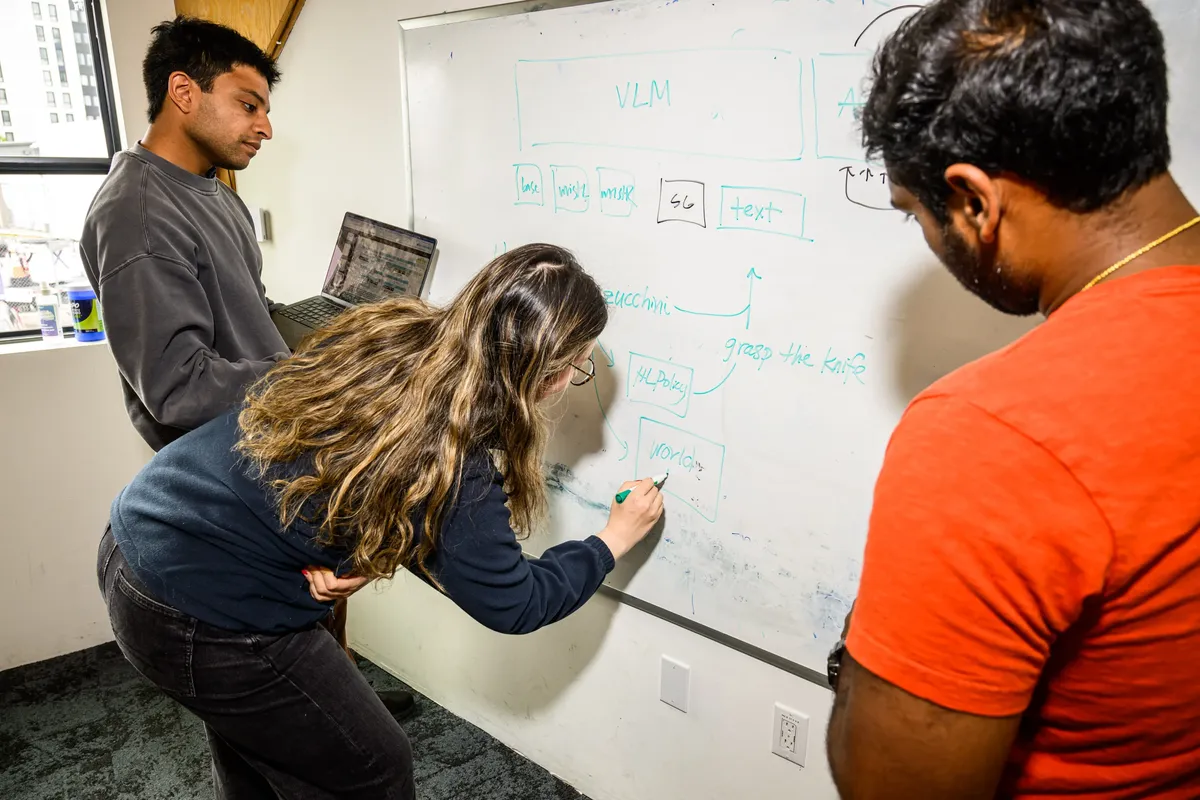
- π0 architecture: a pretrained vision-language model plus an action-generation component trained with flow matching (a variant of diffusion), which outputs chunks of actions at once (arXiv).
- π0.7 architecture: a 4B-parameter Gemma 3 backbone plus an 860M-parameter "action expert." Prompts can include text and subgoal images (The Decoder).
- Evaluation problem: Physical Intelligence concedes it is hard to tell which tasks are truly new to the model, given how large its dataset is.
Read the full section
- π0 architecture: a pretrained vision-language model plus an action-generation component trained with flow matching (a variant of diffusion), which outputs chunks of actions at once (arXiv).
- π0.7 architecture: a 4B-parameter Gemma 3 backbone plus an 860M-parameter "action expert." Prompts can include text and subgoal images (The Decoder).
- Evaluation problem: Physical Intelligence concedes it is hard to tell which tasks are truly new to the model, given how large its dataset is. Claims about unseen tasks need audits of the training data, not just demo videos.
- Data bottleneck: the main data sources each have a weakness. Teleoperation is expensive, human videos are low quality, and data from deployed robots is risky to collect because robots aren't yet safe outside labs (MIT TR).
Claims and evidence
- π0.7 shows compositional generalization
- π0.7 folds shirts with 80% success on robot hardware it hasn't seen — Vendor-reported (). No independent replication found
- Gemini Robotics learns from about 100 demonstrations — Vendor technical report ()
Read the full section
| Claim | Status |
| π0.7 shows compositional generalization | Vendor-reported. Independent analysis notes it overlaps with training data (The Decoder) |
| π0.7 folds shirts with 80% success on robot hardware it hasn't seen | Vendor-reported (The Decoder). No independent replication found |
| Gemini Robotics learns from about 100 demonstrations | Vendor technical report (arXiv) |
| Optimus on public sale by the end of 2027 | Musk forecast. He also said in May 2025 that "thousands" of Optimus robots would be working in Tesla factories by year-end, but in January 2026 described only "some" doing simple tasks (MIT TR) |
Context and prior work
Humanoid demos have impressed before without becoming useful products. Honda's ASIMO was unveiled in 2000 and discontinued in 2018 (MIT TR). LeCun argues that methods that worked for language fail on the high-dimensional, continuous, noisy data robots deal with.
Read the full section
Humanoid demos have impressed before without becoming useful products. Honda's ASIMO was unveiled in 2000 and discontinued in 2018 (MIT TR). Robot control has shifted from hand-coded rules to vision-language models and then to VLAs. World models are now the main proposed next step. LeCun argues that methods that worked for language fail on the high-dimensional, continuous, noisy data robots deal with. Fei-Fei Li has called the world-model field "nascent."
Limitations, safety and contested findings
- Demos can mislead: many polished robot demos are teleoperated or scripted.
- Shipment figures conflict: MIT TR cites Omdia and Unitree for about 15,000 humanoids shipped in 2025, nearly 90% Chinese-made, with Unitree the top shipper.
- World Labs deal status: MIT TR describes World Labs as acquired, but the filings say the deal is still pending closing.
Read the full section
- Demos can mislead: many polished robot demos are teleoperated or scripted. The robot that appeared on stage with Nvidia CEO Jensen Huang in March 2025 was remote-controlled (MIT TR).
- Shipment figures conflict: MIT TR cites Omdia and Unitree for about 15,000 humanoids shipped in 2025, nearly 90% Chinese-made, with Unitree the top shipper. Omdia, as reported by SCMP and TechNode, counted 13,318 units and ranked AgiBot first (5,168 units) ahead of Unitree (4,200) (SCMP, TechNode). Unitree separately reported more than 5,500 units delivered (Jiemian).
- World Labs deal status: MIT TR describes World Labs as acquired, but the filings say the deal is still pending closing.
- Privacy: remote operators of home robots see inside users' homes through the robots' cameras.
Business and practitioner implications
- Reliability is the bar for deployment. Deployments that work today are narrow. Agility moves bins and totes for GXO, Amazon and Schaeffler.
- Money is flowing to world models: AMI Labs' $1.03B round and AMD's ~$8.2B World Labs deal.
- Check demo claims before buying.
Read the full section
- Reliability is the bar for deployment. Boston Dynamics founder Marc Raibert puts it bluntly: "70% success is like it doesn't work." Deployments that work today are narrow. Agility moves bins and totes for GXO, Amazon and Schaeffler.
- Money is flowing to world models: AMI Labs' $1.03B round and AMD's ~$8.2B World Labs deal. Neither has yet shown a direct route to general-purpose robots.
- Check demo claims before buying. Ask vendors how much is done autonomously versus by remote operators, and how much overlap there is between the training data and the tasks being shown.
- Chinese makers lead on volume and price, with one Unitree model under $6,000.
The source trail.
Sources (13)
AI breakthroughs in robotics won’t change your life any time soon
Article text retrieved; extracted text may omit tables or interactive elements. A transcript of the video linked from this page is supplied (linked video manual captions; https://www.youtube.com/watch?v=m-G4-slYcGE); automatic text may contain errors.
technologyreview.comLinked video: AI breakthroughs in robotics won’t change your life any time soon
linked video manual captions
www.youtube.com